Quick Answer: Is the Honda Clarity Electric a Good Used EV Buy?
The Honda Clarity Electric was discontinued after the 2019 model year, so it is only available on the used market in 2026. With just 89 miles of EPA range, a 25.5 kWh battery, and 40 kW peak DC fast charging, it works as a budget commuter car if you can find one under $12,000 and charge at home. It is not a road-trip vehicle. Buyers seeking more range should consider the Clarity Plug-In Hybrid (47 miles electric-only) or modern alternatives like the Chevrolet Bolt EV or Nissan Leaf.
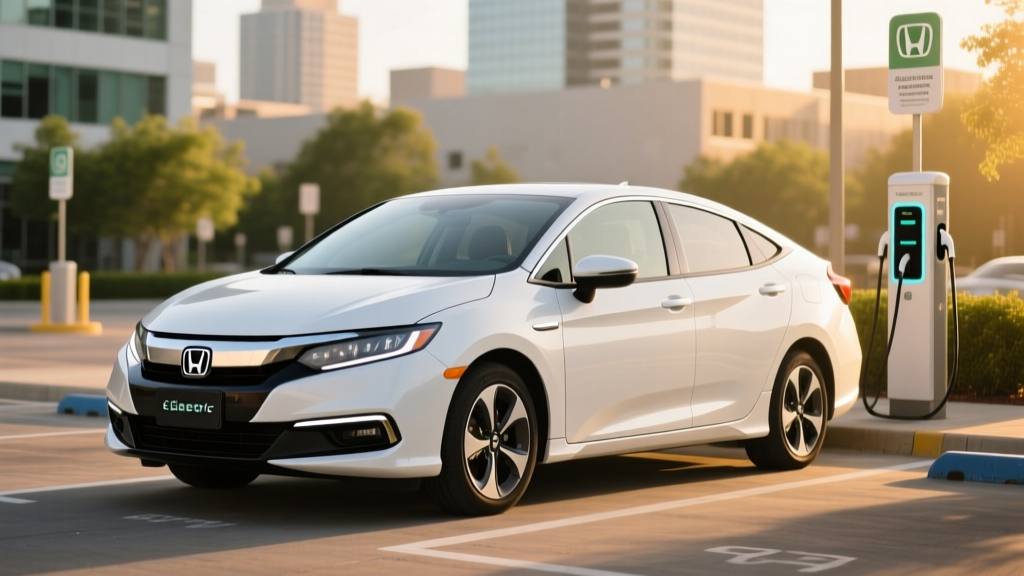
If you have been searching for a Honda Clarity electric car, you have likely discovered that Honda stopped producing the all-electric variant years ago. The Clarity lineup — which included a battery-electric (BEV), plug-in hybrid (PHEV), and hydrogen fuel-cell version — was Honda's ambitious but ultimately short-lived entry into electrification. In 2026, the Clarity Electric lives on exclusively in the used-car market, and whether it makes sense for you depends entirely on your commute, your charging access, and the price you pay.
This guide breaks down the real numbers behind the Clarity Electric, compares it to gas and hybrid alternatives, and gives you a framework for deciding if this discontinued EV fits your life.
Honda Clarity Electric: Battery, Range, and Charging Specs
The Clarity Electric was engineered as a compliance car — a vehicle built primarily to satisfy California's zero-emission vehicle mandates rather than to compete head-on with mainstream EVs. That origin story explains its modest specifications.
| Spec | Value |
|---|---|
| Battery capacity (usable) | 25.5 kWh (NMC lithium-ion) |
| EPA range | 89 miles |
| Real-world range (mild weather, city) | ~80–90 miles |
| Real-world range (highway, 70 mph) | ~65–75 miles |
| Real-world range (cold weather, below 32°F) | ~55–65 miles |
| EPA efficiency | 110 MPGe (combined) |
| Energy consumption | 30 kWh/100 miles |
| Motor output | 174 hp / 221 lb-ft torque |
| 0–60 mph | ~7.7 seconds |
| Level 1 charging (120V, 1.4 kW) | ~18 hours (0–100%) |
| Level 2 charging (240V, 6.6 kW) | ~4 hours (0–100%) |
| DC fast charging (CCS, peak) | 40 kW |
| DC fast charge (10–80%) | ~30 minutes (estimated) |
| Connector | CCS1 (Combo) |
| Battery warranty (original) | 8 years / 100,000 miles (10 yrs/150k in CARB states) |
Real-World Range Reality: The EPA's 89-mile estimate assumes mixed driving in moderate temperatures. On a pure highway trip at 70+ mph, expect closer to 65–75 miles before you need to plug in. In freezing weather, lithium-ion chemistry and cabin heating can push effective range down to 55–65 miles. This car demands daily charging for most commuters.
Clarity Electric vs. Clarity Plug-In Hybrid vs. Gas Sedan
The Clarity lineup can confuse shoppers. Here is how the three variants stack up, along with a conventional gas sedan for baseline comparison.
| Metric | Clarity Electric (BEV) | Clarity Plug-In Hybrid (PHEV) | Honda Accord Hybrid | Honda Accord 1.5T (Gas) |
|---|---|---|---|---|
| Electric-only range | 89 mi (EPA) | 47 mi (EPA) | N/A | N/A |
| Total range | 89 mi | ~340 mi (electric + gas) | ~550 mi | ~460 mi |
| Combined efficiency | 110 MPGe | 110 MPGe (electric) / 42 MPG (gas) | 48 MPG | 33 MPG |
| Annual fuel cost (15k mi) | ~$540 (electric) | ~$650 (mixed) | ~$1,175 | ~$1,710 |
| Used price range (2026) | $8,000–$13,000 | $15,000–$22,000 | $18,000–$26,000 | $16,000–$24,000 |
| Production status | Discontinued (2019) | Discontinued (2021) | Current | Current |
The numbers reveal a clear hierarchy. The Clarity Electric is the cheapest to fuel but the most range-limited. The Clarity PHEV offers the best of both worlds — 47 miles of electric commuting with a gas engine for longer trips — but commands a higher used price. A current Accord Hybrid costs more upfront but eliminates range anxiety entirely and benefits from Honda's ongoing parts and warranty support.
Used Clarity Electric: Ownership Cost Breakdown
Buying a discontinued EV introduces unique cost factors. Here is a realistic five-year ownership projection based on a $10,500 purchase price and 12,000 miles per year.
| Category | Estimated Cost | Notes |
|---|---|---|
| Purchase price | $10,500 | 2017–2019 model, 60k–80k miles |
| Home Level 2 charger install | $500–$1,500 | Depends on panel capacity and wiring run |
| Electricity (5 yrs, home charging) | $2,700 | ~$0.13/kWh national avg, 30 kWh/100 mi |
| Maintenance (5 yrs) | $800–$1,200 | Tires, cabin filter, brake fluid, wipers |
| Insurance (5 yrs) | $5,500–$7,500 | Varies by state and driver profile |
| Potential battery repair | $0–$4,000 | Only if out of warranty; see degradation section |
| Estimated 5-year total | $20,000–$27,400 | Excludes registration, taxes, and depreciation |
Compare that to fueling a 33 MPG gas sedan for five years at $3.50/gallon: roughly $9,500 in fuel alone. The Clarity Electric's energy cost over the same period is approximately $2,700 — a savings of about $6,800. However, that savings must offset the risk of owning a discontinued model with limited parts availability and no remaining factory warranty for most examples.
Federal Tax Credit: Not Available
The IRS §30D federal tax credit applies only to new clean vehicles purchased from a dealer. Because the Clarity Electric is only available used, you cannot claim the new-vehicle credit. The used clean vehicle credit (up to $4,000 under §25E) requires the vehicle to be at least two model years old and sold for under $25,000 by a licensed dealer — which technically qualifies the Clarity, but the credit is capped at 30% of the sale price. On a $10,500 purchase, the maximum credit would be $3,150, subject to income limits and battery-sourcing requirements. Consult a tax professional to verify eligibility.
Battery Health and Degradation: What to Expect in 2026
Every lithium-ion battery loses capacity over time. The Clarity Electric's 25.5 kWh NMC pack is now 7–9 years old depending on model year. Here is what real-world data and chemistry tell us to expect.
Typical degradation for a 7–9 year old NMC pack: Most NMC batteries lose 10–20% of original capacity over this period, depending on climate, charging habits, and mileage. For the Clarity Electric, that means an original 89-mile range could realistically sit between 71 and 80 miles today. Cars that spent their lives in hot climates (Arizona, Texas, Southern California) and were frequently DC fast-charged tend to show more degradation.
What to check before buying:
- Ask the seller for a State of Health (SoH) reading. Some Honda dealers can pull this via OBD-II diagnostics.
- Do a full charge and note the displayed range. If it reads below 70 miles at 100% SoC, the pack has degraded significantly.
- Check whether the original 8-year/100,000-mile battery warranty is still active. In CARB states (California, New York, Massachusetts, and others), the warranty extends to 10 years/150,000 miles — which could still cover a 2019 model through 2029.
Battery replacement cost: If the pack fails out of warranty, expect $4,000–$7,000 for a replacement, though availability is uncertain for a discontinued model. This is the single biggest financial risk of buying a used Clarity Electric.
Charging at Home: The Make-or-Break Factor
The Clarity Electric's 89-mile range makes home charging non-negotiable. Without daily access to a plug, this car becomes impractical for most drivers.
Level 1 (standard 120V outlet): At 1.4 kW, a full charge takes roughly 18 hours. This is sufficient only if you drive under 30 miles per day and plug in every night. For most buyers, Level 1 is a stopgap, not a solution.
Level 2 (240V, 6.6 kW onboard charger): A full charge completes in about 4 hours. This is the practical standard for Clarity Electric ownership. Expect to pay $500–$1,500 for a Level 2 home installation, depending on whether your electrical panel needs an upgrade. A 200-amp panel with spare capacity typically keeps costs at the lower end; older homes with 100-amp service may require a $1,500–$3,000 panel upgrade.
Public DC fast charging: The Clarity's 40 kW peak charge rate is slow by 2026 standards. Modern EVs routinely accept 150–350 kW. At 40 kW, a 10–80% session takes roughly 30 minutes, and the CCS1 connector means compatibility with Electrify America, EVgo, and ChargePoint DC stations — but not Tesla Superchargers without a J3400 (NACS) adapter, and even then the charge rate remains limited to 40 kW.
Common Misconceptions About the Honda Clarity Electric
| Myth | Fact |
|---|---|
| "I can buy a new Clarity Electric." | Honda discontinued the Clarity Electric after 2019. Only used examples are available. |
| "It qualifies for the $7,500 federal tax credit." | The §30D new-vehicle credit does not apply to used cars. The §25E used-vehicle credit may apply (up to $4,000), subject to income and pricing limits. |
| "89 miles of range is enough for anyone." | 89 miles covers many commutes but leaves no margin for highway driving, cold weather, detours, or ride-hailing use. Plan realistically for 65–75 usable miles. |
| "The battery will need replacement soon." | NMC packs typically retain 80–90% capacity at 7–9 years. Check SoH before purchase — many Clarity batteries still have useful life. |
| "It charges on Tesla Superchargers." | The Clarity uses CCS1. Tesla Superchargers require NACS (J3400). Adapters exist but do not increase the Clarity's 40 kW charge ceiling. |
Decision Framework: Should You Buy a Used Honda Clarity Electric?
Buy the Clarity Electric if:
- Your round-trip commute is under 50 miles and you can charge at home every night.
- You want the lowest possible used-EV entry price (under $12,000).
- You live in a mild climate where cold-weather range loss is minimal.
- You have a second gas or hybrid vehicle for longer trips.
- You find a 2019 model still within the 10-year/150,000-mile CARB-state battery warranty.
Skip the Clarity Electric and consider alternatives if:
- Your daily driving exceeds 60 miles or includes regular highway segments.
- You live in an apartment or lack reliable home charging access.
- You need a single-vehicle solution for road trips and commuting.
- You live in a region with harsh winters where range could drop below 60 miles.
- You cannot find a local Honda dealer willing to service a discontinued EV model.
Better alternatives in 2026: If the Clarity Electric's range is too limiting, the used Chevrolet Bolt EV (259 miles EPA, widely available under $18,000 used) or a used Nissan Leaf (149–226 miles depending on battery) offer significantly more range. If you want Honda reliability with electric commuting, the Clarity Plug-In Hybrid — 47 miles electric-only plus a gas engine — remains a strong used choice, though prices run $15,000–$22,000.
Frequently Asked Questions
Is the Honda Clarity Electric still being made?
No. Honda discontinued the Clarity Electric after the 2019 model year. The Clarity Plug-In Hybrid continued through 2021 before the entire Clarity lineup was retired. Honda's current electrified offerings include the Prologue SUV and the upcoming 0 Series models.
How much does it cost to charge a Honda Clarity Electric at home?
At the national average electricity rate of $0.13/kWh, fully charging the 25.5 kWh battery costs approximately $3.30. If you drive 12,000 miles per year at 30 kWh/100 miles, your annual electricity cost is roughly $470 — compared to about $1,270 for a 33 MPG gas car at $3.50/gallon.
Can I use a Honda Clarity Electric for road trips?
It is not practical. With 65–80 miles of real-world range and a 40 kW DC fast-charge rate, you would stop every hour on the highway and wait 30 minutes for a partial charge. This car was designed for city and suburban commuting, not highway travel.
What happens if the Clarity Electric battery fails?
If the battery fails within the original warranty period (8 years/100,000 miles, or 10 years/150,000 miles in CARB states), Honda covers the repair or replacement. Out of warranty, expect $4,000–$7,000 for a replacement pack, though parts availability for a discontinued model may be limited. Always verify battery State of Health before purchasing.
Does the used Honda Clarity Electric qualify for any tax credits?
It does not qualify for the §30D new-vehicle credit. It may qualify for the §25E used clean vehicle credit — up to $4,000 or 30% of the sale price (whichever is less) — if purchased from a licensed dealer for under $25,000, and if you meet income requirements ($75,000 single / $150,000 joint filers). Battery-sourcing requirements also apply. Verify with a tax professional before relying on this credit.
How does the Clarity Electric compare to a Tesla Model 3?
They occupy different segments entirely. A used 2019 Tesla Model 3 Standard Range Plus offers 240 miles of EPA range, 170 kW DC fast charging, and access to the Supercharger network — for $18,000–$23,000 on the used market. The Clarity Electric costs less upfront but sacrifices range, charging speed, and long-distance capability. Choose the Clarity only if your budget is strictly under $13,000 and your driving is local.