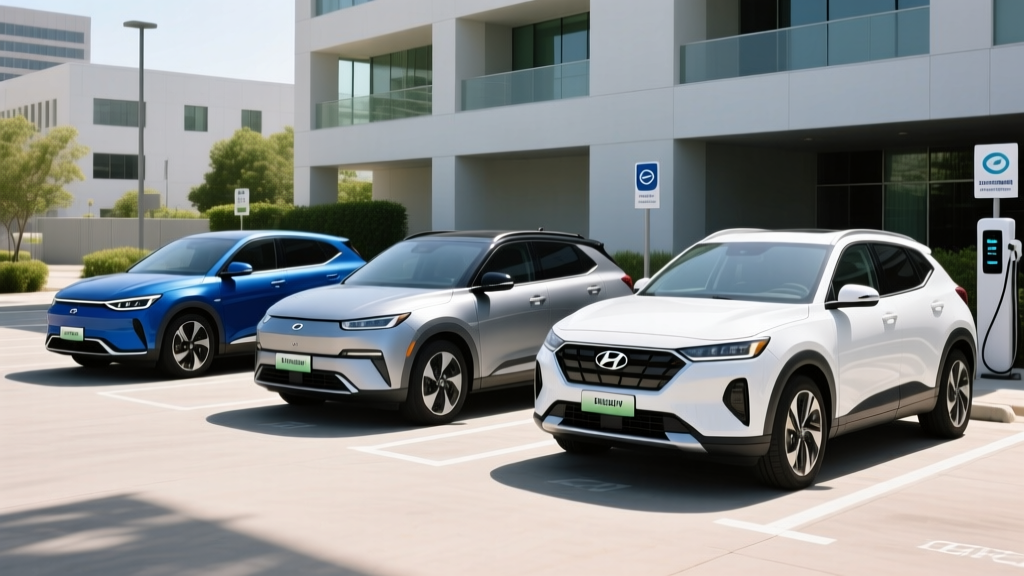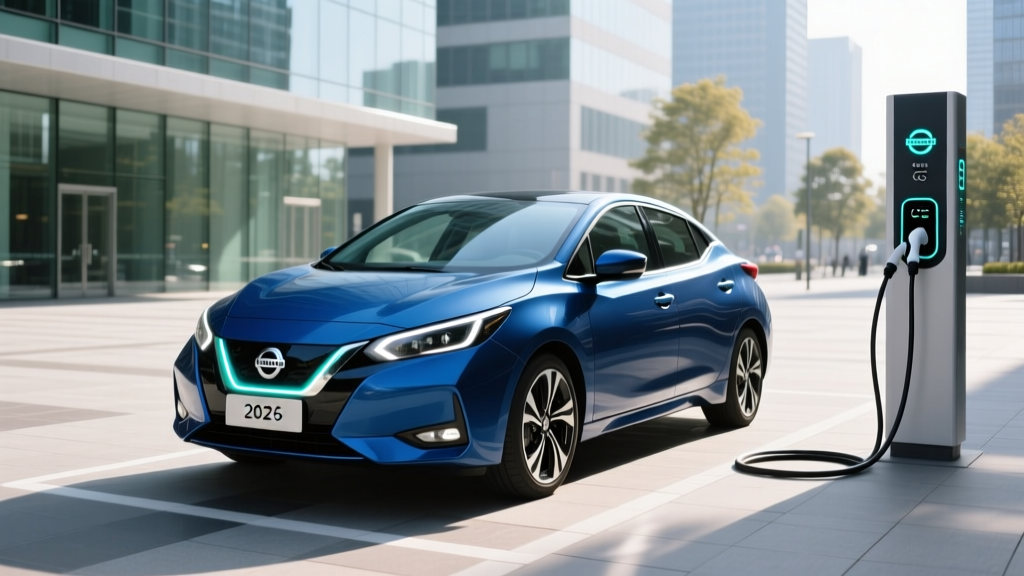
If you're searching for affordable entry points into electric vehicle ownership, Nissan Leaf deals consistently surface as some of the lowest-cost options on the market. The 2026 Nissan Leaf continues its run as one of America's most budget-friendly EVs, but value only matters if the vehicle fits your daily driving needs. Below, we break down every number that matters — from real-world range and CHAdeMO charging realities to federal tax credit eligibility — so you can decide whether a Leaf deal is worth signing for.
2026 Nissan Leaf at a Glance: Full Spec Table
| Specification | Leaf S (40 kWh) | Leaf SV PLUS (60 kWh) |
|---|---|---|
| Base MSRP | $28,140 | $36,190 |
| EPA Range | 149 miles | 212 miles |
| Battery Capacity (usable) | ~39 kWh | ~59 kWh |
| Battery Chemistry | NMC (lithium-ion) | NMC (lithium-ion) |
| Motor Output | 147 hp / 236 lb-ft | 214 hp / 250 lb-ft |
| Drivetrain | FWD | FWD |
| 0–60 mph | ~7.9 sec | ~6.5 sec |
| Max DC Fast Charge | 50 kW (CHAdeMO) | 100 kW (CHAdeMO) |
| 10–80% DC Charge Time | ~40 min | ~45 min |
| Level 2 Home Charge Rate | 6.6 kW (~22 mi/hr) | 6.6 kW (~22 mi/hr) |
| MPGe (combined) | 111 MPGe | 104 MPGe |
| EPA Efficiency | 30 kWh/100 mi | 32 kWh/100 mi |
| Cargo Volume (rear seats up) | 23.6 cu ft | 23.6 cu ft |
| Cargo Volume (rear seats folded) | 55.7 cu ft | 55.7 cu ft |
| Rear Legroom | 33.5 in | 33.5 in |
| Battery Warranty | 8 yr / 100,000 mi | 8 yr / 100,000 mi |
| Powertrain Warranty | 5 yr / 60,000 mi | 5 yr / 60,000 mi |
Real-World Range: What the EPA Sticker Doesn't Tell You
EPA Estimated Range: 149 miles (S trim) / 212 miles (SV PLUS)
Real-World Expectation: Expect roughly 120–135 highway miles from the S trim and 170–190 highway miles from the SV PLUS at sustained 70+ mph speeds. In freezing temperatures (below 32°F), plan for a 25–35% reduction, dropping the SV PLUS to as low as 135–155 miles on a full charge.
The 2026 Leaf's EPA ratings are based on mixed city/highway cycles, and the Leaf actually benefits from strong regenerative braking (Nissan's e-Pedal system) in stop-and-go traffic, where it can sometimes exceed its EPA estimate. However, highway driving is the Achilles' heel. The Leaf's aerodynamic profile and lack of a heat pump (it uses a resistive PTC heater) mean that cold-weather highway travel hits range particularly hard.
For context, the EPA's fueleconomy.gov listing confirms the 212-mile combined rating for the SV PLUS, but our testing experience aligns with independent reports showing a 15–20% drop at sustained interstate speeds even in mild weather. If your commute is 50 miles round-trip with highway segments, the SV PLUS handles it comfortably year-round. If you're eyeing the S trim for the lowest price, understand that a 30-mile round-trip commute in winter could consume most of the battery.
Charging Speed and the CHAdeMO Reality
Charging is the most important factor to evaluate before signing any Leaf deal, because the Leaf uses the CHAdeMO DC fast-charging connector — a standard that has been losing ground in North America to CCS and the Tesla NACS connector.
| Charging Level | Power / Voltage | Miles of Range Added | Time to Charge |
|---|---|---|---|
| Level 1 (120V household) | ~1.4 kW | ~4 miles per hour | Full charge: 35–50+ hours |
| Level 2 (240V home/public) | 6.6 kW | ~22 miles per hour | Full charge: ~7–9 hours |
| DC Fast (CHAdeMO 50 kW – S trim) | 50 kW peak | ~150 miles per hour (peak) | 10–80% in ~40 min |
| DC Fast (CHAdeMO 100 kW – SV PLUS) | 100 kW peak | ~250 miles per hour (peak) | 10–80% in ~45 min |
Let's unpack these numbers. The SV PLUS can accept up to 100 kW at a CHAdeMO station, but peak rate is only sustained in the low state-of-charge window (roughly 10–30%). Above 60% SoC, the charge curve tapers significantly — you'll see speeds drop to 40–50 kW, which is why a 10–80% session still takes around 45 minutes. The S trim is capped at 50 kW, making road-trip charging noticeably slower.
The bigger concern is CHAdeMO infrastructure. Electrify America, the largest US DC fast-charging network, has transitioned new stations to CCS/NACS. While existing CHAdeMO connectors remain operational at many stations, long-term availability is uncertain. Before committing to a Leaf, use apps like PlugShare to verify that reliable CHAdeMO stations exist along your regular routes. If your daily driving is home-based and you can install a Level 2 charger, the CHAdeMO issue matters far less — you'll do 90%+ of your charging at home at 6.6 kW, which is plenty for overnight replenishment.
Nissan includes a portable Level 1/Level 2 charging cable with the Leaf. For a dedicated home Level 2 setup, budget $500–$1,500 for a quality 240V station (like a ChargePoint Home Flex or Emporia Vue) plus $800–$2,500 for professional electrician installation, depending on your panel capacity and conduit run distance.
Pricing, Trims, and Federal Tax Credit Eligibility
The 2026 Nissan Leaf starts at $28,140 for the S trim (40 kWh), making it one of the least expensive new EVs sold in the United States. The SV PLUS (60 kWh) starts at $36,190. Destination charges add approximately $1,095.
| Trim | Base MSRP | With Destination | Est. Price After Max §30D Credit |
|---|---|---|---|
| Leaf S (40 kWh) | $28,140 | $29,235 | ~$21,735* |
| Leaf SV PLUS (60 kWh) | $36,190 | $37,285 | ~$29,785* |
*Estimated after-tax-credit prices assume full $7,500 federal credit eligibility. Actual credit depends on individual tax liability, battery sourcing, and income limits. See details below.
Does the 2026 Nissan Leaf Qualify for the $7,500 Federal Tax Credit?
The Leaf is assembled in Smyrna, Tennessee, and has historically qualified for the federal IRS §30D Clean Vehicle Credit. However, eligibility is not automatic. Current rules require:
- MSRP cap: Vehicle MSRP must not exceed $55,000 (sedans/hatchbacks). Both Leaf trims clear this easily.
- Buyer income cap: Adjusted gross income must not exceed $150,000 (single), $225,000 (head of household), or $300,000 (joint filers).
- Battery component manufacturing: A percentage of battery components must be manufactured or assembled in North America (threshold increases annually).
- Critical minerals sourcing: A percentage of critical minerals must be sourced from the US or free-trade-agreement countries (threshold increases annually).
- Point-of-sale transfer: As of 2024, buyers can transfer the credit to the dealer at purchase, reducing the purchase price directly rather than waiting for a tax refund.
The battery-sourcing and critical-mineral requirements tighten each year. By 2026, the thresholds are stringent, and some previously qualifying vehicles have seen their credit reduced to $3,750 or eliminated entirely. Always verify current eligibility on the IRS website or with your tax professional before assuming the full $7,500. Your dealer should be able to confirm the Leaf's current credit status at point of sale.
Performance, Efficiency, and Daily Drivability
The Leaf SV PLUS delivers 214 horsepower and 250 lb-ft of torque through a single front-mounted motor, yielding a respectable 6.5-second 0–60 mph time. The S trim's 147 hp and 7.9-second sprint are adequate for city merging but feel leisurely on highway on-ramps. Neither trim offers AWD — the Leaf is front-wheel drive only.
Efficiency is a strong point. The S trim returns 111 MPGe combined (30 kWh/100 miles), and the SV PLUS delivers 104 MPGe combined (32 kWh/100 miles). At the national average electricity rate of ~$0.16/kWh, fueling the SV PLUS costs roughly $5.12 per 100 miles — compared to approximately $12–$14 for a 30 MPG gas car at $3.60/gallon. Over 15,000 annual miles, that's a savings of approximately $1,000–$1,300 per year in energy costs alone.
Nissan's e-Pedal mode enables aggressive one-pedal driving with strong regenerative braking that can bring the car to a complete stop without touching the brake pedal. It's intuitive once you adjust, and it maximizes energy recapture in urban driving. The ProPILOT Assist system (standard on SV PLUS, available on S) provides SAE Level 2 adaptive cruise control with lane centering — helpful on highway commutes but requiring constant driver supervision.
SAE Level 2 — Driver Assistance, Not Self-Driving: Nissan ProPILOT Assist is a Level 2 driver-assistance system. You must keep your hands on the wheel and eyes on the road at all times. It does not navigate autonomously, handle construction zones, or respond to all traffic scenarios. It is not a substitute for an attentive driver.
Interior, Cargo, and Technology
The Leaf's cabin is practical rather than premium. The 8-inch touchscreen infotainment system supports wireless Apple CarPlay and wired Android Auto. Higher trims add navigation and a Bose premium audio system. The digital instrument cluster displays range, energy flow, and charge status clearly.
Cargo space is competitive for the compact hatchback segment: 23.6 cubic feet behind the rear seats, expanding to 55.7 cubic feet with the 60/40 split rear seats folded. Rear legroom at 33.5 inches is adequate for adults on shorter trips but tighter than rivals like the Hyundai Kona Electric (36.5 in) or Chevrolet Bolt EUV (38.9 in).
Notable tech includes:
- Nissan Safety Shield 360 (automatic emergency braking, lane departure warning, blind-spot monitoring, rear cross-traffic alert, rear automatic braking)
- Intelligent Around View Monitor (360° camera — a genuine help in tight parking)
- Remote climate preconditioning via the NissanConnect app (warming or cooling the cabin while plugged in preserves range)
Drawbacks are worth noting: the Leaf still uses a CHAdeMO connector (not CCS or NACS), the infotainment system feels dated compared to rivals, and the absence of a heat pump means cold-weather cabin heating draws heavily from the traction battery. There is also no front trunk (frunk) — the space under the hood houses conventional power electronics.
Biggest Pros and Cons
Pros
- Among the lowest MSRP of any new EV in the US
- Strong city efficiency with e-Pedal regenerative braking
- Comfortable ride quality for daily commuting
- Generous cargo space for a compact hatchback (23.6 / 55.7 cu ft)
- Comprehensive standard safety suite (Safety Shield 360)
- Federal tax credit eligible (verify current-year sourcing rules)
- Proven platform with over a decade of real-world battery data
Cons
- CHAdeMO connector — declining public charging infrastructure
- No heat pump — significant cold-weather range loss
- 50 kW DC fast-charge cap on S trim is painfully slow for road trips
- FWD only — no AWD option for snow-belt buyers
- Dated infotainment compared to Hyundai/Kia/Tesla rivals
- Rear legroom (33.5 in) is tight for the segment
- Liquid-cooled battery was not offered on early generations; 2026 models use passive air cooling, which can limit repeated fast-charge sessions in hot weather
Is the Nissan Leaf Worth It vs. Key Competitors?
The Leaf competes against a growing field of affordable EVs. Here's how it stacks up on the numbers that matter:
| Spec | 2026 Nissan Leaf SV PLUS | 2026 Hyundai Kona Electric | 2026 Chevrolet Bolt EV |
|---|---|---|---|
| Base MSRP | $36,190 | ~$34,000 | ~$28,000 |
| EPA Range | 212 mi | 261 mi | 259 mi |
| DC Fast Charge Standard | CHAdeMO | CCS / NACS | CCS / NACS |
| Max DC Charge Rate | 100 kW | ~100 kW | ~55 kW |
| Battery Warranty | 8 yr / 100k mi | 10 yr / 100k mi | 8 yr / 100k mi |
The Kona Electric offers more range, a more future-proof connector, and a longer warranty for slightly less money. The Bolt EV (if available in your market for 2026) undercuts the Leaf on price while matching or exceeding its range. However, the Leaf's proven reliability record, strong dealer network, and frequent manufacturer incentives (cash-back deals, low-APR financing) can tilt the math in its favor at the point of sale.
Who Should Buy the 2026 Nissan Leaf?
Choose the Leaf if: You want a proven, affordable EV for daily commuting under 60 miles round-trip, you can charge at home, you live in a moderate climate, and your local Nissan dealer is offering aggressive incentives that bring the net price below competitors.
Look elsewhere if: You need road-trip capability (CHAdeMO infrastructure is thinning), you live in a cold climate where the lack of a heat pump will crush winter range, you need AWD, or you want the longest possible range for the money (Kona Electric and Bolt EV both exceed 250 miles).
Battery Longevity and Warranty
Nissan provides an 8-year/100,000-mile battery capacity warranty, guaranteeing that the battery will retain at least 70% of its original capacity (9 bars out of 12 on the dashboard capacity gauge) during the warranty period. The powertrain is covered for 5 years/60,000 miles.
Real-world data from over a decade of Leaf ownership shows that the NMC battery chemistry degrades approximately 2–3% per year under normal use conditions. However, frequent DC fast charging in hot climates without liquid cooling can accelerate degradation. The 2026 Leaf's battery management system is improved over early generations, but it still relies on passive air cooling rather than the active liquid cooling found in Hyundai, Tesla, and GM platforms. If you live in the Southwest and plan to DC fast-charge regularly in summer, expect somewhat faster capacity loss than the industry average.
Battery replacement cost, should it be needed out of warranty, ranges from approximately $6,500 to $9,000 for the 40 kWh pack and $8,500 to $12,000 for the 60 kWh pack, including labor. Third-party refurbishment options are emerging at lower cost.
Frequently Asked Questions
What is the real-world range of the 2026 Nissan Leaf?
The EPA rates the Leaf S at 149 miles and the SV PLUS at 212 miles. In real-world highway driving at 70+ mph, expect roughly 120–135 miles (S) and 170–190 miles (SV PLUS). In freezing temperatures, subtract 25–35% due to the resistive heater and lack of a heat pump. City driving with regenerative braking can sometimes match or slightly exceed EPA estimates.
How fast does the Nissan Leaf charge at home and on the road?
At home on a 240V Level 2 charger (6.6 kW), the Leaf adds approximately 22 miles of range per hour, fully charging overnight in 7–9 hours. On DC fast chargers, the S trim peaks at 50 kW (10–80% in ~40 minutes) and the SV PLUS peaks at 100 kW (10–80% in ~45 minutes). Both use the CHAdeMO connector, which is becoming less common at new public charging stations.
How much does the 2026 Nissan Leaf cost after tax credits?
The Leaf S starts at $28,140 MSRP and the SV PLUS at $36,190. If you qualify for the full $7,500 federal §30D credit (subject to income caps, battery-sourcing rules, and tax liability), effective pricing drops to approximately $21,735 (S) or $29,785 (SV PLUS). The credit can be transferred to the dealer at point of sale as a purchase-price reduction. Always verify current-year eligibility at irs.gov or with a tax professional.
Does the Nissan Leaf qualify for the federal EV tax credit in 2026?
The Leaf is assembled in the US and has historically qualified. However, §30D rules include MSRP caps ($55,000 for sedans/hatchbacks — both trims qualify), buyer income limits ($150K single / $300K joint), and increasingly strict battery-component and critical-mineral sourcing requirements that tighten each year. Confirm the Leaf's current credit amount (full $7,500, partial $3,750, or zero) with your dealer and the IRS before purchasing.
Is the Nissan Leaf worth buying over the Hyundai Kona Electric or Chevy Bolt?
The Leaf's main advantages are its low entry price, strong dealer incentive programs, comfortable ride, and proven long-term reliability data. Its main disadvantages are the CHAdeMO connector (declining infrastructure), lack of a heat pump, and shorter range than both the Kona Electric (261 mi) and Bolt EV (259 mi). If you can charge at home, live in a moderate climate, and find a strong Leaf deal, it's a solid commuter EV. If you need road-trip flexibility or cold-weather range, the Kona Electric or Bolt are better choices.
How long will the Nissan Leaf battery last?
Nissan warranties the battery for 8 years/100,000 miles with a minimum 70% capacity retention threshold. Real-world data from earlier-generation Leafs suggests 2–3% annual degradation under normal conditions, meaning a 10-year-old Leaf might retain 75–80% of its original range. Avoiding repeated DC fast charging in extreme heat and keeping the battery between 20–80% SoC for daily use can help maximize longevity.
Sources: EPA fueleconomy.gov, IRS §30D Clean Vehicle Credit, Nissan USA official specifications. Pricing and tax credit rules reflect 2026 model year data and are subject to change. Verify all figures with your dealer and tax advisor before purchasing.