Quick Verdict: A Collector's Performance Wagon, Not an EV
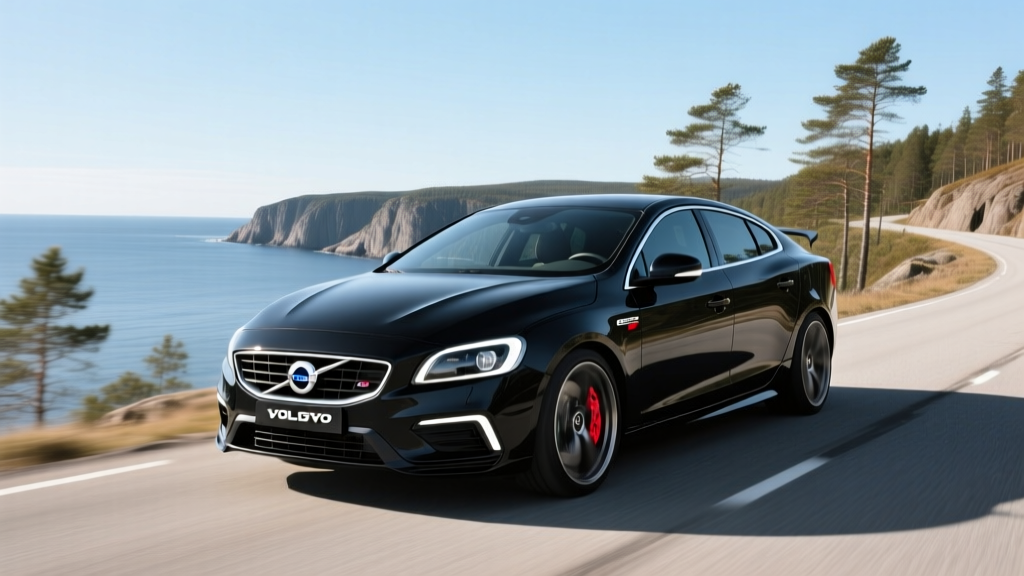
Let's clear this up immediately: the 2016 Volvo V60 T6 Polestar is not an electric vehicle. It's a limited-production, turbocharged-and-supercharged gasoline performance wagon that Volvo and Polestar built before Polestar became a standalone EV brand. If you landed here researching this car, you likely already know it's something special — a 367-horsepower, all-wheel-drive sleeper wagon with track-tuned Öhlins dampers and Brembo brakes, produced in a run of just 1,500 units worldwide (roughly 200 for the U.S. market).
This review covers the 2016 V60 T6 Polestar's actual specs, ownership realities in 2026, and how it stacks up against the electrified performance wagons that have since replaced it — including Polestar's own EV lineup. If you're cross-shopping a used V60 Polestar against a modern EV wagon, this is the comparison you need.
2016 Volvo V60 T6 Polestar: Core Specifications
| Spec | Value |
|---|---|
| Powertrain | 2.0L turbocharged + supercharged inline-4 (Drive-E) |
| Horsepower | 367 hp @ 6,000 rpm |
| Torque | 347 lb-ft @ 3,100–5,100 rpm |
| Transmission | 8-speed automatic (Aisin) |
| Drivetrain | AWD (Haldex-based, rear-biased tuning) |
| 0–60 mph | 4.6 seconds (manufacturer claim) |
| Top Speed | 155 mph (electronically limited) |
| EPA Fuel Economy | 20 city / 29 highway / 23 combined mpg |
| Curb Weight | ~3,968 lbs |
| Cargo Volume (rear seats up) | 28.0 cu ft |
| Cargo Volume (rear seats folded) | 51.2 cu ft |
| Original MSRP (2016) | $62,775 (destination included) |
| Production Volume | 1,500 units globally (~200 U.S.) |
For context on that EPA fuel economy figure, the U.S. EPA's fueleconomy.gov lists the 2016 V60 T6 Polestar at 23 mpg combined. In real-world driving, owners report averaging 19–21 mpg in mixed driving, with highway-only trips occasionally hitting 27–28 mpg. Aggressive driving — which the Polestar begs for — drops that to the mid-teens.
What Made the V60 T6 Polestar Special
The 2016 V60 T6 Polestar wasn't a trim package or an appearance kit. It was a fundamentally re-engineered performance wagon developed by Polestar when it still operated as Volvo's in-house performance division (before spinning off into Polestar the EV brand in 2017). Key hardware upgrades over the standard V60 T6 included:
- Öhlins dual-flow valve dampers — manually adjustable, track-capable, and far more sophisticated than conventional sport suspension
- Brembo front brakes — 6-piston calipers with 371mm rotors, delivering exceptional stopping power
- Polestar-tuned AWD system — rear-biased torque distribution for sharper turn-in and more engaging dynamics
- Unique 20-inch alloy wheels wrapped in Michelin Pilot Super Sport tires
- Rebel Blue paint — the signature Polestar color, with gold brake calipers and gold seatbelts as visual identifiers
- Engine calibration — Polestar-specific ECU mapping extracting 367 hp from the 2.0L Drive-E (versus 302 hp in the standard T6)
The result was a wagon that could genuinely compete with the Mercedes-AMG C63 S Wagon and Audi RS4 on a back road, while offering daily-drivable comfort and Volvo's safety reputation.
Real-World Performance and Driving Impressions
The 4.6-second 0–60 mph time remains quick by 2026 standards, though modern EVs have redefined what "fast" feels like at this price point. The twin-charged 2.0L delivers power with a distinctive character — the supercharger fills in low-rpm torque while the turbo spools for top-end rush. There's a noticeable handoff around 3,000 rpm that some drivers find engaging and others find abrupt.
The Öhlins dampers are the car's party trick. On smooth roads with the dampers set to firm, the V60 Polestar corners with a flatness and precision that belies its wagon body style. Switch the dampers to soft (a manual adjustment requiring a wrench and a few minutes per corner), and it rides compliantly enough for daily commuting. This isn't an adaptive damper system you adjust with a button — it's analog, deliberate, and enthusiast-oriented.
Ownership in 2026: What to Expect
The 2016 V60 T6 Polestar is now a 10-year-old limited-production vehicle. Here's what prospective buyers and current owners need to know:
Used Market Pricing
Examples in good condition (60,000–90,000 miles) typically trade between $28,000 and $38,000 in 2026. Low-mileage examples (under 40,000 miles) in Rebel Blue with service records can command $40,000–$50,000+ among collectors. This is appreciably more than a standard 2016 V60 T6, which sits in the $14,000–$20,000 range.
Maintenance and Parts
The Öhlins dampers are rebuildable but expensive to replace outright (expect $2,500–$4,000 for a full set if sourced new). Brembo replacement rotors and pads are standard consumables and readily available. The Drive-E 2.0L engine has proven generally reliable, though early-production examples had some oil-consumption issues that Volvo addressed under warranty. A pre-purchase inspection by a Volvo specialist is strongly recommended.
Tax Credit and Incentives
The 2016 V60 T6 Polestar does not qualify for the federal §30D EV tax credit — it's a gasoline vehicle with no electrified powertrain. The IRS §30D credit applies only to new plug-in electric vehicles meeting battery-sourcing, MSRP, and buyer-income requirements. Even the used EV credit (§25E), which offers up to $4,000 for qualifying pre-owned EVs, does not apply here.
How It Compares to Modern EV Performance Wagons
If you're considering the V60 T6 Polestar but also eyeing modern electrified alternatives, here's how the numbers stack up against comparable performance wagons available in 2026:
| Spec | 2016 Volvo V60 T6 Polestar | 2026 Polestar 2 Long Range Dual Motor | 2026 BMW i5 M60 xDrive (Touring) |
|---|---|---|---|
| Powertrain | 2.0L turbo+super I4, AWD | Dual-motor EV, AWD | Dual-motor EV, AWD |
| Horsepower | 367 hp | 476 hp | 593 hp |
| 0–60 mph | 4.6 sec | 4.1 sec | 3.7 sec |
| EPA Range / MPG | 23 mpg combined | 320 mi (est.) | 280 mi (est.) |
| Cargo (seats up) | 28.0 cu ft | 14.4 cu ft (hatchback) | 35.0 cu ft (wagon) |
| Fuel/Charge Cost | ~$0.14/mi (gas) | ~$0.04/mi (home L2) | ~$0.04/mi (home L2) |
| Federal Tax Credit | None | Up to $7,500 (§30D)* | Up to $7,500 (§30D)* |
| Price (new/used) | $28k–$50k (used) | ~$54,000 (new) | ~$75,000 (new) |
*Tax credit eligibility depends on MSRP caps ($55,000 for sedans, $80,000 for SUVs/vans), buyer income limits, and battery-critical-mineral sourcing requirements per IRS §30D rules. Verify current-year eligibility before purchase.
The V60 Polestar gives up significant straight-line performance to modern dual-motor EVs, and its fuel costs are roughly 3–4× higher per mile than home-charged electricity. But it offers something the EVs don't: analog engagement, collector scarcity, and a combustion soundtrack that EVs simulate but don't replicate.
Pros and Cons of the 2016 V60 T6 Polestar
✓ Pros
- Rare, collectible — only ~200 U.S. examples
- Genuine Öhlins dampers and Brembo brakes (not cosmetic)
- Wagon practicality with 28 cu ft cargo space
- Distinctive Rebel Blue + gold accent design
- Strong enthusiast community and parts support
- Volvo safety credentials (City Safety, BLIS)
✗ Cons
- 19–21 mpg real-world — expensive to fuel
- No electrification; no EV tax credit eligibility
- Öhlins damper replacement is costly ($2,500–$4,000)
- Sensus infotainment is dated by 2026 standards
- Manual damper adjustment isn't convenient
- Collector pricing inflates entry cost above typical 10-yr-old wagons
Who Should Buy the 2016 V60 T6 Polestar?
Frequently Asked Questions
Is the 2016 Volvo V60 T6 Polestar an electric car?
No. The 2016 V60 T6 Polestar is a gasoline-powered performance wagon with a 2.0L turbocharged-and-supercharged inline-4 engine. Polestar was still Volvo's performance division at the time and had not yet launched as a standalone EV brand (that happened in 2017 with the Polestar 1 plug-in hybrid, followed by the all-electric Polestar 2 in 2020).
How many 2016 V60 T6 Polestars were made?
Volvo and Polestar produced 1,500 units globally for the 2016 model year, with approximately 200 allocated to the United States. This limited production is a key driver of the car's collector value.
Does the 2016 V60 T6 Polestar qualify for any federal tax credits?
No. The IRS §30D clean vehicle credit and the §25E used EV credit apply exclusively to plug-in electric vehicles. The V60 T6 Polestar has no electric motor or battery pack and is ineligible for any federal EV incentive.
What's the real-world fuel economy?
Expect 18–21 mpg in mixed driving. The EPA combined rating is 23 mpg, but the car's performance orientation and 3,968-lb curb weight work against efficiency in real-world use. Highway-only driving at moderate speeds can yield 27–28 mpg.
How does it compare to the Polestar 2?
The Polestar 2 (Long Range Dual Motor) produces 476 hp, hits 60 mph in about 4.1 seconds, and delivers an estimated 320 miles of EPA range — all while costing roughly $0.04/mile to fuel on home electricity versus the V60 Polestar's $0.14/mile on premium gasoline. The EV is faster, cheaper to run, and more modern inside, but it lacks the V60 Polestar's collector rarity, wagon cargo space, and analog driving character.
Are parts still available?
Yes. Volvo continues to support the V60 platform, and the Drive-E 2.0L engine shares many components with current Volvo models. Öhlins offers rebuild services for the dampers, and Brembo brake components are standard catalog items. The enthusiast community (Polestar Owners Club, Volvo forums) is active and helpful for sourcing hard-to-find trim pieces.
Is it a good investment?
Limited-production performance wagons from established manufacturers have shown appreciation potential — the E46 BMW M3 Touring and Audi RS2 Avant are benchmarks. The V60 T6 Polestar's tiny U.S. allocation and unique hardware give it collector legs, but automotive investments are speculative. Buy it because you want to drive it, not purely as a financial play.