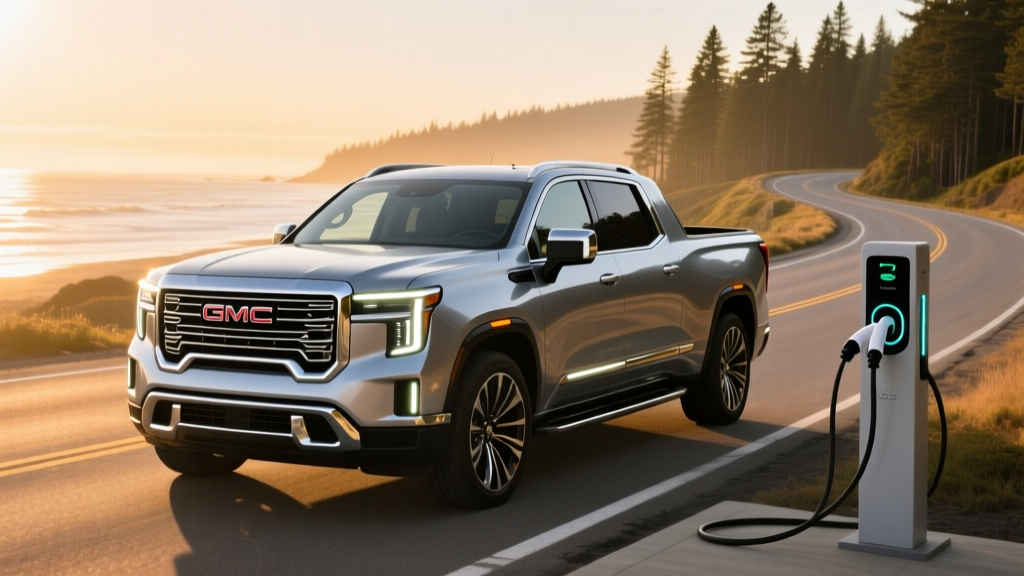
The GMC Sierra EV Denali Ultimate sits at the apex of General Motors' electric truck ambitions — a six-figure, fully loaded pickup that promises luxury, massive range, and serious capability. For 2026, this flagship trim carries forward the Ultium platform's biggest battery pack and most powerful dual-motor setup in the Sierra lineup. But does a premium electric truck justify its price when competitors like the Ford F-150 Lightning Platinum and Rivian R1T Quad-Motor are also fighting for the same buyer? We break down every spec that matters.
Quick Verdict: Who the Sierra EV Denali Ultimate Is For
The 2026 GMC Sierra EV Denali Ultimate is built for buyers who want maximum range, maximum luxury, and don't mind paying a steep premium to get both in a full-size truck. If you tow occasionally, commute daily, road-trip with family, and want an EV that doesn't force range compromises, this trim delivers. If you're budget-conscious or primarily need a work truck, lower Sierra EV trims or the F-150 Lightning offer better value.
Range, Battery, and Real-World Efficiency
Real-World Expectation: ~370–400 miles mixed driving; ~320–350 miles sustained highway at 70+ mph; ~280–310 miles in freezing temperatures with cabin heat. Heavy towing (8,000+ lbs) can cut range to 180–220 miles.
The Sierra EV Denali Ultimate uses GM's largest 24-module Ultium battery pack with approximately 200+ kWh of usable capacity. The chemistry is NMC (nickel manganese cobalt), chosen for its higher energy density — necessary to push a heavy full-size truck past the 400-mile mark. This is not an LFP pack; you won't find the lower-cost, longer-cycle-life chemistry here because the energy-density trade-off would sacrifice too much range in a vehicle this size.
On the efficiency side, the EPA rates the Sierra EV at roughly 61 MPGe combined, which translates to approximately 55–58 kWh per 100 miles in mixed driving. That's thirsty by EV standards — a Hyundai Ioniq 5 uses about 30 kWh/100mi — but expected for an 8,500+ lb truck. Highway efficiency drops noticeably; expect closer to 62–65 kWh/100mi at sustained 75 mph.
| Spec | Value |
|---|---|
| EPA Range | 440 miles |
| Battery (Usable) | ~200+ kWh, NMC (24-module Ultium) |
| Drivetrain | Dual-motor AWD (e4) |
| Horsepower | 760 hp (785 lb-ft torque) |
| 0–60 mph | ~4.2 seconds |
| Max DC Fast Charge | 350 kW (peak) |
| 10–80% DC Charge | ~35 minutes |
| Level 2 Home Charging | 19.2 kW (~52 miles/hr) |
| MPGe (Combined) | ~61 MPGe |
| Max Towing | 10,000 lbs (w/ Max Trailering pkg) |
| Base MSRP | ~$101,295 (incl. destination) |
| Battery Warranty | 8 years / 100,000 miles |
Charging Speed: DC Fast, Level 2, and Real-World Curve
The Sierra EV Denali Ultimate supports a peak DC fast-charge rate of 350 kW via its NACS (Tesla-style) charge port — native access to the Tesla Supercharger network is a significant practical advantage in 2026. However, peak rate and sustained rate are not the same thing.
| Level | Power / Rate | Speed | Notes |
|---|---|---|---|
| Level 1 (120V) | ~1.4 kW | ~3 miles/hr | Emergency/top-up only |
| Level 2 (240V, 80A) | 19.2 kW | ~52 miles/hr | Full charge in ~11–12 hours |
| DC Fast (peak) | 350 kW | ~100 miles in 10 min (peak) | Only at 10–30% SoC |
| DC Fast (10–80%) | Avg ~200 kW | ~35 minutes total | Curve tapers hard above 80% |
At a 350 kW-capable station (like newer Electrify America or EVgo stalls), the Sierra EV can add roughly 100 miles in the first 10 minutes when starting at a low state of charge. But the charge curve tapers significantly: above 60% SoC, speeds drop to ~150 kW, and above 80%, they plummet to under 50 kW. This is normal for a pack this large — GM's thermal management keeps the battery safe but won't fight physics. Plan road-trip stops around 10–80% for the fastest experience.
For home charging, the 19.2 kW onboard charger is among the fastest in any production EV. With a hardwired 100-amp Level 2 wall connector (requiring a 125-amp breaker), you'll recover roughly 52 miles of range per hour. A full 0–100% charge takes about 11–12 hours — feasible for overnight if you arrive home with 20% remaining. Most owners will need a 200-amp electrical panel minimum; a panel upgrade to 400 amps may be necessary if you're running other high-draw appliances.
Performance, Capability, and Driving Dynamics
The Denali Ultimate's dual-motor e4 all-wheel-drive system produces 760 horsepower and 785 lb-ft of torque, launching this heavy truck to 60 mph in approximately 4.2 seconds. That's supercar-rivaling acceleration in a vehicle with a bed. The instant torque delivery is particularly useful for merging and passing on highways.
Towing capacity maxes out at 10,000 pounds with the available Max Trailering package — competitive with the F-150 Lightning's 10,000-lb rating but well below what a diesel RAM 2500 can pull. The Sierra EV includes GM's Super Cruise hands-free driving system (SAE Level 2 — driver must remain attentive) for highway use, plus trailering-specific Super Cruise on compatible mapped roads. ProGrade trailering tech with trailer camera views and blind-spot monitoring that extends to cover trailer length is standard on the Ultimate.
Ride quality benefits from the available Adaptive Air Ride suspension, which can lower the truck for highway efficiency or raise it for ground clearance. The low center of gravity from the floor-mounted battery reduces body roll compared to any gas Sierra, though you'll still feel the mass through sharp corners. Regenerative braking offers one-pedal driving capability with adjustable intensity.
Interior, Cargo, and Technology
The Denali Ultimate cabin is where the premium price is most visible. You get premium leather with unique wood and aluminum trim, 16-way power front seats with massage, a Bose 22-speaker audio system, and a massive 16.8-inch diagonal infotainment touchscreen running GM's Google Built-in platform (Maps, Assistant, Play Store). An 11-inch digital driver display and a multi-color head-up display round out the screen real estate.
Cargo flexibility is a standout. The eTrunk (front trunk) offers roughly 10.7 cubic feet of lockable, weather-sealed storage — enough for a large suitcase or groceries. The 5-foot-3-inch bed is shorter than a standard Sierra, but the available MultiPro MidGate lets you fold down the partition between cab and bed, extending the load floor to over 9 feet with the tailgate down. Rear-seat passengers get approximately 43 inches of legroom, comparable to the crew-cab gas Sierra.
Notable tech drawbacks: the Sierra EV still uses GM's Semi-Active rear camera mirror, which some drivers find disorienting initially. Wireless Apple CarPlay and Android Auto are standard, but the Google Built-in system requires a data connection for full functionality. There's no spare tire — just a tire-inflator kit — which is a real concern for remote-area owners.
Pricing, Trims, and Federal Tax Credit Eligibility
| Detail | Amount |
|---|---|
| Denali Ultimate Base MSRP | ~$101,295 |
| As-Tested (w/ options) | ~$105,000–$108,000 |
| Federal §30D Tax Credit | Up to $7,500 (if eligible) |
| Effective Price (after credit) | ~$93,795–$100,500 |
The 2026 GMC Sierra EV Denali Ultimate starts at approximately $101,295 including destination. Fully loaded with available packages (Max Trailering, premium wheels, accessories), expect to land between $105,000 and $108,000.
Federal tax credit eligibility is nuanced. Under current IRS §30D rules, the Sierra EV Denali Ultimate faces several hurdles:
- MSRP Cap: Trucks/vans/SUVs are capped at $80,000 MSRP for §30D eligibility. The Denali Ultimate at ~$101K exceeds this cap and does NOT qualify for the new-vehicle credit.
- Buyer Income Cap: Even for eligible trims, AGI limits apply ($300K joint / $225K head of household / $150K single).
- Battery Sourcing: Critical mineral and battery component requirements must be met (GM's Ultium sourcing has been improving, but rules tighten annually).
- Point-of-Sale Transfer: If eligible, the credit can be transferred to the dealer at purchase for an immediate price reduction.
The lower Sierra EV trims (like the Elevation starting around $55,000) may qualify for the full $7,500 credit, but the Denali Ultimate's MSRP disqualifies it from §30D. Buyers should consult a tax professional and check the latest rules at irs.gov, as regulations can shift. Some state-level incentives may still apply regardless of MSRP caps — check your local energy agency.
Sierra EV Denali Ultimate vs. Key Competitors
The direct rivals are the Ford F-150 Lightning Platinum (~$96,000, 320-mile range, 580 hp) and the Rivian R1T Quad-Motor (~$99,000, 352-mile range, 1,025 hp). The Sierra EV's 440-mile EPA range is the clear advantage — neither rival comes close. The Rivian wins on raw power and off-road capability; the Ford wins on practicality and a lower price with broader tax-credit eligibility. The Sierra EV's NACS connector and native Supercharger access give it a charging-infrastructure edge over the Rivian (CCS-only, though adapter access is expanding).
Choose the Ford F-150 Lightning Platinum if: You want a lower price, better tax-credit odds, and a proven platform with wider dealer service coverage.
Choose the Rivian R1T if: You want the most power, best off-road capability, and a more adventure-oriented platform.
Pros and Cons
- Class-leading 440-mile EPA range
- Native NACS / Tesla Supercharger access
- 350 kW peak DC charging capability
- 19.2 kW Level 2 onboard charger (fastest in class)
- Super Cruise hands-free driving on 400K+ miles of road
- MultiPro MidGate for extended cargo length
- 760 hp with 4.2-second 0–60
- Luxurious Denali Ultimate interior with premium materials
- $101K+ MSRP disqualifies from federal §30D tax credit
- Heavy: 8,500+ lbs affects efficiency and tire wear
- Towing cuts range by 50%+ (expect ~200 mi loaded)
- 5-foot-3 bed is short for a full-size truck
- No spare tire included
- Real-world highway range ~320–350 mi, not 440
- Expensive to insure (premium EV truck rates)
Ownership Costs and Warranty
GM covers the Sierra EV's battery and powertrain with an 8-year / 100,000-mile warranty, with a capacity-retention threshold of 70% — if the pack degrades below 70% of original capacity within that window, GM will repair or replace it. The bumper-to-bumper warranty is 3 years / 36,000 miles. Based on Ultium platform data from early Cadillac Lyriq and Hummer EV owners, degradation has been modest so far, but long-term data (5+ years) is still limited.
Insurance premiums for the Denali Ultimate run 20–35% higher than a comparably priced gas Sierra, according to industry averages. Factor in higher tire costs (these heavy trucks wear through rubber faster) and you're looking at a total cost of ownership that only makes sense if you're driving high annual miles and charging at home on cheap electricity. At a national average of $0.16/kWh, fueling the Sierra EV costs roughly $0.09 per mile — about half the per-mile cost of a gas Sierra at $3.50/gallon and 18 mpg.
Frequently Asked Questions
What is the real-world range of the GMC Sierra EV Denali Ultimate?
The EPA rates it at 440 miles, but real-world mixed driving yields approximately 370–400 miles. Sustained highway driving at 70+ mph drops that to 320–350 miles, and freezing temperatures can push it down to 280–310 miles. Towing a heavy trailer cuts range dramatically to roughly 180–220 miles.
How fast does the Sierra EV Denali Ultimate charge?
On a 350 kW DC fast charger, it peaks at 350 kW (low SoC only) and averages ~200 kW for a 10–80% charge in about 35 minutes. At home on a 19.2 kW Level 2 charger, it adds roughly 52 miles per hour, with a full charge taking 11–12 hours.
Does the Sierra EV Denali Ultimate qualify for the federal EV tax credit?
No. Under current IRS §30D rules, trucks with an MSRP above $80,000 are not eligible for the new-vehicle federal tax credit. The Denali Ultimate starts at ~$101,295, well over the cap. Lower Sierra EV trims (Elevation) may qualify. State incentives may still apply — check IRS guidelines and your state energy office.
Is the Sierra EV Denali Ultimate worth buying over the F-150 Lightning?
If range is your top priority, yes — the Sierra EV's 440-mile EPA rating crushes the Lightning's 320 miles. If price and tax-credit eligibility matter more, the Lightning Platinum is the better financial decision. The Sierra EV wins on charging infrastructure (native Supercharger access) and hands-free driving tech (Super Cruise).
Can the Sierra EV Denali Ultimate tow a camper?
Yes, up to 10,000 lbs with the Max Trailering package. However, towing at or near capacity will cut your range roughly in half — plan for 180–220 miles between charges when pulling a heavy trailer. Use the built-in trailering apps and energy monitoring to plan routes around charging stops.
What battery chemistry does the Sierra EV use, and how long will it last?
The Sierra EV uses NMC (nickel manganese cobalt) chemistry in its 24-module Ultium pack. GM warranties the battery for 8 years/100,000 miles with a 70% capacity-retention threshold. Based on current Ultium fleet data, expect 10–15% degradation over the first 100,000 miles under normal use. A full pack replacement out of warranty would likely cost $20,000–$30,000 based on current Ultium pricing.