Quick Verdict: A 440-Mile Electric Truck That Means Business
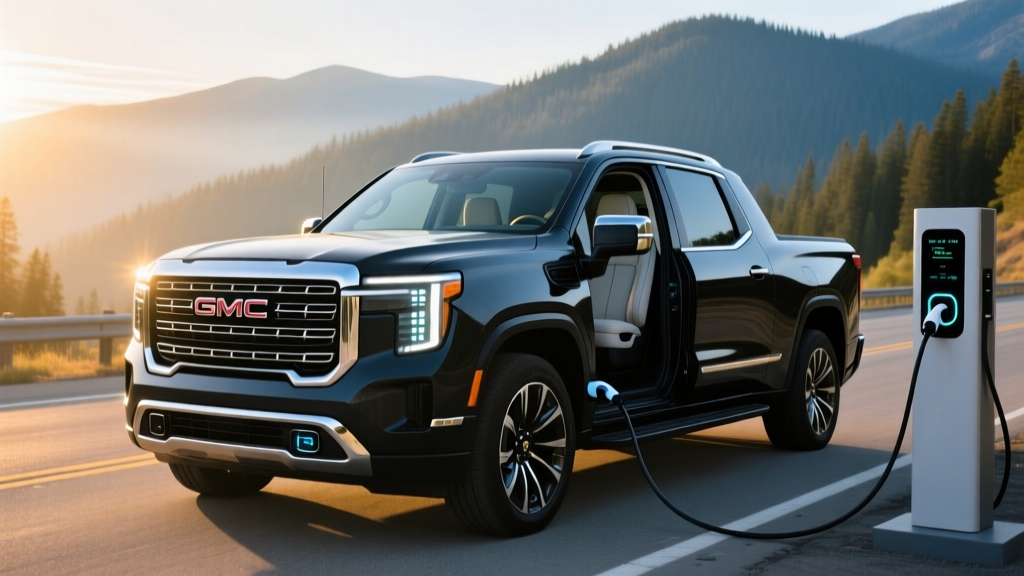
The 2024 GMC Sierra EV Denali Edition 1 is GM's flagship electric pickup — a full-size, dual-motor beast built on the Ultium platform with a massive battery, 754 horsepower, and an EPA-estimated range that eclipses nearly every other electric truck on the market. But at nearly $100,000 before incentives, the question isn't whether this truck is impressive on paper. It's whether the real-world experience justifies the premium over the Rivian R1T, Ford F-150 Lightning, and even GM's own Chevrolet Silverado EV.
We've analyzed the Sierra EV Denali Edition 1 across every metric that matters to EV truck buyers: real-world range under highway and cold-weather conditions, charging curve behavior at DC fast chargers, home Level 2 practicality, towing impact on efficiency, and the full economics of ownership including federal tax credit eligibility under current IRS §30D rules. Here's the data.
Full Specifications: 2024 GMC Sierra EV Denali Edition 1
| Spec | Value |
|---|---|
| EPA Range | 440 miles |
| Battery (Usable) | ~200 kWh (estimated), Ultium NMC lithium-ion |
| Drivetrain | Dual-motor AWD (e4WD) |
| Horsepower | 754 HP (654 lb-ft torque) |
| 0–60 mph | ~4.5 seconds |
| Max DC Fast Charge | 200 kW (350 kW capable architecture) |
| 10–80% DC Charge Time | ~45 minutes (estimated) |
| Level 2 Home Charging | 19.2 kW onboard charger (~52 mi/hr) |
| Efficiency (MPGe) | ~62 MPGe combined (est.) |
| Max Towing Capacity | 9,500 lbs (with available tow package) |
| Max Payload | ~1,800 lbs |
| Base MSRP | $99,495 (incl. destination) |
| Battery/Powertrain Warranty | 8 years / 100,000 miles |
| Basic Warranty | 3 years / 36,000 miles |
Range & Efficiency: The 440-Mile Promise vs. Reality
Real-World Highway (70–80 mph): Expect ~330–370 miles
Cold Weather (below 32°F): Expect ~290–340 miles
While Towing (5,000+ lb trailer): Expect ~180–220 miles
The Sierra EV Denali Edition 1's 440-mile EPA figure is among the highest of any electric vehicle sold in the United States, let alone a full-size pickup. That number is achievable under ideal conditions: moderate temperatures, mixed city/highway driving at lower speeds, and judicious use of regenerative braking. GMC's Ultium platform pairs a massive battery pack — estimated at approximately 200 kWh of usable capacity using NMC (nickel manganese cobalt) chemistry — with an advanced thermal management system that includes a heat pump for cabin conditioning efficiency.
However, physics is unforgiving to large, heavy vehicles at highway speed. The Sierra EV Denali weighs in excess of 9,000 pounds, and aerodynamic drag scales with the square of velocity. On a flat interstate at 75 mph in 70°F weather, expect to see energy consumption rise to roughly 55–60 kWh/100mi, translating to a real-world highway range closer to 330–370 miles. That's still exceptional for an electric truck, but it's a meaningful gap from the sticker.
Cold weather compounds the issue. Lithium-ion batteries lose efficiency in low temperatures, and cabin heating demands significant energy even with a heat pump. In sustained sub-freezing conditions, range can drop 20–30% from the EPA figure. GMC's battery preconditioning feature — which warms the pack when a DC fast charger is navigated to — helps mitigate charging-speed losses in cold weather, but it doesn't recover range lost to heating loads.
Towing is where electric trucks face their harshest reality check. Pulling a 5,000–7,000 lb trailer at highway speed can cut range nearly in half. The Sierra EV's 9,500-lb max tow rating is useful for short hauls, but a 200-mile round trip with a heavy trailer will require mid-trip DC fast charging. Plan accordingly.
For efficiency reference, the Sierra EV Denali Edition 1 achieves approximately 62 MPGe combined (miles per gallon equivalent), translating to roughly 54 kWh per 100 miles in mixed driving. This is competitive with the Ford F-150 Lightning and somewhat less efficient than the Rivian R1T due to the Sierra's greater mass.
Charging Speed: DC Fast, Level 2, and the Charge Curve Reality
| Charging Level | Max Power | Miles Added per Hour | Notes |
|---|---|---|---|
| Level 1 (120V) | 1.4 kW | ~3–4 mi/hr | Emergency/trickle only; full charge takes days |
| Level 2 (240V, 48A) | 11.5 kW | ~30 mi/hr | Standard home charger; overnight full charge |
| Level 2 (240V, 80A) | 19.2 kW | ~52 mi/hr | Requires hardwired 100A circuit; fastest home option |
| DC Fast Charge | 200 kW peak | Up to ~400 mi in 30 min (peak) | 10–80% in ~45 min; tapers significantly above 80% |
The Sierra EV Denali Edition 1 supports DC fast charging at up to 200 kW on currently available infrastructure. GM has stated the Ultium architecture is capable of accepting up to 350 kW, but as of this model year, public chargers delivering sustained rates above 200 kW remain rare, and the truck's charge curve is tuned for the 200 kW sweet spot found at Electrify America and EVgo stations.
Here's what the charge curve actually looks like in practice: from a 10% state of charge, the Sierra EV will ramp quickly to its ~200 kW peak and hold strong through approximately 40–50% SoC. Beyond that, the rate begins to taper — first gradually, then aggressively past 70%. By the time you reach 80%, charging speed has dropped substantially. A 10–80% session takes roughly 45 minutes. Pushing from 80–100% can add another 30+ minutes. For road trips, plan your stops around the 10–80% window and skip the temptation to top off completely unless you're at your final destination.
At home, the Sierra EV's standout feature is its 19.2 kW onboard charger — one of the most powerful in any production EV. Most electric trucks and SUVs max out at 11.5 kW on Level 2, but the Sierra can accept nearly double that if your electrical panel supports it. At 19.2 kW, you'll add roughly 52 miles of range per hour, meaning a depleted battery can go from 20% to 100% overnight in about 8–9 hours. The catch: you'll need a hardwired wall connector on a dedicated 100-amp circuit. Many homes will require a panel upgrade (typically $1,500–$3,000) to support this. A more common 48-amp Level 2 circuit (11.5 kW) still delivers a practical overnight charge, adding about 30 miles per hour.
The Sierra EV also supports GM's EnergyAssist and V2H (vehicle-to-home) capability through the available PowerStation Pro accessory, allowing the truck to back up essential home circuits during an outage — a meaningful feature for truck buyers in areas with unreliable grid power.
Performance & Driving Dynamics
With 754 horsepower and 654 lb-ft of instant electric torque, the Sierra EV Denali Edition 1 hits 0–60 mph in approximately 4.5 seconds. That's supercar territory from a decade ago, delivered from a 9,000-lb crew-cab pickup. The dual-motor e4WD system provides precise torque vectoring between the front and rear axles, and the truck's low center of gravity (battery pack mounted in the floor) keeps body roll surprisingly controlled for its size.
The driving experience is dominated by two sensations: effortless acceleration at any speed, and a remarkable quietness at highway cruising. Without a combustion engine, wind and tire noise are the primary sounds, and GMC has invested heavily in acoustic insulation befitting the Denali brand. The adaptive air suspension smooths out rough pavement and can lower the truck at highway speed for improved aerodynamics or raise it for ground clearance on rough terrain.
Regenerative braking offers multiple modes, including a one-pedal driving setting that can bring the truck to a complete stop without touching the brake pedal. The transition between regen and friction braking is well-calibrated — a common weak point in some competitors. The Sierra EV also features GMC's Super Cruise hands-free driving system on compatible mapped highways, which is among the best Level 2 driver-assistance systems available. Note: Super Cruise is a Level 2 SAE system — the driver must remain attentive and ready to take over at all times. It is not autonomous driving.
Interior, Cargo & Technology
The Denali Edition 1 cabin is the most luxurious interior GMC has ever put in a Sierra. Premium leather with contrast stitching, open-pore wood trim, a 16.8-inch diagonal infotainment touchscreen, and an 11-inch digital instrument cluster define the driver's environment. The portrait-oriented screen runs GM's latest Google Built-In infotainment with native Google Maps navigation (useful for EV route planning with charging stops), Google Assistant voice control, and access to the Play Store for apps.
Passenger space is generous. As a crew cab, the Sierra EV offers approximately 43 inches of rear legroom and a flat floor (no transmission tunnel), making the middle rear seat genuinely usable for adults. The bed is a 5-foot-11-inch short box, slightly shorter than some competitors, but the MultiPro MidGate — a pass-through between the bed and cabin — allows longer items like kayaks or lumber to extend into the cab with the rear window lowered.
Cargo volume behind the rear seats is limited compared to an SUV, as expected in a pickup. The front trunk (frunk) is notably absent on the Sierra EV — GM opted to use that space for HVAC and power electronics, prioritizing cabin and bed utility. This is a trade-off versus the Ford F-150 Lightning, which offers a substantial frunk.
Notable tech features include:
- Super Cruise hands-free driving on 400,000+ miles of mapped roads
- ProGrade Trailering system with up to 9,500-lb capacity and trailer-integrated camera views
- 19.2 kW onboard Level 2 charger
- Vehicle-to-home (V2H) backup power capability (with PowerStation Pro)
- Over-the-air software updates
- Head-up display and digital rearview mirror
Pricing, Tax Credits & Ownership Economics
| Item | Amount |
|---|---|
| Base MSRP (incl. destination) | $99,495 |
| Federal §30D Tax Credit (max) | Up to $7,500 (if eligible) |
| Truck MSRP Cap (§30D) | $80,000 for trucks/vans/SUVs |
| Effective Price After Max Credit | ~$91,995 (if eligible) |
The 2024 GMC Sierra EV Denali Edition 1 carries a base MSRP of $99,495 including destination charges. As the launch edition, it is the only trim available for the 2024 model year, loaded with every available feature. Lower-priced trims (Elevation, AT4) were announced for subsequent model years at significantly lower price points.
Federal tax credit eligibility requires careful attention. Under IRS §30D rules, trucks and vans have an MSRP cap of $80,000. The Denali Edition 1 at $99,495 exceeds this cap, which means it does not qualify for the $7,500 federal clean vehicle credit. This is a significant consideration — buyers should not factor the federal credit into their purchase budget for this specific trim.
Additional §30D requirements (relevant if considering future lower-priced Sierra EV trims) include:
- Buyer adjusted gross income limits: $300,000 (married filing jointly), $225,000 (head of household), $150,000 (single)
- Battery critical mineral and component sourcing requirements (phased in annually)
- Vehicle must be new, purchased for personal use, and primarily used in the U.S.
- Point-of-sale transfer option available (credit applied at purchase rather than at tax filing)
On the ownership cost side, the Sierra EV eliminates fuel costs (electricity for home charging averages $0.13–$0.17/kWh nationally, meaning a full charge costs roughly $26–$34 versus $80–$120 for a gas equivalent). However, insurance premiums for a $100,000 electric truck run 15–30% higher than comparable gas trucks, and tire wear is accelerated by the vehicle's weight and instant torque. Budget for premium tire replacements every 25,000–35,000 miles.
Competitor Comparison: Sierra EV vs. R1T vs. F-150 Lightning
| Spec | GMC Sierra EV Denali Ed. 1 | Rivian R1T Dual-Motor Max | Ford F-150 Lightning Platinum |
|---|---|---|---|
| EPA Range | 440 mi | 410 mi | 300 mi |
| Battery (usable) | ~200 kWh | 149 kWh | 131 kWh |
| Horsepower | 754 HP | 665 HP | 580 HP |
| 0–60 mph | ~4.5 sec | ~3.5 sec | ~4.0 sec |
| Max DC Charge | 200 kW | 200 kW | 150 kW |
| Max Tow | 9,500 lbs | 11,000 lbs | 10,000 lbs |
| Base MSRP | $99,495 | $99,900 | $96,874 |
| Federal Credit Eligible | No (MSRP cap) | No (MSRP cap) | No (MSRP cap) |
| Frunk | No | Yes (large) | Yes (large) |
| Hands-Free Driving | Super Cruise | None (Highway Assist) | BlueCruise |
The Sierra EV Denali Edition 1 wins on range — 440 miles is a class-leading figure — and on onboard charging speed with its 19.2 kW Level 2 capability. The Rivian R1T is quicker to 60 mph, tows more, and has a more versatile bed system with the Gear Tunnel. The F-150 Lightning is the most proven platform with the widest service network, though its range trails both competitors. None of these top trims qualify for the federal credit due to the $80,000 truck MSRP cap.
Who Should Buy the Sierra EV Denali Edition 1?
- Truck buyers who need maximum electric range for long commutes or rural driving where chargers are sparse
- Existing GMC/Chevy loyalists who want the Denali luxury experience in electric form
- Homeowners with 200A+ electrical panels who can exploit the 19.2 kW Level 2 charger
- Buyers interested in V2H backup power for outage-prone areas
- Those who value Super Cruise for frequent highway travel
- You need maximum towing capacity (Rivian R1T tows 11,000 lbs)
- Frunk storage is important to you
- You want a lower entry price (wait for Elevation/AT4 trims)
- You prioritize off-road capability (Rivian R1T or the upcoming Sierra EV AT4)
Pros & Cons
- Class-leading 440-mile EPA range
- 19.2 kW onboard charger — fastest Level 2 in any EV truck
- 754 HP with smooth, effortless acceleration
- Super Cruise hands-free driving on mapped highways
- Denali-grade luxury interior and materials
- V2H backup power capability
- MidGate pass-through for long cargo
- Quiet, refined highway ride
- $99,495 MSRP — does not qualify for federal tax credit
- No front trunk (frunk)
- Heavy — over 9,000 lbs impacts efficiency and tire wear
- Towing drastically reduces range (~50% loss)
- 200 kW DC charge peak is good but not class-leading
- Only one trim available for 2024 (no lower-price option)
- Bed is slightly shorter than some gas Sierra configs
- High insurance premiums expected
Frequently Asked Questions
What is the real-world range of the 2024 GMC Sierra EV Denali Edition 1?
The EPA estimates 440 miles. In real-world highway driving at 75 mph, expect approximately 330–370 miles. In cold weather below freezing, that drops to roughly 290–340 miles. Towing a heavy trailer can halve the range to 180–220 miles.
How fast does the Sierra EV charge at home and on the road?
On DC fast chargers, it peaks at 200 kW, achieving a 10–80% charge in roughly 45 minutes. At home on a 19.2 kW Level 2 circuit (requires 100A dedicated circuit), it adds about 52 miles of range per hour. On a standard 48A Level 2 (11.5 kW), it adds about 30 miles per hour.
Does the Sierra EV Denali Edition 1 qualify for the federal EV tax credit?
No. Under IRS §30D rules, trucks must have an MSRP of $80,000 or less to qualify. The Denali Edition 1's $99,495 MSRP exceeds this cap. Future lower-priced trims (Elevation, AT4) may qualify, subject to income limits and battery sourcing requirements. Consult IRS.gov or a tax professional for your specific situation.
Is the Sierra EV worth buying over the Rivian R1T or F-150 Lightning?
It depends on your priorities. Choose the Sierra EV for maximum range and luxury. Choose the Rivian R1T for towing capacity, off-road ability, and the Gear Tunnel. Choose the F-150 Lightning for the widest dealer/service network and proven fleet pedigree. All three top trims are similarly priced near $100,000 and none qualify for the federal credit.
Does the Sierra EV have a frunk?
No. GMC used the space typically allocated for a front trunk for HVAC components and power electronics. If enclosed front storage is important, the Rivian R1T and F-150 Lightning both offer large front trunks.
What is the battery warranty?
GM covers the Sierra EV's Ultium battery pack and electric powertrain for 8 years or 100,000 miles, whichever comes first. The warranty covers defects and capacity degradation below a specified threshold (typically 60–70% of original capacity, per GM's Ultium warranty terms).