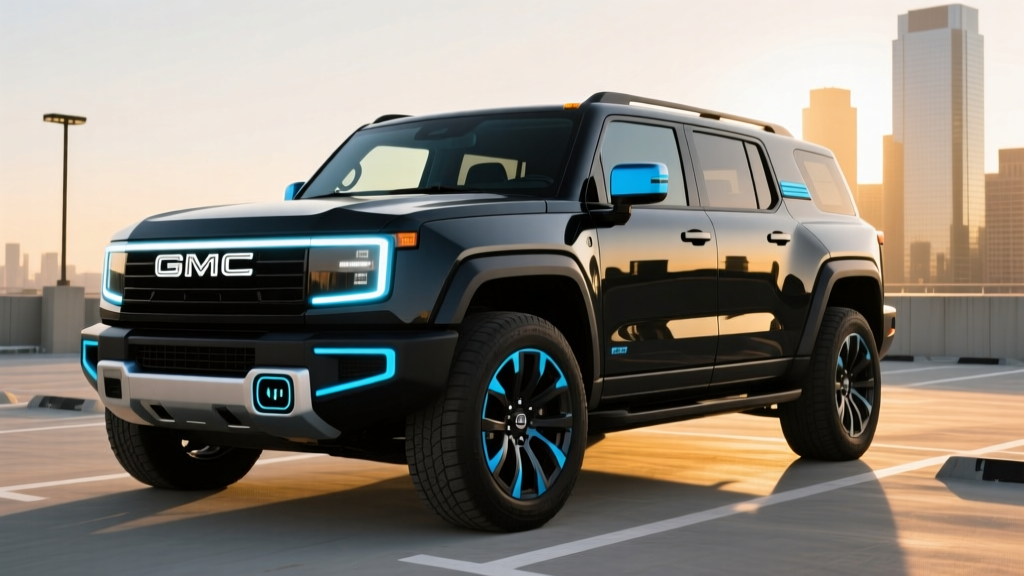
Quick Verdict: Who Should Buy the GMC Hummer EV SUV?
The 2026 GMC Hummer EV SUV is a $99,995–$149,995 electric super-truck aimed at buyers who want extreme off-road capability, 830 hp, and a statement vehicle — not efficiency. With up to 381 miles of EPA range, an Ultium NMC battery, and 350 kW DC fast charging (10–80% in ~30 minutes), it's genuinely usable as a daily driver if you have Level 2 home charging. However, expect real-world highway range closer to 280–310 miles, insurance premiums 25–40% higher than a comparable gas SUV, and no federal §30D tax credit eligibility due to its MSRP exceeding the $80,000 SUV cap. If you need a three-row family hauler or prioritize low cost-per-mile, look elsewhere. If you want the most capable off-road EV on the market and can absorb the running costs, nothing else competes directly.
Range and Efficiency: EPA Sticker vs. Real-World Driving
The Hummer EV SUV uses GM's Ultium platform with a double-stacked lithium-ion NMC (nickel manganese cobalt) battery pack. The usable capacity is approximately 246 kWh on the Edition 1 and 3X trims — one of the largest battery packs in any production passenger vehicle. The 2X trim uses a smaller pack (estimated ~200 kWh usable).
EPA Range (3X trim, 35-inch tires): 381 miles
Real-World Highway (70 mph, moderate weather): ~280–310 miles
Cold Weather (20°F, highway): ~230–260 miles
Efficiency: 47 MPGe combined (EPA) / ~2.1 kWh/mile
That efficiency figure — roughly 2.1 kWh per mile — is critical context. This is a 9,000+ pound vehicle with the aerodynamics of a concrete block. For comparison, a Tesla Model X achieves around 100 MPGe combined with a much smaller battery. Every mile in the Hummer EV SUV costs roughly twice what it costs in a mainstream EV. According to EPA data on fueleconomy.gov, the 3X trim's combined MPGe sits well below more aerodynamic electric SUVs.
On a road trip from Denver to Moab (roughly 350 miles), you will need at least one DC fast-charge stop, possibly two in winter or at sustained highway speeds above 75 mph. The massive battery means even a 10–80% session takes longer in absolute minutes than smaller-pack EVs, despite the 350 kW peak rate.
Charging Speed and Infrastructure Reality
The Hummer EV SUV supports up to 350 kW on a DC fast charger via its CCS1 connector (NACS adapter availability varies by model year and GM's transition timeline). GM has stated that Ultium vehicles can add approximately 100 miles of range in 10 minutes under ideal conditions at a 350 kW station.
| Charging Level | Power (kW) | Connector | Approximate Rate | 10–80% Time |
|---|---|---|---|---|
| Level 1 (120V) | 1.4 kW | J1772 / NACS | ~3 miles per 8-hour overnight | Not practical (100+ hours) |
| Level 2 (240V, 48A) | 11.5 kW | J1772 / NACS | ~20–25 miles per hour | ~14–16 hours (full charge) |
| Level 2 (240V, 80A) | 19.2 kW | J1772 / NACS | ~35–40 miles per hour | ~9–11 hours (full charge) |
| DC Fast (350 kW peak) | Up to 350 kW | CCS1 / NACS* | ~100 miles in 10 min (peak) | ~30 minutes (10–80%) |
Charging curve reality: The Hummer EV SUV does not sustain 350 kW for the entire session. Expect peak rates between 10–30% state of charge, with a significant taper beginning around 50% and a steep drop above 80%. This is normal lithium-ion behavior driven by cell temperature and voltage limits, but with a 246 kWh pack, even the taper phase moves a lot of energy.
Home charging is non-negotiable. Level 1 (standard 120V outlet) is functionally useless for a battery this large — you'd gain roughly 3 miles overnight. A Level 2 home charger at 48 amps (11.5 kW) adds about 20–25 miles per hour of charging, which is sufficient for daily driving of 50–80 miles with overnight top-ups. For the full battery replenishment, plan on 14–16 hours. An 80-amp Level 2 circuit (requiring a 100-amp breaker) cuts this to under 11 hours, but requires a 200-amp or higher electrical panel — common in newer homes with the Hummer's target demographic, but a $1,500–$3,500 panel upgrade if you're on a 100-amp service.
Performance, Capability, and What You're Paying For
The numbers are staggering and define the ownership experience:
| Specification | 2X Trim | 3X / Edition 1 Trim |
|---|---|---|
| Drivetrain | Dual Motor AWD | Tri-Motor AWD (Watts to Freedom) |
| Horsepower | ~625 hp | 830 hp |
| 0–60 mph | ~4.5 seconds | ~3.5 seconds |
| Battery (usable) | ~200 kWh (NMC) | ~246 kWh (NMC) |
| EPA Range | ~314 miles | ~381 miles |
| Towing Capacity | 7,500 lbs | 7,500 lbs |
| Ground Clearance | 10.1 in (standard) / 15.9 in (Extract Mode) | 10.1 in / 15.9 in |
| Water Fording | Up to 32 inches (Extract Mode) | Up to 32 inches |
| Starting MSRP | $99,995 | $129,995–$149,995 |
| Battery/Powertrain Warranty | 8 years / 100,000 miles | 8 years / 100,000 miles |
The Extract Mode — which raises the suspension nearly 6 inches for extreme terrain — and the available four-wheel steering (CrabWalk) are genuine differentiators no other electric SUV offers. If you run trails in Moab, the Rubicon, or the Rockies, this capability is real. If you're commuting in the suburbs, you're carrying 9,000 pounds of engineering you'll never use, and paying for it at every charging session.
Cost of Ownership: Hummer EV SUV vs. Gas Equivalent
Let's compare the Hummer EV SUV 3X against a rough gas equivalent — a fully loaded GMC Yukon Denali or a Mercedes G-Class — over five years and 75,000 miles of mixed driving.
| Cost Category | Hummer EV SUV 3X | GMC Yukon Denali (Gas) |
|---|---|---|
| Purchase Price (MSRP) | $129,995 | $85,000 |
| Federal §30D Tax Credit | $0 (exceeds $80K SUV cap) | $0 |
| Fuel / Energy (75K mi) | $5,200–$7,800* | $14,500–$17,000** |
| Maintenance (5 yr) | $1,200–$2,000 | $4,500–$6,500 |
| Insurance (5 yr est.) | $18,000–$24,000 | $10,000–$14,000 |
| Depreciation (est. 5 yr) | $52,000–$65,000 | $30,000–$40,000 |
| Estimated 5-Year Total | $206,000–$228,000 | $144,000–$162,000 |
*Assumes 70% home Level 2 charging at $0.14/kWh, 30% DC fast charging at $0.40/kWh, and 2.1 kWh/mile efficiency.
**Assumes 16 MPG combined and $3.60/gallon regular unleaded.
The Hummer EV SUV saves roughly $7,000–$11,000 on energy and $3,000–$4,500 on maintenance over five years. But those savings are obliterated by higher insurance (the repair costs on a 9,000-pound EV with specialized Ultium components are steep), significantly steeper depreciation on a six-figure niche vehicle, and a much higher purchase price. IRS §30D rules cap the federal EV tax credit at vehicles with an MSRP under $80,000 for SUVs — the Hummer EV SUV does not qualify at any trim level.
This is not an EV that saves you money. It's an EV that delivers extreme capability with lower per-mile energy cost than a gas equivalent — but total cost of ownership is substantially higher.
Federal Tax Credit and Incentive Reality
Does the Hummer EV SUV qualify for the $7,500 federal EV tax credit?
- ❌ MSRP Cap: SUVs must be under $80,000 MSRP. The Hummer EV SUV starts at $99,995. Not eligible.
- ❌ Point-of-Sale Transfer: Since the vehicle doesn't qualify, no dealer POS transfer is available.
- ⚠️ State Incentives: Some states (CA, CO, NY, MA) offer additional rebates that may apply, but many have MSRP caps as well. Check your state's energy office.
- ✅ Home Charging Credit (§30C): You may qualify for up to $1,000 in federal tax credits for home charger installation if you live in an eligible census tract.
- ✅ Utility Rebates: Many utilities offer $300–$800 rebates for Level 2 charger purchase and installation, plus off-peak charging rates that can cut your energy cost by 30–50%.
Common Misconceptions About the Hummer EV SUV
| Myth | Fact |
|---|---|
| "It gets the $7,500 federal tax credit." | No. MSRP exceeds the $80,000 SUV cap under §30D. Zero federal purchase incentive applies. |
| "381 miles of range means I'll never need to charge on road trips." | Real-world highway range is ~280–310 miles. At 2.1 kWh/mile, aggressive driving or cold weather drops this further. Plan charging stops on trips over 250 miles. |
| "It charges as fast as a Tesla." | Peak 350 kW is impressive, but the massive 246 kWh battery means a 10–80% session takes ~30 minutes. A Tesla Model X (smaller battery) charges 10–80% in ~20 minutes at a V3 Supercharger. |
| "I can charge it on a regular wall outlet." | Level 1 (120V) adds ~3 miles per overnight session. With a 381-mile battery, a full Level 1 charge would take over 100 hours. Level 2 home charging is essential. |
| "The battery will need expensive replacement." | GM warranties the Ultium battery for 8 years/100,000 miles with a capacity retention threshold (typically 70%). NMC degradation data from GM's Bolt and Cadillac Lyriq fleets suggests 10–15% loss over 150,000 miles under normal use. Out-of-warranty replacement on a 246 kWh pack would be extremely expensive ($25,000–$40,000+), but most owners won't face this. |
Decision Framework: Should You Buy the Hummer EV SUV?
Buy the Hummer EV SUV if:
- You need serious off-road EV capability (Extract Mode, CrabWalk, 32-inch water fording) and no gas or electric alternative matches it.
- You have a garage or driveway with access to a 240V circuit (or can install one) for Level 2 home charging.
- Your daily driving is under 80 miles, making overnight Level 2 charging sufficient for routine use.
- You can absorb $200,000+ in five-year total ownership cost without financial strain.
- You value instant 830 hp torque and 3.5-second 0–60 performance in a full-size SUV.
Look elsewhere if:
- You need three usable rows of seating — the Hummer EV SUV is a two-row, five-passenger vehicle. Consider the Rivian R1S or Kia EV9.
- You're buying primarily to save money on fuel. The high purchase price, insurance, and depreciation mean you'll spend more than a gas equivalent.
- You lack home charging access and rely on public infrastructure. Charging a 246 kWh battery at public DC stations is expensive ($0.35–$0.50/kWh = $85–$120 per session) and time-consuming.
- You live in a region with extreme cold and regularly drive over 250 miles in winter. Expect 230–260 miles of real range at 20°F.
- You want to maximize federal incentives. No §30D credit applies here.
Frequently Asked Questions
How long does it take to charge the Hummer EV SUV at home?
On a 48-amp Level 2 charger (11.5 kW), a full charge from empty takes approximately 14–16 hours for the 3X trim's 246 kWh battery. On an 80-amp circuit (19.2 kW), this drops to roughly 9–11 hours. For daily driving of 50–80 miles, an overnight session on a 48-amp charger is more than sufficient — you'll only need 3–5 hours to replenish a typical day's driving.
Can the Hummer EV SUV tow, and how does that affect range?
Yes — it's rated for 7,500 pounds of towing capacity across trims. However, towing a 5,000–7,000 lb trailer will cut range roughly in half. Expect 150–190 miles of real-world range while towing at highway speeds, which means planning DC fast-charge stops every 120–140 miles. This is a significant limitation for long-distance towing.
Is the Hummer EV SUV good in snow and winter conditions?
The dual- and tri-motor AWD system provides excellent traction, and the vehicle's sheer weight (9,000+ lbs) helps with grip. However, cold weather reduces battery efficiency by 20–35% at 20°F. The Hummer EV SUV uses a heat pump for cabin heating, which helps, but the massive cabin volume still demands significant energy to warm. Preconditioning the battery and cabin while plugged in is essential for winter range preservation.
What's the difference between kW and kWh, and why does it matter for the Hummer?
kW (kilowatts) measures power — how fast energy flows, like water pressure in a hose. kWh (kilowatt-hours) measures energy — the total amount stored, like the size of a water tank. The Hummer EV SUV has a ~246 kWh battery (energy capacity) and can charge at up to 350 kW (power rate). A bigger kWh number means more range; a bigger kW number means faster charging. This distinction matters because the Hummer's enormous kWh capacity means even a fast kW charge rate takes longer to fill the "tank."
Does the Hummer EV SUV qualify for HOV lane access?
In most states, yes — as a zero-emission vehicle, it qualifies for HOV/carpool lane stickers regardless of occupancy. California's Clean Air Vehicle decal program, for example, grants solo HOV access. Check your state's DMV for current program availability, as some states have capped or sunset these programs.
How does the Hummer EV SUV compare to the Rivian R1S or Tesla Model X?
The Rivian R1S ($79,900–$105,000) offers three rows, up to 410 miles EPA range (Max Pack), and genuine off-road capability at a lower price point — though with less extreme ground clearance and no CrabWalk. The Tesla Model X ($79,990–$94,990) offers falcon-wing doors, up to 348 miles range, Supercharger network access, and significantly lower running costs, but zero serious off-road capability. The Hummer EV SUV is the most extreme and most expensive option — a niche within a niche.
Sources: EPA fuel economy data via fueleconomy.gov; GMC official specifications via gmc.com/hummer-ev; IRS §30D clean vehicle credit rules via irs.gov.