Tesla's Origin Country and Global Manufacturing Footprint
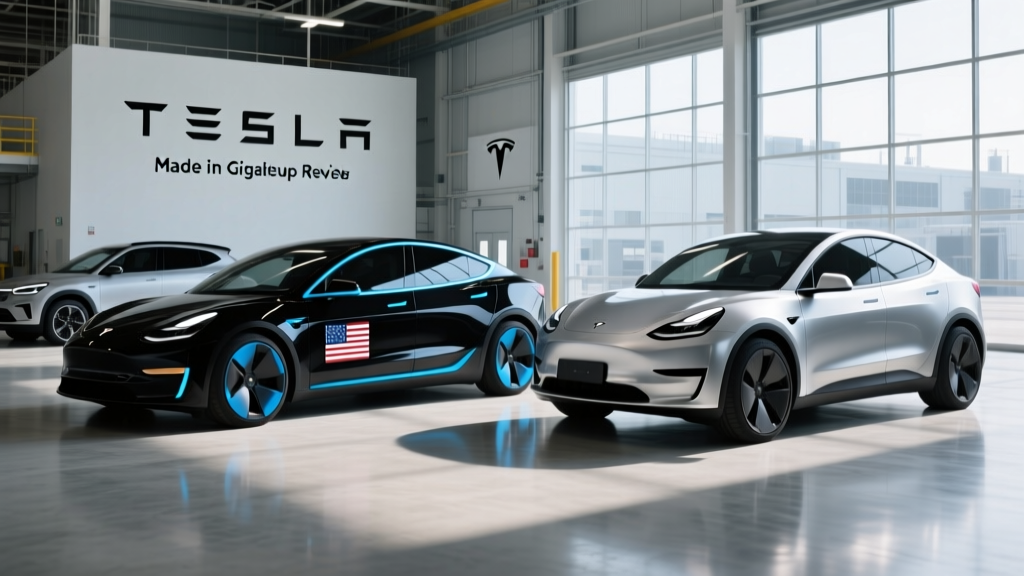
Tesla, Inc. was founded in San Carlos, California, in 2003 and is headquartered in Austin, Texas. The company's origin country is the United States, and it remains one of the few major automakers to design, engineer, and manufacture the majority of its vehicles on American soil. But with a growing global factory network, the answer to "where is my Tesla actually built?" depends on the model, your region, and the battery chemistry inside the pack.
As of 2026, Tesla operates four primary vehicle assembly plants:
- Fremont, California — Model S, Model X, and select Model 3/Y variants
- Gigafactory Texas (Austin) — Model Y (primary US supply) and Cybertruck
- Gigafactory Shanghai, China — Model 3 and Model Y for Asia-Pacific and European markets
- Gigafactory Berlin-Brandenburg, Germany — Model Y for European delivery
For US buyers, your Model Y or Model 3 most likely rolled off the line in Texas or Fremont. However, battery cell sourcing varies: some packs use cells from Panasonic in Nevada (NMC/NCA chemistry), while Standard Range variants increasingly use LFP (lithium iron phosphate) cells from CATL in China. This matters for both longevity characteristics and federal tax credit eligibility under IRS §30D battery-sourcing rules.
2026 Tesla Lineup: Specs, Range, and Pricing at a Glance
| Spec | Model 3 Long Range AWD | Model Y Long Range AWD | Model S Long Range | Model X Long Range |
|---|---|---|---|---|
| EPA Range | 363 mi | 330 mi | 402 mi | 348 mi |
| Battery (usable) | ~75 kWh (NMC) | ~75 kWh (NMC) | ~95 kWh (NMC) | ~95 kWh (NMC) |
| Max DC Fast Charge | 250 kW | 250 kW | 250 kW | 250 kW |
| 10–80% DC Time | ~28 min | ~30 min | ~36 min | ~38 min |
| Level 2 Home Rate | 11.5 kW (~44 mi/hr) | 11.5 kW (~44 mi/hr) | 11.5 kW (~44 mi/hr) | 11.5 kW (~44 mi/hr) |
| 0–60 mph | 4.2 sec | 4.8 sec | 3.1 sec | 3.8 sec |
| Horsepower | 346 hp | 384 hp | 670 hp | 670 hp |
| Drivetrain | Dual Motor AWD | Dual Motor AWD | Dual Motor AWD | Dual Motor AWD |
| MPGe (combined) | 132 MPGe | 122 MPGe | 120 MPGe | 109 MPGe |
| Base MSRP | $47,740 | $48,240 | $79,990 | $84,990 |
Sources: fueleconomy.gov, Tesla US spec sheets. Prices exclude destination fee. Specs reflect 2026 model year.
Real-World Range: What the EPA Sticker Doesn't Tell You
Model 3 Long Range: EPA 363 mi. Expect ~290–310 mi on sustained highway driving at 70+ mph. In freezing temperatures (below 32°F), plan for 220–260 mi due to cabin heating demand and battery resistance.
Model Y Long Range: EPA 330 mi. Highway reality: ~265–285 mi. Cold weather: ~200–240 mi. The Y's taller, less aerodynamic profile hits efficiency harder at speed.
Model S Long Range: EPA 402 mi. Highway reality: ~330–350 mi. Cold weather: ~270–310 mi. The larger 95 kWh pack provides a meaningful buffer.
Tesla's EPA range figures are among the most optimistic in the industry relative to real-world highway consumption. The onboard heat pump (standard across the 2026 lineup) mitigates cold-weather loss compared to older resistive-heating EVs, but physics still applies: expect a 20–30% range reduction in sub-freezing conditions, particularly on short trips where the cabin and battery must heat from cold repeatedly.
For the Model 3 and Model Y RWD (Standard Range) variants using LFP chemistry, cold-weather range loss can be slightly more pronounced — LFP cells have higher internal resistance at low temperatures. However, LFP offers superior cycle life (3,000+ full cycles vs. ~1,500 for NMC) and can be charged to 100% daily without accelerated degradation, making them ideal for commuters with predictable routes.
Charging Speed: DC Fast Charging and Home Setup
| Charging Level | Power / Rate | Miles Added per Hour | Notes |
|---|---|---|---|
| Level 1 (120V household) | ~1.4 kW | ~3–5 mi/hr | Emergency/trickle only |
| Level 2 (240V home, 48A) | 11.5 kW | ~44 mi/hr | Full charge in ~7–8 hours (Model 3/Y) |
| DC Fast (Supercharger V3) | Peak 250 kW | ~1,000+ mi/hr (peak) | 10–80% in ~28–38 min depending on pack size |
| DC Fast (Supercharger V4) | Peak 350 kW (capable) | Varies | Current Tesla vehicles limited to ~250 kW acceptance |
Tesla's Supercharger network remains the most reliable DC fast-charging ecosystem in North America, with over 6,500 V3 and V4 stalls across the US as of 2026. The critical caveat: peak kW is not sustained kW. A Model 3 Long Range hitting a V3 Supercharger at 10% SoC may pull 250 kW briefly, but the charge curve tapers significantly above 50%, dropping to ~60 kW by 80%. This is why the 10–80% metric (~28 minutes) is more useful than peak power claims.
For home charging, Tesla's Wall Connector ($475) at 48 amps on a 60-amp circuit delivers 11.5 kW — enough to fully replenish a Model 3 overnight. Installation typically runs $800–$2,000 depending on panel proximity and whether your home's 200-amp service needs upgrading. All 2026 Teslas ship with the NACS (North American Charging Standard) port natively, eliminating the need for adapters at Superchargers. For Electrify America or other CCS networks, a NACS-to-CCS adapter is required (Tesla sells one for ~$250).
Tax Credit Eligibility: What You'll Actually Pay
| Model / Trim | Base MSRP | §30D Credit | Effective Price | Eligibility Notes |
|---|---|---|---|---|
| Model 3 RWD (LFP) | $38,990 | $3,750 (partial) | ~$35,240 | LFP cells from CATL fail critical-minerals test; only $3,750 battery-component half applies* |
| Model 3 Long Range AWD | $47,740 | $7,500 | ~$40,240 | NMC cells (Panasonic/Nevada); meets sourcing rules if income caps satisfied |
| Model Y Long Range AWD | $48,240 | $7,500 | ~$40,740 | US-assembled, US-sourced battery; under $80K SUV MSRP cap |
| Model S Long Range | $79,990 | $0 | $79,990 | Exceeds $55K sedan MSRP cap — ineligible |
| Model X Long Range | $84,990 | $0 | $84,990 | Exceeds $80K SUV/van MSRP cap — ineligible |
*Credit amounts reflect 2026 IRS §30D rules. Income caps apply: $150K single / $300K joint MAGI. Battery sourcing requirements tighten annually. Point-of-sale transfer is available at participating dealers. Always verify current eligibility at irs.gov before purchasing.
The §30D credit has two halves worth $3,750 each: one for battery-component manufacturing in North America, and one for critical-minerals sourcing from US free-trade partners. The Model 3 Long Range and Model Y typically qualify for the full $7,500 because their Panasonic cells are manufactured in Nevada with compliant mineral supply chains. The Standard Range LFP variants, using Chinese-sourced CATL cells, generally qualify for only $3,750 or potentially $0 depending on FEOC (Foreign Entity of Concern) restrictions that have tightened through 2025–2026.
Model S and Model X buyers receive no federal credit due to MSRP cap exceedance — the sedan cap is $55,000 and the SUV/truck cap is $80,000.
Interior Space, Tech, and Driver Assistance
Cargo and Passenger Volume:
- Model 3: 23 cu ft trunk + rear frunk; 42.3" front legroom, 35.3" rear legroom
- Model Y: 30 cu ft behind second row (76 cu ft with seats folded) + frunk; 41.8" front, 37.0" rear legroom
- Model S: 28 cu ft trunk + frunk; 42.4" front, 35.4" rear legroom
- Model X: Up to 88 cu ft (5-seat config, seats folded); available 6- and 7-seat layouts
The Model Y's crossover form factor delivers meaningfully more usable cargo height than the Model 3, making it the stronger pick for families hauling strollers, gear, or groceries in bulk. The Model X offers optional third-row seating, though the rearmost seats are best suited for children.
Standout Tech:
- 15.4" center touchscreen (Model 3/Y) or 17" (Model S/X) with native navigation, streaming, and gaming
- Tesla Vision (camera-only) Autopilot standard; FSD (Supervised) available as $8,000 add-on or $99/month subscription
- Over-the-air updates continuously add features (UI refinements, efficiency tweaks, new apps)
- Sentry Mode dashcam recording, Dog Mode climate control, and phone-as-key
Tesla Autopilot and FSD (Supervised) are SAE Level 2 driver-assistance systems. Despite the "Full Self-Driving" name, the driver must remain fully engaged, hands on or near the wheel, and eyes on the road at all times. Tesla's camera-based system does not use LiDAR or radar (removed from 2022+ vehicles). It performs well on divided highways but requires active supervision in construction zones, adverse weather, and complex urban environments. Only Level 4 services (Waymo, Zoox in geofenced areas) operate without a human driver.
Warranty, Ownership Costs, and Longevity
Tesla's warranty structure for 2026:
- Basic Vehicle: 4 years / 50,000 miles
- Battery & Drive Unit (Model 3/Y): 8 years / 100,000 miles (Long Range AWD) or 120,000 miles (certain trims)
- Battery & Drive Unit (Model S/X): 8 years / 150,000 miles
- Capacity retention threshold: 70% minimum over warranty period
Real-world degradation data from Tesla's fleet suggests NMC packs retain approximately 88–92% capacity at 100,000 miles under normal use (daily charging to 80–90%, occasional DC fast charging). LFP packs in Standard Range models show even slower degradation curves, with many owners reporting 93%+ State of Health at 80,000 miles — a benefit of LFP's inherent chemistry stability.
Insurance costs remain a Tesla pain point. Average annual premiums for a Model Y run $2,200–$2,800 depending on state and driver profile — roughly 20–35% higher than comparable ICE crossovers, driven by repair cost data. Tesla's own insurance product (available in select states) uses real-time driving behavior and can be competitive for clean-record drivers.
5-Year Total Cost of Ownership (Model Y LR AWD, estimated):
- Purchase (after $7,500 credit): ~$40,740
- Electricity (15,000 mi/yr × $0.14/kWh avg): ~$5,250
- Insurance (5 years): ~$12,500
- Maintenance (tires, cabin filter, wiper fluid): ~$1,500
- Estimated depreciation: ~$18,000
- Total 5-year cost: ~$78,000
Compare to a Toyota RAV4 Hybrid at ~$65,000 over 5 years — the Model Y costs more upfront but delivers dramatically lower fuel cost, zero oil changes, and a far more advanced tech/driving experience. The gap narrows further if you charge primarily at home on off-peak electricity rates.
Pros, Cons, and Who Should Buy
Pros
- Best-in-class Supercharger network (reliability & coverage)
- Class-leading efficiency (MPGe) across lineup
- Over-the-air updates add real value over time
- US-assembled with strong domestic supply chain
- $7,500 tax credit on Model 3 LR and Model Y
- Strong resale value relative to EV segment average
Cons
- Higher insurance premiums than segment average
- No Apple CarPlay / Android Auto (Tesla-only ecosystem)
- FSD ($8K) remains Level 2 — not autonomous
- LFP Standard Range variants lose credit eligibility
- Minimalist interior not for everyone (no instrument cluster)
- Panel gap and paint quality inconsistency (improving but noted)
Decision Framework
Choose Tesla Model 3 if: You prioritize efficiency and driving dynamics, commute under 60 miles daily, and want the lowest entry price into the Supercharger ecosystem.
Choose Tesla Model Y if: You need crossover cargo space for a family, value the $7,500 credit, and take road trips where Supercharger reliability matters.
Choose Model S/X if: Budget exceeds $80K, you want 400+ mi range (S) or three-row seating (X), and the tax credit is irrelevant to your purchase decision.
Look at Hyundai Ioniq 5 or Ford Mustang Mach-E if: You want Apple CarPlay, prefer a traditional dealer service network, or need CCS-native charging without adapters.
Frequently Asked Questions
What is Tesla's origin country?
Tesla was founded in the United States (San Carlos, California, 2003) and is headquartered in Austin, Texas. The company is an American corporation. Its primary US manufacturing facilities are in Fremont, California, and Austin, Texas, with additional factories in Shanghai, China, and Berlin, Germany serving regional markets.
Does the Tesla Model Y qualify for the $7,500 federal tax credit in 2026?
Yes — the Model Y Long Range AWD (MSRP $48,240) qualifies for the full $7,500 §30D credit for buyers meeting income caps ($150K single / $300K joint). It is assembled in Austin, Texas, with a US-sourced battery. The credit can be applied as a point-of-sale reduction at purchase. Verify current eligibility at irs.gov before buying, as sourcing rules tighten annually.
How fast does a Tesla charge at home and on road trips?
At home on a Level 2 (240V, 48A) Tesla Wall Connector, all 2026 models charge at 11.5 kW, adding roughly 44 miles of range per hour — a full overnight charge. On the road, Tesla V3 Superchargers deliver peak 250 kW DC, achieving a 10–80% charge in approximately 28 minutes (Model 3) to 38 minutes (Model X). Real-world charging sessions vary based on battery temperature, state of charge, and stall availability.
Is Tesla's FSD actually self-driving?
No. Tesla FSD (Supervised) is an SAE Level 2 driver-assistance system. It can handle highway lane changes, navigate on-ramps, and assist in some city streets, but requires constant driver supervision. It does not make the vehicle autonomous. Only Level 4 robotaxi services (Waymo, Zoox in approved geofenced areas) operate without a human driver.
How long will a Tesla battery last?
Tesla warranties its battery packs for 8 years / 100,000–150,000 miles (depending on model) with a minimum 70% capacity retention guarantee. Fleet data indicates NMC packs retain 88–92% at 100,000 miles; LFP packs often retain 93%+. Battery replacement outside warranty currently costs $12,000–$20,000 depending on pack size, though prices continue declining as cell manufacturing scales.
Is Tesla still worth buying vs competitors in 2026?
For buyers who prioritize charging infrastructure reliability, over-the-air feature improvements, and strong efficiency, Tesla remains a top pick — particularly the Model Y with the $7,500 credit bringing its effective price to ~$40,740. However, the Hyundai Ioniq 5, Kia EV6, and Ford Mustang Mach-E offer competitive range, faster 800V charging architectures (in the case of Hyundai/Kia), Apple CarPlay, and traditional dealer service networks. Your choice depends on whether Supercharger access and Tesla's software ecosystem outweigh the benefits of a more conventional ownership experience.