The Quick Answer: GMC's 2026 EV Lineup at a Glance
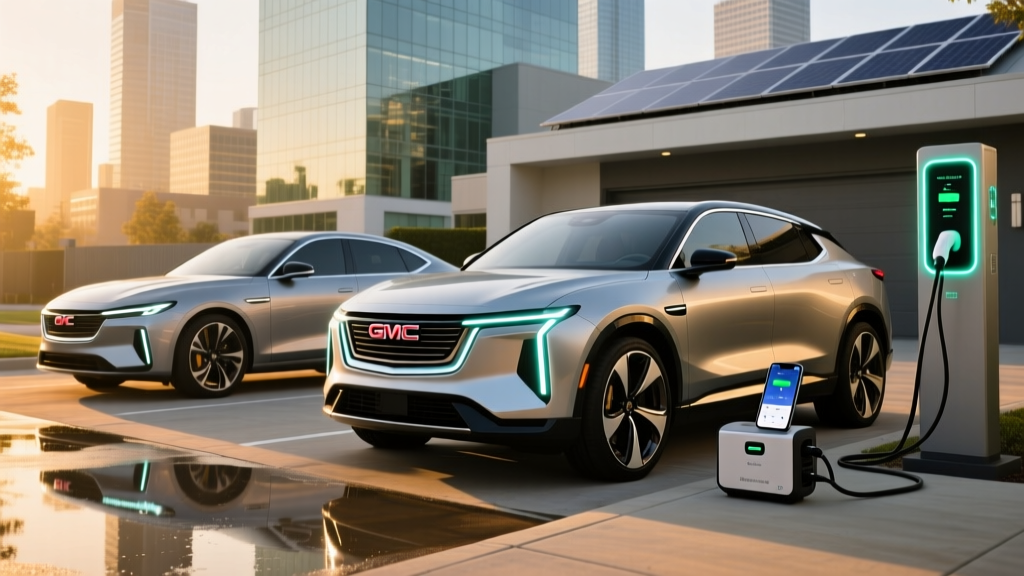
GMC currently sells two fully electric vehicles for the 2026 model year: the Sierra EV pickup (370–440 miles EPA range, starting at $56,995) and the Hummer EV pickup/SUV (314–381 miles EPA, starting at $99,995). Both use GM's Ultium battery platform with NMC chemistry and support DC fast charging up to 350 kW. The Sierra EV qualifies for partial or full §30D federal tax credits depending on battery sourcing and buyer income, while the Hummer EV exceeds the $80,000 MSRP cap and is ineligible. A third model, the compact Canyon EV, is announced for late 2026/2027 but is not yet on sale.
GMC Sierra EV: The Mainstream Electric Truck
The 2026 GMC Sierra EV is GMC's volume-play electric pickup, built on the BT1 electric platform shared with the Chevrolet Silverado EV. It targets fleet buyers, commercial users, and retail truck shoppers who want electric powertrain benefits without sacrificing truck capability.
| Spec | Sierra EV Elevation | Sierra EV AT4 | Sierra EV Denali |
|---|---|---|---|
| Base MSRP | $56,995 | $69,995 | $89,395 |
| EPA Range | 370 mi | 400 mi | 440 mi |
| Battery (usable) | ~200 kWh (NMC) | ~200 kWh (NMC) | ~200 kWh (NMC) |
| Peak DC Fast Charge | 350 kW | 350 kW | 350 kW |
| 10–80% DC Time | ~22 min (at 350 kW stall) | ~22 min | ~22 min |
| Level 2 (11.5 kW) | ~17 hrs (0–100%) | ~17 hrs | ~17 hrs |
| Horsepower | 510 hp | 625 hp | 754 hp |
| 0–60 mph | ~5.8 sec | ~4.7 sec | ~4.3 sec |
| Towing (max) | 10,200 lbs | 12,000 lbs | 12,000 lbs |
| Battery Warranty | 8 yr / 100,000 mi | 8 yr / 100,000 mi | 8 yr / 100,000 mi |
Real-world range reality: The Denali's 440-mile EPA figure assumes mixed driving at moderate temperatures. In highway-only driving at 70 mph, expect ~340–370 miles. In sub-freezing weather (20°F), range drops to ~280–320 miles due to cabin heating and battery thermal losses. Towing a 7,000-lb trailer can cut range by 40–50%, yielding ~200–240 miles before needing a charge.
Charging Reality: Peak kW vs. Sustained kW
GMC advertises 350 kW peak DC fast charging, but that number represents the top of the charge curve, not a sustained rate. In practice, the Sierra EV pulls 300–350 kW between 10–30% state of charge, then tapers progressively. From 50–80%, you'll see 120–180 kW. Above 80%, charging slows sharply to protect the NMC cells — expect 40–60 kW. A 10–80% session at a functional 350 kW Electrify America or EVgo stall takes ~22 minutes. At a 150 kW CCS/NACS station, the same session takes ~38 minutes.
For home charging, the Sierra EV's 11.5 kW onboard charger means a full 0–100% charge on a 48-amp Level 2 circuit takes approximately 17 hours. Most owners charge from 20–80% overnight (roughly 10 hours), which covers daily driving needs.
GMC Hummer EV: The Flagship Electric Supertruck
The Hummer EV (available as a pickup and SUV) is GMC's halo vehicle — a 9,000-lb electric behemoth with up to 1,045 hp and Watts to Freedom launch mode. It's a low-volume, high-margin product that showcases Ultium capability.
| Spec | Hummer EV 2X | Hummer EV 3X |
|---|---|---|
| Base MSRP | $99,995 | $122,995 |
| EPA Range (Pickup) | 381 mi | 314 mi |
| Battery (usable) | ~212 kWh (NMC, double-stack) | ~212 kWh (NMC, double-stack) |
| Peak DC Fast Charge | 350 kW | 350 kW |
| 10–80% DC Time | ~25 min | ~25 min |
| Horsepower | 625 hp | 1,045 hp |
| 0–60 mph | ~3.5 sec | ~3.0 sec |
| §30D Tax Credit | Not eligible (MSRP exceeds $80,000 cap) | |
The Hummer EV's double-stack Ultium battery is physically massive — two layers of cells wired in parallel and series to deliver both high energy and high power. The trade-off is weight: at ~9,000 lbs curb weight, the Hummer EV consumes more energy per mile than the Sierra EV (47 MPGe combined vs. ~55 MPGe for the Sierra Denali). Charging a 212 kWh battery from 10–80% requires roughly 150 kWh of energy — even at 350 kW peak, thermal management and taper extend the session to ~25 minutes under ideal conditions.
GMC Electric Cars vs. Gas Trucks: Cost Comparison
The purchase price of a GMC EV truck is higher than its gas counterpart, but the total cost of ownership (TCO) equation shifts when you factor in fuel, maintenance, and tax incentives. Here's a 5-year comparison between the Sierra EV Elevation ($56,995) and a similarly equipped gas Sierra 1500 AT4 (~$58,000 MSRP).
| Cost Category (5 Years) | Sierra EV Elevation | Gas Sierra 1500 AT4 |
|---|---|---|
| Purchase Price | $56,995 | $58,000 |
| §30D Federal Tax Credit | –$3,750 to –$7,500* | $0 |
| Fuel / Electricity (75,000 mi) | $4,200 (home L2, $0.14/kWh avg) | $11,250 (18 MPG, $3.60/gal) |
| Maintenance (oil, filters, brakes) | $1,200 | $4,800 |
| Insurance (avg annual) | $11,500 ($2,300/yr) | $9,000 ($1,800/yr) |
| Estimated Depreciation | $22,000 | $20,000 |
| 5-Year Total Cost | ~$72,145 (after credit) | ~$83,050 |
*§30D credit amount depends on battery critical-mineral and component sourcing, which shifts annually. Verify current-year eligibility at IRS.gov and confirm with a tax professional.
The Sierra EV saves roughly $10,900 over five years in this scenario, primarily through fuel and maintenance savings. However, higher insurance premiums (~$500/year more) and potentially higher depreciation partially offset the gains. If you lack home charging and rely on DC fast charging at $0.40–$0.50/kWh, your "fuel" cost jumps to ~$12,000 over 75,000 miles — erasing the fuel savings entirely.
Real-World Ownership: What First-Time GMC EV Buyers Need to Know
Home Charging Access Is Non-Negotiable for Most Buyers
The Sierra EV's 200 kWh battery makes public-only charging impractical. A 10–80% session at a 150 kW public charger takes ~40 minutes and costs $30–$45 depending on local rates. If you drive 40 miles daily, you'll need to DC fast charge roughly twice a week. Home Level 2 charging (240V, 48-amp circuit) costs $1,200–$2,500 to install (equipment + electrician + permit, assuming your panel has capacity) and delivers ~25 miles of range per hour of charging. For a truck this size, budget for a panel upgrade ($1,500–$3,500) if your home has a 100-amp service.
Cold-Weather Range Loss Is Real
NMC batteries lose 20–35% of their range in sustained sub-freezing temperatures. The Sierra EV Denali's 440-mile EPA range drops to ~290–340 miles in 10°F weather. GMC's battery thermal management system mitigates this somewhat, but preconditioning (warming the battery while plugged in) is essential for preserving range and enabling fast DC charging in cold weather. If you live in the Upper Midwest or Northeast, plan your winter routes around the reduced range.
Charging Infrastructure Gaps Exist
While the Tesla Supercharger network (now open to non-Tesla vehicles via NACS adapter or native NACS port) and Electrify America have expanded significantly, rural corridors in the Mountain West, Great Plains, and parts of the South still have sparse DC fast charging. GMC includes 3 years of limited complimentary charging on EVgo and Electrify America, but check route coverage before committing to an EV for long-distance travel.
Tax Credit Eligibility: §30D Rules for GMC Electric Cars
2026 §30D Federal Tax Credit Requirements (verify at IRS.gov):
- MSRP Cap: Vans/pickups/SUVs must be ≤$80,000 MSRP. Sierra EV Elevation ($56,995) and AT4 ($69,995) qualify. Sierra EV Denali ($89,395) and all Hummer EV trims do NOT qualify.
- Buyer Income Cap: Modified AGI ≤$300,000 (joint), ≤$225,000 (head of household), ≤$150,000 (single).
- Battery Sourcing: Critical minerals and battery components must meet escalating percentage thresholds from US/free-trade-agreement sources. The credit splits into two halves ($3,750 each) — meeting one requirement yields $3,750, meeting both yields $7,500.
- Point-of-Sale Transfer: You can transfer the credit to the dealer at purchase, reducing your out-of-pocket cost immediately rather than waiting for a tax refund.
- Final Assembly: Vehicle must undergo final assembly in North America (both GMC models are assembled at Factory ZERO in Detroit-Hamtramck, MI).
Decision Framework: Should You Buy a GMC Electric Truck?
Choose the Sierra EV if:
- You have home Level 2 charging access (or can install it)
- Your daily driving is under 200 miles with occasional 300–400 mile road trips
- You want lower operating costs and qualify for at least half the §30D credit
- You need a truck for light-to-moderate towing (under 10,000 lbs regularly)
- You value instant torque and quiet operation over exhaust-note nostalgia
Stick with a gas or hybrid Sierra if:
- You tow heavy loads (8,000+ lbs) on long highway routes regularly — EV range drops 40–50% under tow
- You live in an apartment or street-park with no charging access
- Your budget is under $50,000 and you need a crew-cab 4WD truck
- You regularly drive in extreme cold (below 0°F) in areas with sparse charging
Consider the Hummer EV only if:
- Budget is not a primary concern ($100K+)
- You want a statement vehicle with extreme performance (3.0-sec 0–60)
- You understand the §30D credit does not apply and operating costs are secondary
Common Misconceptions About GMC Electric Trucks
| Myth | Fact |
|---|---|
| "The Sierra EV can't tow like a real truck" | Max towing is 12,000 lbs — competitive with half-ton gas trucks. However, towing at max capacity cuts range roughly in half, requiring more frequent charge stops on long hauls. |
| "EV batteries need replacing every 5 years" | GM warranties the Ultium battery for 8 years/100,000 miles against degradation below 60% capacity. Industry data shows NMC batteries typically retain 85–90% capacity after 100,000 miles with normal use. |
| "350 kW charging means I'll always charge in 15 minutes" | 350 kW is the peak rate, not sustained. The charge curve tapers significantly above 50% SoC. Real-world 10–80% takes ~22 minutes at a 350 kW stall, longer at 150 kW stations. |
| "The Hummer EV qualifies for the $7,500 tax credit" | It does not. The §30D MSRP cap for trucks is $80,000. The Hummer EV starts at $99,995 and is ineligible regardless of buyer income. |
| "I can charge at any Tesla Supercharger" | Only Superchargers equipped with the Magic Dock (built-in NACS adapter) or stations explicitly listed as open to non-Tesla vehicles in the Tesla app. Not all stalls support non-Tesla vehicles. |
Frequently Asked Questions
What is the cheapest GMC electric car available in 2026?
The 2026 GMC Sierra EV Elevation at $56,995 MSRP is GMC's most affordable electric vehicle. After a potential §3,750–$7,500 federal tax credit (depending on sourcing and income), the effective price drops to approximately $49,495–$53,245. This is still $5,000–$10,000 more than a base gas Sierra 1500, but operating costs are lower over time.
Does GMC make an electric SUV?
Yes — the Hummer EV SUV is available alongside the Hummer EV pickup, with similar specs (314–381 miles EPA range, 830–1,045 hp depending on trim). It starts at $99,995 and is ineligible for the federal tax credit. GMC has not announced a mainstream electric SUV (like an electric Acadia/Terrain equivalent) as of early 2026; those segments are covered by Chevrolet (Equinox EV, Blazer EV) and Cadillac (Lyriq, Optiq) within GM's portfolio.
How long does it take to charge a GMC Sierra EV at home?
On a Level 2 home charger (240V, 48-amp, 11.5 kW), a full 0–100% charge of the Sierra EV's ~200 kWh battery takes approximately 17 hours. Most owners charge from 20–80% overnight (~10 hours), which adds roughly 260 miles of range — sufficient for multi-day commuting without daily plug-ins. On a standard 120V outlet (Level 1, ~1.4 kW), a full charge would take over 140 hours, making it impractical as a primary charging method for a battery this large.
Is the GMC Sierra EV eligible for the federal EV tax credit?
The Sierra EV Elevation ($56,995) and AT4 ($69,995) fall under the §30D MSRP cap of $80,000 for trucks and are potentially eligible for up to $7,500 in federal tax credits, depending on battery component and critical-mineral sourcing percentages (which change annually) and the buyer's modified adjusted gross income. The Denali ($89,395) exceeds the cap and is ineligible. Always verify current-year eligibility at fueleconomy.gov and consult a tax professional.
How does the Sierra EV compare to the Ford F-150 Lightning and Rivian R1T?
The Sierra EV offers more EPA range (370–440 mi vs. the F-150 Lightning's 240–320 mi) and faster peak DC charging (350 kW vs. 150–210 kW). The Rivian R1T (Dual Motor, ~352 mi EPA, $79,900) is more off-road capable but has a smaller bed and lower towing capacity. The F-150 Lightning is generally less expensive at base trims but trails in range and charging speed. The Sierra EV's trade-off is higher weight and a longer wheelbase, which affects maneuverability in tight urban settings.
What happens if the Sierra EV battery degrades?
GM's Ultium battery warranty covers capacity retention above 60% for 8 years or 100,000 miles. If the battery falls below that threshold within the warranty period, GM will repair or replace modules to restore capacity above 60%. Out-of-warranty replacement costs for a 200 kWh Ultium pack are estimated at $18,000–$28,000 based on current module pricing, though costs are expected to decline as battery manufacturing scales. Real-world degradation data from early Ultium vehicles suggests 5–8% capacity loss over the first 50,000 miles with typical charging habits (avoiding frequent 100% charges and DC fast charging).