The Short Answer: Which GM EV Fits You?
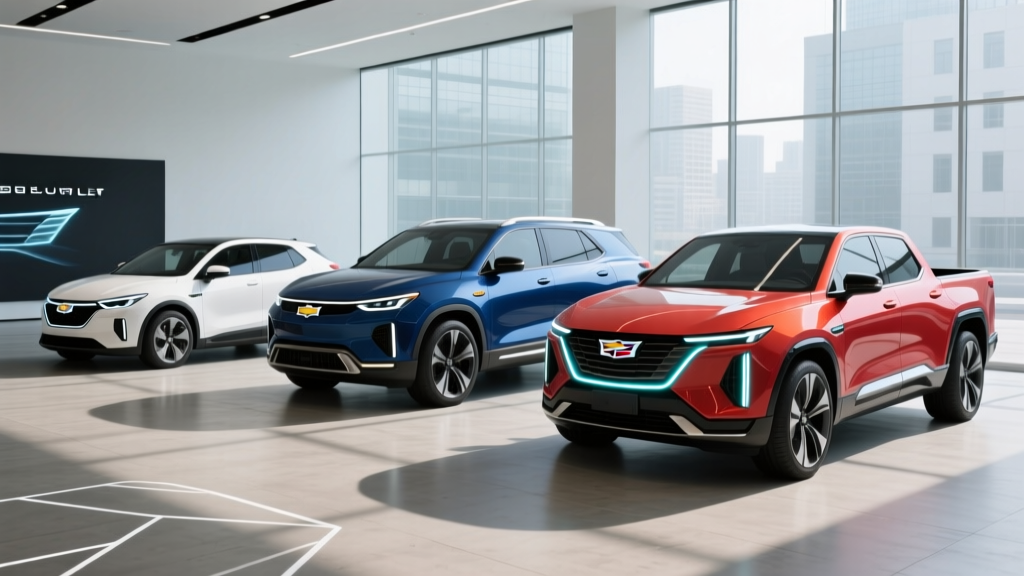
General Motors offers a broadening lineup of Ultium-based electric vehicles spanning affordable crossovers to heavy-duty trucks. As of early 2026, the core GM EV vehicles available to US buyers include the Chevrolet Equinox EV (starting ~$33,600, up to 319 mi EPA), Chevrolet Blazer EV (~$44,600, up to 324 mi), Cadillac Lyriq (~$58,590, 314 mi), and Chevrolet Silverado EV (~$57,900+, up to 492 mi for the Max Range variant). The discontinued Bolt EV/EUV has been replaced by a next-generation Bolt on the Ultium platform, expected later in 2026. Most GM EVs qualify for partial or full federal tax credits under IRS §30D, but eligibility depends on income caps, MSRP limits, and battery-sourcing requirements that shift yearly — always verify on irs.gov before purchasing.
The 2026 GM EV Lineup: Specs at a Glance
GM's Ultium platform underpins every current-generation electric vehicle in the portfolio. The architecture supports battery packs from roughly 85 kWh to over 200 kWh, with both NMC (nickel manganese cobalt) and LFP (lithium iron phosphate) chemistries depending on model and trim. Here's how the major models stack up on paper:
| Model | Battery (kWh usable) | EPA Range | Peak DC Charge (kW) | 10–80% Time | 0–60 mph | Base MSRP |
|---|---|---|---|---|---|---|
| Chevy Equinox EV 2LT | ~85 kWh (NMC) | 319 mi | 150 kW | ~32 min | ~7.5 sec | $33,600 |
| Chevy Blazer EV RS AWD | ~102 kWh (NMC) | 283 mi (AWD) / 324 mi (FWD) | 190 kW | ~28 min | ~5.8 sec | $44,600 |
| Cadillac Lyriq Luxury AWD | ~102 kWh (NMC) | 314 mi | 190 kW | ~27 min | ~5.0 sec | $58,590 |
| Silverado EV 4WT (Max Range) | ~200+ kWh (NMC) | 492 mi | 350 kW | ~25 min | ~4.5 sec (top trim) | $57,900 (fleet) / $78,000+ (retail RST) |
Real-world caveat: EPA range figures assume moderate temperatures and mixed driving. On sustained highway trips at 70–80 mph, expect 10–15% less range. In freezing weather (below 20°F), range can drop 20–30% without preconditioning. The Equinox EV's 319-mile sticker, for example, realistically delivers 250–275 miles on a cold-weather highway run.
Real-World Range vs. EPA Sticker
EPA 319 mi (Equinox EV FWD): Expect ~270–290 mi in mild conditions on mixed roads. Highway-only at 75 mph: ~255–270 mi. Winter (20°F) with cabin heat: ~220–245 mi. Always precondition the battery while plugged in before departing to recover 5–10% of cold-weather range.
GM EVs vs. Gas Equivalents: The Cost Comparison
Numbers matter more than marketing. Here's how a popular GM EV compares to its closest gas-powered sibling over five years and 75,000 miles of driving. We're using the Equinox EV 2LT vs. the gas Equinox LT AWD, assuming $3.40/gallon gas and $0.16/kWh national average home electricity.
| Cost Category | Equinox EV 2LT | Gas Equinox LT AWD |
|---|---|---|
| Purchase price (MSRP) | $33,600 | $30,600 |
| Estimated §30D tax credit | Up to $7,500 (verify eligibility) | $0 |
| Effective purchase price | ~$26,100 (if full credit applies) | $30,600 |
| Fuel/energy (75k mi) | ~$2,100 (home charging) | ~$8,500 (26 MPG combined) |
| Maintenance (5 yr) | ~$1,200 | ~$3,800 |
| Insurance (5 yr avg.) | ~$9,500 | ~$8,200 |
| 5-Year Total Cost | ~$38,900 | ~$51,100 |
The EV wins decisively on fuel and maintenance — no oil changes, no transmission fluid, far fewer moving parts. However, EV insurance premiums run 10–20% higher on average due to battery replacement costs in collision claims. According to fueleconomy.gov, the Equinox EV achieves roughly 114 MPGe combined, translating to about 29 kWh per 100 miles.
If you rely on public DC fast charging exclusively at $0.35–$0.55/kWh, your 75,000-mile energy cost rises to $5,500–$8,500 — narrowing the gap significantly. Home charging access is the single biggest variable in EV ownership economics.
Charging the GM EV Lineup: What You Need to Know
GM has adopted the NACS (North American Charging Standard) connector across its EV lineup, granting access to Tesla's Supercharger network — the most reliable and expansive DC fast-charging network in the US. This is a significant practical advantage over vehicles locked to CCS-only networks.
| Charging Level | Power (kW) | Miles Added per Hour | Typical Use Case |
|---|---|---|---|
| Level 1 (120V outlet) | 1.4 kW | 3–5 mi/hr | Overnight top-up, PHEV, emergency |
| Level 2 (240V home) | 7.7–11.5 kW | 25–40 mi/hr | Daily home charging, full overnight refill |
| DC Fast (public) | 150–350 kW | 300–800+ mi/hr (peak) | Road trips, rapid top-ups |
Home Level 2 Installation: Budget Reality
A Level 2 home charger (240V, 48-amp circuit) is the backbone of convenient EV ownership. Here's what installation actually costs for a typical single-family home:
| Item | Cost Range |
|---|---|
| Level 2 charger hardware (ChargePoint, Emporia, Wallbox) | $300–$700 |
| Electrician labor (240V/50A circuit run) | $500–$2,000 |
| Permit & inspection | $50–$300 |
| Electrical panel upgrade (if needed, 200A service) | $1,500–$3,500 |
| Total (no panel upgrade) | $850–$3,000 |
| Total (with panel upgrade) | $2,350–$6,500 |
GM offers the PowerUP home charging solution and has partnered with EVgo for public charging. If your electrical panel is already at 200 amps and the charger location is within 30 feet of the panel, expect the lower end. Older homes with 100-amp service will likely need an upgrade — budget accordingly and get a licensed electrician's assessment before committing to a purchase.
Charge-curve reality check: The Silverado EV's advertised 350 kW peak is achieved only at a low state of charge (10–20%) on a compatible 350 kW+ station. Above 60% SoC, charging tapers significantly — you'll spend more time going from 80% to 100% than from 10% to 80%. For road trips, plan stops around the 10–80% window for the fastest throughput.
Federal Tax Credit Eligibility for GM EVs
The §30D Clean Vehicle Credit can reduce your federal tax liability by up to $7,500 — and since 2024, it can be transferred to the dealer as a point-of-sale discount. But eligibility is not automatic. Here's the checklist for 2026:
- Income caps: Modified AGI ≤ $150,000 (single), ≤ $225,000 (head of household), ≤ $300,000 (joint)
- MSRP caps: ≤ $55,000 for sedans; ≤ $80,000 for SUVs, vans, and trucks
- Battery sourcing: Minimum percentages of critical minerals and battery components must be sourced from the US or free-trade-agreement partners (thresholds increase annually)
- Assembly: Final assembly must occur in North America
- Transfer option: You can transfer the credit to the dealer at purchase for an immediate price reduction, even if your tax liability is lower than the credit amount
As of 2026, most GM Ultium-based vehicles are assembled in the US (Spring Hill, TN; Factory ZERO, MI; Ramos Arizpe, Mexico for some), but battery-sourcing compliance varies by model and production batch. The Equinox EV and Blazer EV have generally qualified for at least partial credit. Always check the current eligibility list on fueleconomy.gov and consult a tax professional for your specific situation.
Common Misconceptions About GM EVs
| Myth | Fact |
|---|---|
| "The Ultium platform has been plagued by recalls." | Early Blazer EV units (2024 model year) did face software-related stop-sale orders. GM issued OTA updates and extended warranties. Current 2025–2026 models have largely resolved these issues — but check NHTSA for open recalls on any specific VIN. |
| "GM EVs can't use Tesla Superchargers." | All current GM EVs ship with native NACS ports, granting direct Supercharger access without adapters. This is a major infrastructure advantage. |
| "EV batteries need replacing every 5 years." | GM warranties its Ultium batteries for 8 years/100,000 miles with a capacity-retention threshold of 60% or better. Industry data shows modern NMC packs degrading roughly 10–15% over 8 years under normal use. |
| "The Equinox EV is too slow for highway merging." | At ~7.5 seconds 0–60 mph, the Equinox EV FWD is comparable to the gas Equinox (7.8 sec). Electric torque delivery is instant, making real-world merging feel quicker than the number suggests. |
| "You'll save money no matter how you charge." | Public DC fast charging at $0.45+/kWh can cost more per mile than a fuel-efficient gas car. Savings depend heavily on home charging access and local electricity rates. |
Battery Longevity and Warranty Coverage
Every GM Ultium-based EV carries a battery and powertrain warranty of 8 years or 100,000 miles (whichever comes first), with a guaranteed minimum capacity retention — typically 60% of original capacity. If the battery degrades below that threshold within the warranty period, GM will repair or replace modules at no cost.
For context, real-world degradation data from Recurrent Auto and other fleet studies show that liquid-cooled NMC batteries (like Ultium) typically retain 88–92% capacity after 5 years and 75,000 miles. LFP packs — which GM may expand to lower-cost trims — trade lower energy density for longer cycle life, often retaining 95%+ over the same period.
Out-of-warranty replacement cost: A full Ultium battery pack replacement currently ranges from $15,000 to $30,000+ depending on pack size, though individual module replacement (the more common repair) runs $2,000–$5,000. These costs are expected to decline as the platform matures and aftermarket options emerge.
Decision Framework: Which GM EV Should You Buy?
Choose the Equinox EV if:
- Your budget is under $40,000 (after potential tax credit)
- You need 300+ miles of EPA range for commuting and occasional road trips
- You have home Level 2 charging and drive under 80 miles daily
- You want the lowest total cost of ownership in the GM lineup
Choose the Blazer EV if:
- You want a sportier driving experience (available SS trim with 557 HP)
- You need more cargo space and a larger cabin than the Equinox
- You value faster DC charging (190 kW peak) for frequent road trips
- Budget is $45,000–$55,000
Choose the Cadillac Lyriq if:
- You prioritize luxury, ride refinement, and a premium interior
- You want a 33-inch LED dashboard display and Super Cruise (Level 2 hands-free driving on compatible highways)
- Budget is $55,000–$70,000 and you don't need third-row seating
Choose the Silverado EV if:
- You need truck capability: up to 10,000 lbs towing (work truck trims), V2L/V2H power export
- You want class-leading EV range (492 mi Max Range) for long-haul work
- Budget is $60,000+ and you have access to 350 kW charging infrastructure
Skip GM EVs and consider a PHEV if:
- You lack reliable home or workplace charging
- You regularly drive in extreme cold (-10°F or below) where range loss exceeds 30%
- You live in a charging desert with sparse DC fast-charging infrastructure
- Your budget is under $30,000 and you can't wait for the next-gen Bolt
Frequently Asked Questions
Is GM discontinuing the Chevrolet Bolt?
The original Bolt EV and EUV were discontinued after the 2023 model year. GM confirmed a next-generation Bolt built on the Ultium platform, expected to arrive in late 2026 or early 2027. Pricing and specs are not yet finalized. If you need an affordable GM EV now, the Equinox EV is the current entry point.
Can I charge a GM EV at a Tesla Supercharger?
Yes. All current GM EVs use the native NACS connector, which is the same physical plug used at Tesla Superchargers. You can pull up, plug in, and charge without an adapter. GM's in-vehicle navigation and the myChevrolet/myCadillac apps route you through compatible Supercharger stalls.
How does Super Cruise differ from full self-driving?
Super Cruise is an SAE Level 2 driver-assistance system. It provides hands-free steering, acceleration, and braking on pre-mapped divided highways — but a driver-monitoring camera ensures your eyes remain on the road. You are legally and practically the driver at all times. This is fundamentally different from Level 4 robotaxi services like Waymo, which operate without any human driver in geofenced areas.
What's the real cost to charge a GM EV at home per month?
If you drive 1,000 miles per month in an Equinox EV (roughly 29 kWh/100 mi) and pay $0.16/kWh, your monthly electricity cost is about $46. That compares to roughly $130/month in gasoline for a 26 MPG gas crossover at $3.40/gallon. Annual savings: approximately $1,000–$1,200 on energy alone.
Are GM EVs reliable?
Early Ultium vehicles (2024 Blazer EV) faced software quality issues that led to temporary stop-sales. GM addressed these through over-the-air updates and warranty extensions. The Equinox EV and Lyriq have generally received more favorable early reliability reports. For the most current data, check NHTSA recall records and IIHS ratings for the specific model year you're considering.
Does cold weather affect GM EV range significantly?
Yes. At 20°F, expect 20–30% range reduction compared to the EPA sticker, primarily due to cabin heating and increased battery resistance. GM's Ultium platform includes a heat pump on most trims, which recovers some efficiency. Preconditioning the battery while plugged in before departure is the single most effective way to mitigate cold-weather range loss.