The Forgotten Co-Founder: Ian Wright and Tesla Motors' Origin Story
When most people think of Tesla's founding, Elon Musk and Martin Eberhard dominate the narrative. But Ian Wright — a New Zealand-born electrical engineer — was the third person to join Tesla Motors in 2004, and his contributions to the original Roadster's powertrain architecture laid groundwork that still echoes through every Tesla on the road in 2026. While Wright departed the company after a board dispute in 2004, his engineering philosophy around electric drivetrain efficiency directly informed the DNA of subsequent models.
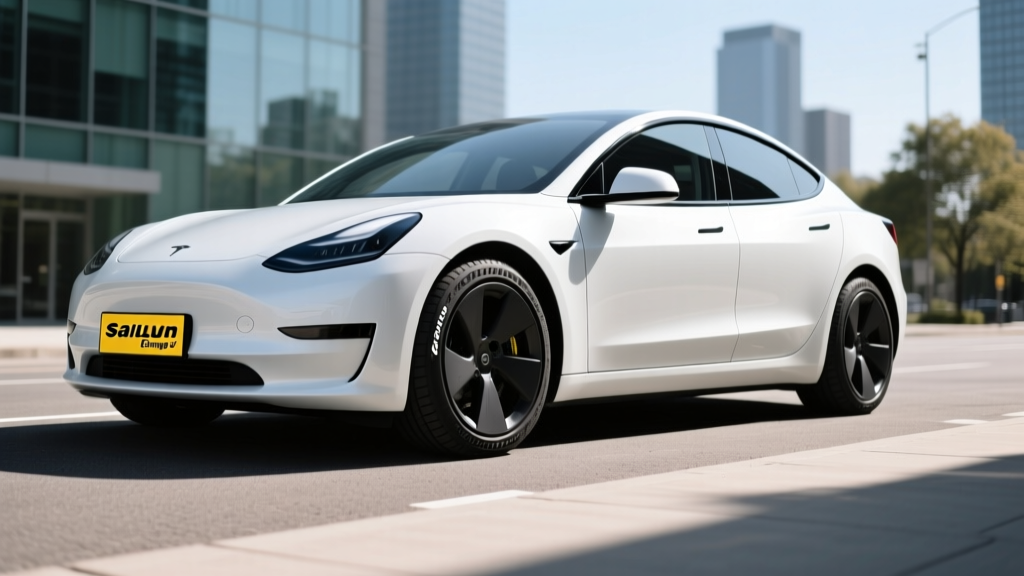
This profile examines the Tesla Roadster — the car that Wright helped conceptualize — and traces how its engineering principles manifest in the current 2026 Tesla lineup, from the refreshed Model 3 to the long-awaited next-generation Roadster. We'll break down real specs, charging performance, and whether today's Teslas live up to the vision Wright helped establish two decades ago.
Original Roadster: The Blueprint (2008–2012)
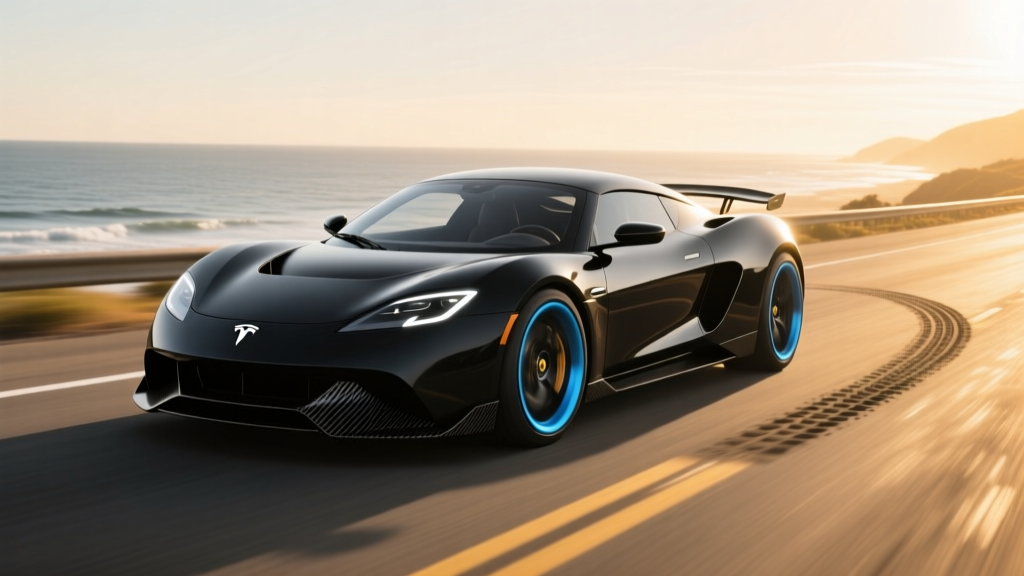
The Tesla Roadster (first generation) was the vehicle that proved battery-electric cars could be desirable performance machines, not just compliance vehicles. While Ian Wright left Tesla before production began, the engineering direction he championed — lightweight construction, aggressive power density, and Lotus-based chassis dynamics — defined the final product.
| Specification | Original Roadster (2008–2012) |
|---|---|
| EPA Range | 244 miles |
| Battery Capacity | 53 kWh (NMC lithium-ion) |
| 0–60 mph | 3.7 seconds |
| Horsepower | 288 hp |
| Top Speed | 125 mph (electronically limited) |
| Curb Weight | 2,690 lbs |
| Units Produced | ~2,450 |
| Original MSRP | $109,000 (2008) |
The Roadster's 53 kWh NMC (nickel-manganese-cobalt) battery pack was revolutionary for 2008, using 6,831 individual 18650-format cells — the same form factor found in laptop batteries at the time. This modular approach to battery architecture became a Tesla hallmark, evolving into the 2170 and eventually 4680 cell formats used in 2026 vehicles.
How Wright's Vision Lives On: 2026 Tesla Lineup Specs
While the original Roadster is now a collector's piece, the engineering priorities Wright championed — efficiency, performance-to-weight ratio, and scalable battery architecture — are visible across Tesla's current 2026 lineup. Here's how the key models stack up:
| Spec | 2026 Model 3 LR AWD | 2026 Model Y LR AWD | 2026 Model S Plaid | 2026 Cybertruck AWD |
|---|---|---|---|---|
| EPA Range | 363 mi | 337 mi | 396 mi | 340 mi |
| Battery (kWh) | ~79 kWh (NMC) | ~79 kWh (NMC) | ~100 kWh (NMC) | ~123 kWh (NMC) |
| 0–60 mph | 4.2 sec | 4.8 sec | 1.99 sec | 4.1 sec |
| Horsepower | 346 hp | 384 hp | 1,020 hp | 600 hp |
| Peak DC Charge | 250 kW | 250 kW | 250 kW | 250 kW |
| 10–80% Time | ~25 min | ~25 min | ~30 min | ~35 min |
| Base MSRP | $47,990 | $48,990 | $89,990 | $79,990 |
| MPGe (Combined) | 132 MPGe | 122 MPGe | 120 MPGe | 68 MPGe |
Charging Performance: V3 Superchargers and Home Setup
Tesla's Supercharger network remains the gold standard for public DC fast charging reliability. The V3 Supercharger stations deliver up to 250 kW peak, though — as with all EVs — sustained charge rates taper significantly above 80% State of Charge (SoC).
| Charging Level | Power | Speed (Model 3 LR) | Notes |
|---|---|---|---|
| Level 1 (120V outlet) | ~1.4 kW | ~3–4 miles/hour | Emergency/trickle only |
| Level 2 (240V, 48A) | 11.5 kW | ~44 miles/hour | Home Wall Connector; full charge in ~7 hrs |
| DC Fast (V3 Supercharger) | 250 kW peak | 10–80% in ~25 min | Tapers to ~50 kW above 80% |
| DC Fast (V4 Supercharger) | 350 kW peak | 10–80% in ~20 min | Limited V4 station availability as of 2026 |
Charge curve reality: The 250 kW peak only applies between roughly 10–35% SoC. From 35–60%, expect ~175 kW. From 60–80%, the rate drops to ~100 kW. Above 80%, charging slows dramatically to protect the NMC cells — plan to unplug at 80% on road trips for optimal time efficiency.
For home charging, Tesla's Wall Connector ($420) on a 60-amp circuit delivers 48 amps (11.5 kW), adding roughly 44 miles of range per hour. Most owners charging overnight (8–10 hours) will wake to a full battery. Installation costs range from $500–$2,000 depending on panel capacity and run distance — budget for a potential panel upgrade if your home has a 100-amp service.
Pricing and Federal Tax Credit Eligibility (2026)
Tesla's pricing has shifted frequently, but as of early 2026, here's where the lineup stands relative to the IRS §30D federal tax credit requirements:
| Model | Base MSRP | MSRP Cap? | Est. Credit | Key Sourcing Caveat |
|---|---|---|---|---|
| Model 3 RWD | $38,990 | Under $55K ✓ | Up to $7,500 (varies) | Battery sourcing must meet critical-mineral thresholds |
| Model 3 LR AWD | $47,990 | Under $55K ✓ | Up to $7,500 (varies) | LFP trumps may qualify; NMC depends on mineral sourcing |
| Model Y LR AWD | $48,990 | Under $80K ✓ | Up to $7,500 (varies) | SUV classification raises MSRP cap to $80K |
| Model S Plaid | $89,990 | Over $55K ✗ | $0 (MSRP cap exceeded) | Sedan cap is $55K |
| Cybertruck AWD | $79,990 | Under $80K ✓ | Up to $7,500 (varies) | Truck classification; verify current sourcing compliance |
Critical caveats: The §30D credit has income caps ($150K single / $300K joint AGI), MSRP caps ($55K sedans, $80K SUVs/trucks/vans), and increasingly strict battery-sourcing and critical-mineral requirements that phase in through 2026. The credit can now be transferred to the dealer at point of sale, reducing your purchase price directly. Always verify current eligibility on IRS.gov and consult a tax professional — rules change frequently.
Autopilot, FSD, and Driver Assistance: Level 2 Reality
Tesla's Autopilot (standard) and Full Self-Driving Supervised ($8,000 add-on or $99/month subscription as of 2026) remain SAE Level 2 driver-assistance systems. Despite the "FSD" name, the driver must remain fully engaged — hands on or near the wheel, eyes on the road, ready to intervene instantly.
What FSD Supervised does well: highway lane-keeping, automatic lane changes, navigation-based on/off-ramp handling, and increasingly capable city-street navigation. What it struggles with: construction zones, unusual road geometries, adverse weather (heavy rain, snow obscuring cameras), and edge-case scenarios that require human judgment.
Who Should Buy a Tesla in 2026?
Tesla's 2026 lineup serves distinct use cases, and the right choice depends on your driving patterns:
Choose Model Y if: You need family-friendly cargo room (76 cu ft with seats folded), AWD for snow-belt climates, and qualify for the higher $80K SUV MSRP cap on the tax credit. It's the best-selling EV in America for a reason.
Choose Model S if: Performance is non-negotiable (1.99s 0–60 in Plaid), you want premium interior materials, and you don't need the tax credit. The 396-mile EPA range is the best in the lineup for road trips.
Choose Cybertruck if: You need truck utility (11,000-lb towing capacity), want the stainless-steel durability factor, and your budget clears $80K. Real-world range with a heavy trailer drops significantly — expect 200–230 miles when towing near max capacity.
Look elsewhere if: You want a traditional luxury interior (Mercedes EQS, BMW i7), need CHAdeMO compatibility, want physical buttons and stalks, or prefer dealership service over Tesla's mobile-ranger model.
✅ Pros
- Supercharger network: 6,000+ V3/V4 stalls in North America — unmatched reliability
- Over-the-air updates continuously add features and improve efficiency
- Best-in-class software integration and app experience
- Strong resale value relative to legacy-brand EVs
- NACS connector now the industry standard — legacy brands adopting through 2026
❌ Cons
- Panel gaps and build-quality inconsistency still reported on Fremont-built units
- No physical buttons, stalks, or instrument cluster — all screen-dependent
- FSD ($8K) remains Level 2 despite the name; value proposition debated
- Service center wait times can stretch weeks in some metro areas
- Insurance premiums run 15–30% higher than comparable ICE vehicles
Warranty and Battery Longevity
Tesla's warranty structure is competitive but not class-leading:
- Basic Vehicle: 4 years / 50,000 miles
- Battery & Drive Unit (Model 3/Y): 8 years / 100,000 miles (120,000 for LR/AWD)
- Battery & Drive Unit (Model S/X): 8 years / 150,000 miles
- Capacity Retention Threshold: 70% of original capacity during warranty period
Real-world degradation data from Tesla's 2025 Impact Report shows average battery capacity retention of approximately 85% after 150,000 miles for NMC packs. LFP packs (used in Model 3 RWD) show even less degradation — roughly 90% retention at the same mileage — and can be charged to 100% daily without accelerated wear, a practical advantage for commuters who need maximum daily range.
Battery replacement costs remain a concern for out-of-warranty ownership: a Model 3 pack replacement runs approximately $13,000–$16,000 at a Tesla service center, though refurbished packs are increasingly available at lower cost.
Ian Wright's Broader EV Legacy Beyond Tesla
After leaving Tesla Motors in 2004, Ian Wright co-founded Wrightspeed, applying his electric-drivetrain expertise to commercial delivery vehicles. His company developed the X1 powertrain — a range-extended electric system for medium-duty trucks — that was adopted by FedEx and other fleet operators. Wright's focus on real-world fleet efficiency, rather than consumer performance, demonstrated that the engineering principles he championed at Tesla had applications far beyond sports cars.
Wright's story is a reminder that Tesla's origin involved five co-founders (Eberhard, Tarpenning, Wright, Musk, and Straubel), each contributing distinct engineering and business perspectives. While Musk's capital and vision scaled the company, and J.B. Straubel's battery engineering defined its technical trajectory, Wright's early powertrain concepts helped establish the performance-first ethos that differentiated Tesla from every other automaker attempting electrification in the mid-2000s.
Frequently Asked Questions
What was Ian Wright's specific role at Tesla Motors?
Wright joined Tesla in early 2004 as the company's third employee and VP of Business Development. He contributed to early powertrain architecture discussions and helped shape the Roadster's performance targets before departing later that year following a board restructuring that also removed Martin Eberhard from day-to-day leadership.
Is the original Tesla Roadster still drivable in 2026?
Yes, but with caveats. Original Roadster batteries (53 kWh NMC) have degraded significantly — expect 140–180 miles of real-world range on a well-maintained pack. Tesla offered a battery upgrade program (to 70 kWh) that some owners pursued. The PEM (Power Electronics Module) is also a known failure point. Collector values range from $120,000–$200,000 depending on mileage and condition.
Does the Tesla Model 3 qualify for the $7,500 federal tax credit in 2026?
The Model 3 RWD ($38,990) and Long Range AWD ($47,990) both fall under the $55K MSRP cap for sedans. However, the actual credit amount depends on battery-sourcing and critical-mineral compliance, which varies by production batch. Your personal eligibility also requires meeting income caps ($150K single / $300K joint). Check the latest sourcing data on fueleconomy.gov and consult a tax professional.
How does Tesla's Supercharger network compare to competitors in 2026?
Tesla's network has 6,000+ Supercharger stalls in North America with ~98% uptime — significantly more reliable than Electrify America or EVgo networks. With NACS now adopted by Ford, GM, Rivian, Hyundai, and others, non-Tesla EVs can access Superchargers via adapter, though Tesla vehicles still get native plug-and-charge convenience without adapter hassle.
Should I wait for the next-generation Tesla Roadster?
Tesla has announced the next-gen Roadster (with a claimed 0–60 under 1 second using the SpaceX cold-gas thruster package) multiple times since 2017, but as of 2026, it remains unreleased with no confirmed production date. We recommend against making purchase decisions based on announced-but-unavailable models. If you want a Tesla performance car today, the Model S Plaid delivers 1.99-second 0–60 times and is available now.
Sources: fueleconomy.gov (EPA range and MPGe data), IRS.gov §30D credit rules, Tesla.com (manufacturer specifications and pricing, accessed January 2026).