Quick Answer: Which GM EV Model Is Right for You?
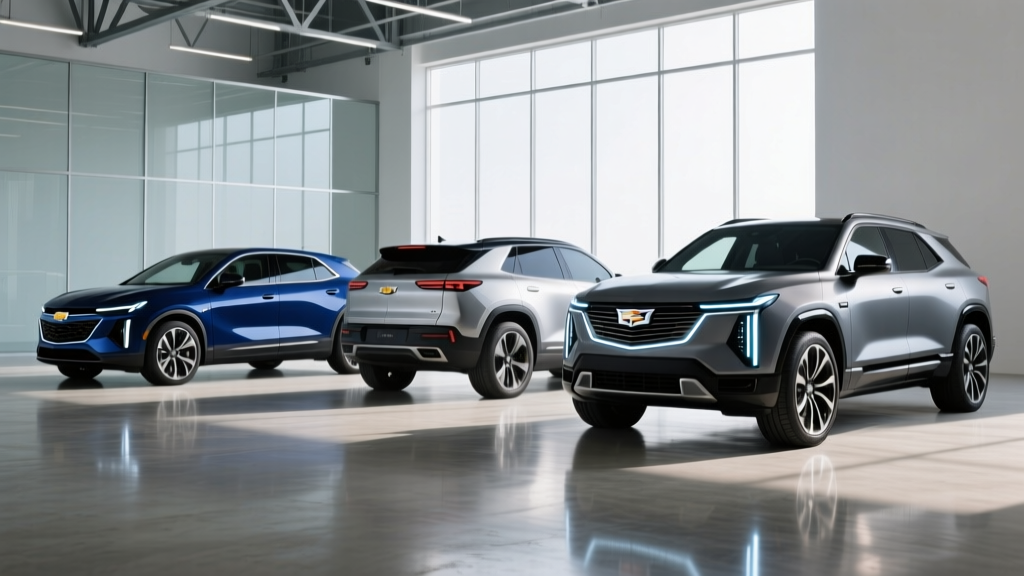
General Motors currently sells five core EV models in the U.S. for 2026: the Chevrolet Equinox EV (EPA 319 mi, from ~$33,600), Chevrolet Blazer EV (EPA 324 mi, from ~$44,600), Chevrolet Silverado EV (EPA 492 mi, from ~$57,900), Cadillac Lyriq (EPA 314 mi, from ~$58,590), and Cadillac Optiq (EPA 305 mi, from ~$53,900). The Equinox EV is the volume value pick; the Silverado EV 4WT offers the longest range of any production pickup; the Lyriq targets luxury buyers. All ride on GM's Ultium platform with NMC battery chemistry and support DC fast charging at 150–350 kW depending on the model. Federal §30D tax credit eligibility varies by model, trim, and buyer income — check current IRS rules before purchasing.
The 2026 GM EV Lineup at a Glance
GM's transition to an all-electric future has produced a lineup spanning affordable crossovers to luxury SUVs and full-size trucks. Every current GM EV uses the company's Ultium battery platform — a modular architecture supporting battery packs from roughly 85 kWh to 200+ kWh, with nickel-manganese-cobalt (NMC) chemistry across the range. NMC offers higher energy density than LFP (lithium iron phosphate), which is why GM achieves competitive range figures without massive, heavy packs.
All 2026 GM EVs come equipped with the North American Charging Standard (NACS) connector natively, giving them access to Tesla's Supercharger network without an adapter — a significant advantage over CCS-only competitors when traveling on highways.
| Model | EPA Range | Battery (kWh, usable) | Peak DC Fast Charge | 10–80% Time | 0–60 mph | Starting MSRP |
|---|---|---|---|---|---|---|
| Chevy Equinox EV | 319 mi | 85 kWh (NMC) | 150 kW | ~30 min | ~7.6 sec | $33,600 |
| Chevy Blazer EV | 324 mi | 102 kWh (NMC) | 190 kW | ~28 min | ~5.4 sec (RS AWD) | $44,600 |
| Chevy Silverado EV (4WT) | 492 mi | 200 kWh (NMC) | 350 kW | ~25 min | ~4.5 sec (RST) | $57,900 |
| Cadillac Lyriq | 314 mi | 102 kWh (NMC) | 190 kW | ~28 min | ~5.8 sec (AWD) | $58,590 |
| Cadillac Optiq | 305 mi | 100 kWh (NMC) | 190 kW | ~28 min | ~5.0 sec (Sport AWD) | $53,900 |
Sources: EPA fueleconomy.gov, Chevrolet, Cadillac official specifications. Range figures represent highest-EPA-rated trim. MSRP excludes destination charges. Specs are for 2026 model year and subject to change.
Real-World Range: What to Actually Expect
EPA estimates assume a mix of city and moderate-speed driving. In our experience and third-party testing, real-world highway range at 70–75 mph typically runs 10–15% below the EPA sticker. Cold weather (below 32°F) can reduce range by an additional 20–30% due to battery heating demands and cabin climate load. Expect roughly:
- Equinox EV: ~270 mi highway in mild weather; ~220 mi in cold conditions
- Blazer EV: ~280 mi highway mild; ~230 mi cold
- Silverado EV 4WT: ~420 mi highway mild; ~350 mi cold (the 200 kWh pack provides a large buffer)
- Lyriq / Optiq: ~270 mi highway mild; ~215 mi cold
If your daily commute plus errands total under 60 miles — as most American drivers average — even the shortest-range GM EV covers multiple days between charges when plugged in at home overnight.
GM EV Models vs. Gas and Hybrid Alternatives: The Cost Comparison
Comparing a GM EV against a comparable gas or hybrid vehicle requires looking beyond the sticker price. Let's benchmark the Chevrolet Equinox EV LT against the Chevrolet Equinox gas (1.5L turbo, FWD) and the Toyota RAV4 Hybrid.
| Factor | Equinox EV LT (~$33,600) | Equinox Gas (~$28,000) | RAV4 Hybrid (~$33,500) |
|---|---|---|---|
| EPA Efficiency | ~3.2 kWh/mi (104 MPGe) | 28 MPG combined | 39 MPG combined |
| Fuel/Energy Cost per Mile | ~$0.04 (home charging at $0.13/kWh) | ~$0.12 (gas at $3.40/gal) | ~$0.09 (gas at $3.40/gal) |
| Annual Fuel Cost (12,000 mi) | ~$480 | ~$1,440 | ~$1,045 |
| Annual Maintenance | ~$200 (no oil, filters, spark plugs) | ~$600 | ~$500 |
| 5-Year Fuel + Maintenance | ~$3,400 | ~$10,200 | ~$7,725 |
| Federal Tax Credit (§30D) | Up to $7,500 (eligibility varies) | $0 | $0 |
Assumptions: $0.13/kWh national average electricity, $3.40/gal gas. Tax credit subject to IRS §30D requirements including buyer income caps ($150K single / $300K joint), MSRP caps ($55K for SUVs), and battery component/critical mineral sourcing rules. Point-of-sale transfer available at participating dealers. Confirm eligibility at purchase time.
The Equinox EV costs roughly $5,600 more upfront than its gas sibling, but the $6,800 five-year operating savings (fuel + maintenance) and potential $7,500 tax credit can make the EV the cheaper choice within the first year of ownership — if you qualify for the credit and can charge at home.
Charging Infrastructure: Home Setup and Public Networks
Every GM EV ships with a dual-level charge cord capable of Level 1 (120V, ~1.4 kW) and Level 2 (240V, up to 11.5 kW with a NACS or J1772 adapter). But relying on Level 1 alone means adding roughly 4 miles of range per hour of charging — fine for a plug-in hybrid, inadequate for a 200 kWh Silverado EV.
Home Level 2 Charging: What You'll Need
Most GM EV owners install a dedicated Level 2 wall connector (hardwired or NEMA 14-50 outlet) in their garage or driveway. Here's what to budget:
| Item | Typical Cost Range |
|---|---|
| Level 2 charger (40–48A, hardwired) | $400–$700 |
| Electrician labor (240V circuit, 50–60A breaker) | $800–$2,000 |
| Permit and inspection | $50–$250 |
| Electrical panel upgrade (if needed, 200A service) | $1,500–$3,500 |
| Total (no panel upgrade) | $1,250–$2,950 |
| Total (with panel upgrade) | $2,750–$6,450 |
With a 48A Level 2 charger, the Equinox EV adds roughly 34 miles of range per hour, and the Silverado EV adds about 30 miles per hour — meaning any GM EV fully replenishes overnight in 7–10 hours.
Public DC Fast Charging
GM's native NACS connector unlocks the full Tesla Supercharger network — currently over 20,000 stalls nationwide. On a V3 Supercharger (250 kW), the Blazer EV or Lyriq can charge from 10–80% in under 30 minutes. The Silverado EV's 350 kW peak rate means it charges even faster at compatible Electrify America or EVgo stations, though sustained rates taper significantly above 80% State of Charge (SoC) to protect battery health.
DC fast charging typically costs $0.30–$0.48/kWh at public stations — roughly 2–3× home charging rates. For road trips, budget $40–$70 per full charge depending on the vehicle and network.
Tax Credits, Incentives, and Total Cost of Ownership
The federal §30D Clean Vehicle Credit can reduce your tax liability by up to $7,500 for a qualifying new GM EV. As of 2026, the rules are specific:
§30D Eligibility Checklist
- Buyer income caps: Modified AGI ≤ $150,000 (single) or ≤ $300,000 (married filing jointly)
- MSRP caps: ≤ $55,000 for sedans; ≤ $80,000 for SUVs, vans, and trucks
- Battery sourcing: Minimum percentages of critical minerals and battery components must be sourced from the U.S. or free-trade-agreement countries (thresholds increase annually)
- Point-of-sale transfer: You can transfer the credit to the dealer at purchase, reducing your out-of-pocket cost immediately rather than waiting for tax filing
- Final assembly: Vehicle must undergo final assembly in North America
Not every GM EV qualifies for the full $7,500 at every trim level. Battery sourcing requirements tighten yearly, and specific models may qualify for a partial credit ($3,750) or none at all depending on the current supply chain. Always verify eligibility on fueleconomy.gov or consult a tax professional before relying on the credit in your purchase decision.
| Cost Category | Equinox EV LT | Equinox Gas LT |
|---|---|---|
| Purchase Price (MSRP) | $33,600 | $28,000 |
| Federal Tax Credit | −$7,500 (if eligible) | $0 |
| Net Purchase Cost | $26,100 | $28,000 |
| Home Charger Install | $2,000 | $0 |
| 5-Year Fuel / Energy | $2,400 | $7,200 |
| 5-Year Maintenance | $1,000 | $3,000 |
| 5-Year Insurance (est.) | $7,500 | $6,000 |
| 5-Year Total Cost | $39,000 | $44,200 |
Insurance estimates are approximate and vary by driver profile, location, and insurer. EV insurance premiums tend to run 15–25% higher than comparable gas vehicles due to higher repair costs. Get quotes before purchasing.
Battery Longevity, Warranty, and Replacement Costs
GM covers all Ultium-based EV batteries with an 8-year / 100,000-mile warranty that guarantees the pack will retain at least 70% of its original capacity. In practice, NMC batteries in GM's liquid-cooled Ultium architecture are showing degradation rates of roughly 1–2% per year in moderate climates — meaning after 8 years, you'd expect roughly 85–92% capacity retention under normal use.
Out-of-warranty battery replacement for an Equinox EV (85 kWh pack) currently runs approximately $12,000–$16,000 including labor, while the Silverado EV's 200 kWh pack could cost $25,000–$35,000. These prices are expected to decline as battery manufacturing scales and recycling improves, but they represent a real long-tail risk for high-mileage owners.
To maximize battery lifespan: avoid routinely charging to 100% (set daily limit to 80%), use preconditioning before DC fast charging, and minimize repeated back-to-back fast charges in extreme heat.
Common Misconceptions About GM EVs
| Myth | Fact |
|---|---|
| "GM EVs can't use Tesla Superchargers" | All 2026 GM EVs have native NACS ports and access the full Supercharger network without an adapter. |
| "EV batteries need replacing every 5 years" | Ultium batteries are warrantied for 8 years/100K miles at 70%+ capacity. Real-world degradation data suggests 15+ year lifespans to 70% SoH under normal use. |
| "EVs don't work in cold weather" | Range drops 20–30% in sub-freezing temps, but GM's heat pump (standard on most trims) recovers cabin efficiency. Preconditioning while plugged in mitigates most losses. |
| "Charging takes hours" | Home Level 2 adds ~30–34 mi/hr overnight. DC fast charging reaches 80% in 25–30 minutes at compatible stations. |
| "The $7,500 tax credit applies to everyone" | Income caps, MSRP caps, and battery sourcing rules restrict eligibility. Verify at IRS.gov before purchasing. |
Decision Framework: Which GM EV Should You Buy?
Choose Based on Your Situation
Choose the Equinox EV if: You want the most affordable GM EV, commute under 60 miles daily, have home Level 2 charging, and want to maximize the federal tax credit (MSRP under $55K SUV cap).
Choose the Blazer EV if: You need more interior space and cargo volume than the Equinox, prefer a sportier driving experience, and your budget allows $44K+.
Choose the Silverado EV if: You need a full-size truck with towing capability (up to 10,000 lbs on work trims), want maximum range (492 mi EPA on 4WT), or need a work vehicle with available V2L (vehicle-to-load) power for job-site tools.
Choose the Cadillac Lyriq if: You want a premium luxury SUV experience, value interior material quality and sound insulation, and budget is above $58K. Note: the Lyriq's MSRP exceeds the $80K SUV tax credit cap on higher trims.
Choose the Cadillac Optiq if: You want Cadillac luxury in a more compact, slightly more affordable package than the Lyriq, with similar Ultium underpinnings.
Consider a hybrid instead if: You lack reliable home charging access, regularly drive 400+ miles between charging opportunities in rural areas, or live in an apartment without charging options. The Chevrolet Equinox gas or Toyota RAV4 Hybrid eliminates charging dependency at the cost of higher per-mile fuel expenses.
Frequently Asked Questions
Do GM EVs qualify for the $7,500 federal tax credit in 2026?
Eligibility depends on the specific model, trim MSRP, your income, and current battery sourcing requirements. The Equinox EV (under the $55K SUV cap) is most likely to qualify fully. Higher-priced models like the Silverado EV and Cadillac Lyriq may qualify depending on trim and current IRS sourcing thresholds. Always verify on fueleconomy.gov and consult a tax professional.
Can I charge a GM EV at a Tesla Supercharger?
Yes. All 2026 GM EVs feature the NACS connector natively and have full access to Tesla's Supercharger network. No adapter is required. This gives GM owners access to the largest and most reliable fast-charging network in North America.
How long does it take to charge a GM EV at home?
With a 48A Level 2 charger (240V), expect 7–10 hours for a full charge depending on the model and battery size. The Equinox EV (85 kWh) charges in roughly 7.5 hours; the Silverado EV (200 kWh) takes about 17 hours from empty — but you'll rarely arrive home fully depleted.
What happens if the battery degrades?
GM's 8-year/100,000-mile battery warranty covers capacity loss below 70%. Real-world data from Ultium-based vehicles suggests 1–2% annual degradation under normal conditions. If your pack falls below the threshold within the warranty period, GM will repair or replace it at no cost.
Are GM EVs good for towing?
The Silverado EV is rated to tow up to 10,000 lbs (Work Truck trim). However, towing cuts EV range dramatically — expect a 40–50% range reduction when towing near maximum capacity. The Blazer EV is rated for up to 1,500 lbs. The Equinox EV and Cadillacs are not rated for significant towing.
Do GM EVs have Super Cruise or self-driving?
Available Super Cruise on select GM models is an SAE Level 2 driver-assistance system — it handles steering, acceleration, and braking on mapped divided highways, but the driver must remain attentive and keep eyes on the road (monitored by an infrared camera). It is not self-driving. Only Level 4 systems like Waymo's robotaxi operate without a human driver, and those are limited to specific geofenced urban areas.