The Short Answer: Chinese EVs in the US Market (2026)
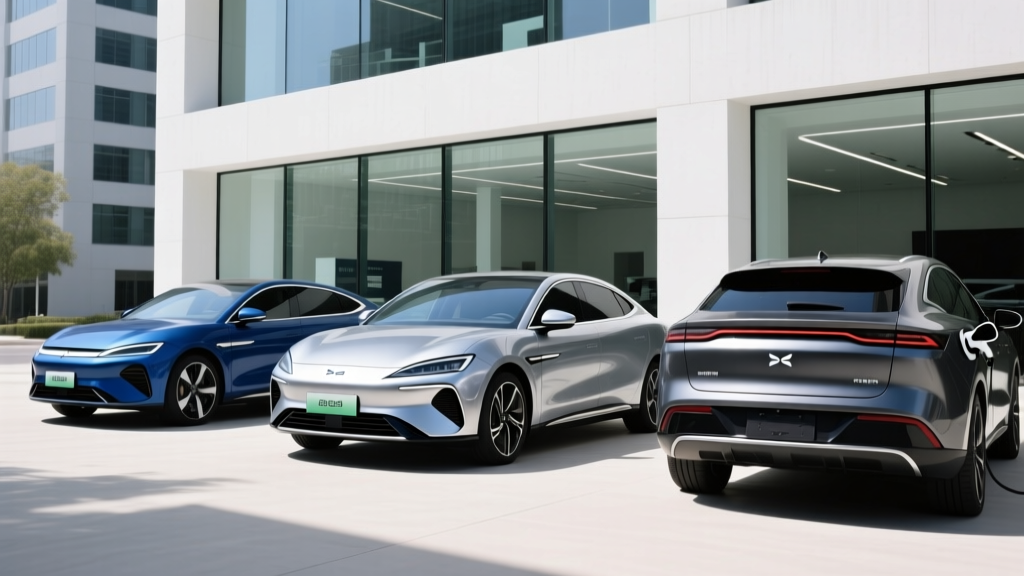
As of 2026, no Chinese-branded electric vehicles are officially sold through US dealership networks. Steep federal tariffs — 100% on Chinese-manufactured EVs imposed in 2024 and sustained through 2026 — have effectively blocked direct imports from brands like BYD, NIO, Xpeng, and Zeekr. However, Chinese-owned brands manufacturing outside China (such as Volvo, Polestar, and Lotus under Geely ownership) are available, and some Chinese-made battery components appear in US-assembled vehicles. If you're searching for Chinese electric cars for sale in the USA, your realistic options are limited to these indirect pathways, which we detail below with exact pricing, range data, and ownership costs.
Why Chinese EVs Aren't on US Dealer Lots
The barrier isn't technology — it's trade policy. In May 2024, the Biden administration raised tariffs on Chinese-manufactured electric vehicles from 25% to 100% under Section 301 of the Trade Act. This tariff structure remains in effect in 2026. A BYD Seal that retails for roughly $38,000 in China would face an effective US landed cost exceeding $76,000 before dealer markup, making it uncompetitive against domestically assembled alternatives.
The policy rationale cites unfair subsidies and intellectual property concerns, but the practical effect is straightforward: Chinese OEMs cannot price their vehicles competitively in the US market. BYD, the world's largest EV manufacturer by volume as of late 2025, has publicly stated it has no near-term plans for US passenger vehicle sales, focusing instead on Europe, Southeast Asia, and Latin America.
What About Chinese-Owned Brands You Can Buy?
Several brands with Chinese parent companies do sell in the US, but their vehicles are manufactured in Europe, South Korea, or other non-China facilities:
| Brand | Parent Company | Manufacturing Origin | US Availability (2026) |
|---|---|---|---|
| Volvo (EX30, EX90) | Geely (China) | Belgium, South Carolina | Yes — US-spec models available |
| Polestar (Polestar 3, 4) | Geely (China) | South Korea, China* | Yes — non-China-built trims |
| Lotus (Eletre) | Geely (China) | China | Limited — tariff-affected pricing |
*Polestar shifted some US-bound production to South Korea to avoid the 100% tariff.
Real Costs: What Chinese-Owned EVs Actually Cost US Buyers
Let's examine the actual purchase and ownership economics of the most accessible Chinese-connected EVs available in 2026, compared against mainstream US-market alternatives.
| Vehicle | Base MSRP | EPA Range | Battery (kWh) | Peak DC Charge (kW) | 10-80% Time | Federal §30D Credit Eligible? |
|---|---|---|---|---|---|---|
| Volvo EX30 Single Motor | $36,345 | 265 mi | 69 kWh (NMC) | 153 kW | ~26 min | Yes — if income/MSRP caps met |
| Polestar 4 Long Range | $56,300 | 300 mi | 102 kWh (NMC) | 200 kW | ~22 min | Partial — sourcing dependent |
| Tesla Model Y (baseline) | $44,990 | 320 mi | 75 kWh (LFP) | 250 kW | ~18 min | Yes — full $7,500 |
| Hyundai Ioniq 5 SE | $42,600 | 303 mi | 77.4 kWh (NMC) | 240 kW | ~18 min | Yes — full $7,500 |
Federal Tax Credit Nuances
The IRS §30D clean vehicle credit offers up to $7,500, but eligibility hinges on battery component sourcing and critical mineral requirements that tighten annually. Chinese-manufactured battery cells or modules disqualify a vehicle entirely under the "foreign entity of concern" (FEOC) rules effective since 2024. This means any vehicle with CATL or BYD-sourced cells — even if assembled in the US — loses credit eligibility. Always verify current eligibility on fueleconomy.gov before purchasing, as sourcing changes can alter qualification mid-model-year.
EV vs. Gas vs. Hybrid: What Should You Actually Buy?
If Chinese EVs aren't available, the real decision is which electrified powertrain suits your situation. Here's the data-driven comparison:
| Factor | BEV (e.g., Tesla Model Y) | PHEV (e.g., Toyota RAV4 Prime) | Gas (e.g., Toyota RAV4) |
|---|---|---|---|
| MSRP (base) | $44,990 | $43,690 | $30,425 |
| After $7,500 credit | $37,490 | $36,190* | $30,425 |
| Fuel/Energy cost per mile | $0.04-0.06 (home L2) | $0.05-0.10 (mixed) | $0.12-0.16 |
| Annual fuel cost (12k mi) | $480-720 | $600-1,200 | $1,440-1,920 |
| Maintenance (5-yr est.) | $1,500-2,500 | $3,000-4,500 | $3,500-5,500 |
| 5-Year Total Cost of Ownership | ~$42,000-48,000 | ~$43,000-52,000 | ~$43,000-52,000 |
*RAV4 Prime credit varies by battery sourcing — verify at purchase.
Real-World Ownership: What First-Time EV Buyers Must Know
Home Charging Is Non-Negotiable for Most Owners
Approximately 80-85% of EV charging happens at home. If you lack access to a dedicated 240V Level 2 circuit (or at minimum a standard 120V outlet in a garage or driveway), EV ownership becomes significantly more expensive and inconvenient. Public DC fast charging costs $0.30-0.50/kWh — roughly 3-5x the cost of home electricity at the national average of $0.16/kWh.
A Level 2 home charger installation typically runs $800-2,500 for the equipment and electrician labor, assuming your electrical panel has spare capacity. If you need a panel upgrade from 100A to 200A service, add $1,500-3,500. Factor this into your total purchase budget.
Cold-Weather Range Loss Is Real
Lithium-ion batteries lose 20-40% of their EPA-rated range in sustained sub-freezing temperatures. A 300-mile EPA vehicle may deliver only 180-240 miles in January in Minnesota or Maine. Vehicles equipped with heat pumps (standard on most 2026 models from Tesla, Hyundai, Volvo) mitigate this loss to approximately 15-25%, but it never disappears entirely. If you live in a cold climate and regularly drive more than 150 miles one-way, plan for this reduction.
Charging Speed Tapers Above 80%
Manufacturers advertise peak DC fast-charge rates (e.g., "250 kW"), but that peak only applies at low state-of-charge (typically 10-40%). Above 80%, charging power drops dramatically to protect battery health — often to 50 kW or less. A "10-80% in 18 minutes" claim is realistic; an "80-100% in 10 minutes" claim is not. Plan road-trip stops around the 10-80% window for efficiency.
Common Misconceptions About Chinese EVs in America
| Myth | Fact |
|---|---|
| "BYD and NIO are sold in the US" | Neither brand has US retail operations in 2026. BYD sells commercial buses and trucks in limited US fleet applications, but no passenger vehicles. |
| "Chinese EVs are cheap and low quality" | BYD's Seal and Han models score competitively in Euro NCAP testing. The barrier is tariff policy, not product quality. |
| "I can import a Chinese EV myself" | Federal importation requires EPA and DOT certification, crash testing, and compliance with FMVSS standards. Individual import of non-certified vehicles is effectively prohibited for road use. |
| "Volvo is still Swedish" | Volvo Cars has been owned by China's Geely Holding since 2010. Design and engineering remain in Gothenburg, Sweden, but corporate control is Chinese. |
| "The tariff will be lifted soon" | As of early 2026, no bipartisan legislative effort exists to reduce the 100% EV tariff. Policy change is unlikely before 2028 at the earliest. |
Decision Framework: Should You Wait for Chinese EVs or Buy Now?
Choose to Buy a US-Available EV Now If:
- You need a vehicle within 6 months and cannot delay your purchase
- You qualify for the §30D credit (income under $150K single / $300K joint, vehicle MSRP under $55K cars / $80K SUVs/trucks)
- You have home charging access or a confirmed installation plan
- Your daily driving is under 80 miles round-trip with occasional longer road trips
Consider Waiting If:
- Your current vehicle is functional for another 2-3 years and you're speculating on tariff changes
- You specifically want a BYD or NIO model and are willing to wait indefinitely with no guarantee of US availability
- You live in an apartment without charging access and your municipality has no public charging infrastructure plan
Consider a PHEV Instead If:
- You lack reliable home charging but want some electric-only driving (typically 25-42 miles)
- You regularly drive in rural areas with sparse DC fast-charging coverage
- You want to reduce fuel costs without range-anxiety risk on long trips
5-Year Ownership Cost Reality
Here's what ownership actually costs for a typical US-market EV vs. the gas equivalent, using the Tesla Model Y and Toyota RAV4 as representative examples over 60 months and 60,000 miles:
| Cost Category | Tesla Model Y LR ($44,990) | Toyota RAV4 LE ($30,425) |
|---|---|---|
| Purchase price (after credit) | $37,490 | $30,425 |
| Insurance (5-yr avg.) | $9,500-12,000 | $6,500-8,500 |
| Fuel/Energy (5 yr) | $2,400-3,600 | $7,200-9,600 |
| Maintenance (5 yr) | $1,800-2,800 | $3,500-5,000 |
| Depreciation (est.) | $15,000-19,000 | $10,000-13,000 |
| Total 5-Year Cost | $66,190-74,890 | $57,625-66,525 |
EVs carry higher insurance premiums (typically 15-25% above gas equivalents due to repair costs and parts pricing) and steeper initial depreciation, but dramatically lower fuel and maintenance expenses. The break-even point vs. a gas vehicle typically arrives around year 4-6 depending on mileage, local electricity rates, and whether you captured the full federal credit.
Frequently Asked Questions
Can I buy a BYD vehicle in the United States in 2026?
No. BYD does not sell passenger vehicles through any US retail channel. The 100% federal tariff makes direct import economically unviable, and BYD has not announced plans for US-market passenger car sales.
Are Volvo and Polestar considered Chinese cars?
They are owned by China's Geely Holding Group, but their US-market vehicles are manufactured in Belgium, South Carolina, or South Korea — not China. This distinction matters for both tariff avoidance and §30D tax credit eligibility.
Will Chinese EV tariffs be reduced in the near future?
There is no active legislative effort to reduce the 100% tariff as of early 2026. Trade policy shifts are possible but unlikely before the next presidential administration cycle at the earliest.
What's the cheapest EV I can actually buy in the US right now?
The Nissan LEAF S starts at approximately $28,140 (2026 model year) with 149 miles of EPA range, and the Chevrolet Equinox EV LT starts around $33,000 with 319 miles of range. Both may qualify for the §30D credit depending on your income and the vehicle's battery sourcing at time of purchase.
Is it worth buying an EV if I can't charge at home?
Generally, no — unless you have reliable access to workplace Level 2 charging or live near affordable public DC fast chargers. Public charging at $0.35-0.50/kWh erases most of the fuel-cost advantage over gasoline, and the time cost of 20-40 minute charging stops adds friction to daily use.
Do Chinese-made batteries in US cars affect quality or safety?
CATL and BYD are among the world's largest battery suppliers, and their cells meet international safety standards. However, their presence in a vehicle's battery pack triggers FEOC disqualification under §30D rules, meaning the vehicle loses federal tax credit eligibility. This is a trade-policy issue, not a safety concern. NHTSA crash-test ratings remain the authoritative safety benchmark regardless of battery origin.