Quick Verdict: A Genuine Subaru, But an Underwhelming EV
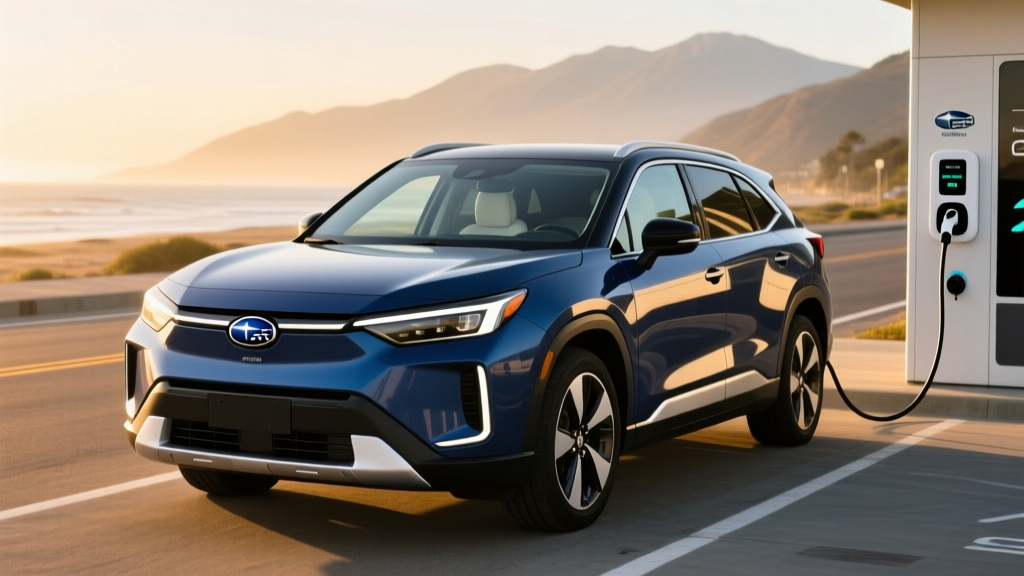
The 2024 Subaru Solterra is the brand's first dedicated battery-electric vehicle, built on the e-TGBL platform co-developed with Toyota (its twin is the bZ4X). It delivers standard all-wheel drive, 8.3 inches of ground clearance, and the X-MODE traction system that loyal Subaru buyers expect. But as an EV in a segment now stacked with 300+ mile competitors, the Solterra's modest range and slow DC charging are hard to overlook — even after a significant charging speed improvement over the 2023 model year.
For 2024, Subaru raised the DC fast-charging ceiling from roughly 100 kW to approximately 130 kW on higher trims, added a battery preconditioning feature, and kept pricing competitive. The question is whether Subaru's off-road credibility and standard AWD are enough to offset a 228-mile EPA range ceiling and a charging curve that still trails the Hyundai Ioniq 5 and Kia EV6 by a wide margin.
Range, Efficiency & the Real-World Reality Check
Real-World Expectation: Plan on roughly 190–210 miles on a highway road trip at 70 mph in mild weather. In cold conditions (below 30°F), expect that to drop to 160–180 miles. City driving with regenerative braking can push closer to the EPA sticker, sometimes slightly above.
The Solterra carries a 71.4 kWh usable lithium-ion battery (approximately 72.8 kWh gross) using NMC (nickel-manganese-cobalt) cell chemistry supplied by CATL and Panasonic, depending on the production batch. This is a modestly sized pack for a 4,365-pound crossover, and it shows in the efficiency numbers.
According to fueleconomy.gov, the 2024 Solterra achieves:
| Metric | Premium (18" wheels) | Limited / Touring (20" wheels) |
|---|---|---|
| Combined MPGe | 107 MPGe | 102 MPGe |
| City MPGe | 114 MPGe | 111 MPGe |
| Highway MPGe | 99 MPGe | 93 MPGe |
| kWh / 100 miles | 32 kWh | 34 kWh |
| EPA Range | 227 miles | 222 miles (Limited), 228 miles (Touring)* |
*EPA range varies slightly by trim and equipment. Verify on the window sticker.
The efficiency penalty of the larger 20-inch wheels and standard AWD is real. Competitors like the Hyundai Ioniq 5 (114 MPGe combined on SEL AWD with a 77.4 kWh pack and 260-mile range) extract more miles per kilowatt-hour from a similar footprint. The Solterra's boxy shape, heavy curb weight, and all-terrain tire compound (on certain trims) all contribute to its thirstier consumption.
Charging: Improved for 2024, Still a Weak Point
Charging speed was the 2023 Solterra's most criticized flaw, and while Subaru made meaningful upgrades for 2024, the results still place the Solterra behind segment leaders. Here's what you need to know, distinguishing between kW (the rate of power delivery — think of it as how fast water flows through a hose) and kWh (the total energy stored in the battery — the size of the tank).
| Charging Level | Max Rate | Time / Miles Added |
|---|---|---|
| Level 1 (120V household) | ~1.4 kW | ~3–4 miles per hour |
| Level 2 (240V home / public) | ~7.2 kW (onboard charger) | ~22–25 miles per hour; full charge ~9.5 hours |
| DC Fast Charge (CCS) | Up to ~130 kW peak (2024 update) | 10–80% in approximately 35 minutes* |
*10–80% time is under ideal conditions with a preconditioned battery and a capable 150+ kW CCS charger. Real-world sessions on Electrify America or EVgo often average 80–100 kW sustained, stretching the 10–80% window closer to 40–45 minutes.
The 2024 model year brought a battery preconditioning feature — accessible through the infotainment system — that warms the pack before a DC fast-charging session. This matters enormously: without preconditioning, cold-soaked batteries can see peak rates cut in half. Always activate preconditioning when navigating to a charger.
However, the charging curve still tapers aggressively past 80% state of charge (SoC). The last 20% can take as long as the first 70%, which is typical of NMC chemistry but more pronounced here than in the Ioniq 5's 800-volt architecture (which sustains high rates longer and achieves 10–80% in roughly 18 minutes at a 350 kW charger).
For home Level 2 charging, the 7.2 kW onboard charger is adequate but not generous. A full 0–100% session takes about 9.5 hours, meaning most owners charging overnight from 20% will wake up to a full battery — but those with shorter overnight windows (e.g., arriving home at 11 PM and leaving at 6 AM) may not fully replenish after a heavy driving day.
Performance, Drivetrain & the Subaru DNA
| Spec | All Trims |
|---|---|
| Drivetrain | Dual-motor AWD (standard) |
| Horsepower | 215 hp (combined) |
| Torque | 248 lb-ft |
| 0–60 mph | ~6.5 seconds |
| Top Speed | ~108 mph (electronically limited) |
| Ground Clearance | 8.3 inches |
| Towing Capacity | Not rated for towing |
The dual-motor AWD system is where the Solterra earns its Subaru badge. X-MODE is standard, offering Snow/Dirt and Deep Snow/Mud settings that modulate torque distribution and traction control for low-grip surfaces. In our experience on gravel forest roads and light snow, the Solterra's AWD system is genuinely capable — better than most crossover EVs that simply apportion torque front-to-rear without terrain logic.
The 6.5-second 0–60 time is adequate for merging and passing but won't excite anyone coming from a Tesla Model Y Performance (3.5 seconds) or even the Ioniq 5 AWD (5.0 seconds). The Solterra prioritizes low-speed tractability and off-road crawl control over straight-line speed.
One notable omission: the Solterra is not rated for towing. For buyers who need to pull a small trailer or bike rack with a hitch receiver, this is a dealbreaker. The Hyundai Ioniq 5 and Kia EV6 both offer a 1,650-pound tow rating on AWD trims.
Interior, Cargo & Daily Practicality
The Solterra's cabin is functional and durable rather than luxurious. Hard plastics appear on the lower door panels and center console — a Subaru tradition — but the upper dash uses soft-touch materials and the overall build quality is solid.
| Measurement | Specification |
|---|---|
| Cargo Volume (behind 2nd row) | 23.8 cu ft |
| Cargo Volume (seats folded) | 63.5 cu ft |
| Front Legroom | 42.1 inches |
| Rear Legroom | 35.7 inches |
| Front Headroom | 39.9 inches |
| Rear Headroom | 38.2 inches |
| Frunk (Front Trunk) | None |
The absence of a frunk is a missed opportunity — many competitors offer 0.8–2.0 cu ft of under-hood storage for charging cables. The 23.8 cu ft rear cargo area is competitive with the Toyota bZ4X (identical platform) but trails the Ioniq 5 (27.2 cu ft) and Model Y (30.2 cu ft). Rear legroom at 35.7 inches is tight for taller passengers on long trips.
The 12.3-inch touchscreen infotainment system (standard on Limited and Touring; 8.0-inch on Premium) supports wireless Apple CarPlay and Android Auto. Subaru's latest Starlink connected services include remote charging status, preconditioning scheduling, and OTA (over-the-air) update capability. The digital gauge cluster sits high on the dash, positioned to reduce eye movement — similar to Peugeot's i-Cockpit approach.
Pricing, Trims & Federal Tax Credit Eligibility
| Trim | Base MSRP | Est. Price After §30D Credit* |
|---|---|---|
| Premium | $44,995 | ~$37,495 |
| Limited | $48,495 | ~$40,995 |
| Touring | $51,995 | ~$44,495 |
*Prices include destination charge. Tax credit eligibility depends on buyer income, battery sourcing, and MSRP caps. See details below.
The 2024 Solterra qualifies for the IRS §30D federal tax credit, but eligibility is not automatic for every buyer. Here's the checklist:
- MSRP Cap: The Solterra is classified as an SUV/crossover, so the MSRP cap is $80,000. All trims clear this easily.
- Buyer Income Cap: Modified adjusted gross income (MAGI) must not exceed $150,000 (single), $225,000 (head of household), or $300,000 (married filing jointly).
- Battery Sourcing: The credit is split into two halves — $3,750 for critical minerals and $3,750 for battery component assembly. As of the 2024 model year, the Solterra qualifies for the full $7,500 based on Subaru's supply chain disclosures, but sourcing rules tighten annually. Verify current eligibility at the point of sale.
- Point-of-Sale Transfer: Beginning in 2024, buyers can transfer the credit to the dealer at purchase, reducing the purchase price directly rather than waiting to claim it on their tax return. This requires the dealer to be registered with the IRS Energy Credits portal.
Consult a tax professional for your specific situation — the credit is non-refundable, meaning you need sufficient tax liability to benefit from it if you don't use the point-of-sale transfer option.
Battery Warranty & Long-Term Ownership
Subaru provides a battery warranty of 8 years / 100,000 miles, guaranteeing that the high-voltage battery will retain at least 70% of its original capacity during that period. The powertrain warranty is 5 years / 60,000 miles, and the limited vehicle warranty is 3 years / 36,000 miles.
NMC batteries in this class typically degrade 10–15% over the first 100,000 miles under normal use patterns. Subaru's 70% retention threshold is industry-standard but less generous than Hyundai's 8 years / 100,000 miles at 70% (identical terms) or Tesla's 8 years / 120,000 miles at 70% for Model Y. The Solterra's smaller battery means each percentage point of degradation translates to fewer lost miles — a 15% loss on a 228-mile range leaves roughly 194 miles, which is still livable for most commutes.
Replacement cost for the entire battery pack is estimated at $12,000–$18,000 out of warranty, though individual module replacement may be possible at lower cost depending on the failure mode.
How It Compares: Solterra vs. the Competition
| Spec | Solterra Touring | Hyundai Ioniq 5 SEL AWD | Kia EV6 Wind AWD | Tesla Model Y Long Range |
|---|---|---|---|---|
| EPA Range | 228 mi | 260 mi | 282 mi | 310 mi |
| Battery (usable kWh) | 71.4 | 77.4 | 77.4 | 75.0 |
| Peak DC Charge kW | ~130 kW | ~240 kW | ~240 kW | ~250 kW |
| 10–80% DCFC Time | ~35 min | ~18 min | ~18 min | ~25 min |
| 0–60 mph | 6.5 sec | 5.0 sec | 5.1 sec | 4.8 sec |
| AWD | Standard | Optional | Optional | Standard |
| Base MSRP (AWD equivalent) | $44,995 | $49,600 | $50,900 | $48,990 |
| Ground Clearance | 8.3 in | 6.1 in | 6.1 in | 6.6 in |
| Towing | Not rated | 1,650 lbs | 2,700 lbs | 3,500 lbs |
The Solterra wins on ground clearance and standard AWD pricing — it's the cheapest way to get dual-motor all-wheel drive in this group. It also wins on off-road capability thanks to X-MODE. But it loses decisively on range, charging speed, and performance.
- You need genuine AWD traction for snow, gravel, or light off-road use
- You value Subaru's safety reputation and standard EyeSight driver assists
- Your daily commute is under 100 miles round-trip with home charging
- You want standard AWD under $45,000 before incentives
- You road-trip frequently and need fast DC charging (Ioniq 5 / EV6)
- You need more than 230 miles of real-world range (Model Y, Ioniq 5 Extended Range)
- You need towing capability
- You want a frunk or maximum cargo space
Safety & Driver Assistance
Subaru's EyeSight suite is standard across all trims, including adaptive cruise control with lane centering, pre-collision braking, lane departure warning, and lead vehicle start alert. This is an SAE Level 2 driver-assistance system — meaning the driver must remain fully engaged with hands on the wheel and eyes on the road at all times. It is not autonomous driving.
The Insurance Institute for Highway Safety (IIHS) awarded the Solterra (tested as the Toyota bZ4X twin) good ratings in most crashworthiness categories. The NHTSA has also rated the platform. Always verify the latest model-year scores, as testing protocols evolve.
Pros, Cons & Who Should Buy
Pros
- Standard dual-motor AWD on every trim
- 8.3 inches of ground clearance; genuine X-MODE off-road capability
- Full $7,500 federal tax credit eligibility (subject to income/sourcing rules)
- Competitive starting price for a standard-AWD electric SUV
- Subaru's strong safety reputation and EyeSight suite
- Battery preconditioning added for 2024
Cons
- 228-mile EPA range is below segment average
- DC fast charging peaks at ~130 kW — 10–80% takes ~35 minutes
- No frunk (front trunk)
- Not rated for towing
- Rear legroom is tight at 35.7 inches
- Heavy for its battery size, hurting efficiency
Who it's best for: The 2024 Solterra fits Subaru loyalists who live in snow-belt states or rural areas with unpaved roads, have reliable home Level 2 charging, and whose daily driving stays under 120 miles. It's a commuter and weekend-adventure vehicle — not a road-trip machine.
Who should look elsewhere: Frequent highway travelers, those without home charging access (the Solterra's slow DC charging makes public-only ownership painful), and anyone who needs towing or maximum cargo room should cross-shop the Ioniq 5, EV6, or Model Y.
Frequently Asked Questions
What is the real-world range of the 2024 Subaru Solterra?
In mixed driving at moderate temperatures, expect 200–215 miles. On a 70 mph highway trip, plan for 185–200 miles. In cold weather below 30°F, range drops to approximately 160–180 miles. The EPA sticker of 228 miles is achievable in city driving with regenerative braking but optimistic for highway use.
How fast does the 2024 Solterra charge at home and on DC fast chargers?
At home on a 240V Level 2 charger, the Solterra adds roughly 22–25 miles per hour at its 7.2 kW onboard charger rate, taking about 9.5 hours from empty to full. On a DC fast charger, it peaks at approximately 130 kW (a 2024 improvement over the 2023 model's ~100 kW), reaching 10–80% in about 35 minutes under ideal conditions. Real-world sessions often average 80–100 kW, extending that to 40–45 minutes.
Does the 2024 Solterra qualify for the $7,500 federal EV tax credit?
Yes, the 2024 Solterra currently qualifies for the full $7,500 under IRS §30D, but eligibility depends on your income (MAGI caps of $150K single / $300K joint), and battery sourcing requirements that tighten annually. The credit can be transferred to the dealer at point of sale to reduce the purchase price directly. Always verify eligibility with your dealer and a tax professional at the time of purchase, as rules change.
Is the Solterra worth buying over the Hyundai Ioniq 5 or Tesla Model Y?
It depends on your priorities. If you need standard AWD under $45K, high ground clearance, and off-road traction for snow or gravel, the Solterra is uniquely capable. If you prioritize range (260–310 miles), fast charging (18–25 minutes to 80%), towing, or interior space, the Ioniq 5 or Model Y are objectively better EVs. The Solterra is a great Subaru but a middling electric vehicle.
What are the biggest drawbacks of the 2024 Solterra?
The three biggest limitations are range (228 miles EPA, less in real-world highway and cold driving), slow DC fast charging (~130 kW peak, 35+ minutes to 80%), and no towing rating. Secondary complaints include the lack of a frunk, tight rear legroom, and the use of hard plastics in the cabin.
Does the Solterra have one-pedal driving?
The Solterra offers strong regenerative braking with steering-wheel paddle selectors to adjust regen intensity, but it does not offer true one-pedal driving that brings the car to a complete stop and holds it without brake pedal input. You'll still use the brake pedal for full stops.