If you own a 2024–2026 Chevrolet Equinox EV, Blazer EV, Silverado EV, or Cadillac Lyriq, your vehicle left the factory with a CCS1 charge port. General Motors has transitioned to the North American Charging Standard (NACS) for future models, but for current CCS-equipped GM EVs, the GM approved NACS DC adapter is the essential bridge to accessing Tesla's Supercharger network — the largest and most reliable DC fast-charging network in North America.
This guide covers exactly how the adapter works, what speeds you can expect, how to set up home charging for your GM EV, and what you'll pay per mile compared to gas. We'll also break down the electrical requirements, installation costs, and equipment picks so you can plan a complete charging setup with real numbers.
Why GM EV Owners Need the NACS DC Adapter
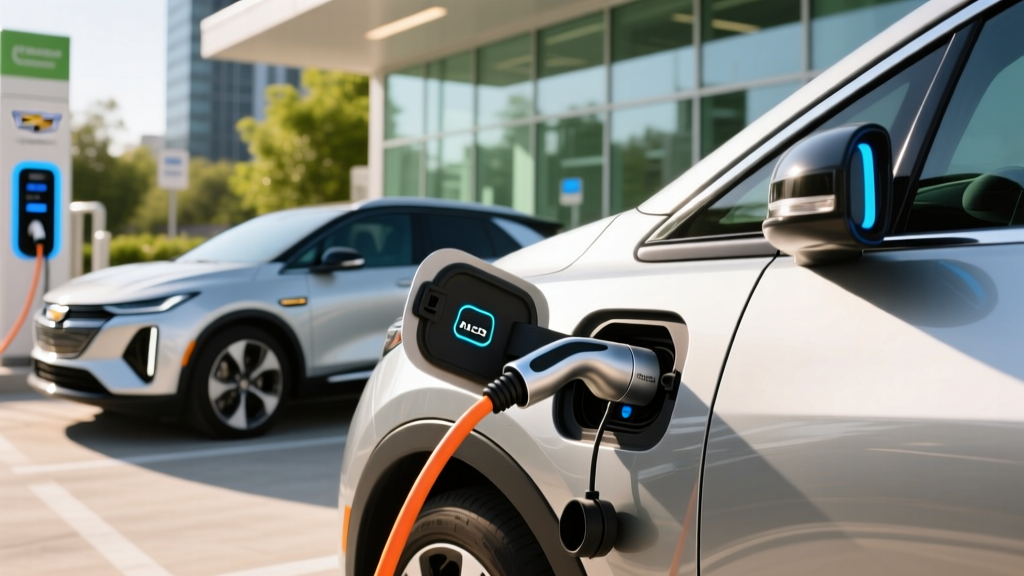
Starting in 2024, GM began granting CCS-equipped EVs access to Tesla Superchargers via a proprietary adapter. The GM approved NACS DC adapter (officially the GM-to-NACS DC fast-charge adapter) converts your vehicle's CCS1 inlet to accept the NACS connector found on all Tesla Supercharger stalls. Without it, you're limited to Electrify America, EVgo, ChargePoint, and other CCS networks.
Why does this matter? Tesla's Supercharger network operates over 60,000 connectors globally, with industry-leading uptime exceeding 99%. For GM EV owners planning road trips, the adapter unlocks thousands of additional fast-charging stops that CCS-only drivers simply can't reach.
Charging Levels Explained: Speeds, Power, and Range Added
Before we get into installation and costs, let's clarify the three charging levels available to your GM EV. Remember: kW (kilowatts) measures power — how fast energy flows into your battery. kWh (kilowatt-hours) measures energy — the total capacity stored in your battery. Confusing these two is the most common EV literacy mistake.
| Level | Voltage / Amperage | Power (kW) | Miles of Range Added per Hour | Best For |
|---|---|---|---|---|
| Level 1 | 120V / 12A | ~1.4 kW | 3–5 mi/hr | Overnight trickle, PHEVs, emergencies |
| Level 2 | 240V / 32–48A | 7.7–11.5 kW | 25–42 mi/hr | Daily home charging, workplace, destinations |
| DC Fast | 400–800V DC | 50–350 kW | 150–600+ mi/hr (peak) | Road trips, quick top-ups |
Real-World Charging Time Examples
Here's what charging looks like for common GM EV battery sizes, from 10% to 80% State of Charge (SoC):
- Chevrolet Equinox EV (85 kWh usable, Ultium NMC): ~32 minutes on a 150 kW DC fast charger; ~9 hours on a 9.6 kW Level 2 home charger.
- Cadillac Lyriq (102 kWh usable, Ultium NMC): ~34 minutes on a 190 kW DC fast charger; ~11 hours on a 9.6 kW Level 2.
- Chevrolet Silverado EV (200+ kWh usable, Ultium NMC): ~40 minutes on a 350 kW DC fast charger; ~21+ hours on a 9.6 kW Level 2.
Charging curve reality: Peak kW rates are not sustained. A GM EV rated for 190 kW DC fast charging will peak near that rate between roughly 10–40% SoC, then taper progressively. By 80%, charge speed may drop to 40–60 kW. This is why manufacturers quote 10–80% times rather than 0–100%. Charging past 80% on DC is slow and generates excess heat — save it for Level 2 at home.
GM Approved NACS DC Adapter: Specs, Pricing, and Compatibility
The official GM adapter is sold through Chevrolet and Cadillac dealerships and the GM accessories store. Here's what you need to know:
| Specification | Detail |
|---|---|
| Connector (vehicle side) | CCS1 (Combo) |
| Connector (charger side) | NACS (Tesla) |
| Max DC power throughput | ~190 kW (vehicle-limited, not adapter-limited) |
| AC charging support | No — DC fast charging only |
| Compatible GM vehicles | 2024–2026 Equinox EV, Blazer EV, Silverado EV, Cadillac Lyriq, Cadillac Optiq (CCS-equipped) |
| Approximate MSRP | $225–$400 (varies by dealer and model year) |
Connector Compatibility: Which Plug Fits Your GM EV?
Understanding which connectors work with your GM EV — and where you'll need an adapter — prevents frustration at the charger.
| Connector Type | AC / DC | Native GM Compatibility | Adapter Needed? | Where You'll Find It |
|---|---|---|---|---|
| J1772 | AC (Level 1 & 2) | Yes (top portion of CCS inlet) | No | Home chargers, public Level 2, workplaces |
| CCS1 (Combo) | DC Fast | Yes | No | Electrify America, EVgo, ChargePoint DC |
| NACS (Tesla) | DC Fast | No (2024–2026 CCS models) | Yes — GM approved NACS DC adapter | Tesla Superchargers |
| CHAdeMO | DC Fast | No | Not available | Legacy Nissan Leaf stations (being phased out) |
Looking ahead: GM has confirmed that 2025+ model-year vehicles (starting with certain 2025 trims and expanding through 2026) will ship with native NACS ports. If you're buying a 2027+ GM EV, you'll likely have NACS natively and need a CCS adapter instead for legacy networks.
Home Level 2 Charger Installation: Electrical Requirements and Costs
Installing a Level 2 home charger is the single most impactful upgrade for daily EV ownership. Here's exactly what's involved for a GM EV owner.
Electrical Requirements
A Level 2 charger for your Equinox EV, Lyriq, or Silverado EV requires a dedicated 240-volt circuit. The specific amperage depends on your charger:
- 32-amp charger (7.7 kW): Requires a 40-amp breaker (NEC requires circuits rated at 125% of continuous load).
- 40-amp charger (9.6 kW): Requires a 50-amp breaker.
- 48-amp charger (11.5 kW): Requires a 60-amp breaker.
Most GM EVs accept up to 11.5 kW on Level 2 AC, so a 48-amp charger maximizes your vehicle's onboard charger capability. However, the Silverado EV's massive battery benefits enormously from the higher amperage — a 48A charger adds roughly 42 miles of range per hour versus 25 miles on a 32A unit.
Panel Upgrade Considerations
This is where costs can escalate. If your home's electrical panel is already near capacity (common in homes built before 2000 with 100-amp service), you may need a panel upgrade to 200 amps before adding a 50–60 amp EV circuit. Signs you might need an upgrade:
- Your panel is 100A or 125A total service
- You already run high-draw appliances (electric range, dryer, HVAC, hot tub)
- Your panel has no available breaker slots
- You notice flickering lights or warm breakers under load
Cost reality: A panel upgrade adds $1,500–$3,500 to your project. Some homeowners opt for a smart load-management device (like the Emporia Smart Load Center or Span panel) that dynamically shares amperage between the EV charger and other appliances, avoiding a full panel upgrade.
Installation Cost Breakdown
| Component | Simple Install (panel nearby) | Complex Install (long run / panel upgrade) |
|---|---|---|
| Level 2 charger equipment | $350–$700 | $350–$700 |
| Electrician labor (2–6 hours) | $300–$600 | $800–$2,000 |
| Electrical permit | $50–$150 | $50–$200 |
| Conduit, wiring, materials | $50–$150 | $200–$600 |
| Panel upgrade (if needed) | N/A | $1,500–$3,500 |
| Total estimated cost | $750–$1,600 | $2,900–$7,000 |
Important: Always hire a licensed electrician and pull a permit. Unpermitted EV charger installations can void homeowner's insurance claims and create fire hazards. The National Electrical Code (NEC) requires a dedicated circuit with GFCI protection for outdoor installations and specific wire gauge (typically 6 AWG copper for a 50A circuit).
Level 2 Charger Equipment Recommendations for GM EVs
Not all Level 2 chargers are equal. Here are three proven options matched to GM EV onboard charger capabilities (up to 11.5 kW / 48A):
Best Overall: ChargePoint Home Flex
- Power output: Up to 11.5 kW (48A), configurable down to 16A
- Connector: J1772 (plugs directly into GM CCS inlet)
- Cable length: 23 feet
- Smart features: Wi-Fi, app scheduling, energy tracking, Alexa integration
- Price: ~$549
- NEMA rating: NEMA 4 (indoor/outdoor)
Best Value: Emporia Level 2 EV Charger
- Power output: Up to 11.5 kW (48A)
- Connector: J1772
- Cable length: 24 feet
- Smart features: Wi-Fi, real-time energy monitoring, solar integration, load management
- Price: ~$399
- NEMA rating: NEMA 4 (indoor/outdoor)
Premium Pick: Wallbox Pulsar Plus
- Power output: Up to 11.5 kW (48A)
- Connector: J1772
- Cable length: 25 feet
- Smart features: Wi-Fi + Bluetooth, Power Sharing (dual charger), compact design
- Price: ~$649
- NEMA rating: NEMA 4 (indoor/outdoor)
Safety and Code Considerations
Regardless of which charger you choose, ensure these safety requirements are met:
- Dedicated circuit: Your EV charger must have its own breaker — never share a circuit with other appliances.
- GFCI protection: Required for all outdoor installations per NEC 2020+. Many modern chargers have built-in GFCI; confirm with your electrician.
- Outdoor rating: If mounting outside, choose a NEMA 4-rated unit. NEMA 3R is minimum but NEMA 4 provides better protection against driven rain and ice.
- Wire gauge: 6 AWG copper for 50A circuits; 4 AWG for 60A circuits. Aluminum wire requires upsizing.
- Cable management: A 23–25 foot cable prevents stretching across driveways. Consider a retractable mount if your parking spot varies.
Cost to Charge: Home vs. Public DC Fast vs. Gas
The economic case for EV ownership hinges on charging costs. Let's run the numbers for a 2026 Chevrolet Equinox EV (EPA-estimated 319 miles range, ~3.0 mi/kWh efficiency) compared to a comparable gas SUV averaging 28 MPG combined.
| Scenario | Rate | Cost per kWh | Cost per Mile |
|---|---|---|---|
| Home Level 2 (off-peak utility rate) | $0.11/kWh | $0.11 | $0.037 |
| Home Level 2 (standard rate) | $0.16/kWh | $0.16 | $0.053 |
| Public Level 2 (ChargePoint, etc.) | $0.25–$0.35/kWh | $0.30 avg | $0.100 |
| DC Fast (Tesla Supercharger w/ adapter) | $0.28–$0.42/kWh | $0.35 avg | $0.117 |
| DC Fast (Electrify America) | $0.36–$0.52/kWh | $0.44 avg | $0.147 |
| Gas SUV (28 MPG, $3.40/gal) | $3.40/gallon | N/A | $0.121 |
Using the GM NACS Adapter at Tesla Superchargers: Step by Step
Once you have the adapter, the Supercharger experience is straightforward but has a few quirks GM owners should know:
- Set up your accounts: Download the Tesla app and create an account. Link your GM vehicle using the "Charge Your Non-Tesla EV" feature. Add a payment method.
- Locate Superchargers: In the Tesla app, filter for Superchargers with "Magic Dock" or NACS connectors open to non-Tesla vehicles. Not all Supercharger stalls have been opened to other brands — check before driving there.
- Arrive and connect: Attach the GM approved NACS DC adapter to your vehicle's CCS1 port first, then plug the NACS Supercharger cable into the adapter's NACS end.
- Initiate charging: Use the Tesla app to select the stall number and start the session. Charging begins within seconds.
- Monitor your session: The Equinox EV or Lyriq infotainment screen displays charge rate, SoC, and time to completion. Expect peak rates of 150–190 kW tapering above 60% SoC.
- Disconnect: Stop the session in the Tesla app, unplug the NACS cable, remove the adapter from your vehicle, and store it in the provided case.
Federal Tax Credit for Home Charging Equipment (2026)
The IRS §30D and §25C credits may help offset your home charging installation. Under current 2026 rules, the Alternative Fuel Vehicle Refueling Property Credit (§30C) provides up to 30% of the cost of home EV charging equipment and installation, capped at $1,000. This applies to both the charger hardware and the electrician's labor.
Eligibility requirements include:
- The equipment must be installed at your primary residence
- The property must be located in an eligible census tract (low-income or non-urban area — check IRS guidance for your address)
- The credit covers equipment placed in service during the tax year
- Income caps do not apply to §30C (unlike the vehicle purchase credit)
Consult a tax professional to confirm eligibility, as census-tract qualifications and credit availability are subject to legislative changes.
Frequently Asked Questions
How much does it cost to install a home EV charger?
A straightforward Level 2 installation with an electrical panel nearby typically costs $750–$1,600 including the charger, electrician labor, permit, and materials. If your home needs a panel upgrade or a long conduit run, costs can reach $2,900–$7,000. Always get three quotes from licensed electricians and verify they have EV charger installation experience.
How fast will each charging level add range to my GM EV?
Level 1 (120V standard outlet) adds roughly 3–5 miles per hour — suitable only for PHEVs or emergency trickle charging. Level 2 (240V home charger at 48A) adds 25–42 miles per hour, fully replenishing an Equinox EV overnight. DC fast charging at 150–190 kW adds 150–400+ miles per hour at peak, enabling a 10–80% charge in 30–40 minutes.
Which connector and charger are compatible with my GM EV?
2024–2026 GM EVs use a CCS1 port. For Level 2 AC charging (home and public), any J1772 connector plugs directly into the top portion of your CCS inlet. For DC fast charging at CCS stations (Electrify America, EVgo), no adapter is needed. For Tesla Superchargers, you need the GM approved NACS DC adapter. CHAdeMO connectors are not compatible with any GM EV.
How much does charging cost per mile compared to gas?
Home charging at off-peak utility rates costs approximately $0.037 per mile for an Equinox EV — roughly one-third the cost of a 28 MPG gas SUV at $3.40/gallon ($0.121/mi). Even DC fast charging at Supercharger rates ($0.117/mi) is slightly cheaper than gas. The savings widen significantly with higher gas prices or lower electricity rates.
What electrical upgrades might I need for a home charger?
The most common upgrade is a 200-amp panel upgrade ($1,500–$3,500) if your existing panel is 100A or near capacity. Other potential needs include: adding breaker slots, upgrading the service drop from the utility, installing a sub-panel in the garage, or adding a smart load-management system to avoid panel upgrades. A licensed electrician will assess your panel during a site visit before quoting.
Can I use a third-party CCS-to-NACS adapter instead of the GM approved one?
Third-party adapters exist at lower prices ($150–$300), but using a non-OEM adapter carries risk. If a charging-related electrical fault damages your vehicle's onboard charger or battery management system, GM may deny the warranty claim. The GM approved NACS DC adapter is tested and validated for your specific vehicle's electrical architecture. For a $225–$400 investment, the OEM adapter is worth the peace of mind.
Do I need the NACS adapter for Level 2 home charging?
No. The GM approved NACS DC adapter is exclusively for DC fast charging at Tesla Superchargers. Your home Level 2 charger uses a J1772 connector, which plugs directly into your GM EV's CCS port without any adapter. The adapter is only needed when you pull up to a NACS-equipped DC fast-charging station.