The Short Answer on Polaris Electric Carts
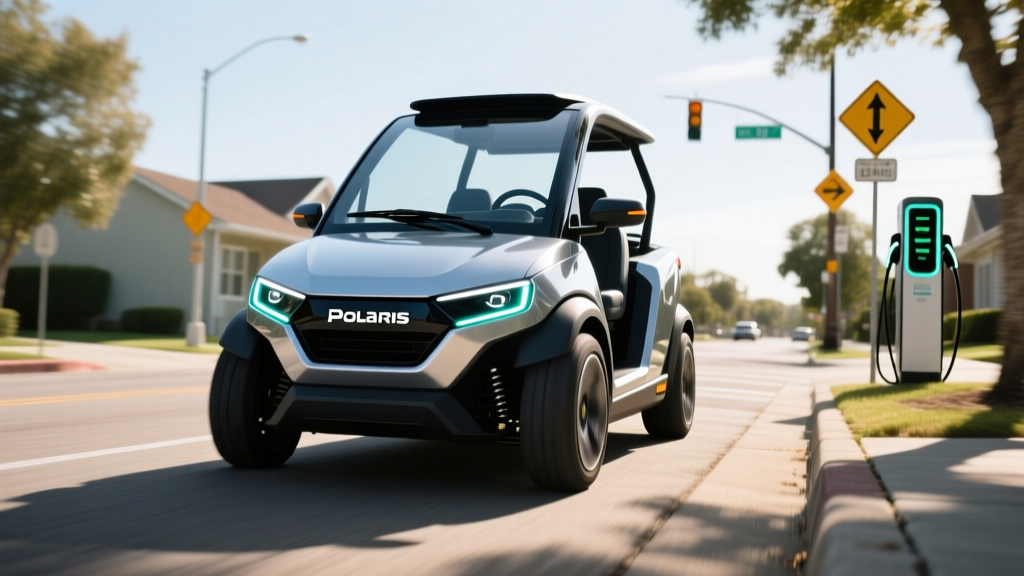
As of 2026, Polaris does not manufacture a full-size, highway-capable electric UTV or side-by-side under its main brand. The Polaris Ranger XP Kinetic — the brand's most prominent electric utility vehicle — was produced through 2024 before Polaris paused the program to reassess its electrification strategy. If you're searching for a "Polaris electric cart," you're likely encountering one of three things: used Ranger XP Kinetic models on the secondary market, Polaris GEM neighborhood electric vehicles (NEVs) that Polaris discontinued in 2022, or aftermarket electric conversions on older Polaris chassis. For neighborhood-speed electric carts, competitors like Club Car, E-Z-GO, and ICON Electric Vehicles dominate the 2026 market. If you need a work-capable electric UTV, the used Ranger XP Kinetic (149 kWh battery, ~45-mile work range) remains the most capable option — but expect to pay $25,000–$35,000 on the resale market with no factory warranty backing.
What Is a Polaris Electric Cart? Understanding the Landscape
The term "Polaris electric cart" gets thrown around in forums and marketplace listings, but it doesn't correspond to a single current-production vehicle. Here's what buyers are actually looking at:
Polaris Ranger XP Kinetic (Discontinued After 2024)
This was a legitimate, full-size electric UTV built on the Ranger XP 1000 platform. It featured a massive 149 kWh lithium-ion battery pack — larger than many highway EVs — and a 110-hp electric motor producing 140 lb-ft of instant torque. Polaris rated it at approximately 45 miles of range under mixed work conditions (stop-and-go trail use, towing, hauling). It was never EPA-rated for highway efficiency because it wasn't street-legal in most jurisdictions. The base MSRP was $29,999 when new, positioning it well above the gas-powered Ranger XP 1000 ($17,000–$22,000 range).
Polaris GEM (Neighborhood Electric Vehicle — Discontinued 2022)
The GEM was a low-speed vehicle (LSV) capped at 25 mph, street-legal on roads with speed limits up to 35 mph in most states. Polaris shut down the GEM line in late 2021, citing shifting market dynamics. Used GEMs (model years 2016–2021) appear on resale sites for $6,000–$14,000 depending on condition and battery health. These ran on lead-acid or lithium packs with 25–35 miles of range.
Aftermarket Electric Conversions
Several shops offer electric motor swaps for older gas Polaris Rangers and Sportsmans. These vary wildly in quality, range (typically 20–40 miles), and safety. There's no standardized spec sheet, and warranty coverage is nonexistent from Polaris.
Polaris Ranger XP Kinetic: The Specs That Mattered
If you're considering a used Ranger XP Kinetic, here are the exact numbers you need to evaluate:
| Spec | Value |
|---|---|
| Battery Capacity | 149 kWh (lithium-ion, NMC chemistry) |
| Motor Output | 110 hp / 140 lb-ft torque |
| Range (Mixed Work Use) | ~45 miles (estimated; no EPA rating for UTVs) |
| Range (Light Trail/Flat Terrain) | ~60–70 miles (owner-reported) |
| Towing Capacity | 2,500 lbs |
| Payload Capacity | 1,250 lbs |
| Top Speed | ~60 mph (governed) |
| Charging (Level 1, 120V) | ~1.4 kW — full charge in 100+ hours |
| Charging (Level 2, 240V) | ~7.2 kW — full charge in ~20 hours |
| DC Fast Charging | Not supported |
| Original MSRP (2024) | $29,999 (base) |
| Used Market Price (2026) | $25,000–$35,000 |
| Warranty (Original) | 1 year factory; now expired for most units |
The 149 kWh battery is the defining feature — and the biggest risk on a used purchase. NMC (nickel manganese cobalt) chemistry offers strong energy density, which is how Polaris packed that much capacity into a UTV frame. But NMC cells degrade with heat exposure and deep discharge cycles. A work-ranch Kinetic that's been repeatedly drained to 10% and charged in 95°F+ barns could show significant capacity loss by year three. Always request a battery health report or have a qualified EV technician perform a capacity test before purchasing used.
Electric UTV vs. Gas UTV: Real Cost Comparison
Here's where the ownership math gets interesting — and where electric makes a compelling case for specific use patterns.
| Cost Factor | Ranger XP Kinetic (Used, $30K) | Ranger XP 1000 (New, $20K) |
|---|---|---|
| Purchase Price | $30,000 | $20,000 |
| Fuel/Energy (5 yrs, 3,000 mi/yr) | $1,350 (electricity at $0.14/kWh) | $5,250 (gas at $3.50/gal, 15 mpg avg) |
| Maintenance (5 yrs) | $600 (no oil, filters, plugs, belts) | $3,500 (oil changes, air filters, belts, clutch) |
| Insurance (5 yrs avg) | $4,500 | $3,750 |
| Estimated Resale Value (Year 5) | $14,000 | $10,000 |
| Total 5-Year Net Cost | $22,450 | $22,500 |
The numbers are nearly identical over five years — but the profiles are completely different. The Kinetic costs more upfront and carries higher insurance premiums (specialty EV coverage), but you save roughly $3,900 on fuel and $2,900 on maintenance. The gas Ranger is cheaper to buy and insure, but ongoing engine maintenance and fuel costs add up fast if you're running it daily on a property.
Key insight: The Kinetic's economics only work if you drive enough to capture the fuel and maintenance savings. If your UTV sits for months and logs under 500 miles per year, the gas Ranger is the clear financial winner.
Charging a Polaris Electric Cart: What You Actually Need
The Ranger XP Kinetic's charging setup reveals both its practicality and its limitations.
Level 1 Charging (Standard 120V Outlet)
At ~1.4 kW, a full charge from empty takes over 100 hours — essentially impractical for daily use. However, if you only deplete 20–30% of the battery during a work day, a 120V outlet running overnight can replenish that in 20–30 hours. This works for light-duty users who don't need a full charge daily.
Level 2 Charging (240V — Recommended)
At 7.2 kW, a full charge takes roughly 20 hours. This is still slow by highway-EV standards (where 10–80% in 20 minutes at a DC fast charger is the norm), but it's manageable for a UTV that returns to a barn or garage each evening. A dedicated 240V/40-amp circuit with a NEMA 14-50 outlet runs $500–$1,500 to install depending on your panel's proximity to the charging location. Always have a licensed electrician assess your panel capacity — adding a 40-amp circuit to an already-loaded 100-amp panel may require a $2,000–$4,000 panel upgrade.
No DC Fast Charging
The Kinetic does not support DC fast charging. There's no CCS or NACS port. This means you cannot rapidly top up mid-day on a job site. Plan your work around the battery, not the other way around.
Common Misconceptions About Polaris Electric Carts
| Myth | Fact |
|---|---|
| "You can get a new Polaris electric cart in 2026" | Polaris discontinued the Ranger XP Kinetic after 2024 and the GEM after 2021. No new electric UTVs are currently in production from Polaris. |
| "Electric UTVs have no power for towing" | The Kinetic produces 140 lb-ft of instant torque — more low-end pulling force than the gas Ranger XP 1000's 68 lb-ft. It tows 2,500 lbs with zero hesitation off the line. |
| "You'll save thousands going electric" | Upfront cost is $8,000–$10,000 higher. Fuel and maintenance savings recover that over 4–6 years of heavy use. Light-use owners may never break even. |
| "The battery will need replacing in 3 years" | NMC batteries in UTV applications typically retain 80%+ capacity after 1,000 full charge cycles. At 3,000 miles/year with 45-mile range per cycle, that's roughly 15 years of cycles. Heat and deep discharge are the real degradation factors. |
| "It qualifies for the $7,500 federal EV tax credit" | The §30D credit applies to on-road motor vehicles, not off-road UTVs. The Kinetic is not eligible. Some state or utility rebates for electric off-road equipment may apply — check your local programs. |
Who Should Buy a Polaris Electric Cart — and Who Shouldn't
Decision Framework: Is a Used Polaris Ranger XP Kinetic Right for You?
Choose the Kinetic if:
- You operate on a ranch, farm, or large property where noise matters (livestock, hunting land, residential adjacency)
- You drive 1,500+ miles per year on the UTV — enough to capture fuel and maintenance savings
- You have reliable access to 240V charging at your barn or garage
- You value instant torque for towing and hauling on varied terrain
- You're comfortable with used-vehicle risk and no remaining factory warranty
Stick with a gas Ranger XP 1000 if:
- You need extended range for all-day trail rides or remote work sites with no charging access
- You drive under 500 miles per year — the savings won't offset the higher purchase price
- You need a warranty-backed new vehicle for business/expense purposes
- You frequently operate in extreme cold (below 20°F), where NMC range drops 25–35%
- You want the flexibility to refuel in 3 minutes anywhere
Consider a neighborhood electric cart (Club Car, E-Z-GO, ICON) if:
- You need a street-legal LSV for gated communities, campuses, or short neighborhood trips
- Your top speed needs are under 25 mph
- You want a current-production vehicle with warranty support
- Budget is under $15,000
Real-World Ownership: What Polaris Electric Cart Owners Report
Based on owner forums and resale listings from 2024–2026 Kinetic users, here are the recurring themes:
Cold-weather range loss is real. Owners in northern states (Minnesota, Montana, Maine) report 30–35% range reduction when operating below 25°F. The Kinetic's battery pack lacks active thermal management — a cost-saving measure that matters in extreme climates. If you're in a cold region, plan for 30 miles of usable range in winter, not 45.
The silence is a double-edged sword. Ranchers consistently praise the quiet operation around livestock. Hunters value the stealth approach. But several owners report near-miss incidents on shared trails where hikers and horseback riders didn't hear the Kinetic approaching. Polaris included a backup alarm, but forward operation is nearly silent at low speeds. Consider adding an aftermarket audible alert if you share trails.
Regenerative braking changes how you drive. The Kinetic's regen is aggressive enough to slow the vehicle significantly when you lift off the accelerator — similar to one-pedal driving in a Tesla or Hyundai Ioniq 5. New EV owners take a few days to adjust, but most report preferring it once accustomed. It also extends range by 8–12% on hilly terrain.
Tire wear accelerates. The instant torque delivery and heavy battery pack (curb weight approximately 1,900 lbs vs. ~1,400 lbs for the gas Ranger) wear through stock tires faster. Budget for replacement tires every 2,000–3,000 miles instead of the 4,000–5,000 miles typical on a gas UTV.
The Bottom Line: Where the Polaris Electric Cart Stands in 2026
Polaris's electric UTV experiment produced a genuinely capable machine — the Ranger XP Kinetic's 149 kWh battery and 140 lb-ft of torque are impressive engineering. But the company's decision to pause production reflects market reality: the $30,000 price point, limited charging infrastructure in rural areas, and niche demand made it a tough sell against the proven, $17,000 gas Ranger.
For the right buyer — a property owner with high mileage, 240V charging access, and a need for quiet operation — a used Kinetic at $25,000–$35,000 remains a compelling work tool. For everyone else, the gas Ranger XP 1000 or a competitor's current-production electric UTV (such as the Polaris alternatives from Polaris's own lineup) makes more financial sense.
If you're researching electrified vehicles more broadly, the U.S. Department of Energy's fueleconomy.gov remains the authoritative source for comparing energy costs across vehicle types, and the IRS clean vehicle credit page details which on-road EVs qualify for federal incentives (UTVs generally do not).
Frequently Asked Questions
Can I still buy a new Polaris electric cart in 2026?
No. Polaris discontinued the Ranger XP Kinetic after the 2024 model year and the GEM NEV after 2021. You can find used Kinetic models on the secondary market for $25,000–$35,000, and used GEMs for $6,000–$14,000, but no new units are in production.
Does the Polaris Ranger XP Kinetic qualify for the federal EV tax credit?
No. The IRS §30D clean vehicle credit applies to on-road motor vehicles meeting specific MSRP, income, and battery-sourcing requirements. The Kinetic is classified as an off-road UTV and is not eligible. Some state utility districts offer rebates for electric off-road equipment — check your local programs.
How long does the Polaris Kinetic battery last before replacement?
NMC lithium-ion cells typically retain 80% of original capacity after 1,000 full charge cycles. At the Kinetic's ~45-mile range per cycle and 3,000 miles of annual use, that translates to approximately 15 years before significant degradation. However, extreme heat, frequent deep discharges below 20%, and fast-charging abuse can accelerate wear. Battery replacement, if needed, would likely cost $10,000–$18,000 based on current NMC pack pricing — a significant expense with no factory support post-discontinuation.
Is a Polaris electric cart street legal?
The Ranger XP Kinetic is an off-road UTV and is not street-legal in most U.S. states. The discontinued Polaris GEM was a low-speed vehicle (LSV) legal on roads with speed limits up to 35 mph in most jurisdictions. If you need a street-legal electric cart, look at current-production LSVs from Club Car, E-Z-GO, or ICON Electric Vehicles.
What's the best alternative to a Polaris electric cart?
For work UTV use: a new gas Polaris Ranger XP 1000 ($17,000–$22,000) offers proven reliability and lower upfront cost. For neighborhood use: a Club Car Onward or E-Z-GO Liberty (both available in electric, $10,000–$16,000 new). For a fully electric work UTV with current production: options are extremely limited in 2026, with most buyers waiting for new entrants or considering diesel/hybrid alternatives for heavy-duty applications.