Quick Verdict: Is Volvo a Good Luxury EV Brand in 2026?
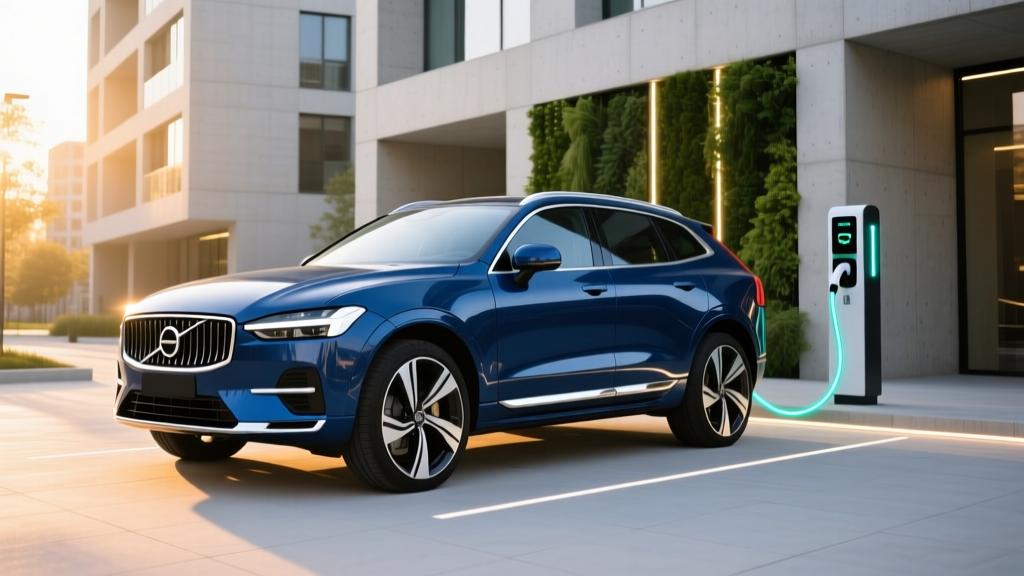
Volvo's 2026 electric lineup — the three-row EX90, compact EX30, and midsize EX40 — delivers strong Scandinavian design, class-leading safety tech, and competitive range (280–330 miles EPA depending on model). However, buyers should know that Volvo's EVs carry premium pricing ($38,000–$81,000+ MSRP), DC fast-charging speeds that trail Korean rivals (peak 200–250 kW vs Hyundai's 350 kW), and limited federal tax credit eligibility due to battery sourcing rules. If you prioritize safety, minimalist luxury, and home Level 2 charging, Volvo's EVs are compelling. If you need the fastest road-trip charging or maximum federal incentives, competitors like BMW iX or Hyundai Ioniq 5 may serve you better.
Volvo's 2026 Electric Lineup at a Glance
Volvo has committed fully to electrification, and its 2026 portfolio reflects that transition. Here's what's currently on sale:
| Model | Body Style | Battery (kWh) | EPA Range | Peak DC Charge | 10–80% Time | 0–60 mph | Base MSRP |
|---|---|---|---|---|---|---|---|
| EX30 (Single Motor) | Subcompact SUV | 69 usable (NMC) | 265 mi | 153 kW | ~26 min | 5.1 sec | $37,995 |
| EX30 (Twin Motor) | Subcompact SUV | 69 usable (NMC) | 254 mi | 153 kW | ~26 min | 3.4 sec | $44,995 |
| EX40 (Single Motor) | Compact SUV | 79 usable (NMC) | 291 mi | 200 kW | ~28 min | 7.1 sec | $53,550 |
| EX40 (Twin Motor) | Compact SUV | 79 usable (NMC) | 276 mi | 200 kW | ~28 min | 4.5 sec | $58,050 |
| EX90 (Twin Motor) | 3-Row SUV | 107 usable (NMC) | 310 mi | 250 kW | ~22 min | 5.7 sec | $79,995 |
| EX90 (Twin Motor Perf.) | 3-Row SUV | 107 usable (NMC) | 300 mi | 250 kW | ~22 min | 4.7 sec | $86,495 |
Real-world range caveat: EPA figures assume mixed driving at moderate temperatures. In highway testing at 70+ mph, expect 10–15% range reduction. In sub-freezing winter conditions, NMC batteries in the EX40 and EX90 typically lose 20–30% of rated range unless preconditioned. The EX30's smaller 69 kWh pack makes it more susceptible to cold-weather range drop — plan for ~185–200 real-world miles in freezing highway driving.
How Volvo EVs Compare to Gas and Hybrid Luxury Rivals
To evaluate Volvo on luxury electric vehicles properly, you need context against both combustion and hybrid alternatives in the luxury SUV space.
| Metric | Volvo EX90 Twin Motor | BMW X5 xDrive40i (Gas) | BMW X5 xDrive50e (PHEV) | Mercedes GLE 350 (Gas) |
|---|---|---|---|---|
| Base MSRP | $79,995 | $67,900 | $73,900 | $62,600 |
| EPA Combined Efficiency | 74 MPGe (2.0 kWh/mi) | 22 MPG | 56 MPGe / 22 MPG gas-only | 22 MPG |
| Annual Fuel/Energy Cost* | ~$720 | ~$2,800 | ~$1,400 (mixed) | ~$2,800 |
| 0–60 mph | 5.7 sec | 5.6 sec | 4.6 sec | 6.9 sec |
| Third Row | Yes | Optional | No | Optional |
| Estimated §30D Credit | $0 (sourcing) | N/A | Up to $7,500 | N/A |
*Annual cost assumes 12,000 miles/year, $3.50/gal gasoline, $0.14/kWh home electricity. Source: fueleconomy.gov.
The data tells a clear story: The EX90 commands a $12,000–$17,000 premium over gas equivalents, but annual energy savings of ~$2,000 narrow that gap over 5–7 years — assuming home charging. The BMW X5 PHEV splits the difference with 38 miles of electric-only range and federal credit eligibility, making it a strong alternative if your daily commute is short but you need gas-engine flexibility for road trips.
Real Costs of Volvo EV Ownership: 5-Year Breakdown
| Cost Category | Volvo EX40 SM ($53,550) | Volvo XC60 B5 (Gas, $49,050) | Notes |
|---|---|---|---|
| Purchase Price (MSRP) | $53,550 | $49,050 | EX40 carries ~$4,500 EV premium |
| Federal Tax Credit (§30D) | $0 | $0 | Volvo EVs currently fail battery sourcing requirements |
| 5-Year Energy/Fuel | $3,600 (home charging) | $14,000 (gas at $3.50/gal) | Public DC charging raises EV cost to ~$6,500 |
| 5-Year Maintenance | ~$1,800 | ~$4,200 | No oil changes, fewer brake replacements (regen) |
| 5-Year Insurance (avg) | ~$11,500 | ~$9,000 | EV premiums run 20–30% higher on average |
| Depreciation (est. 5yr) | ~$24,000 | ~$20,000 | Luxury EVs depreciate faster; resale is improving |
| 5-Year Total Cost | ~$94,450 | ~$96,250 | EV wins by ~$1,800 over 5 years |
Key takeaway: The EX40 breaks even with its gas counterpart around year 4 if you charge primarily at home. If you rely on public DC fast charging (at $0.35–$0.55/kWh), the fuel cost advantage shrinks dramatically. Insurance premiums are a real cost factor — get quotes before committing. See IRS §30D rules for current credit eligibility.
Real-World Range vs. EPA: What Volvo Owners Actually Report
Volvo's EPA estimates are reasonable for mixed suburban driving. However, independent highway and cold-weather testing reveals:
- EX90 Twin Motor: EPA 310 mi → ~265 mi sustained highway at 75 mph → ~220 mi highway in 20°F weather
- EX40 Single Motor: EPA 291 mi → ~245 mi sustained highway → ~200 mi in 20°F weather
- EX30 Twin Motor: EPA 254 mi → ~210 mi sustained highway → ~170 mi in 20°F weather
Volvo's heat pump (standard on EX90, optional on EX40/EX30) mitigates cold-weather loss by 5–8 percentage points. Always precondition your battery before winter DC charging sessions.
Charging Reality: Home, Public, and What You'll Need
Volvo's EVs use the CCS1 connector on 2024–2025 models, with 2026 models transitioning to NACS (Tesla-style) for native Supercharger access. Here's what charging looks like in practice:
| Level | Power | Miles Added/Hour | Use Case | Cost |
|---|---|---|---|---|
| Level 1 (120V) | 1.4 kW | 3–5 mi/hr | Emergency/overnight top-up | Included cord |
| Level 2 (240V, 48A) | 11.5 kW | 30–40 mi/hr | Daily home charging | $500–$1,800 install |
| DC Fast (EX90) | Peak 250 kW | ~180 mi in 10 min | Road trips | $0.35–$0.55/kWh public |
| DC Fast (EX40) | Peak 200 kW | ~140 mi in 10 min | Road trips | $0.35–$0.55/kWh public |
| DC Fast (EX30) | Peak 153 kW | ~110 mi in 10 min | Road trips | $0.35–$0.55/kWh public |
Charging curve reality: Volvo's peak DC rates are sustained only between roughly 10–40% SoC. Above 60%, charging tapers significantly — the 10–80% time of ~22–28 minutes is accurate, but going from 80–100% can add another 25–35 minutes. For road trips, plan stops at 15–20% remaining and charge to 80% for optimal efficiency.
Home charging is nearly mandatory for cost-effective Volvo EV ownership. A Level 2 home installation (240V, 50-amp circuit, 48A charger) typically costs $800–$1,800 including equipment and electrician labor, assuming your panel has capacity. A 200-amp panel upgrade adds $1,500–$3,000. Always hire a licensed electrician and pull permits — never skip this step.
Tax Credits, Incentives, and Volvo's Sourcing Challenge
This is where Volvo's EV lineup faces its biggest headwind in 2026. Under current IRS §30D rules, the federal clean vehicle credit requires:
- MSRP cap: SUVs must be ≤$80,000; sedans/other ≤$55,000 (EX90 Performance exceeds the cap)
- Buyer income cap: AGI ≤$300,000 (joint), $225,000 (head of household), $150,000 (individual)
- Battery component sourcing: Increasing percentages must be manufactured/assembled in North America
- Critical minerals: Increasing percentages must be sourced from the US or FTA partners
- Point-of-sale transfer: Eligible buyers can transfer the credit to the dealer for an immediate price reduction
The problem for Volvo: As of early 2026, Volvo's battery cells (supplied primarily by CATL and LG Energy Solution) and module assembly do not meet the critical minerals and component sourcing thresholds required for the full $7,500 credit. Some trims may qualify for a partial $3,750 credit if mineral sourcing alone is satisfied, but buyers should verify eligibility at the point of sale using the IRS VIN lookup tool. This puts Volvo at a disadvantage versus BMW (iX eligible), GM (Cadillac Lyriq eligible), and Ford (Mustang Mach-E eligible) which have restructured supply chains for compliance.
State incentives may help: States like California, Colorado, and Massachusetts offer additional rebates of $2,000–$7,500 that are not subject to federal sourcing rules. Check your state's energy office for current programs.
Safety, Tech, and Driver Assistance
Volvo's reputation for safety carries into the EV era. The EX90 introduces a standard LiDAR sensor (from Luminar) mounted on the roof, enabling advanced pedestrian and obstacle detection beyond camera-only systems. All 2026 Volvo EVs include:
- Pilot Assist (SAE Level 2): Adaptive cruise + lane centering on highways
- Run-off-road protection and intersection auto-braking
- Driver Understanding cameras (monitors attention; alerts if distracted)
- Google Built-in infotainment with native Google Maps EV routing
Important: Volvo Pilot Assist Is Level 2, Not Self-Driving
Volvo's Pilot Assist is an SAE Level 2 driver-assistance system. It combines adaptive cruise control and lane-centering but requires the driver to remain fully engaged — hands on or near the wheel, eyes on the road. It does NOT navigate autonomously, handle all intersections, or replace driver attention. Only Level 4 robotaxi services (Waymo, Zoox) operate without a human driver in defined areas.
Common Misconceptions About Volvo EVs
| Myth | Fact |
|---|---|
| "Volvo EVs get the full $7,500 tax credit" | Most 2026 Volvo EVs fail §30D battery sourcing requirements; expect $0–$3,750 depending on trim and current IRS determinations. |
| "The EX90 charges as fast as any rival" | At 250 kW peak, the EX90 trails the BMW iX (270 kW), Hyundai Ioniq 5 (350 kW via 800V), and Lucid Air (300+ kW). Real-world 10–80% in ~22 min is good, not class-leading. |
| "Volvo's EPA range is conservative" | Volvo's EPA figures are realistic for mixed driving. Highway and cold-weather range drops 15–30% as with all EVs. The heat pump helps but doesn't eliminate loss. |
| "I don't need home charging for a Volvo EV" | Public DC charging at $0.40–$0.55/kWh costs nearly as much per mile as gasoline. Without home Level 2 at $0.10–$0.16/kWh, the economic case for a Volvo EV weakens significantly. |
| "The EX30 qualifies for the used EV credit if I buy pre-owned" | The §25E used EV credit requires a sale price ≤$25,000 and the vehicle to be at least 2 model years old. The EX30 launched in 2025, so used-credit eligibility won't begin until 2027 at the earliest. |
Decision Framework: Is a Volvo EV Right for You?
Choose a Volvo EV If:
- You have access to home Level 2 charging (garage or driveway with 240V)
- Safety technology is your top priority — LiDAR standard on EX90, comprehensive ADAS across the lineup
- You prefer Scandinavian minimalist design over flashy screens and aggressive styling
- Your daily commute is under 80 miles round-trip (all models handle this easily on a single charge)
- You value Volvo's 8-year/100,000-mile battery warranty and 4-year/50,000-mile vehicle warranty
- You live in a state with additional EV rebates that offset the federal credit gap
Look Elsewhere If:
- You need the maximum $7,500 federal tax credit — consider BMW iX, Cadillac Lyriq, or Ford Mustang Mach-E
- You take frequent 400+ mile road trips and want the fastest possible DC charging — Hyundai Ioniq 5 (800V, 350 kW) or Tesla Model Y (Supercharger network)
- You live in an apartment without charging access and can't install a Level 2 charger
- You need a third row but have a strict budget — the EX90 starts at $79,995; the Kia EV9 starts at ~$56,000 and qualifies for the federal credit
- You drive in extreme cold regularly and need maximum range retention — consider a PHEV like the Volvo XC90 Recharge or BMW X5 xDrive50e instead
Frequently Asked Questions
What is Volvo's battery warranty on its electric vehicles?
Volvo covers the high-voltage traction battery for 8 years or 100,000 miles, whichever comes first. The warranty guarantees the battery will retain at least 70% of its original capacity during that period. If degradation exceeds 30%, Volvo will repair or replace modules to bring capacity back above the threshold.
Does Volvo use LFP or NMC batteries?
Volvo's 2026 lineup uses NMC (nickel manganese cobalt) chemistry across the EX30, EX40, and EX90. NMC offers higher energy density than LFP, enabling longer range in a smaller package, but it is more expensive and subject to critical-mineral sourcing constraints. Volvo has signaled future LFP adoption for base trims, but no 2026 models currently use it.
Can I charge a Volvo EV at Tesla Superchargers?
2026-model Volvo EVs are being transitioned to the NACS (North American Charging Standard) connector, which provides native access to Tesla's Supercharger network. If you purchase a 2024–2025 model with CCS1, Volvo provides a NACS adapter, and Tesla has opened select Superchargers to non-Tesla CCS vehicles via the Tesla app. Always check Tesla's non-Tesla Supercharger page for current availability.
How does the EX90 compare to the Kia EV9 for three-row electric SUV buyers?
The EX90 offers more power (496 hp vs 379 hp), standard LiDAR, and more premium materials, but starts ~$24,000 higher and currently lacks federal credit eligibility. The EV9 qualifies for the full $7,500 credit, charges at up to 350 kW (800V architecture), and starts at ~$56,000. If budget and charging speed matter most, the EV9 wins. If safety tech and luxury refinement are paramount, the EX90 justifies its premium.
What should a first-time EV buyer know before purchasing a Volvo EV?
First, confirm you can install a Level 2 home charger — this is essential for convenience and cost savings. Second, understand that real-world range will be 15–30% below the EPA sticker in highway or cold-weather driving. Third, get insurance quotes before purchasing, as EV premiums run 20–30% higher. Fourth, verify tax credit eligibility using the IRS VIN tool at the dealership — don't rely on marketing materials. Fifth, plan road trips around DC fast-charger locations using apps like A Better Routeplanner or PlugShare, and understand that charging slows significantly above 80% SoC.
How does Volvo's EV maintenance compare to gas cars?
Volvo EVs eliminate oil changes, transmission fluid service, spark plugs, and exhaust system maintenance. Brake pad life extends to 80,000–120,000 miles thanks to regenerative braking. Expect to spend roughly $300–$400/year on cabin air filters, tire rotations, wiper fluid, and brake fluid checks — about 60% less than a comparable gas Volvo. The primary long-term cost concern is tire replacement, as EVs are heavier and wear tires 15–20% faster.