Quick Verdict: Luxury SUV Heft With Genuine Performance
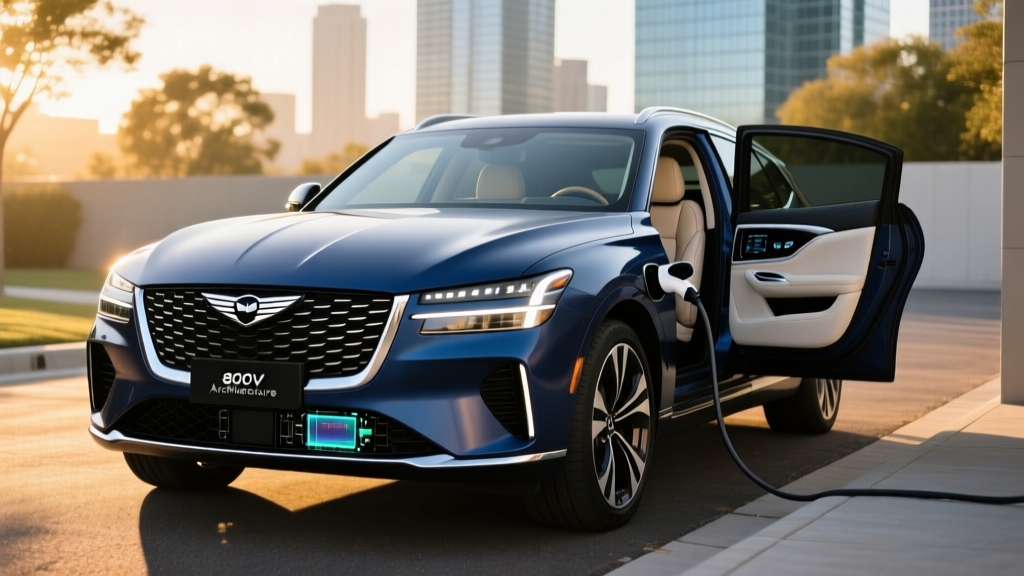
The 2026 Genesis Electrified GV70 occupies a narrow but compelling lane: a compact luxury electric SUV that prioritizes cabin refinement and straight-line performance over maximum efficiency. With a curb weight of approximately 4,895 pounds, it is one of the heaviest vehicles in its class — and that mass directly shapes its range, efficiency, and driving character. If you're cross-shopping the Electrified GV70 against the Tesla Model Y, BMW iX, or Audi Q4 e-tron, understanding how that weight translates to real-world ownership is the single most important factor in your decision.
This review breaks down the 2026 Electrified GV70's curb weight implications, EPA range, charging behavior, powertrain specs, pricing, and federal tax credit eligibility — with the real-world honesty that spec sheets leave out.
2026 Genesis Electrified GV70 Core Specifications
| Specification | 2026 Electrified GV70 |
|---|---|
| Curb Weight | ~4,895 lbs |
| EPA Estimated Range | 236 miles |
| Usable Battery Capacity | 77.4 kWh (NMC lithium-ion) |
| Drivetrain | Dual-motor AWD |
| Horsepower | 429 HP (483 HP w/ Boost mode) |
| Torque | 516 lb-ft |
| 0–60 mph | 4.2 seconds |
| Max DC Fast Charge Rate | 350 kW (peak) |
| 10–80% DC Fast Charge Time | ~18 minutes |
| Level 2 Charge Rate (AC) | 10.9 kW (~33 mi/hr) |
| EPA Efficiency | 91 MPGe combined (2.0 kWh/mi) |
| Cargo Volume (rear seats up/down) | 28.7 / 56.9 cu ft |
| Front Legroom / Rear Legroom | 41.4 / 39.1 in |
| Base MSRP (Advanced trim) | $67,700 |
| As-Tested (Prestige trim) | ~$74,350 |
| Battery/Powertrain Warranty | 10 years / 100,000 miles |
Curb Weight Explained: Why 4,895 Pounds Matters
The 2026 Genesis Electrified GV70's curb weight of approximately 4,895 lbs is a defining characteristic — not just a spec-sheet footnote. For context, the Tesla Model Y Long Range AWD weighs roughly 4,398 lbs, and the BMW iX xDrive50 sits at about 5,659 lbs. The GV70 lands between efficiency-oriented competitors and larger luxury EVs, and that positioning has measurable consequences.
How Curb Weight Affects Range
Vehicle mass is the enemy of energy efficiency. Every pound requires energy to accelerate, and regenerative braking can only recapture a fraction of that kinetic energy. The GV70's 77.4 kWh NMC battery must push nearly 5,000 pounds, which explains its 91 MPGe combined rating — respectable, but below the Model Y's 122 MPGe combined on a larger 75 kWh pack. At roughly 2.0 kWh per mile in mixed driving, the GV70 consumes more electricity per mile than lighter competitors, which also translates to higher charging costs over time.
How Curb Weight Affects Driving Dynamics
Genesis engineers tuned the GV70's suspension and steering to manage its mass gracefully. The result is a composed, planted ride quality that absorbs highway imperfections better than lighter competitors. The trade-off is perceptible body roll in spirited cornering — this is a luxury cruiser, not a sports sedan. The low center of gravity from the floor-mounted battery pack helps, but physics is physics: 4,895 lbs of SUV will never feel as agile as a 4,200-lb sedan.
How Curb Weight Affects Tire Wear and Maintenance
Heavier EVs wear tires faster. Expect to replace tires every 25,000–35,000 miles on the Electrified GV70, compared to 40,000+ miles on lighter EVs or ICE vehicles. Budget accordingly — premium 255/50R19 or 255/45R20 tires run $250–$350 each.
Real-World Range vs. EPA Estimate
EPA Estimate: 236 miles
Real-World Highway (70 mph, mild weather): ~200–215 miles
Real-World City (stop-and-go with regen): ~225–240 miles
Cold Weather (below 32°F, highway): ~165–185 miles
The Electrified GV70's heat pump helps mitigate cold-weather range loss, but the combination of high curb weight, AWD drivetrain losses, and a modest 77.4 kWh battery means highway driving at speed will consistently return below the EPA sticker. Plan road trips around 180-mile segments for a comfortable buffer.
Charging Speed: 350 kW Peak, But Understand the Curve
The 2026 Electrified GV70 supports DC fast charging at up to 350 kW peak on compatible chargers — among the fastest in its class. However, peak rate and sustained rate are very different things, and understanding the charge curve is essential for realistic trip planning.
| Charging Level | Power / Rate | Speed / Time |
|---|---|---|
| Level 1 (120V household) | ~1.4 kW | ~4 miles per hour |
| Level 2 (240V, 48A home) | 10.9 kW | ~33 miles per hour (~7.5 hrs 10–100%) |
| DC Fast (350 kW peak) | Up to 350 kW | 10–80% in ~18 min |
| DC Fast (150 kW station) | Up to 150 kW | 10–80% in ~28 min |
| DC Fast (50 kW station) | Up to 50 kW | 10–80% in ~65 min |
The Charge Curve Reality
At a 350 kW Electrify America or compatible DC fast charger, the GV70's battery will accept peak power only between roughly 10% and 35% State of Charge (SoC). Above 50% SoC, the rate tapers significantly — by 80% SoC, you're likely seeing 50–80 kW. This is standard behavior for NMC chemistry batteries with aggressive thermal management, but it means the advertised 18-minute 10–80% time assumes ideal conditions: a preconditioned battery, a functioning 350 kW charger, and moderate ambient temperatures.
Practical tip: Use the GV70's built-in route planner to precondition the battery before arriving at a DC fast charger. Skipping preconditioning in cold weather can double your charging time. The navigation system will automatically initiate battery heating when a charger is set as your destination.
Home Charging Setup
The GV70 comes with a CCS1 charge port (no native NACS adapter included as of the 2026 model year, though aftermarket CCS-to-NACS adapters from licensed manufacturers are available for Tesla Supercharger access). At home, a Level 2 wall connector on a 60-amp circuit delivering 48 amps will fully replenish the 77.4 kWh battery in roughly 7.5 hours — ideal for overnight charging. Installation costs for a Level 2 home charger typically range from $500 to $2,500 depending on your electrical panel capacity and conduit run length, per Genesis USA.
Performance: 429 HP and a Sub-4.5-Second Sprint
The dual-motor AWD powertrain produces 429 horsepower and 516 lb-ft of torque in standard driving. Engage Boost mode (a steering wheel button), and output temporarily rises to 483 HP for 10-second bursts, dropping the 0–60 mph time from 4.5 seconds to 4.2 seconds.
For a nearly 5,000-pound SUV, that acceleration is genuinely impressive. The instant torque delivery from both electric motors makes the GV70 feel lighter on its feet than its curb weight suggests, particularly in the 0–30 mph range where electric motors shine. Highway passing power remains strong up to the electronically limited top speed of approximately 149 mph.
Drive Modes and Regen Braking
Genesis offers Eco, Comfort, Sport, and custom drive modes. The regenerative braking system provides four levels (0–3) adjustable via steering wheel paddles. Level 3 enables near-one-pedal driving in city traffic, though it does not bring the vehicle to a complete hold without touching the brake pedal — unlike Tesla's or Nissan's implementations. This is a deliberate engineering choice that some drivers prefer for its more natural, ICE-like feel.
Interior, Cargo, and Technology
The Electrified GV70's cabin is where the Genesis luxury proposition shines most clearly. Nappa leather, genuine aluminum trim, and a standard 12.3-inch digital instrument cluster paired with a 12.3-inch infotainment touchscreen create an environment that competes favorably with the BMW iX and Mercedes EQB at similar price points.
Space and Practicality
With 28.7 cubic feet of cargo space behind the rear seats and 56.9 cubic feet with the rear seats folded, the GV70 offers practical family-SUV utility. Front legroom measures 41.4 inches, and rear legroom is a generous 39.1 inches — sufficient for adults on longer trips. However, unlike the Tesla Model Y, there is no front trunk (frunk); the space under the hood houses electrical components. This is a missed opportunity for additional storage that competitors offer.
Driver Assistance and Infotainment
Genesis Highway Driving Assist II (HDA II) is a SAE Level 2 driver-assistance system combining adaptive cruise control with lane-centering and lane-change assist on divided highways. It requires the driver to keep hands on the wheel and eyes on the road at all times — this is not autonomous or "self-driving" capability. HDA II performs competently but falls short of the lane-change confidence offered by GM's Super Cruise or Ford's BlueCruise on mapped highways.
The infotainment system supports wireless Apple CarPlay and Android Auto, over-the-air (OTA) software updates, a digital key via smartphone, and Genesis Connected Services for remote climate control, charging status, and vehicle location. A notable standout: the GV70's Vehicle-to-Load (V2L) capability allows you to power external devices (up to 3.6 kW) through an interior outlet — useful for camping, tailgating, or emergency backup power.
Pricing, Trims, and Federal Tax Credit Eligibility
| Trim Level | MSRP | Est. After §30D Credit* |
|---|---|---|
| Advanced | $67,700 | $60,200 |
| Prestige | $74,350 | $66,850 |
*Federal tax credit eligibility depends on multiple factors detailed below. Table assumes maximum $7,500 credit and point-of-sale transfer.
Federal §30D Tax Credit: Does the Electrified GV70 Qualify?
The 2026 Genesis Electrified GV70 faces a complex tax credit picture under current IRS §30D rules. Here are the key eligibility criteria:
- MSRP Cap: SUVs must have an MSRP at or below $80,000 — both GV70 trims qualify.
- Buyer Income Cap: Modified adjusted gross income must not exceed $300,000 (joint), $225,000 (head of household), or $150,000 (single).
- Battery Component Sourcing: A percentage of battery components must be manufactured or assembled in North America. Genesis sources the GV70's battery from suppliers with significant North American manufacturing, but the specific critical-minerals and component thresholds are subject to annual tightening under the Inflation Reduction Act.
- Final Assembly: The Electrified GV70 is assembled in South Korea. Under current §30D rules, vehicles must undergo final assembly in North America to qualify for the full credit. This is the primary obstacle — the Electrified GV70 may not qualify for the federal credit unless Genesis shifts production or qualifies under a commercial-lease exemption (§45W).
- Point-of-Sale Transfer: If eligible, the credit can be transferred to the dealer at purchase for an immediate price reduction rather than claimed on your tax return.
Lease Loophole: Vehicles leased (rather than purchased) may qualify for the $7,500 commercial clean vehicle credit under §45W regardless of assembly location. If you're open to leasing, the Electrified GV70 may pass the credit savings through as a reduced lease payment. Confirm with your Genesis dealer and consult a tax professional for your specific situation.
For the latest credit eligibility, always verify at fueleconomy.gov before purchasing.
Efficiency, Ownership Costs, and Warranty
At 91 MPGe combined (approximately 36 kWh per 100 miles, or 2.0 kWh per mile), the Electrified GV70 is not the most efficient EV in its class. The Tesla Model Y Long Range achieves 122 MPGe combined, and even the heavier BMW iX xDrive50 manages 87 MPGe with a much larger battery. Higher efficiency means lower electricity costs per mile and less frequent charging on road trips.
Estimated Annual Charging Cost
At the U.S. average residential electricity rate of approximately $0.17/kWh (as of early 2026) and 15,000 miles of annual driving:
- Home charging cost: ~$5,100/year (at 2.0 kWh/mi)
- DC fast charging cost (at $0.40/kWh average): significantly higher — $12,000/year if exclusively using public chargers
- Comparable gas SUV at 24 MPG, $3.40/gal: ~$2,125/year
Wait — the GV70 costs more to "fuel" than a gas SUV? Only if you rely heavily on expensive public DC fast chargers. At home electricity rates, the cost drops to roughly $510/year — a substantial savings. This is the core economic argument for home charging access as a prerequisite for EV ownership.
Warranty Coverage
Genesis provides class-leading warranty protection:
- Battery: 10 years / 100,000 miles (capacity retention threshold: 70%)
- Powertrain: 10 years / 100,000 miles
- New Vehicle Limited: 5 years / 60,000 miles
- Complimentary Maintenance: 3 years / 36,000 miles
The 10-year battery warranty with a 70% capacity retention guarantee is among the strongest in the industry and should ease long-term ownership anxiety. NMC batteries in Hyundai Motor Group vehicles (Genesis's parent) have demonstrated strong real-world longevity, with most owners reporting less than 10% degradation over 100,000 miles.
Pros, Cons, and Who Should Buy
Pros
- Luxurious, quiet cabin with premium materials
- Strong 429 HP / 4.2-sec 0–60 performance
- Up to 350 kW DC fast charging capability
- Class-leading 10-year/100,000-mile battery warranty
- V2L capability for external power
- Complimentary maintenance and valet service
Cons
- 236-mile EPA range is below key competitors
- High curb weight (4,895 lbs) hurts efficiency
- No frunk (front trunk) for additional storage
- South Korea assembly may disqualify from §30D tax credit
- CCS1 port requires adapter for Tesla Supercharger access
- 91 MPGe trails lighter competitors significantly
Who Is the Electrified GV70 Best For?
Ideal buyer: Luxury-oriented commuters and small families who prioritize cabin quality, ride refinement, and strong acceleration over maximum range. If your daily drive is under 80 miles round-trip with home charging, the GV70's 236-mile range is more than adequate, and you'll enjoy one of the most refined cabins in the compact luxury EV segment.
Not ideal for: Frequent road-trippers who need 300+ mile range between stops, efficiency-obsessed buyers comparing cost-per-mile, or those who require federal tax credit eligibility for the purchase math to work. If range is your top priority, the Tesla Model Y Long Range (330 mi EPA) or the Hyundai Ioniq 5 (305 mi EPA) offer more practical reach at lower price points.
Frequently Asked Questions
What is the real-world range of the 2026 Genesis Electrified GV70?
The EPA rates the Electrified GV70 at 236 miles. In real-world highway driving at 70 mph in mild conditions, expect approximately 200–215 miles. City driving with regenerative braking can return 225–240 miles. In cold weather below freezing, highway range can drop to 165–185 miles despite the heat pump system.
How fast does the Electrified GV70 charge?
On a 350 kW DC fast charger with a preconditioned battery, the GV70 charges from 10% to 80% in approximately 18 minutes under ideal conditions. On a typical 150 kW public charger, expect 28 minutes for the same session. At home on a Level 2 (240V/48A) charger, the 77.4 kWh battery replenishes at about 33 miles per hour, taking roughly 7.5 hours for a full charge.
Does the 2026 Electrified GV70 qualify for the federal EV tax credit?
Likely not for purchase. The Electrified GV70 is assembled in South Korea, and current IRS §30D rules require North American final assembly for the new clean vehicle credit. However, leasing may qualify under the §45W commercial vehicle credit loophole, potentially passing $7,500 in savings through as a reduced lease payment. Verify current eligibility at fueleconomy.gov and consult a tax professional.
How much does the Electrified GV70 cost?
The 2026 Electrified GV70 starts at $67,700 for the Advanced trim and approximately $74,350 for the Prestige trim (destination charges included). If the tax credit is unavailable, these are your out-of-pocket figures before state/local incentives. With a §45W lease credit, effective pricing drops by up to $7,500.
Is the Electrified GV70 worth buying vs. the Tesla Model Y or BMW iX?
It depends on your priorities. Choose the GV70 if cabin luxury, ride comfort, and dealership service experience matter more than range and efficiency. The Model Y wins on range (330 mi), efficiency (122 MPGe), Supercharger network access, and price. The BMW iX offers more interior space and comparable luxury but starts significantly higher. The GV70 is the refined alternative for buyers who want Genesis's hospitality-oriented ownership experience in an electric package.
What is the curb weight of the 2026 Genesis Electrified GV70 and why does it matter?
The curb weight is approximately 4,895 lbs. This is heavier than most compact luxury EV competitors and directly impacts efficiency (91 MPGe vs. 122 MPGe for a Model Y), tire wear (expect 25,000–35,000-mile tire life), and real-world range (highway driving consistently returns below the EPA estimate). The mass also contributes to the GV70's planted, stable ride quality — a trade-off many luxury buyers will accept.
Sources: fueleconomy.gov (EPA range and efficiency data), Genesis USA (manufacturer specifications), IRS.gov (§30D tax credit rules). Specifications and pricing reflect 2026 model year data available at time of publication. Tax credit eligibility is subject to change — verify current rules before purchase.