The Quick Answer: Are Electric Cars Worth It for Adult Buyers?
Electric cars for adults make financial sense if you can charge at home, drive 10,000–15,000 miles per year, and qualify for the federal §30D tax credit (up to $7,500). A typical EV owner with home Level 2 charging saves $800–$1,200 annually on fuel and $400–$600 on maintenance compared to a gas car. However, EVs still carry higher upfront MSRPs, insurance premiums 10–20% above equivalent gas models, and real-world highway range that falls 15–25% below the EPA sticker. If you rely exclusively on public DC fast charging or live in an apartment without charging access, a hybrid or PHEV may serve you better.
What Adult Buyers Actually Need to Decide About EVs
The decision to go electric isn't about saving the planet in the abstract — it's about whether an EV fits your daily logistics, your budget, and your housing situation. Most adult shoppers we survey are juggling mortgages, commutes, family hauling, and road trips. They need answers grounded in numbers, not marketing slogans.
Here are the four decision pillars that matter most:
- Charging access: Can you install a Level 2 (240V) charger at home, or will you rely on public infrastructure?
- Driving patterns: Is your daily commute under 60 miles round-trip, or do you regularly drive 200+ miles?
- Climate: Do you live where winter temperatures routinely drop below 30°F?
- Budget reality: Can you absorb a $38,000–$55,000 purchase price before incentives, and higher insurance premiums?
If you answered yes to home charging, mostly drive under 200 miles daily, live in a moderate climate, and can work within the price range, an EV will likely save you money over five years. If you answered no to home charging, a plug-in hybrid (PHEV) like the Toyota RAV4 Prime or a conventional hybrid is a more pragmatic choice.
EV vs Gas vs Hybrid: The Real Cost Comparison
Let's put concrete numbers behind the EV versus gas debate. The table below compares a representative 2026 EV (Hyundai Ioniq 5 SEL, ~$46,000 MSRP), a comparable gas SUV (Toyota RAV4 LE, ~$30,000 MSRP), and a PHEV (Toyota RAV4 Prime, ~$44,000 MSRP) over five years and 75,000 miles of mixed driving.
| Cost Category | 2026 Hyundai Ioniq 5 SEL (EV) | 2026 Toyota RAV4 LE (Gas) | 2026 Toyota RAV4 Prime (PHEV) |
|---|---|---|---|
| Base MSRP | $46,250 | $30,500 | $44,590 |
| Federal Tax Credit (§30D) | Up to $7,500* | $0 | Up to $7,500* |
| Effective Purchase Price | ~$38,750 | $30,500 | ~$37,090 |
| Fuel/Energy (5 yr) | $3,400 (home charging) | $9,750 (gas @ $3.50/gal, 30 MPG) | $5,200 (mixed electric + gas) |
| Maintenance (5 yr) | $1,200 | $3,500 | $2,800 |
| Insurance (5 yr est.) | $10,500 | $8,200 | $9,400 |
| Estimated Depreciation | $18,500 | $12,200 | $16,800 |
| Total 5-Year Cost | $72,350 | $64,150 | $71,290 |
*Federal §30D credit eligibility depends on buyer income caps ($150K single / $300K joint), vehicle MSRP caps ($55K cars / $80K SUVs/trucks), and battery critical-mineral sourcing requirements. Verify current rules at irs.gov before purchasing. Credit can be transferred at point of sale as a purchase-price reduction.
The EV closes the gap significantly when you factor in the tax credit and dramatically lower fuel and maintenance costs. But the gas RAV4 still wins on pure sticker price and depreciation — EVs lose value faster, especially as battery technology evolves and new models undercut older ones. According to fueleconomy.gov, the Ioniq 5 achieves 114 MPGe combined, translating to roughly $0.045 per mile on average US electricity rates ($0.16/kWh), versus $0.117 per mile for the gas RAV4.
Real Costs and Savings: Breaking Down the Numbers
Purchase Price and Incentives
Most mainstream EVs in 2026 start between $35,000 and $55,000. The Chevrolet Equinox EV LT begins around $34,900, the Tesla Model 3 Rear-Wheel Drive at $38,990, and the Ford Mustang Mach-E Select at $42,995. The §30D credit can reduce your effective price by up to $7,500, but not every vehicle or buyer qualifies. Key restrictions include:
- Buyer AGI must not exceed $150,000 (single) or $300,000 (married filing jointly)
- Vehicle MSRP must not exceed $55,000 for sedans or $80,000 for SUVs, vans, and trucks
- Battery must meet critical-mineral and component sourcing thresholds that tighten annually
- Credit can be applied at point of sale, reducing your out-of-pocket cost immediately
Charging vs Fueling
Home charging is where EVs shine economically. At the national average residential rate of $0.16/kWh, fully charging a 77 kWh battery (Ioniq 5 Long Range) costs about $12.32 for roughly 270 real-world miles. That same distance in a 30 MPG gas car at $3.50/gallon costs $31.50. Over 15,000 annual miles, the EV saves roughly $1,300 in fuel.
Public DC fast charging tells a different story. Networks like Electrify America and EVgo charge $0.35–$0.55/kWh, sometimes more. At $0.48/kWh, that same 77 kWh fill costs $37 — more than gasoline. If you cannot charge at home and must rely entirely on public fast chargers, your fuel savings evaporate entirely.
| Source | Rate | Cost for ~270 Miles | Cost Per Mile |
|---|---|---|---|
| Home Level 2 (avg US) | $0.16/kWh | $12.32 | $0.046 |
| Public DC Fast Charger | $0.48/kWh | $36.96 | $0.137 |
| Gasoline (30 MPG car) | $3.50/gallon | $31.50 | $0.117 |
Maintenance
EVs have no engine oil, transmission fluid, spark plugs, or exhaust systems. You'll still replace cabin air filters, wiper blades, brake fluid, and tires (EVs wear tires 15–20% faster due to instant torque and heavier curb weight). Expect annual maintenance of $200–$350 for an EV versus $500–$800 for a gas car.
Insurance
This is where EVs sting. Insurance premiums run 10–20% higher than equivalent gas vehicles due to higher repair costs, specialized parts, and total-loss thresholds that account for battery replacement. Budget an extra $300–$500 per year. Shopping across multiple carriers — especially those with EV-specific programs — can narrow the gap.
Range, Charging, and Real-World Ownership Truths
EPA Range vs Real-World Range
The EPA range sticker is a laboratory estimate under controlled conditions. In practice, expect to lose 15–25% on sustained highway driving at 70+ mph, and 20–40% in sub-30°F winter weather. A vehicle rated at 310 miles EPA might deliver 240–260 miles on a warm highway day and 185–220 miles in a cold Midwestern January.
Common EV Misconceptions vs Facts
| Myth | Fact |
|---|---|
| "EV batteries need replacing every 5 years" | Modern NMC and LFP batteries degrade 10–15% over 10 years/150,000 miles. Federal law mandates 8-year/100,000-mile battery warranties with a 70% capacity retention floor. |
| "You can charge an EV in 10 minutes anywhere" | Peak DC fast-charge rates (150–350 kW) only apply between ~10–50% SoC. Charging slows dramatically above 80%. A realistic 10–80% session takes 18–35 minutes depending on vehicle and charger. |
| "EVs are worse in winter" | EVs lose range in cold weather, but they start instantly, heat cabins using heat pumps efficiently, and don't need block heaters. Preconditioning while plugged in mitigates most range loss. |
| "Public charging is unreliable everywhere" | Tesla Superchargers average 99.5%+ uptime. CCS networks (Electrify America, EVgo) have improved to ~90–93% uptime. Check PlugShare for station-specific reviews before relying on a route. |
| "EVs are zero-emission vehicles" | Tailpipe emissions are zero, but upstream electricity generation varies by region. Charging on a coal-heavy grid reduces but doesn't eliminate lifecycle emissions. Most US grids are decarbonizing year over year. |
Charging Speeds Explained: kW vs kWh
This is the single most confused topic in EV ownership. kW (kilowatts) measures power — how fast energy flows. kWh (kilowatt-hours) measures energy — how much the battery holds. Think of kW as the flow rate of a hose and kWh as the size of the bucket.
| Level | Voltage | Power (kW) | Miles Added Per Hour | Best For |
|---|---|---|---|---|
| Level 1 (standard outlet) | 120V | 1.4 kW | 3–5 mi/hr | Overnight top-ups, PHEVs |
| Level 2 (home/public) | 240V | 7.2–19.2 kW | 20–60 mi/hr | Daily home charging |
| DC Fast Charge | 400–800V | 50–350 kW | 150–1,000+ mi/hr (peak) | Road trips, quick stops |
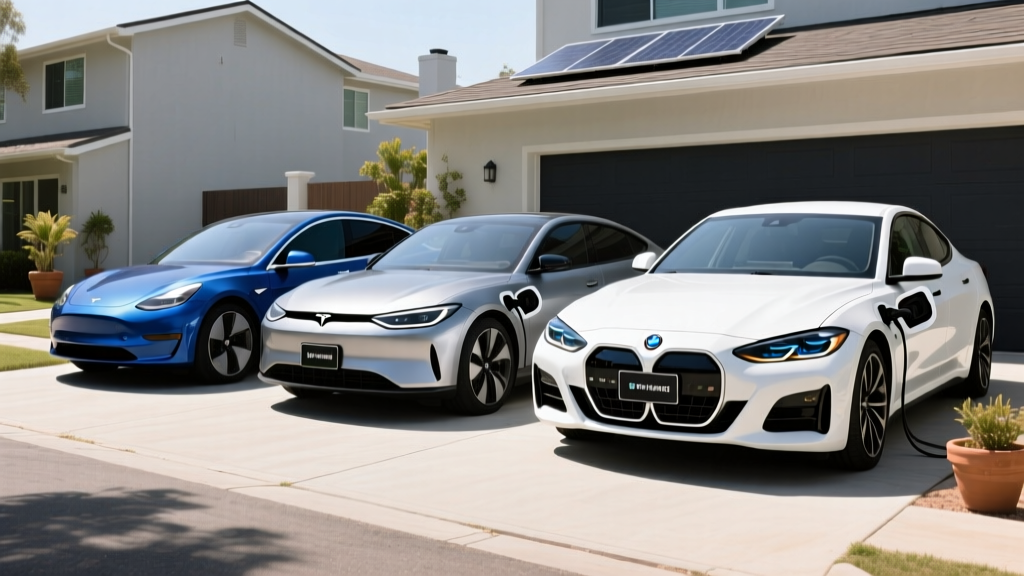
A Level 2 home charger (typically 48 amps / 11.5 kW) will fully recharge most EVs overnight in 7–10 hours. Installation costs $800–$2,500 depending on panel capacity, run length, and local permit fees. If your home has a 200-amp electrical panel with spare capacity, expect the lower end. A panel upgrade to 200A adds $1,500–$3,000.
The Charging Curve Reality
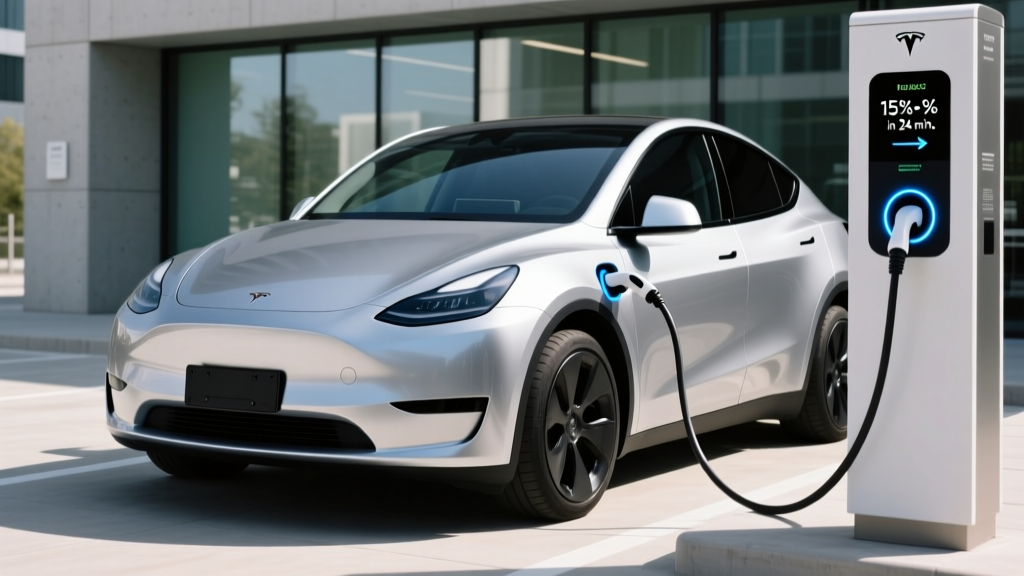
No EV sustains its peak charge rate for an entire session. A Hyundai Ioniq 5 might peak at 240 kW at 10% SoC but taper to 150 kW by 50%, 80 kW by 70%, and 40 kW above 85%. This means a 10–80% session takes roughly 18 minutes at a capable 350 kW charger, but 80–100% adds another 25–30 minutes. On road trips, plan to charge to 80% and go — the last 20% isn't worth the wait.
What First-Time EV Buyers Must Know Before Signing
Battery Chemistry Matters: LFP vs NMC
Two dominant chemistries power today's EVs:
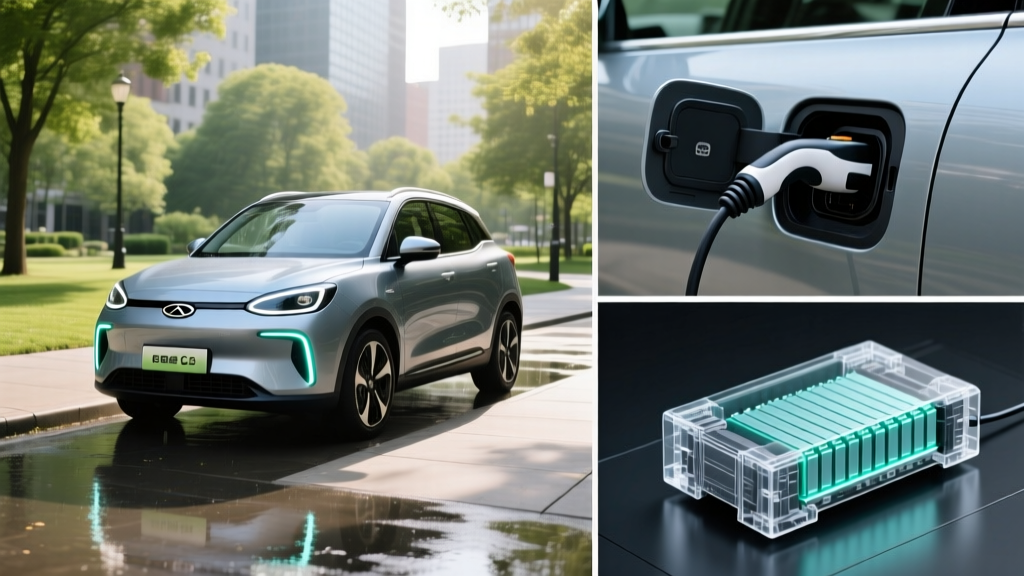
- NMC (Nickel Manganese Cobalt): Higher energy density, longer range per kWh, better cold-weather performance. Found in most long-range EVs. Degrades faster if routinely charged to 100%. Recommended daily charge: 80%.
- LFP (Lithium Iron Phosphate): Lower energy density but longer cycle life, safer thermal profile, and can be charged to 100% daily without accelerated degradation. Found in standard-range Tesla Model 3/Y and some Chinese-market imports. Less range per charge but longer overall lifespan.
Ask the dealer which chemistry your trim uses — it affects how you'll charge daily and how the battery ages over 10+ years.
Home Charging Access Is Non-Negotiable
If you cannot install a Level 2 charger where you park overnight, an EV becomes a logistical burden. Public charging is improving but still costs 2–3× more than home charging and requires planning around station availability, broken chargers, and occupied stalls. Apartment dwellers should check whether their building offers or plans EV charging, or strongly consider a PHEV that can run on gas when electric range is depleted.
Depreciation and Resale
EVs have depreciated faster than gas cars in recent years, driven by rapid technology advancement, aggressive price cuts (especially from Tesla), and battery-health uncertainty in the used market. Expect 40–55% depreciation over five years for mainstream EVs versus 35–45% for comparable gas vehicles. Leasing can mitigate this risk — you capture the tax credit (via the lessor, often passed through as a capitalized-cost reduction) and walk away at term without resale exposure.
Your Decision Framework: EV, Hybrid, or PHEV?
Use this checklist to find your best fit:
- Choose a full EV if: You have home Level 2 charging access, drive under 250 miles daily, qualify for the §30D credit, and want the lowest per-mile operating cost. Best picks: Tesla Model 3, Hyundai Ioniq 5, Chevrolet Equinox EV.
- Choose a PHEV if: You want electric commuting (25–42 miles) with gas flexibility for road trips, live in an area with sparse DC fast chargers, or can only access Level 1 (120V) charging at home. Best picks: Toyota RAV4 Prime, Jeep Wrangler 4xe, Chrysler Pacifica Hybrid.
- Choose a hybrid (HEV) if: You have zero charging access, want maximum fuel efficiency without plugging in, or prioritize lowest upfront cost. Best picks: Toyota Prius, Honda Accord Hybrid, Toyota Highlander Hybrid.
- Wait or reconsider if: You regularly tow heavy loads (EV range drops 40–50% while towing), live in extreme cold with no garage, or drive 300+ miles daily in rural areas with sparse charging.
Frequently Asked Questions
How long do EV batteries actually last?
Modern EV batteries are designed to retain 70–85% of original capacity after 10 years or 150,000 miles. Federal law requires manufacturers to warrant the battery for at least 8 years/100,000 miles (10 years/150,000 miles in CARB states like California). Data from NHTSA recalls and long-term fleet studies show catastrophic battery failure is rare — under 2% of vehicles. Most degradation occurs in the first 2–3 years, then flattens. A full battery replacement outside warranty runs $8,000–$18,000 depending on the vehicle.
Do I qualify for the $7,500 federal EV tax credit?
Eligibility under IRS §30D depends on three factors: your adjusted gross income (must be under $150K single / $225K head of household / $300K joint), the vehicle's MSRP (under $55K for cars, $80K for SUVs/trucks/vans), and whether the battery meets critical-mineral and component sourcing requirements that tighten each year. Some popular EVs qualify for the full $7,500, some for $3,750, and some for nothing. The credit can be transferred to the dealer at point of sale as an immediate price reduction. Always check the latest eligible vehicle list at fueleconomy.gov and consult a tax professional for your specific situation.
Is charging an EV really cheaper than buying gas?
Yes — but only with home charging. At $0.16/kWh (national average residential rate), an EV costs roughly $0.04–$0.05 per mile. A 30 MPG gas car at $3.50/gallon costs about $0.12 per mile. Over 15,000 miles per year, that's a $1,050–$1,200 annual savings. However, if you rely entirely on public DC fast charging at $0.40–$0.55/kWh, your cost per mile rises to $0.10–$0.14 — essentially matching or exceeding gasoline. The economics only work reliably with home or workplace charging.
What happens if I run out of charge on the road?
Running an EV battery to zero is uncommon because navigation systems route you through chargers and warnings escalate well in advance. But if it happens, you'll need a flatbed tow to the nearest charger — EVs cannot be towed with wheels on the ground without risking motor damage. Roadside assistance plans from AAA and manufacturers increasingly include EV-specific towing provisions. Plan road trips using apps like A Better Routeplanner or PlugShare and keep a 10–15% buffer.
Are electric cars safe in a crash?
EVs consistently earn top ratings from both NHTSA and the IIHS. The heavy battery pack mounted low in the chassis gives EVs a low center of gravity, reducing rollover risk. Battery fire risk is statistically lower than gasoline fires in ICE vehicles, though EV battery fires are harder to extinguish and require specialized firefighting protocols. High-voltage systems automatically disconnect upon airbag deployment.
Should I buy or lease my first EV?
Leasing is compelling for first-time EV buyers because it eliminates resale-value risk (EVs depreciate faster than gas cars), often passes through the $7,500 credit as a capitalized-cost reduction regardless of your personal tax liability, and lets you upgrade to newer technology in 3 years. Buying makes sense if you plan to keep the car 7+ years, drive under 15,000 miles annually, and qualify for the credit directly. Compare the total lease cost (down payment + monthly payments + disposition fee) against the purchase cost (price – credit + interest + depreciation) before deciding.
Electric cars for adults aren't a leap of faith — they're a calculated decision. If the numbers align with your driving habits, housing situation, and budget, an EV delivers lower operating costs, instant torque, and a quieter commute. If they don't, hybrids and PHEVs offer a pragmatic bridge. Either way, go in with eyes open and the math checked.