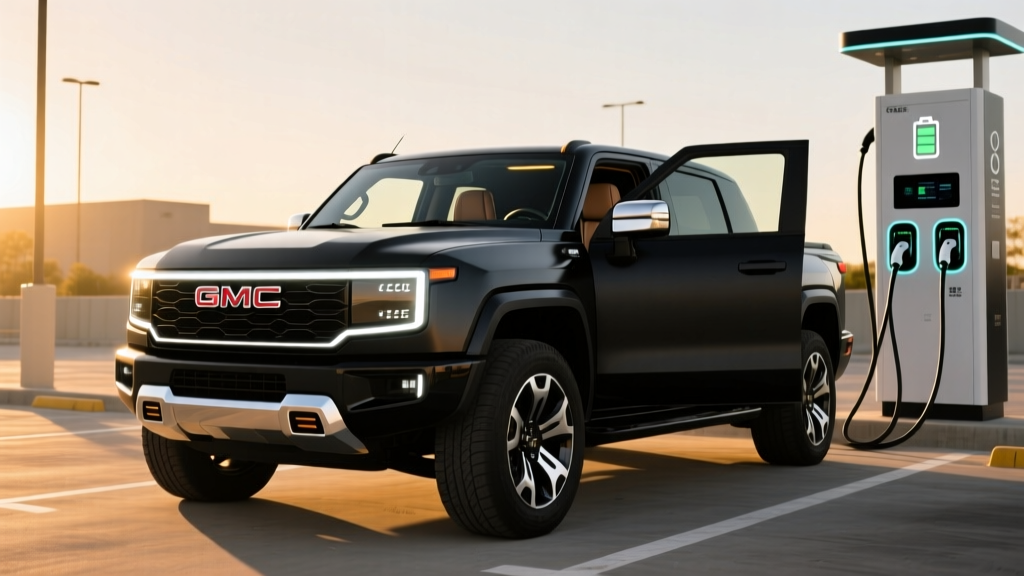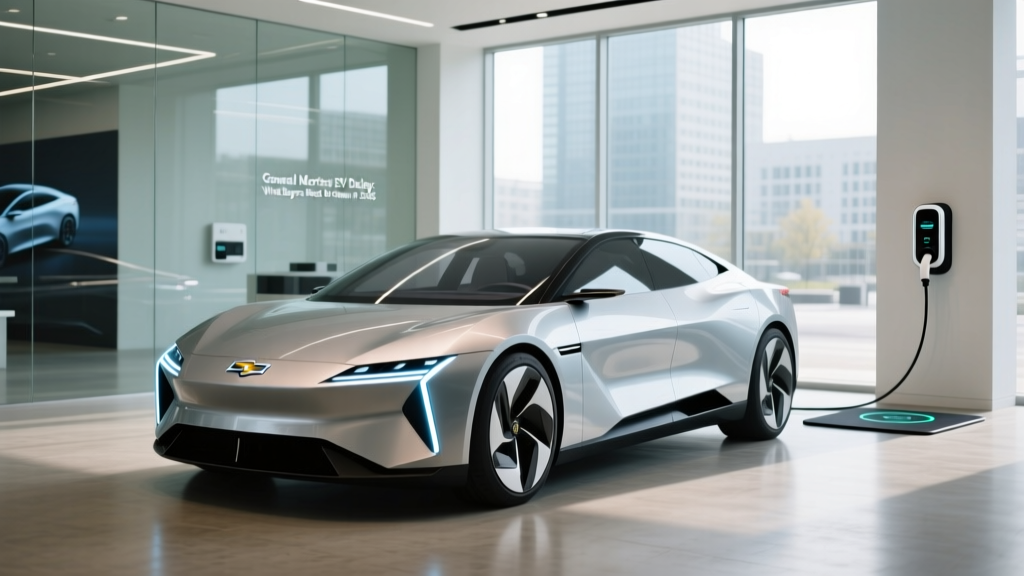
If you've been tracking the electric vehicle market, you've likely encountered the General Motors EV delay narrative. The short answer: GM pushed back several Ultium-based launches between 2023 and 2025 due to battery-pack manufacturing bottlenecks and software integration challenges at its Ultium Cells plants. As of early 2026, most of those delayed models — including the Chevrolet Silverado EV, Blazer EV, and Equinox EV — are now in production and on dealer lots, though some trims and configurations remain constrained. The GMC Sierra EV and Cadillac Escalade IQ are also now reaching customers after extended waits. If you're considering a GM electric vehicle today, the core lineup is available, but you should verify specific trim inventory at your local dealer, as the production ramp is still normalizing for certain high-demand configurations.
Quick Answer: Should You Wait or Buy Now?
The worst of the General Motors EV delay cycle is behind us. The Equinox EV, Blazer EV, and Silverado EV are in production and delivering. However, if you want a specific trim (e.g., Silverado EV RST with Max Range), expect a 4–10 week dealer wait or limited allocation. If you need a vehicle immediately, the Equinox EV 3LT (starting ~$34,995) offers the best availability and value right now.
The Timeline: What Caused the General Motors EV Delay?
GM's Ultium platform — a modular skateboard architecture using large-format pouch cells in a flexible battery-pack design — was announced with ambitious production targets starting in 2022. The reality proved more complex. Several factors converged to create the delays:
- Ultium Cells joint venture ramp: GM's battery plants (Lansing, MI; Spring Hill, TN; New Carlisle, IN) took longer than projected to reach volume production, particularly for the NMC (nickel manganese cobalt) pouch cells that power most Ultium vehicles.
- Software integration: GM's new vehicle software platform, which controls everything from battery thermal management to the infotainment stack, required extended validation. The Blazer EV, for instance, launched in late 2023 but faced a temporary sales halt in early 2024 due to software quality issues that GM subsequently addressed via over-the-air updates.
- Supply chain constraints: Critical minerals and component shortages affected cell production rates throughout 2023–2024.
By mid-2025, GM reported that Ultium Cells plants had reached significantly improved throughput, and the company resumed full production across its EV portfolio. The GM investor updates throughout 2025 confirmed accelerating delivery numbers heading into 2026.
The 2026 GM EV Lineup: What's Actually Available
Here's the current state of GM's consumer EV lineup as of 2026, with exact specifications:
| Model | Trim Range | Battery (kWh usable) | EPA Range | Peak DC Charge | 10–80% Time | 0–60 mph | Base MSRP |
|---|---|---|---|---|---|---|---|
| Chevy Equinox EV | 2LT / 3LT / RS | 85 kWh (NMC) | 319 mi (3LT FWD) | 150 kW | ~28 min | 8.1 sec | $34,995 |
| Chevy Blazer EV | 2LT / RS / SS | 102 kWh (NMC) | 324 mi (RS AWD) | 190 kW | ~24 min | 4.0 sec (SS) | $44,995 |
| Cadillac Lyriq | Tech / Luxury / Sport | 102 kWh (NMC) | 314 mi (AWD) | 190 kW | ~24 min | 4.6 sec (AWD) | $58,590 |
| Chevy Silverado EV | WT / RST / Trail Boss | 200 kWh (NMC, Max Range) | 440 mi (RST Max) | 350 kW | ~20 min | 4.5 sec (RST) | $39,900 (WT) |
| GMC Sierra EV | Elevation / AT4 / Denali | 200 kWh (NMC) | 440 mi (Denali Max) | 350 kW | ~20 min | 4.3 sec (Denali) | $58,700 (Elev.) |
| Cadillac Escalade IQ | Luxury / Sport | 200+ kWh (NMC) | ~450 mi (est.) | 350 kW | ~22 min | <5.0 sec | $129,990 |
Real-World Range Reality Check
EPA range figures above assume mild conditions. Expect 15–25% range reduction in sustained highway driving at 75+ mph, and 20–35% loss in sub-freezing temperatures. The Silverado EV RST's 440-mile EPA rating is impressive, but on a cold-weather highway run at 70 mph, plan for roughly 310–340 miles before needing to charge. The Equinox EV's 319-mile rating translates to approximately 250–270 real-world highway miles in moderate weather.
Cost Breakdown: GM EV vs. Gas Equivalent
Understanding the total cost of ownership is essential, especially given the premium some Ultium models command. Here's a 5-year comparison between the Chevy Equinox EV 3LT ($34,995) and a comparably equipped Chevy Equinox Gas RS AWD (~$33,500):
| Category | Equinox EV 3LT AWD | Equinox Gas RS AWD |
|---|---|---|
| Purchase Price (MSRP) | $36,295 (AWD add) | $33,500 |
| Federal Tax Credit (§30D) | -$7,500* | $0 |
| Effective Purchase Price | $28,795 | $33,500 |
| 5-Yr Fuel / Electricity (15k mi/yr) | $3,150 (home L2, $0.14/kWh) | $9,750 (26 MPG, $3.25/gal) |
| 5-Yr Maintenance | $1,200 | $3,800 |
| 5-Yr Insurance (est. avg) | $8,400 | $7,200 |
| Estimated Depreciation (5 yr) | $14,500 | $13,800 |
| 5-Year Total | $56,045 | $68,050 |
*§30D federal tax credit eligibility requires meeting income caps ($150K single / $300K joint), MSRP caps ($55K for SUVs), and battery critical-mineral sourcing rules. The Equinox EV currently qualifies for the full $7,500. Verify current eligibility at fueleconomy.gov and consult a tax professional. Point-of-sale transfer is available, reducing your upfront cost at the dealer.
Charging at Home and on the Road
One of the biggest ownership variables is charging access. GM Ultium vehicles use the NACS (North American Charging Standard) connector, which means native access to Tesla Superchargers — the most reliable public DC fast-charging network in the US. This is a significant advantage over vehicles limited to CCS-only networks.
| Level | Power | Miles Added per Hour | Typical Use Case |
|---|---|---|---|
| Level 1 (120V) | 1.4 kW | ~4 mi/hr | Emergency / overnight trickle |
| Level 2 (240V, 48A) | 11.5 kW | ~34 mi/hr | Daily home charging |
| DC Fast (Equinox/Blazer) | 150–190 kW peak | ~180–220 mi in 20 min | Road trips |
| DC Fast (Silverado/Sierra) | Up to 350 kW peak | ~100 mi in 10 min | Road trips (Max Range pack) |
Home charging installation for a Level 2 setup (240V, 60A circuit, hardwired Wallbox or ChargePoint) typically costs $800–$2,200 including equipment, electrician labor, and permits. If your home's electrical panel needs an upgrade to 200A service, add $1,500–$3,500. GM does not currently include free home charger hardware with most 2026 models, unlike some earlier promotions.
Charging-curve reality: The Silverado EV's 350 kW peak rate is only sustained at low state-of-charge (10–25%). Expect the rate to taper to ~150 kW by 60% SoC and drop further above 80%. The 10–80% time of ~20 minutes assumes a 350 kW-capable station (such as newer Electrify America or Tesla V4 Supercharger stalls). On a 150 kW station, that same charge takes ~35 minutes.
Battery Chemistry, Warranty, and Longevity
All current GM Ultium consumer vehicles use NMC (nickel manganese cobalt) pouch cells manufactured by the Ultium Cells joint venture (GM and LG Energy Solution). NMC offers high energy density — essential for the Silverado EV's 440-mile range — but is more expensive and resource-intensive than LFP (lithium iron phosphate) chemistry.
| Factor | NMC (GM Ultium) | LFP (Tesla, some Ford) |
|---|---|---|
| Energy Density | Higher (more range per kg) | Lower (~15–20% less) |
| Charge to 100% Daily? | Not recommended (80% daily) | Yes, designed for 100% |
| Cold-Weather Performance | Better | Reduced range in cold |
| Cycle Life | ~1,500–2,000 cycles | ~3,000+ cycles |
| Cost | Higher | Lower |
GM's battery warranty covers 8 years / 100,000 miles, guaranteeing the battery will retain at least 70% of its original capacity. This is competitive with industry norms. Real-world degradation data for Ultium packs is still limited given the platform's youth, but LG-manufactured NMC cells in similar applications have shown approximately 8–12% capacity loss over 150,000 miles in fleet data.
Common Misconceptions About the GM EV Delay
| Myth | Fact |
|---|---|
| "GM cancelled all its EVs." | GM delayed production timelines but never cancelled the Ultium platform. All announced consumer models are now in production or delivering. |
| "The Blazer EV is unreliable because of the sales halt." | The early-2024 sales pause was for software quality, not hardware defects. GM issued OTA fixes, and the Blazer EV has been in uninterrupted production since mid-2024. |
| "GM EVs can't use Tesla Superchargers." | All 2025+ GM Ultium vehicles come with native NACS ports, enabling direct Supercharger access without adapters. |
| "The Silverado EV is too expensive to be practical." | The Work Truck (WT) trim starts at $39,900 and qualifies for the §30D credit, bringing it to ~$32,400 — competitive with gas Silverado pricing. |
| "I should wait for solid-state batteries." | GM has announced solid-state R&D partnerships, but commercial availability is not expected before 2029–2030. Current Ultium NMC packs are proven and warranted. |
Decision Framework: Should You Buy a GM EV Now?
If/Then Buyer Guide
- If you need an affordable electric crossover with 300+ miles of range and home charging access → Buy the Equinox EV 3LT. At ~$28,795 after the federal credit, it's one of the best-value EVs on the market.
- If you want a sporty midsize EV with strong performance → Consider the Blazer EV SS (0–60 in 4.0 sec, 324 mi range), but test-drive it to confirm the updated software meets your expectations.
- If you need a full-size electric truck for towing and road trips → The Silverado EV RST Max Range (440 mi, 350 kW charging) is compelling, but expect a 6–12 week wait for specific configurations. The WT fleet trim is more readily available.
- If you live in an apartment without charging access and can't install a Level 2 charger → Consider a PHEV instead (like the upcoming GM PHEV models or competitors), or verify that public charging infrastructure near you is reliable enough for daily use.
- If you live in a cold climate (sustained sub-25°F winters) → Factor in 25–35% winter range loss. The Silverado EV's massive 200 kWh pack absorbs this penalty best, retaining ~290+ miles even in harsh conditions. Smaller packs like the Equinox's 85 kWh will drop to ~210–230 real-world winter miles.
- If you're cross-shopping GM vs. Tesla or Hyundai/Kia → GM's NACS native access is a plus, but the Hyundai Ioniq 5 and Tesla Model Y still charge faster on their respective peak curves. Test-drive all three before deciding.
Frequently Asked Questions
Is the General Motors EV delay still affecting availability in 2026?
Most models are now in steady production. The Equinox EV and Blazer EV are widely available at dealers. The Silverado EV and Sierra EV in higher trims (RST, Denali) may still require a factory order with a 4–10 week lead time. The Escalade IQ is in limited production with longer wait times.
Does the Chevy Equinox EV qualify for the $7,500 federal tax credit?
Yes, as of early 2026, the Equinox EV qualifies for the full §30D credit of $7,500, assuming you meet income caps ($150,000 single / $300,000 joint AGI) and the vehicle MSRP stays under the $55,000 SUV cap. The credit can be transferred to the dealer as a point-of-sale discount. Always verify current status at irs.gov.
Can I charge a GM EV at a Tesla Supercharger?
Yes. All 2025 and newer GM Ultium vehicles have a native NACS charge port, meaning you can plug directly into any Tesla Supercharger without an adapter. You'll need to set up payment through the Tesla app or your vehicle's infotainment system. Older GM EVs (like the Bolt EV/EUV with CCS) require a GM-provided adapter for Supercharger access.
How long will a GM Ultium battery last?
GM warranties the battery for 8 years / 100,000 miles at a minimum of 70% capacity retention. Based on NMC chemistry behavior in similar applications, expect approximately 8–12% degradation over 150,000 miles. Proper care — avoiding frequent 100% charges, minimizing DC fast-charging in extreme heat, and using preconditioning — can extend battery life well beyond the warranty period.
Should I wait for GM's next-generation EVs instead of buying now?
GM has announced next-generation models (including a more affordable Bolt successor and expanded Cadillac offerings) for 2027–2028. However, these are still preliminary. If a current Ultium model fits your needs and budget, there's no compelling reason to wait 2+ years for unannounced vehicles, especially given the tax credit availability today.