Quick Verdict: The Taycan That Started It All
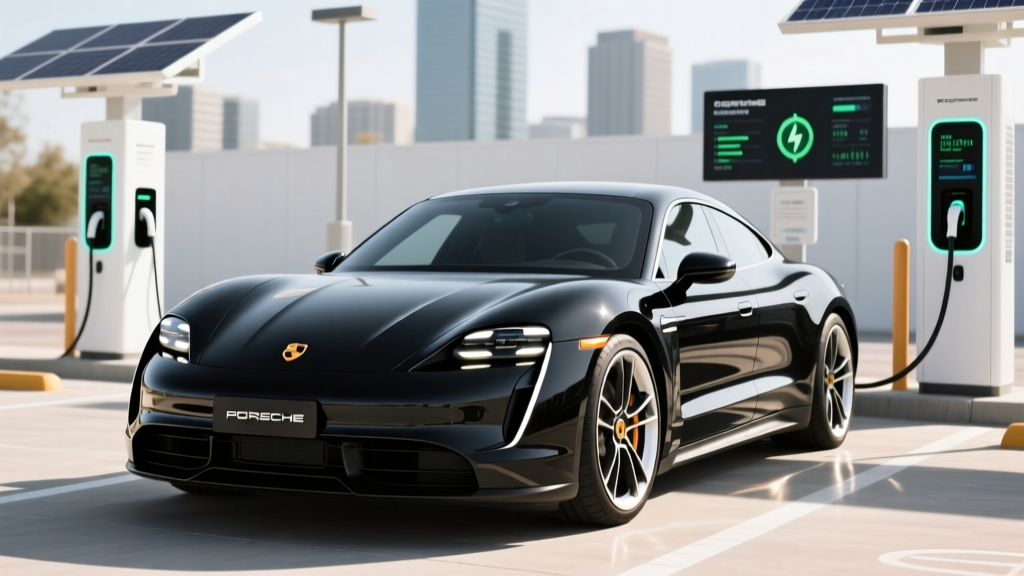
The 2020 Porsche Taycan was Porsche's first all-electric vehicle, and it arrived with a clear mandate: prove that a battery-electric car could deliver the driving dynamics the brand is known for. Six years later, the original Taycan remains one of the most engaging EVs on the road — and on the used market, it's finally entering a price range where buyers are asking whether it's a smart buy in 2026. The answer depends heavily on which variant you choose, how you plan to charge, and what you expect from a luxury EV that's now halfway through its battery warranty.
This review covers the 2020 Taycan lineup — the Taycan 4S, Taycan Turbo, and Taycan Turbo S — with exact specs, real-world range data, charging performance, and ownership economics updated for the current market.
Range and Efficiency: EPA vs. Reality
The 2020 Taycan launched with two battery options: the base 79.2 kWh Performance Battery and the optional 93.4 kWh Performance Battery Plus (both gross capacity; usable is approximately 71.0 kWh and 83.7 kWh, respectively). Both use NMC (nickel-manganese-cobalt) lithium-ion chemistry, optimized for high discharge rates rather than maximum energy density — a deliberate Porsche engineering choice favoring repeatable performance over maximum range.
| Trim | Battery (usable kWh) | EPA Range (mi) | MPGe (combined) | kWh/100 mi |
|---|---|---|---|---|
| Taycan 4S (79.2 kWh) | 71.0 | 203 | 69 | 49 |
| Taycan 4S (93.4 kWh) | 83.7 | 203 | 68 | 49 |
| Taycan Turbo | 83.7 | 201 | 69 | 49 |
| Taycan Turbo S | 83.7 | 192 | 68 | 50 |
Source: EPA range and MPGe data via fueleconomy.gov.
Charging Performance: 800-Volt Architecture Advantage
The 2020 Taycan was the first production EV with an 800-volt electrical architecture (most competitors at the time used 400V). This allows higher charging power at lower current, reducing heat and enabling sustained fast-charging performance that was class-leading at launch and remains competitive today.
| Charging Level | Max Power | Speed / Time | Connector |
|---|---|---|---|
| Level 1 (120V) | 1.3 kW | ~3 mi/hr | J1772 (adapter) |
| Level 2 (240V, 48A) | 11.5 kW | ~28 mi/hr; full charge in ~8.5 hr (93.4 kWh) | J1772 / CCS1 |
| DC Fast Charge (peak) | 270 kW (93.4 kWh pack) 225 kW (79.2 kWh pack) | 10–80% in ~22.5 min (93.4 kWh) 10–80% in ~22.5 min (79.2 kWh) | CCS1 |
Charging curve reality: The Taycan's 270 kW peak is achievable on a 350 kW CCS charger (such as Electrify America's latest stations), but only between approximately 5–27% state of charge. The curve tapers significantly: from 27–55% it holds around 150–170 kW, then drops further to roughly 80–100 kW from 55–80%. This means the advertised 10–80% time of 22.5 minutes is accurate under ideal conditions (preconditioned battery, warm ambient temperature, high-power charger), but real-world sessions at older 150 kW chargers will stretch to 30–35 minutes. Porsche's preconditioning feature, activated when a charging stop is set in the navigation system, warms the battery to optimal temperature and is essential for hitting peak charge rates.
Home charging note: The onboard charger maxes out at 11.5 kW (48 amps) on Level 2. A full home charge of the 93.4 kWh pack takes roughly 8.5 hours — overnight is sufficient. Porsche's Mobile Charger Connect (included with the vehicle) supports up to 9.6 kW on a NEMA 14-50 outlet; for full 11.5 kW capability, a hardwired Level 2 station like the ChargePoint Home Flex or Porsche's own wall-mounted charger is recommended.
Performance and Drivetrain
The 2020 Taycan lineup uses dual permanent-magnet synchronous motors (one per axle) providing all-wheel drive across all trims. A two-speed transmission on the rear axle — first gear for launch acceleration, second for efficient highway cruising — is unique among EVs and contributes to the Taycan's ability to deliver repeatable hard launches without powertrain overheating.
| Trim | Drivetrain | Peak HP (Launch Control) | Peak Torque (lb-ft) | 0–60 mph (sec) | Top Speed (mph) |
|---|---|---|---|---|---|
| Taycan 4S (79.2 kWh) | Dual-motor AWD | 522 | 472 | 3.8 | 155 |
| Taycan 4S (93.4 kWh) | Dual-motor AWD | 562 | 479 | 3.6 | 155 |
| Taycan Turbo | Dual-motor AWD | 670 | 626 | 3.0 | 161 |
| Turbo S | Dual-motor AWD | 750 | 774 | 2.6 | 161 |
The Turbo S's 2.6-second 0–60 time was verified independently by multiple testers and remains quick by any standard. More impressive in daily driving is the car's repeatability: Porsche engineered the thermal management system so that back-to-back launches produce virtually identical times, something early competitors like the Tesla Model S struggled with.
Interior, Cargo, and Technology
The 2020 Taycan's interior marked Porsche's shift to a nearly all-digital cabin. The driver faces a curved 16.8-inch configurable instrument cluster, while the center stack features a 10.9-inch PCM (Porsche Communication Management) touchscreen, with an optional 8.4-inch lower touchscreen for climate and handwriting input. A passenger-side 10.9-inch display was optional.
Cargo and passenger space:
- Rear trunk: 14.3 cu ft (4S/Turbo/Turbo S with 93.4 kWh pack)
- Front trunk (frunk): 2.8 cu ft — small; fits a charging cable bag or a slim laptop case
- Front headroom: 38.9 in | Rear headroom: 36.5 in
- Front legroom: 41.3 in | Rear legroom: 32.7 in
- Curb weight: 4,777–5,121 lbs depending on trim and battery
The rear seat is the Taycan's most commonly cited compromise. At 32.7 inches of legroom, it trails the Tesla Model S (35.4 in) and Audi e-tron GT (which shares the J1 platform but was packaged differently). Adults over 6 feet will find the rear seat tight on longer trips. The frunk is also notably small compared to competitors, a consequence of the front-mounted power electronics and HVAC components.
Driver assistance: The 2020 Taycan includes Porsche InnoDrive with adaptive cruise control, lane-keeping assist, and traffic-sign recognition. This is an SAE Level 2 system — the driver must keep hands on the wheel and remain fully engaged. Night vision assist and surround-view camera were available as options. Porsche did not offer a hands-free driving mode comparable to GM's Super Cruise or Ford's BlueCruise in the 2020 model year.
Pricing, Tax Credits, and Used Market Value
The 2020 Taycan's original MSRP placed it firmly in the luxury performance segment. On the used market in 2026, prices have moderated considerably, though the Turbo S still commands a premium.
| Trim | Original Base MSRP | Typical 2026 Used Price | Federal Used-EV Credit (§25E) |
|---|---|---|---|
| Taycan 4S | $103,800 | $42,000–$52,000 | Up to $4,000 (30% of sale price, capped) |
| Taycan Turbo | $150,900 | $55,000–$68,000 | Up to $4,000 |
| Taycan Turbo S | $185,000 | $70,000–$85,000 | Up to $4,000 |
The new-vehicle §30D credit ($7,500) is no longer applicable to a 2020 model. However, buyers purchasing a used 2020 Taycan from a licensed dealer may qualify for the §25E Previously-Owned Clean Vehicle Credit, which provides 30% of the sale price up to a maximum of $4,000. Key eligibility requirements per IRS guidelines:
- Sale price must be $25,000 or less — this disqualifies most Turbo and all Turbo S examples
- Buyer adjusted gross income must not exceed $75,000 (single), $112,500 (head of household), or $150,000 (joint)
- Vehicle must be at least 2 model years old (met by all 2020 models)
- Must purchase from a licensed dealer (private-party sales do not qualify)
- Credit is non-refundable and can only be claimed once per VIN
In practice, the $25,000 sale-price cap means only high-mileage or cosmetically challenged 4S examples will qualify for the used credit. Most 2020 Taycans on the market in 2026 will sell above this threshold. Consult a tax professional to confirm eligibility for your specific situation.
Battery Health, Warranty, and Longevity
Porsche provides an 8-year / 100,000-mile battery warranty on the 2020 Taycan, guaranteeing that the battery will retain at least 70% of its original capacity during that period. The limited vehicle warranty covers 4 years / 50,000 miles, and Porsche offers 4 years of roadside assistance.
Battery degradation data: Early owner reports and fleet data suggest the Taycan's NMC battery degrades more slowly than average, aided by the 800V system's conservative buffer management. Porsche uses a relatively large top-and-bottom buffer (the 93.4 kWh gross pack has ~83.7 kWh usable), which protects the cells from extreme states of charge. Owners reporting at 60,000–80,000 miles typically show 5–9% degradation — well within the 70% warranty threshold. However, a full battery replacement out of warranty is estimated at $20,000–$30,000 based on current Porsche parts pricing, a significant long-term ownership risk for buyers of early examples approaching the 8-year mark.
What to check before buying a used 2020 Taycan:
- Request a battery health report from a Porsche dealer (State of Health / SoH percentage)
- Verify whether the vehicle received the 2021 software recall update for potential 12V battery drain
- Check service records for coolant system maintenance (the Taycan has three separate cooling circuits)
- Inspect for underbody damage — the battery pack is structural and replacement is costly
Taycan vs. Competitors: How It Stacks Up
| Spec | Taycan Turbo | Tesla Model S Performance | Audi e-tron GT (2022+)* |
|---|---|---|---|
| EPA Range | 201 mi | 348 mi | 238 mi |
| 0–60 mph | 3.0 sec | 2.3 sec | 3.1 sec |
| Peak DC Charge | 270 kW | 250 kW | 270 kW |
| Rear Legroom | 32.7 in | 35.4 in | 31.5 in |
| Build Quality | Excellent | Average | Excellent |
| Driving Dynamics | Best-in-class | Quick but numb | Very good |
*Audi e-tron GT launched for the 2022 model year on the same J1 platform; included for cross-shopping context.
- Choose the Taycan if: You prioritize steering feel, build quality, and repeatable performance over maximum range and back-seat space. You have reliable home charging and your daily commute is under 150 miles round-trip.
- Choose the Model S if: Range and Supercharger network access are your top priorities, or you regularly carry rear-seat passengers. The 2020 Model S offers nearly double the EPA range.
- Choose the e-tron GT if: You want the J1 platform's 800V charging and similar driving dynamics in a slightly more practical package with a newer interior design (2022+).
Pros and Cons
- Class-leading steering feel and chassis balance
- 800V architecture enables sustained fast-charging performance
- Repeatable launch performance without thermal degradation
- Premium interior materials and build quality
- Conservative EPA ratings — real-world range often exceeds sticker
- Heat pump standard for cold-weather efficiency
- EPA range significantly trails Tesla Model S and newer competitors
- Rear seat legroom is tight (32.7 in) — not ideal for families
- Small frunk (2.8 cu ft) limits front cargo utility
- CCS1 connector only — no NACS adapter was offered for 2020 models
- No hands-free Level 2+ driving mode (unlike Super Cruise/BlueCruise)
- Out-of-warranty battery replacement estimated at $20,000–$30,000
- Infotainment system feels dated compared to 2024+ Taycan refresh
Frequently Asked Questions
What is the real-world range of the 2020 Porsche Taycan?
In mixed driving at moderate temperatures, expect 220–240 miles from the 93.4 kWh pack — above the EPA's 192–203 mile estimates. Sustained highway driving at 75+ mph reduces this to 190–210 miles. In freezing weather, plan for 135–175 miles depending on trim and driving style.
How fast does the 2020 Taycan charge at home and on the road?
On a 350 kW DC fast charger, the Taycan peaks at 270 kW and charges from 10–80% in approximately 22.5 minutes under ideal conditions. On a home Level 2 charger (11.5 kW), a full charge takes about 8.5 hours. On a standard 120V outlet, expect roughly 3 miles of range per hour — essentially a trickle for emergencies only.
Does the 2020 Taycan qualify for any federal tax credit in 2026?
The new-vehicle §30D credit no longer applies. The used-EV §25E credit (up to $4,000) may apply if the sale price is $25,000 or less and the buyer's income is within IRS limits. Most 2020 Taycans sell above the $25,000 cap, so eligibility is limited to high-mileage or lower-trim examples. Verify current rules at irs.gov.
Is the 2020 Taycan worth buying vs. newer EVs?
If driving dynamics and build quality matter more to you than maximum range or the latest infotainment, the 2020 Taycan offers exceptional value on the used market at $42,000–$85,000 depending on trim. The main risks are battery replacement cost as the car approaches the 8-year warranty boundary and the relatively small rear seat. For road-trip-heavy buyers, the 201-mile EPA range (Turbo) is a genuine limitation compared to newer 300+ mile EVs.
What NACS adapter options exist for the 2020 Taycan?
The 2020 Taycan uses a CCS1 charge port. As of 2026, Porsche has not released an official NACS adapter for J1-platform Taycans, and third-party CCS-to-NACS adapters remain limited. This means access to Tesla Superchargers is restricted unless a compatible adapter becomes available. Check with your local Porsche dealer for the latest adapter compatibility updates.
Who is the 2020 Taycan best suited for?
The Taycan is ideal for a driving enthusiast who wants an EV for daily commuting (under 150 miles round-trip), has access to home Level 2 charging, and rarely carries more than one passenger. It is not well suited for large families (rear seat is tight), frequent long-distance road-trippers (range and charging infrastructure limitations vs. Tesla), or buyers who prioritize the latest in-car tech and hands-free driving features.