The Quick Answer: Is the GMC Hummer EV Truck Worth It?
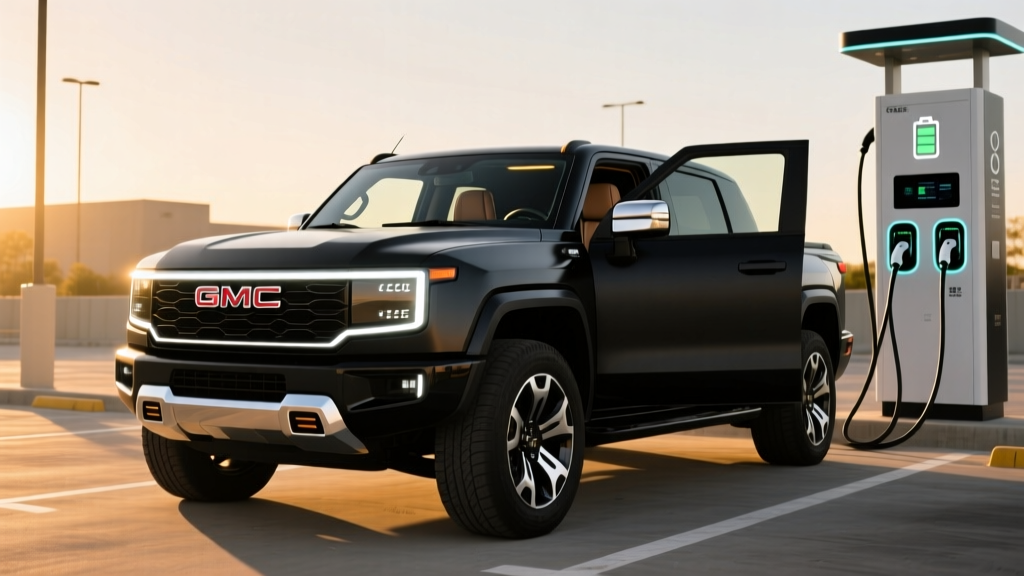
The ev hummer truck (officially the GMC Hummer EV Pickup) is a 1,000+ horsepower electric supertruck with up to 381 miles of EPA-estimated range in 2EV trim. It starts around $110,295 (2025/2026 model years) and climbs past $140,000 fully loaded. It qualifies for no federal §30D tax credit because it exceeds the $80,000 MSRP cap for trucks. Real-world highway range drops to roughly 280–310 miles, and its 2,923 kWh-capable Ultium battery takes about 30 minutes to charge 10–80% on a 350 kW DC fast charger. It's an engineering showcase, not an efficiency play — buy it for performance and presence, not for low running costs.
Range and Efficiency: EPA Numbers vs. Real-World Driving
The Hummer EV Pickup's massive 24-module double-stacked Ultium battery pack holds approximately 212.7 kWh of usable energy — the largest battery ever fitted to a production passenger vehicle. That mass (the truck weighs over 9,000 lbs curb) directly impacts efficiency.
| Spec | 2EV (Base) | 3X |
|---|---|---|
| EPA Range | ~381 mi | ~329 mi |
| Real-World Highway (70 mph) | ~280–310 mi | ~250–275 mi |
| Real-World Cold (30°F) | ~240–270 mi | ~210–240 mi |
| Battery Capacity (Usable) | ~212.7 kWh | ~212.7 kWh |
| EPA Efficiency (MPGe) | ~47 MPGe | ~47 MPGe |
| kWh/100 mi | ~72–75 | ~72–75 |
Real-World Range Reality: The 381-mile EPA figure assumes mixed driving. On sustained 70+ mph highway runs — the typical road-trip scenario — expect 280–310 miles in moderate temperatures. In freezing weather, the battery's enormous thermal mass actually helps it retain heat, but cabin heating and chemistry losses still cut range by 20–30%. For a truck this heavy, physics is physics: moving 9,000+ lbs at highway speed demands energy.
Charging Speed: Peak kW, Sustained Curve, and Home Setup
The Hummer EV supports up to 350 kW peak DC fast charging on 800V-capable infrastructure (like Electrify America's 350 kW stalls). However, peak rate is not sustained rate.
| Charging Level | Power (kW) | Time / Rate | Notes |
|---|---|---|---|
| Level 1 (120V outlet) | ~1.4 kW | ~4 mi/hr | Not practical for daily use at this battery size |
| Level 2 (240V, 48A) | ~11.5 kW | ~18–19 hours (0–100%) | Standard home charger; overnight recovery of ~70–80 mi |
| Level 2 (240V, 80A) | ~19.2 kW | ~11 hours (0–100%) | Requires hardwired 100A circuit; recommended for this truck |
| DC Fast (350 kW peak) | Up to 350 kW | ~30 min (10–80%) | Curve tapers significantly above 80% SoC |
| DC Fast (150 kW station) | Up to 150 kW | ~55–65 min (10–80%) | More common at public stations |
Charge curve reality: The Hummer EV hits its peak ~350 kW rate only in a narrow SoC window (roughly 10–25%). By 50% SoC, the rate drops to ~200 kW, and above 80% it slows dramatically to protect the battery. Plan road-trip stops around the 10–80% window for the fastest throughput.
Home charging gotcha: With a 212.7 kWh battery, a standard 48-amp Level 2 charger adds only ~70 miles overnight. If you drive 100+ miles daily, you need an 80-amp hardwired unit on a dedicated 100-amp breaker. Many homes need a panel upgrade ($1,500–$3,000) to support this. Budget $2,500–$4,500 total for a proper home charging installation with an 80A unit.
EV Hummer Truck vs. Gas Truck: Cost & Capability Comparison
How does the Hummer EV stack up against a comparable gas-powered heavy-duty truck? We compared it against the 2025 Ford F-250 Super Duty (6.7L Power Stroke diesel) — similar towing class, similar buyer profile.
| Metric | GMC Hummer EV 3X | Ford F-250 Diesel (4WD) |
|---|---|---|
| Base MSRP | ~$112,095 | ~$65,000–$80,000 |
| Federal Tax Credit (§30D) | $0 (exceeds $80k cap) | $0 (not eligible) |
| Energy Cost per Mile | ~$0.10–$0.15 (home); ~$0.20–$0.35 (DCFC) | ~$0.25–$0.35 (diesel at $4.00/gal, 15 mpg) |
| Annual Fuel/Energy (15k mi) | ~$1,500–$2,250 (home charging) | ~$4,000 (diesel) |
| Maintenance (Annual Avg) | ~$300–$500 | ~$1,200–$1,800 |
| 0–60 mph | ~3.0 sec (Watts to Freedom) | ~6.5–7.5 sec |
| Towing Capacity | ~7,500 lbs | ~15,000–22,000 lbs |
| Payload | ~1,300 lbs | ~3,500–4,200 lbs |
| Range | ~329 mi (EPA) | ~500–700 mi (diesel, 34-gal tank) |
The bottom line: The Hummer EV wins on acceleration, ride refinement, and per-mile energy cost if you charge at home. The diesel F-250 wins decisively on towing, payload, range, and upfront price. These are fundamentally different tools. If you need to tow a 12,000-lb trailer cross-country, the Hummer EV is the wrong truck. If you want a daily-driver supertruck with occasional light towing, it's a compelling (if expensive) choice.
Total Ownership Cost: 5-Year Breakdown
Let's model 5-year ownership for a Hummer EV 2EV with 15,000 miles driven annually.
| Category | Hummer EV 2EV | Ford F-250 Diesel |
|---|---|---|
| Purchase Price (MSRP) | $110,295 | $72,000 |
| Federal Tax Credit | $0 | $0 |
| 5-Year Energy/Fuel | $8,500 (mix home/DCFC) | $20,000 |
| 5-Year Maintenance | $2,000 | $7,500 |
| 5-Year Insurance (Est.) | $18,000–$22,000 | $9,000–$12,000 |
| Home Charger Install | $3,500 | $0 |
| Estimated Depreciation (5yr) | ~45–55% | ~35–45% |
| 5-Year Total Cost (approx.) | $190,000–$210,000 | $130,000–$150,000 |
Key takeaways:
- The Hummer EV saves roughly $11,500 on energy and $5,500 on maintenance over 5 years compared to a diesel F-250.
- Those savings are overwhelmed by the $38,000+ higher purchase price, significantly higher insurance premiums (luxury EV surcharge, high repair costs), and steeper projected depreciation.
- Insurance for the Hummer EV runs $300–$400/month in most states due to its $110k+ value, specialized aluminum/steel body panels, and limited repair-network experience with Ultium platforms.
Performance, Tech, and What Makes It Unique
The Hummer EV's party tricks are legitimate engineering achievements:
- Watts to Freedom mode: Lowers the air suspension, haptic seat feedback, and launches the 9,000-lb truck to 60 mph in approximately 3.0 seconds (3X trim, tri-motor, 1,000+ hp).
- CrabWalk: Four-wheel steering allows the rear wheels to turn up to 10 degrees in the same direction as the fronts, enabling diagonal movement for tight trail obstacles.
- Extract Mode: Air suspension raises the ride height by approximately 6 inches for extreme off-road clearance.
- Infinity Roof: Removable roof panels stored in the front trunk (frunk) for open-air driving.
- UltraVision: Up to 18 camera views, including underbody cameras for off-road trail navigation.
The Super Cruise hands-free driver-assistance system covers over 750,000 miles of pre-mapped roads in the US and Canada. Note: Super Cruise is an SAE Level 2 system — you must remain attentive, and the system monitors your eyes via an infrared camera. It is not autonomous driving.
SAE Level 2 — Not Self-Driving: Super Cruise requires the driver to remain engaged and ready to take over at any time. The infrared driver-monitoring camera will alert you and eventually disengage if you look away for too long. Only Level 4 services like Waymo operate without a human driver.
Tax Credit, Pricing, and Trim Breakdown
For 2025–2026 model years, the GMC Hummer EV Pickup is available in two primary trims:
| Trim | Drivetrain | HP (approx.) | 0–60 mph | MSRP |
|---|---|---|---|---|
| 2EV | Dual-motor AWD | ~655 hp | ~4.5 sec | ~$110,295 |
| 3X | Tri-motor AWD | ~1,000+ hp | ~3.0 sec | ~$112,095–$140,000+ |
Federal tax credit status: The Hummer EV does not qualify for the §30D federal EV tax credit. Under current IRS rules, trucks must have an MSRP at or below $80,000 to be eligible. Every Hummer EV trim exceeds this cap. Additionally, buyer income limits ($300,000 joint / $150,000 single) and battery critical-mineral sourcing requirements apply to the credit generally.
Check your state for additional incentives — some states offer rebates or HOV-lane access regardless of MSRP, but these vary by jurisdiction. Consult your state's energy or DMV website for current programs.
Decision Framework: Should You Buy the Hummer EV Truck?
Buy the GMC Hummer EV if:
- You want a statement vehicle with supercar acceleration and genuine off-road capability
- You have reliable home Level 2 charging (ideally 80A) and drive mostly under 250 miles daily
- Light towing (under 7,500 lbs) covers your needs
- You value instant torque, quiet operation, and zero tailpipe emissions for daily driving
- Your budget comfortably supports a $110k–$140k vehicle with $300+/month insurance
Skip the Hummer EV if:
- You regularly tow over 7,500 lbs or haul heavy payloads — get a diesel F-250 or Ram 2500
- You lack home charging access and your area has sparse DC fast-charging infrastructure
- You frequently drive 300+ mile highway stretches in cold weather — range anxiety is real at 9,000 lbs
- You're seeking an efficiency-focused EV — consider the Rivian R1T or Ford F-150 Lightning for better value and practicality
- Total cost of ownership is a primary concern — the math doesn't favor the Hummer EV financially
Common Misconceptions: Myth vs. Fact
| Myth | Fact |
|---|---|
| "It gets the $7,500 federal tax credit." | No. MSRP exceeds the $80,000 truck cap under §30D. Zero federal credit applies. |
| "381-mile range means I can road-trip 381 miles without stopping." | EPA range assumes mixed driving. Sustained highway speeds yield 280–310 real miles. Plan stops at ~250 miles. |
| "It charges as fast as a Tesla." | Peak 350 kW is impressive, but the massive battery means 10–80% still takes ~30 minutes. A Model S (100 kWh) fills proportionally faster. |
| "The battery will need replacing in a few years." | GM covers the Ultium battery with an 8-year/100,000-mile warranty (minimum 70% capacity retention). Large batteries degrade more slowly due to lower C-rates per cell. |
| "It can tow as much as a diesel truck." | Rated at ~7,500 lbs — roughly half of what a diesel F-250 can pull. Towing also cuts EV range by 40–60%. |
Warranty, Battery Longevity, and Maintenance
GM provides the following coverage for the Hummer EV:
- Battery: 8 years / 100,000 miles (whichever comes first), warrantied to retain at least 70% of original capacity
- Powertrain (motors, inverters): 5 years / 60,000 miles
- Bumper-to-bumper: 3 years / 36,000 miles
The 212.7 kWh battery's sheer size works in its favor for longevity: daily driving of 50–80 miles uses only 15–25% of total capacity, meaning shallow charge cycles that reduce degradation stress. Expect 90%+ state of health at 100,000 miles based on Ultium platform data and general NMC chemistry performance at low C-rates.
Maintenance advantages: No oil changes, no transmission fluid, no spark plugs, no exhaust system. Regenerative braking significantly extends brake pad life (many EV owners report 100,000+ miles on original pads). Expect to spend $300–$500 annually on cabin air filters, wiper fluid, tire rotations, and coolant checks.
Frequently Asked Questions
Can I charge the Hummer EV on a standard household outlet?
Yes, but it's impractical. A 120V Level 1 outlet delivers ~1.4 kW, adding roughly 4 miles of range per hour. Fully charging the 212.7 kWh battery from empty would take over 6 days. You need a Level 2 home charger (240V, minimum 48A, ideally 80A) for practical daily use.
How does the Hummer EV handle in snow and ice?
The dual- and tri-motor AWD system provides excellent traction, and the truck's 9,000+ lb weight gives it substantial planted stability. Air suspension adjusts ride height for deep snow. Range loss in freezing temps is 20–30%, so precondition the battery while plugged in to minimize this.
Does the Hummer EV use NACS or CCS for charging?
The current Hummer EV uses the CCS1 connector for DC fast charging. GM has announced a transition to the NACS (Tesla-style) connector for future model years. Adapters are expected to be available for Supercharger access, but verify current compatibility with GM before relying on the Tesla network.
What happens if I run out of charge on the road?
GM provides roadside assistance during the warranty period. However, a dead Hummer EV requires a flatbed tow — it cannot be flat-towed or dolly-towed due to the electric motors. Plan routes with charging apps like PlugShare or A Better Routeplanner and maintain a 10–15% buffer.
Is the Hummer EV good for off-roading?
Genuinely yes. Extract Mode raises ground clearance, CrabWalk aids tight trail navigation, underbody cameras and armor protect critical components, and the instant torque delivery is ideal for rock crawling. It's a capable off-road platform — just be mindful of range on remote trails far from chargers.
Sources: EPA fuel economy data via fueleconomy.gov; GMC Hummer EV specifications via GMC official site; IRS §30D clean vehicle credit rules via irs.gov.