Quick Answer: Is a Fully Electric Tractor Right for You?
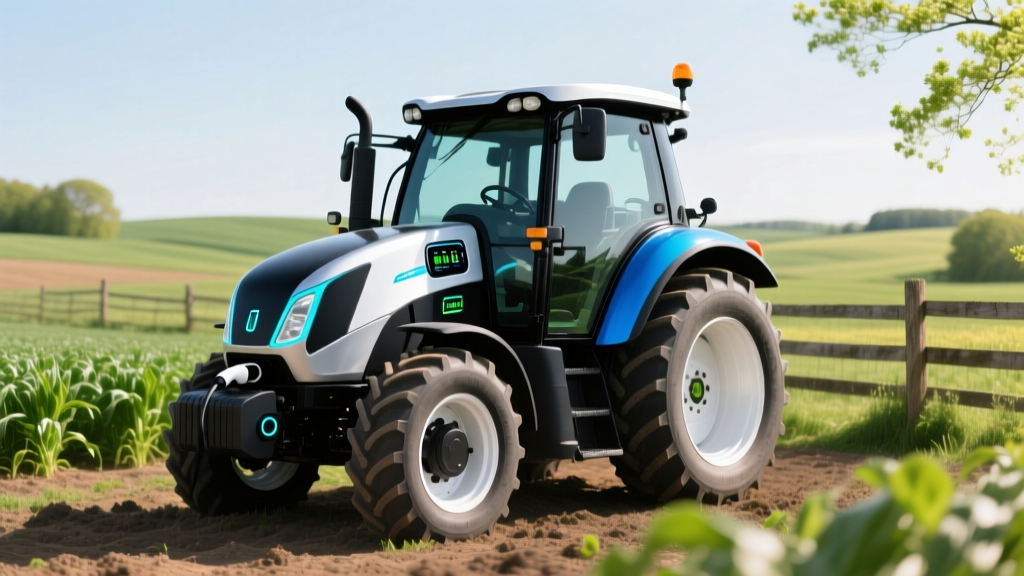
A fully electric tractor can handle light-to-medium duty tasks on small farms (under ~40 acres), orchards, vineyards, and property maintenance — but current battery-electric models top out around 40-70 HP equivalent and 4-8 hours of light-duty runtime before needing a recharge. If your operation requires sustained high-horsepower PTO work (tilling heavy clay, large-scale haying, or 12+ hour field days), a diesel tractor or a hybrid-electric setup remains the practical choice in 2026. The economics favor electric when you have reliable Level 2 charging access, short daily run times, and qualify for agricultural equipment incentives.
Electric tractors are no longer a novelty. Manufacturers like Monarch Tractor, Solectrac, and others have delivered production battery-electric models aimed at specialty crops, vineyards, and small-scale diversified farms. But "fully electric tractor" means something very different depending on whether you're pulling a two-bottom plow through loam or mowing a five-acre pasture. This guide breaks down the real numbers, costs, and ownership realities so you can decide whether electrification makes sense for your operation.
Current Fully Electric Tractor Models: Specs at a Glance
The production electric tractor market in 2026 remains niche compared to the passenger EV space. Here's what's actually available or taking orders:
| Model | HP (Peak / Continuous) | Battery (kWh) | Runtime (Light / Heavy Duty) | Charge Time (Level 2, 240V) | Base MSRP |
|---|---|---|---|---|---|
| Monarch MK-V | 70 HP peak / 40 HP continuous | ~60 kWh (swappable packs available) | ~10 hrs light / ~4-5 hrs heavy | ~5-6 hours per pack | ~$68,000 |
| Solectrac e25 | 25 HP equivalent | ~28 kWh | ~5-6 hrs light / ~2-3 hrs heavy | ~4-5 hours | ~$34,900 |
| Solectrac e70i (announced) | 70 HP equivalent | ~60 kWh (dual-pack option) | ~8 hrs light / ~4 hrs heavy | ~6-8 hours | TBD (est. $70,000+) |
| John Deere GridCON (prototype) | Not rated for production | 130 kWh (concept) | N/A | N/A | Not available |
Key spec note: Electric tractor HP ratings can be misleading. Electric motors deliver peak torque instantly, so a 40 HP continuous electric motor often pulls comparably to a 50-55 HP diesel at the PTO — but sustained high-load work drains batteries fast. Always evaluate based on continuous HP and kWh capacity, not peak numbers.
Electric vs. Diesel Tractor: Real Cost Comparison
The purchase price of a fully electric tractor is substantially higher than an equivalent diesel compact utility tractor. The savings come from fuel and maintenance over time. Here's a realistic 5-year breakdown for a small farm running ~500 hours per year:
| Cost Category | Electric Tractor (40 HP class) | Diesel Tractor (45 HP class) |
|---|---|---|
| Purchase Price | $68,000 | $28,000 |
| Fuel / Energy (500 hrs/yr × 5 yrs) | $3,750 (est. $0.15/kWh, ~5 kWh/hr avg) | $18,750 (est. $4.50/gal diesel, ~1.5 gal/hr) |
| Maintenance (5 yrs) | $1,500 (no oil, filters, DEF, minimal moving parts) | $6,000 (oil changes, filters, DEF, cooling system, injector service) |
| Battery Replacement Reserve | $0 (under warranty at 5 yrs; ~$15,000-25,000 if out of warranty at 8-10 yrs) | $0 |
| Insurance (est.) | $2,400 ($480/yr) | $1,800 ($360/yr) |
| 5-Year Total | ~$75,650 | ~$54,550 |
The math: At 500 hours/year, the electric tractor saves roughly $3,000-$3,500 annually in fuel and maintenance, but starts with a ~$40,000 purchase premium. The break-even point on operating costs alone is roughly 11-13 years. Electric tractors make financial sense when:
- You qualify for USDA REAP grants (up to 50% of project cost for agricultural renewable energy systems), state clean-air equipment incentives, or utility rebates
- Your operation runs in emissions-sensitive environments (indoor facilities, organic farms near residences, vineyards with noise ordinances)
- You have solar or wind generation that offsets electricity costs to near zero
- Diesel fuel prices rise significantly above current levels
The USDA REAP program can dramatically alter the economics — a 50% grant on a $68,000 electric tractor brings the effective cost to $34,000, achieving near-immediate parity with diesel on a total-cost basis.
Charging Infrastructure: What Your Farm Actually Needs
This is where many electric tractor buyers hit a wall. Unlike passenger EVs that can use public charging networks, a farm tractor needs on-site charging — and rural electrical infrastructure is often inadequate.
Charging Requirements by Scenario
| Charging Level | Power (kW) | Voltage | Charge Time (60 kWh Battery) | Infrastructure Needed |
|---|---|---|---|---|
| Level 1 (Standard Outlet) | 1.4-1.9 kW | 120V | 32-43 hours | Standard 15A/20A outlet — impractical for daily use |
| Level 2 (Farm Shop) | 7.2-11.5 kW | 240V | 5-8 hours | 50A/60A 240V circuit, NEMA 14-50 or hardwired EVSE |
| Level 2 (High Power) | 19.2 kW | 240V | ~3 hours | 80A 240V circuit — may require panel upgrade |
| DC Fast Charge (rare) | 25-50 kW | 480V 3-phase | ~1-2 hours | 3-phase power, commercial-grade install ($15,000-$40,000+) |
Real-world charging reality: Most rural farms have 200A single-phase residential service. A Level 2 charger drawing 48A continuous (for an 11.5 kW charge rate) consumes a significant portion of that panel's capacity, especially if you're also running well pumps, grain dryers, or workshop equipment simultaneously. Budget $1,500-$4,000 for a dedicated Level 2 circuit installation, or $5,000-$15,000+ if your panel needs upgrading to 400A service.
Swappable battery strategy: Monarch's approach with swappable packs addresses the downtime problem. A second battery pack ($15,000-$20,000 additional) allows one pack to charge while the other runs — effectively doubling your daily operating window. This is the most practical solution for farms without 3-phase power.
Solar Charging: The Best-Case Scenario
If your farm has a solar array with excess daytime capacity, charging an electric tractor can approach zero marginal energy cost. A typical 10 kW solar array in the Midwest produces roughly 40-50 kWh on a summer day — enough to recharge a 60 kWh tractor battery in 1.2-1.5 days of full production. Pair this with the USDA REAP grant (which also funds solar installations), and the combined system economics improve substantially.
Real-World Performance: What Electric Tractors Actually Do Well (and Where They Struggle)
Where Electric Excels
- Vineyard and orchard work: Zero exhaust emissions near fruit, quiet operation for worker comfort, precise low-speed control for spraying and pruning
- Livestock operations: Silent operation doesn't stress animals; no diesel fumes in confined barn spaces
- Loader and material handling: Electric motors deliver instant torque for bucket work; regenerative braking recaptures energy on downhill runs
- Mowing and light tillage on small acreage: 4-6 hours of mowing on a single charge covers 10-20 acres depending on terrain
- Autonomous-capable operations: The Monarch MK-V includes built-in GPS autosteering and can operate as a driverless (supervised) platform — a significant labor advantage
Where Electric Falls Short
- Heavy PTO work: Running a rotary cutter through thick brush or a baler continuously will drain a 60 kWh battery in 2-3 hours
- Cold-weather operation: Lithium-ion batteries lose 15-30% effective capacity below freezing. A tractor rated for 6 hours of runtime in July may deliver 4 hours in January
- Multi-day planting/harvest windows: When you need 14-hour days to beat weather, overnight Level 2 charging won't fully replenish the battery for the next shift
- Large-acre row crops: 200+ acre corn/soybean operations requiring 100+ HP tractors have no viable fully electric option in 2026
- Remote fields without power access: If your working fields are miles from your barn charger with no way to swap batteries, you're tethered
Common Misconceptions About Fully Electric Tractors
| Myth | Fact |
|---|---|
| "Electric tractors have no power" | Electric motors produce peak torque from 0 RPM. A 40 HP continuous electric tractor often matches or exceeds the drawbar pull of a 50 HP diesel at low speeds. The limitation is sustained energy, not instantaneous power. |
| "The battery will die in 3 years" | Modern LFP (lithium iron phosphate) battery packs used in agricultural applications are rated for 3,000-5,000 charge cycles before dropping to 80% capacity. At one full cycle per day, 250 working days/year, that's 12-20 years of service. Monarch and Solectrac provide battery warranties of 5-8 years. |
| "You can charge from any outlet" | A standard 120V outlet delivers ~1.5 kW — charging a 60 kWh battery would take over 40 hours. Level 2 (240V, 7-11 kW) is the practical minimum for farm operations. |
| "Electric tractors qualify for the $7,500 EV tax credit" | The federal §30D clean vehicle credit applies to on-road passenger vehicles, not off-road agricultural equipment. However, electric tractors may qualify for the §45W commercial clean vehicle credit (up to $7,500 for vehicles under 14,000 lbs GVWR used in business) or USDA REAP grants. Consult a tax professional for your specific situation. |
| "They're totally maintenance-free" | While electric tractors eliminate oil changes, fuel filters, DEF fluid, and exhaust system maintenance, they still require hydraulic fluid service, tire maintenance, PTO clutch inspection, and eventual battery thermal management system service. |
Decision Framework: Should You Buy a Fully Electric Tractor?
Choose a Fully Electric Tractor If:
- Your farm is under 40 acres with light-to-medium duty tasks (mowing, spraying, loader work, light tillage)
- You operate in vineyards, orchards, organic farms, or livestock facilities where zero emissions matter
- You have reliable 240V Level 2 charging at your barn/shop or can invest in the installation
- Your typical daily runtime is under 6-8 hours of light duty or under 4 hours of heavy PTO work
- You qualify for USDA REAP grants, state clean-equipment incentives, or have on-farm solar generation
- You value reduced noise (electric tractors operate at ~65-75 dB vs. 85-95 dB for diesel)
- You're interested in autonomous or GPS-guided operation (available on the Monarch MK-V platform)
Stick With Diesel (or Wait) If:
- You farm 100+ acres of row crops requiring sustained high-HP field work
- You regularly need 10+ hour operating days during planting and harvest windows
- Your farm lacks adequate electrical service and upgrading would cost $10,000+
- You operate in extreme cold climates (below 10°F) for extended winter work periods
- Your budget cannot absorb the upfront premium even with available grants
- You need 3-point hitch implements that require high continuous hydraulic flow rates exceeding current electric tractor capacity
First-Time Electric Tractor Buyer Checklist
If you're seriously considering a fully electric tractor, work through this sequence before placing a deposit:
- Audit your daily energy needs: Track your current diesel consumption per hour for each task (tilling, mowing, loader work, idling). Multiply by your average daily hours. A diesel compact tractor burns roughly 1.0-2.0 gallons/hour depending on load; the electric equivalent is approximately 4-8 kWh/hour.
- Assess your electrical service: Have a licensed electrician evaluate your barn/shop panel. Determine if you have capacity for a 50A or 60A 240V circuit without a panel upgrade.
- Calculate real energy cost: Check your utility's agricultural rate schedule. Some rural co-ops offer off-peak rates as low as $0.06-$0.08/kWh for farm accounts, which dramatically improves the economics.
- Research incentive stacking: USDA REAP grants (up to 50%), state clean-air district incentives, utility demand-management rebates, and potential §45W commercial vehicle credits can collectively offset 40-60% of the purchase price. Confirm current-year eligibility on IRS.gov and USDA.gov.
- Request a demo: Both Monarch and Solectrac offer demo programs. Run the tractor on YOUR land, with YOUR implements, on YOUR typical tasks. Published specs don't account for your soil type, terrain, and implement efficiency.
- Plan for battery end-of-life: Ask the manufacturer about battery replacement cost, warranty terms (capacity retention threshold — typically 70-80% at 5-8 years), and recycling/repurposing programs.
Frequently Asked Questions
How long does a fully electric tractor battery last?
Current LFP battery packs in production electric tractors are rated for 3,000-5,000 full charge cycles to 80% capacity. In practical farm use (roughly 200-250 working days per year, not always a full cycle), expect 12-20 years before the battery drops below 80% of original capacity. Manufacturer warranties typically cover 5-8 years with a 70-80% capacity retention guarantee.
Can I use my existing implements with an electric tractor?
Yes, in most cases. Production electric tractors like the Monarch MK-V and Solectrac models use standard Category 1 three-point hitches and standard 540 RPM PTO shafts. However, verify that your implement's PTO horsepower requirement falls within the electric tractor's continuous (not peak) HP rating. Heavy-duty rotary cutters and balers designed for 60+ HP diesel tractors will exceed the capacity of current electric models.
Do electric tractors work in cold weather?
They work, but with reduced range. Lithium-ion batteries lose 15-30% of effective capacity in freezing temperatures, similar to passenger EVs. A tractor delivering 6 hours of runtime at 70°F may deliver only 4-5 hours at 20°F. Battery preconditioning (warming the pack before use) helps but consumes energy. If you need full winter performance, factor cold-weather derating into your battery sizing.
Is a fully electric tractor eligible for any federal tax credits?
Not the §30D consumer EV credit — that applies to on-road passenger vehicles. However, electric agricultural equipment may qualify for the §45W Commercial Clean Vehicle Credit (up to $7,500 for qualifying vehicles under 14,000 lbs GVWR) if used in a business/farm operation. More significantly, the USDA REAP program offers grants covering up to 50% of eligible renewable energy equipment costs, which has been applied to electric farm equipment in approved cases. Always verify current-year rules with a tax professional and your local USDA Rural Development office.
What happens if I run out of battery in the field?
Unlike a diesel tractor where you can bring a fuel can, a depleted electric tractor must be towed or recharged in place. Some operations keep a portable generator with a compatible charger as an emergency backup. Monarch's swappable battery system mitigates this — you can transport a charged pack to the field and swap it in roughly 10 minutes. Plan your work patterns around charge cycles the same way you'd plan around a diesel fuel tank.
How does the total cost of ownership compare over 10 years?
Over 10 years at 500 hours/year, a fully electric tractor (with USDA REAP grant reducing purchase price to ~$34,000) totals approximately $52,000 including energy, maintenance, and insurance. A comparable diesel tractor totals approximately $87,000 including fuel, maintenance, and lower insurance. The electric option wins decisively at the 10-year mark — but only if grant funding is secured. Without grants, the diesel tractor remains cheaper through year 10-12.
Sources: Specifications sourced from manufacturer publications and Monarch Tractor, Solectrac official product pages. Incentive information verified via USDA Rural Development REAP program and IRS Commercial Clean Vehicle Credit guidelines. Always confirm current-year eligibility and pricing directly with manufacturers and program administrators.