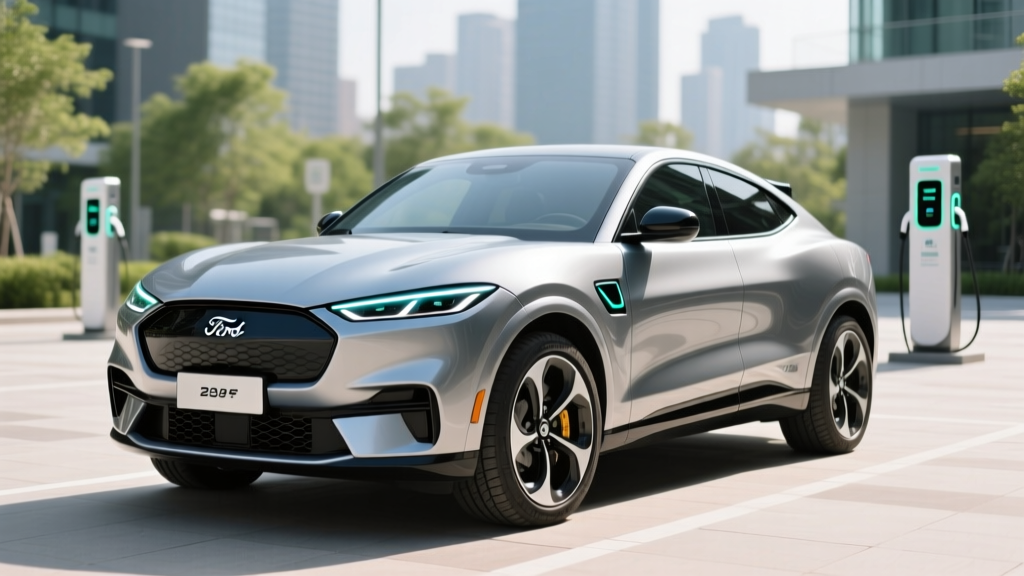
The Ford Mustang Mach-E has spent half a decade proving that a legacy automaker can build a compelling electric crossover — and the 2026 model year refines the formula with updated software, continued LFP battery availability on base trims, and broader NACS charging access. For buyers searching for a practical, performance-capable electric SUV that isn't a Tesla, the Mach-E remains one of the strongest contenders in the midsize segment.
But the Mach-E lineup is sprawling: four trims, two battery sizes, two chemistries, and three drivetrain configurations. Getting the right one for your needs — and understanding what the real-world range, charging speeds, and ownership costs actually look like — requires digging past the brochure. Here's the data-driven breakdown.
Range, Battery, and Real-World Efficiency
The 2026 Mach-E offers two battery packs across its trim range. The Standard Range pack uses a 72 kWh (usable) lithium iron phosphate (LFP) battery, while the Extended Range pack uses a 91 kWh (usable) nickel-manganese-cobalt (NMC) pack. LFP is notable for its longer cycle life and ability to be charged to 100% daily without degradation concerns — a meaningful ownership advantage for commuters who can charge at home.
| Trim | Battery (kWh usable) | Chemistry | Drivetrain | EPA Range | MPGe (city/hwy/combined) | kWh/100 mi |
|---|---|---|---|---|---|---|
| Select SR | 72 | LFP | RWD | 250 mi | 111/96/103 | 33 |
| Premium ER | 91 | NMC | RWD | 320 mi | 108/93/101 | 33 |
| Premium ER eAWD | 91 | NMC | AWD | 290 mi | 101/88/95 | 35 |
| GT ER eAWD | 91 | NMC | AWD | 280 mi | 96/82/89 | 38 |
The Mach-E's efficiency of roughly 33 kWh/100 mi on RWD trims is competitive with the Hyundai Ioniq 5 (34 kWh/100 mi) and slightly behind the Tesla Model Y Long Range (~30 kWh/100 mi). The heat pump, standard on all 2026 trims, helps mitigate cold-weather efficiency loss compared to older EVs that relied solely on resistive heating.
Charging Speed: DC Fast Charge and Home Level 2
The Mach-E's DC fast-charging capability has been a point of evolution. For 2026, Extended Range models peak at 150 kW on a DC fast charger, while Standard Range models peak at approximately 115 kW. Ford has equipped the Mach-E with the NACS (Tesla-style) charge port for 2026, granting native access to the Tesla Supercharger network — one of the most reliable public charging ecosystems in the U.S.
| Charging Level | Power (kW) | Connector | 10-80% Time | Miles Added per Hour |
|---|---|---|---|---|
| Level 1 (120V) | ~1.4 kW | NACS (120V adapter) | N/A (trickle) | ~3-4 mi/hr |
| Level 2 (240V, 48A) | 11.5 kW | NACS (J1772 adapter) | ~8.5 hrs (SR) / ~10.5 hrs (ER) | ~30-37 mi/hr |
| DC Fast Charge (ER) | Peak 150 kW | NACS | ~36 min (10-80%) | ~180 mi in 20 min |
| DC Fast Charge (SR) | Peak 115 kW | NACS | ~40 min (10-80%) | ~140 mi in 20 min |
A critical ownership note: the Mach-E's charge curve tapers significantly above 80% state of charge (SoC). The last 20% can take as long as the first 70%, which is typical for lithium-ion packs but means road-trip charging stops should target 10-80% for time efficiency. Ford's onboard route planner accounts for this when preconditioning the battery for a planned DC stop — always enter your charger destination into the vehicle's navigation so the thermal management system warms or cools the pack to optimal temperature before you arrive.
For home charging, the 11.5 kW onboard charger (48 amps on a 60-amp circuit) is one of the stronger Level 2 rates in the segment. A full overnight charge from 20% to 100% on the Extended Range pack takes roughly 9-10 hours — easily manageable for overnight top-ups. Most owners will need a 240V/60A circuit installed; budget $800-$2,000 for a licensed electrician depending on panel capacity and run length from your electrical panel to the garage. Per the U.S. Department of Energy, a Level 2 home setup pays for itself within 1-2 years versus exclusive public charging.
Performance: 0-60, Horsepower, and Drivetrain
The Mach-E lineup covers a wide performance envelope, from adequate commuter acceleration to genuine sports-car territory:
- Select SR RWD: 266 hp, 317 lb-ft torque, 0-60 in ~6.3 seconds
- Premium ER RWD: 290 hp, 317 lb-ft torque, 0-60 in ~5.8 seconds
- Premium ER eAWD: 346 hp, 428 lb-ft torque, 0-60 in ~4.8 seconds
- GT ER eAWD: 480 hp, 634 lb-ft torque, 0-60 in ~3.5 seconds (with Performance Upgrade)
The dual-motor eAWD system uses independent front and rear motors with no mechanical linkage — torque distribution is managed electronically. In practice, this means confident wet-weather and light-snow traction without the parasitic loss of a traditional AWD system. The GT trim's 3.5-second 0-60 time puts it in Porsche Cayenne Turbo territory, though the GT's 4,900-lb curb weight is noticeable in tight cornering compared to lighter competitors like the Ioniq 5 N.
One-pedal driving is available across all trims with a strong regen mode that can bring the Mach-E to a complete stop without touching the brake pedal. The brake pedal feel — a common complaint in early model years — has been improved with a more linear transition between regenerative and friction braking in 2026.
Pricing, Trims, and Federal Tax Credit Eligibility
| Trim | Base MSRP | Est. As-Tested* | §30D Credit Eligible? | Est. After Credit |
|---|---|---|---|---|
| Select SR RWD | $39,995 | $41,500 | Yes (if sourcing rules met) | ~$32,495 |
| Premium ER RWD | $46,995 | $49,200 | Yes (if sourcing rules met) | ~$39,495 |
| Premium ER eAWD | $49,995 | $52,800 | Yes (if sourcing rules met) | ~$42,495 |
| GT ER eAWD | $59,995 | $63,500 | Yes (if sourcing rules met) | ~$52,495 |
*As-tested prices include destination charge and common options. Actual prices vary by dealer.
The Mach-E qualifies for the IRS §30D federal tax credit of up to $7,500, but eligibility is not automatic. The credit is subject to several requirements that change periodically:
- MSRP cap: The vehicle must have an MSRP at or below $80,000 for SUVs (all Mach-E trims qualify).
- Buyer income cap: Modified adjusted gross income must not exceed $150,000 (single), $225,000 (head of household), or $300,000 (joint filers).
- Battery sourcing: A percentage of critical minerals and battery components must be sourced from the U.S. or free-trade-agreement countries. Ford has worked to qualify the Mach-E's supply chain, but specific eligibility can shift annually as sourcing percentages are recalculated. Always verify current-year eligibility on fueleconomy.gov before purchasing.
- Point-of-sale transfer: The credit can now be transferred to the dealer at purchase, reducing your out-of-pocket cost immediately rather than waiting for a tax refund.
Consult a tax professional to confirm your personal eligibility. State and local incentives (e.g., utility rebates for home charger installation) may stack on top of the federal credit — check your local jurisdiction for specifics.
Interior Space, Cargo, and Daily Practicality
The Mach-E is classified as a midsize crossover, and its interior dimensions reflect that positioning:
- Front legroom: 43.3 inches
- Rear legroom: 38.1 inches
- Cargo behind rear seats: 29.7 cu ft
- Cargo with rear seats folded: 59.7 cu ft
- Front trunk (frunk): 4.7 cu ft (drainable, useful for wet items or groceries)
Rear seat space is generous for two adults but tighter for a middle passenger due to a pronounced floor hump where the eAWD front motor sits. The 29.7 cu ft cargo area is competitive with the Tesla Model Y (30.2 cu ft) but smaller than the Hyundai Ioniq 5 (27.2 cu ft to the parcel shelf, but more usable space due to its boxier shape). The drainable frunk is a standout feature — ideal for storing muddy hiking boots, ice for a cooler, or wet umbrellas without soiling the main cabin.
The infotainment system runs on Ford's latest SYNC 4A software via a 15.5-inch vertical touchscreen. Wireless Apple CarPlay and Android Auto are standard. The screen dominates the dashboard and is generally responsive, though some users find the lack of physical climate controls (everything runs through the touchscreen) distracting while driving. A wireless charging pad, four USB-C ports, and a Bang & Olufsen premium audio system (on Premium and above) round out the tech suite.
Driver Assistance, Safety, and Warranty
BlueCruise comes with a 90-day free trial on 2026 Mach-E models; after that, it requires a subscription (~$75/month or $800/year). The system performs well on long highway stretches — lane centering is smooth, and adaptive cruise handles stop-and-go traffic competently. However, it will disengage in work zones and occasionally on faded lane markings, requiring immediate driver takeover.
The standard Ford Co-Pilot360 2.0 suite (no subscription required) includes automatic emergency braking with pedestrian detection, blind-spot monitoring, rear cross-traffic alert, lane-keeping assist, and evasive steering assist. The Mach-E has earned a TOP SAFETY PICK rating from the IIHS and a 5-star overall rating from NHTSA.
Warranty coverage:
- Battery & electric powertrain: 8 years / 100,000 miles (whichever comes first), with a minimum 70% capacity retention guarantee
- Bumper-to-bumper: 3 years / 36,000 miles
- Powertrain (non-electric): 5 years / 60,000 miles
- Roadside assistance: 5 years / 60,000 miles
The 70% capacity retention threshold over 8 years is standard for the industry, though some competitors (like Hyundai/Kia) offer a more generous 70% over 10 years/100,000 miles. In practice, NMC degradation in liquid-cooled packs like the Mach-E's has proven modest — most owners report 5-8% loss over the first 100,000 miles based on fleet data. LFP packs on the Standard Range models may degrade even less over equivalent mileage.
Who Should Buy the Mach-E — and Who Shouldn't
Pros
- NACS port = native Tesla Supercharger access
- LFP battery option on Select trim (charge to 100% daily)
- Strong home charging rate (11.5 kW / 48A)
- GT performance rivals sports cars at a fraction of the price
- Drainable frunk is genuinely useful
- BlueCruise is one of the better Level 2 systems
- Federal tax credit eligible (up to $7,500)
Cons
- DC fast charging at 150 kW trails Ioniq 5 (240 kW) and Model Y (~250 kW)
- No physical climate controls — touchscreen-only HVAC
- BlueCruise requires a paid subscription after trial
- Rear middle seat is cramped
- 36-min 10-80% charge time is slow for road trips vs. 800V competitors
- No towing capacity to speak of (1,500 lbs max with hitch)
Decision Framework
Choose the Mach-E if: You want native Supercharger access without an adapter, value LFP battery longevity for daily home charging, prefer a traditional dealership service experience, and prioritize highway driver-assist tech (BlueCruise). The Premium ER RWD at ~$39,500 after the federal credit is the value sweet spot — 320 miles of EPA range, strong home charging, and a comfortable ride.
Look elsewhere if: You take frequent long road trips where 150 kW DC charging adds 10-15 extra minutes per stop compared to 800V competitors (Hyundai Ioniq 5, Kia EV6). If towing is a priority, consider the Ford F-150 Lightning or Rivian R1S. If you want the absolute lowest cost per mile of range, the Tesla Model Y Long Range still edges ahead on efficiency and charging speed.
How the Mach-E Stacks Up Against Key Competitors
| Spec | Ford Mach-E Premium ER RWD | Tesla Model Y LR AWD | Hyundai Ioniq 5 Limited AWD |
|---|---|---|---|
| EPA Range | 320 mi | 320 mi | 290 mi |
| Battery (kWh) | 91 (NMC) | ~78 (NMC) | 84 (NMC) |
| Peak DC Charge | 150 kW | ~250 kW | 240 kW (800V) |
| 10-80% Time | ~36 min | ~25 min | ~18 min |
| 0-60 mph | 5.8 sec | 4.8 sec | 5.1 sec |
| Home L2 Rate | 11.5 kW | 11.5 kW | 10.9 kW |
| Base MSRP (comparable) | $46,995 | $48,990 | $54,200 |
| Cargo (behind rear) | 29.7 cu ft | 30.2 cu ft | 27.2 cu ft |
| Native NACS | Yes | Yes | No (CCS → adapter) |
The Mach-E's biggest competitive gap is DC fast-charging speed. At 150 kW peak, it adds roughly 180 miles in 20 minutes, while the Ioniq 5's 800V architecture can add ~210 miles in 15 minutes. On a 600-mile road trip with two charging stops, that difference compounds to 20-30 extra minutes in the Mach-E. For buyers who road-trip more than 3-4 times per year, this matters.
However, the Mach-E holds its own on range, interior quality, and dealer service network — areas where some EV-only startups struggle. Ford's nationwide dealer footprint means warranty service and collision repair are accessible virtually everywhere, a practical advantage over Tesla's more limited service center network in rural areas.
Frequently Asked Questions
What is the real-world range of the Ford Mustang Mach-E?
The Extended Range RWD model is EPA-rated at 320 miles. In real-world highway driving at 70-75 mph, expect 260-280 miles. In freezing weather, that can drop to 200-230 miles. The Standard Range RWD (250 mi EPA) delivers roughly 200-220 miles in mixed highway driving. Always plan charging stops around 80% of the EPA figure for a comfortable margin.
How fast does the Mach-E charge at home and on the road?
At home on a 240V/60A Level 2 charger, the Mach-E charges at 11.5 kW, adding roughly 30-37 miles per hour — a full overnight charge is realistic. On DC fast chargers, the Extended Range model peaks at 150 kW (10-80% in ~36 minutes), while Standard Range peaks at 115 kW (~40 minutes). Charging slows significantly above 80% SoC.
Does the 2026 Mach-E qualify for the $7,500 federal tax credit?
All trims fall under the $80,000 SUV MSRP cap and are potentially eligible for the full $7,500 under IRS §30D. However, you must meet income limits ($150K single / $300K joint), and the vehicle's battery must meet critical-mineral and component-sourcing requirements for the purchase year. Verify current eligibility on fueleconomy.gov and consult a tax professional. The credit can be applied at point of sale to reduce your purchase price immediately.
Is the Mach-E worth buying over a Tesla Model Y?
It depends on your priorities. The Mach-E offers a more traditional dealership experience, a drainable frunk, LFP battery availability, and competitive range. The Model Y offers faster DC charging (~250 kW), slightly better efficiency, and access to Tesla's integrated ecosystem. Both have native NACS/Supercharger access. If you value service accessibility and don't road-trip frequently, the Mach-E is a strong pick. If charging speed and efficiency are paramount, the Model Y edges ahead.
How long will the Mach-E battery last?
Ford warranties the battery for 8 years/100,000 miles with a 70% minimum capacity retention guarantee. Real-world data from high-mileage Mach-E owners suggests NMC packs lose roughly 5-8% capacity over the first 100,000 miles with normal use. LFP packs (Standard Range) are expected to degrade even less. With liquid-cooled thermal management and moderate charging habits (avoiding frequent DC fast charging to 100%), the battery should remain functional well beyond 150,000 miles.
Can I tow with the Mach-E?
The Mach-E has a maximum towing capacity of just 1,500 pounds when equipped with the factory hitch — enough for a small utility trailer or a couple of dirt bikes, but not suitable for boat or camper towing. If towing is a priority, look at the Ford F-150 Lightning (7,700 lbs) or Rivian R1S (7,700 lbs).