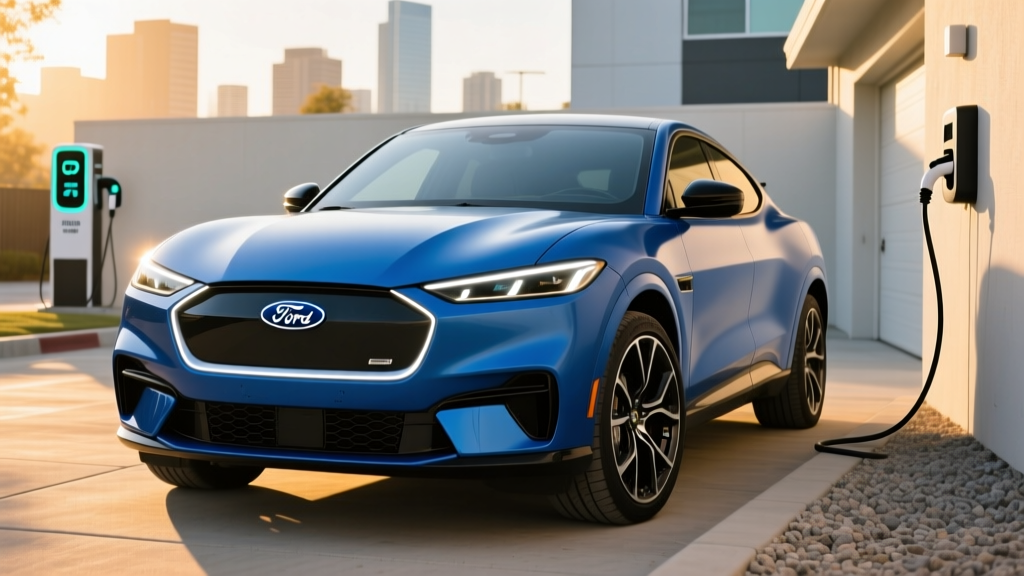
The Ford Mustang Mach-E has been on sale for over half a decade now, and for 2026 it remains one of the most compelling mid-size electric SUVs on the market. With a refreshed battery lineup, continued NACS adoption, and pricing that undercuts several rivals, the Mach-E occupies a critical space for buyers transitioning from gas-powered crossovers. But how does it actually perform when you live with it daily? We break down every number that matters — from real-world range to charging curves to total cost — so you can decide if this is the right EV for your garage.
Quick Verdict: Who the Mach-E Is For
The 2026 Mustang Mach-E is best suited for suburban families and commuters who need practical cargo space, respectable road-trip charging speeds, and available all-wheel drive for inclement weather. It is not the longest-range EV in its class, nor the fastest-charging, but its combination of driving dynamics, interior space, and sub-$45,000 entry pricing (before incentives) makes it a strong all-rounder. If you prioritize sporty handling over luxury refinement and can charge at home, the Mach-E deserves a serious test drive.
Range and Efficiency: EPA Numbers vs. Real-World Reality
| Trim / Battery | Drivetrain | EPA Range | MPGe (Combined) | kWh/100 mi |
|---|---|---|---|---|
| Select (Standard Range, ~70 kWh) | RWD | 250 mi | 100 MPGe | 34 |
| Premium (Extended Range, ~91 kWh) | RWD | 320 mi | 101 MPGe | 33 |
| Premium (Extended Range, ~91 kWh) | AWD | 290 mi | 94 MPGe | 36 |
| GT (Extended Range, ~91 kWh) | AWD | 280 mi | 86 MPGe | 39 |
Real-World Range Reality: The EPA 320-mile figure on the Premium Extended Range RWD is achievable in mild-weather city and suburban driving with moderate regen use. On sustained highway trips at 70-75 mph, expect 265–285 miles before needing to stop. In freezing temperatures (below 30°F), plan for a 20–30% reduction, bringing effective highway range down to roughly 210–230 miles on the Extended Range AWD trims. The Standard Range models are best treated as ~200-mile highway vehicles in mixed conditions.
The Mach-E uses NMC (nickel manganese cobalt) lithium-ion pouch cells across all trims. NMC offers higher energy density than LFP chemistry, which is how Ford packages up to 91 kWh usable capacity in a relatively compact floorpan. The trade-off is that NMC batteries prefer not to sit at 100% state of charge for extended periods — daily charging to 80–90% is recommended for longevity, with 100% reserved for road trips.
Charging Speeds: DC Fast Charging and Home Level 2
For 2026, the Mach-E comes equipped with the NACS (North American Charging Standard) port natively, meaning direct access to Tesla Supercharger V3 and V4 stations without an adapter. This is a significant practical advantage over CCS-equipped rivals that still require dongles for the largest fast-charging network.
| Charging Level | Connector | Max Power | Speed / Time |
|---|---|---|---|
| Level 1 (120V household) | NACS / J1772 adapter | ~1.4 kW | ~3–4 mi/hr |
| Level 2 (240V home / public) | NACS / J1772 | 10.5 kW (48A) | ~28–32 mi/hr; full charge in ~9–10 hr |
| DC Fast Charge | NACS | 150 kW peak (SR) / 150 kW peak (ER) | 10–80% in ~36–41 min |
Charging curve reality: The Mach-E's peak DC rate of 150 kW is not sustained across the full session. On an Extended Range model at a 150+ kW stall, you'll see peak rates near 150 kW between roughly 15–35% state of charge, tapering to ~100 kW by 55%, and dropping sharply above 80%. This means the 10–80% time of roughly 38 minutes is realistic, but adding range from 80–100% can take an additional 25+ minutes. For road trips, plan stops around the 10–80% window and skip topping off unless you're near your destination.
At home on a Level 2 wall connector (hardwired 60A circuit / 48A continuous), the Mach-E's onboard charger accepts up to 10.5 kW, which adds roughly 30 miles of range per hour of charging. An overnight charge from 20% to 80% takes about 5–6 hours — easily handled while you sleep. Ford recommends a dedicated 60A circuit with 6-gauge wire for optimal Level 2 performance; budget $800–$2,000 for professional installation depending on your panel capacity and run length.
Performance: 0-60, Horsepower, and Drivetrain
| Trim | Drivetrain | Horsepower | Torque (lb-ft) | 0–60 mph |
|---|---|---|---|---|
| Select (SR) | RWD | 266 hp | 317 | 6.3 sec |
| Premium (ER) | RWD | 290 hp | 317 | 5.8 sec |
| Premium (ER) | AWD (dual motor) | 365 hp | 428 | 4.8 sec |
| GT (ER) | AWD (dual motor) | 480 hp | 634 | 3.5 sec |
The GT trim's 3.5-second 0–60 time is legitimately quick and puts it in sports-car territory off the line. But the volume seller — the Premium Extended Range AWD at 4.8 seconds — is the sweet spot for most buyers. It delivers confident highway merging and passing without the GT's efficiency penalty. All trims feature regenerative braking with one-pedal driving mode, and the Mach-E offers three regen levels selectable from the center display.
Interior, Cargo, and Technology
Cargo volume: 29.7 cubic feet behind the second row, expanding to 59.7 cubic feet with the rear seats folded. The front trunk (frunk) adds 4.7 cubic feet of lockable storage with a drain plug — useful for tailgating or storing wet gear. Rear legroom measures 38.1 inches, which is competitive with the Hyundai Ioniq 5 and slightly less than the Tesla Model Y's 40.5 inches.
Infotainment: The Mach-E runs Ford's SYNC 4A system on a vertically oriented 15.5-inch touchscreen. Wireless Apple CarPlay and Android Auto are standard. The interface is responsive, though some owners report that the heavy reliance on touchscreen controls (climate, drive modes) requires a learning curve compared to physical buttons. Over-the-air updates continue to refine the software.
Driver assistance: Ford Co-Pilot360 Assist 2.0 is standard, including adaptive cruise control with stop-and-go, lane centering, evasive steering assist, and blind-spot monitoring. Ford's BlueCruise hands-free highway driving system is available on Premium and GT trims (standard on GT, subscription-based after the initial trial period). BlueCruise operates on pre-mapped divided highways and is an SAE Level 2 system — the driver must remain attentive and the cabin camera monitors eye gaze. It is not self-driving.
BlueCruise Limitations: This is an SAE Level 2 driver-assistance system. It operates only on approved divided highways (~130,000+ mapped miles in the US and Canada). You must keep your eyes on the road. The system disengages in construction zones, complex interchanges, and poor weather. It does not handle city streets, stoplights, or unmapped roads. You are the driver at all times.
Pricing, Trims, and Federal Tax Credit
| Trim | Base MSRP | Est. As-Tested (AWD / Loaded) |
|---|---|---|
| Select (SR, RWD) | $42,995 | ~$44,500 |
| Premium (ER, RWD) | $48,995 | ~$51,000 |
| Premium (ER, AWD) | $51,995 | ~$54,500 |
| GT (ER, AWD) | $59,995 | ~$63,000 |
Federal EV tax credit (§30D): The 2026 Mach-E's credit eligibility depends on several factors that change frequently. As of early 2026, certain Mach-E trims qualify for up to $7,500 under the IRS §30D new clean vehicle credit, but buyers must meet all of the following requirements:
- MSRP cap: The vehicle's MSRP must not exceed $80,000 for SUVs (all Mach-E trims clear this).
- Buyer income cap: Modified adjusted gross income must not exceed $150,000 (single), $225,000 (head of household), or $300,000 (joint).
- Battery sourcing: A percentage of critical minerals and battery components must be sourced from the US or free-trade-agreement countries. These thresholds increase annually. Ford has worked to shift Mach-E battery supply chains, but eligibility can change mid-year. Always verify at fueleconomy.gov before purchasing.
- Point-of-sale transfer: As of 2024+, eligible buyers can transfer the credit to the dealer at purchase, reducing the purchase price upfront rather than waiting for a tax refund. This requires dealer participation.
Consult a tax professional and verify current eligibility on irs.gov before relying on the credit in your purchase budget.
Warranty and Long-Term Ownership
Ford provides the following coverage for the 2026 Mach-E:
- Basic vehicle warranty: 3 years / 36,000 miles
- Powertrain warranty: 5 years / 60,000 miles
- High-voltage battery warranty: 8 years / 100,000 miles (whichever comes first), covering defects and capacity loss below 70% of original capacity
The 70% capacity retention threshold is industry-standard and matches competitors like Hyundai and Volkswagen. In practice, NMC batteries in liquid-cooled packs like the Mach-E's have shown degradation curves that flatten after the first 20,000–30,000 miles. Data from Recurrent Auto suggests most modern EVs retain 90%+ capacity at 100,000 miles under normal use. Avoid habitual DC fast-charging in extreme heat and frequent 100% charges to maximize longevity.
Pros, Cons, and Verdict
Pros
- Native NACS port — direct Supercharger access without adapter
- Engaging driving dynamics for an EV crossover
- Competitive cargo space (29.7 cu ft rear + 4.7 cu ft frunk)
- BlueCruise hands-free highway driving available
- Sub-$43K entry price on Select trim
- Strong over-the-air update track record
Cons
- DC fast-charging at 150 kW is slower than Ioniq 5 / EV6 (240+ kW)
- Real-world highway range falls notably short of EPA sticker
- Heavy touchscreen reliance; no physical climate knobs
- BlueCruise requires paid subscription after trial
- Rear visibility hampered by sloping roofline
- No available air suspension or adaptive dampers (except GT)
Frequently Asked Questions
What is the real-world range of the 2026 Mustang Mach-E?
The Extended Range RWD model's EPA estimate is 320 miles, but expect 265–285 miles on highway road trips at 70–75 mph. In freezing weather, that drops to roughly 210–230 miles. The Standard Range RWD delivers about 200 miles in mixed real-world driving. These figures assume you're driving to 10–15% remaining and not running the cabin heater at maximum continuously.
How fast does the Mach-E charge at home and on DC fast chargers?
On a home Level 2 charger (240V, 48A), the Mach-E accepts up to 10.5 kW, adding roughly 30 miles per hour and charging from empty to full in about 9–10 hours. On DC fast chargers, it peaks at 150 kW and charges from 10–80% in approximately 36–41 minutes. It charges natively via NACS, giving direct access to Tesla Superchargers.
Does the 2026 Mach-E qualify for the $7,500 federal EV tax credit?
Some trims may qualify for up to $7,500 under IRS §30D, but eligibility depends on battery component and critical mineral sourcing rules that shift throughout the year. The buyer must also fall under income caps ($150K single / $300K joint) and the vehicle MSRP must be under $80,000 (all trims qualify). Always check fueleconomy.gov and consult a tax professional before purchasing.
Is the Mach-E worth buying over the Tesla Model Y or Hyundai Ioniq 5?
Choose the Mach-E if you want engaging handling, a traditional SUV driving position, native Supercharger access, and a strong dealer service network. The Tesla Model Y offers more rear legroom, slightly faster charging, and a more mature software ecosystem. The Hyundai Ioniq 5 charges significantly faster (up to 240 kW on 800V architecture) and has a more distinctive design, but requires a CCS-to-NACS adapter for Supercharger access. Test all three back-to-back before deciding.
What are the biggest drawbacks of the Mach-E?
The 150 kW peak DC charge rate is the Mach-E's most notable competitive weakness — it trails the Ioniq 5, EV6, and Model Y in sustained fast-charging speed. The touchscreen-heavy interior frustrates some drivers who prefer physical buttons. And the EPA range estimates, while competitive on paper, overstate what you'll actually see on highway road trips by 10–15%.
Can the Mach-E tow?
Yes. When properly equipped with the factory tow package, the Mach-E AWD trims are rated for up to 2,300 pounds — enough for a small utility trailer or a pair of dirt bikes, but not a camper or boat. Towing significantly reduces range; plan on a 30–40% range reduction when towing near the maximum rating.