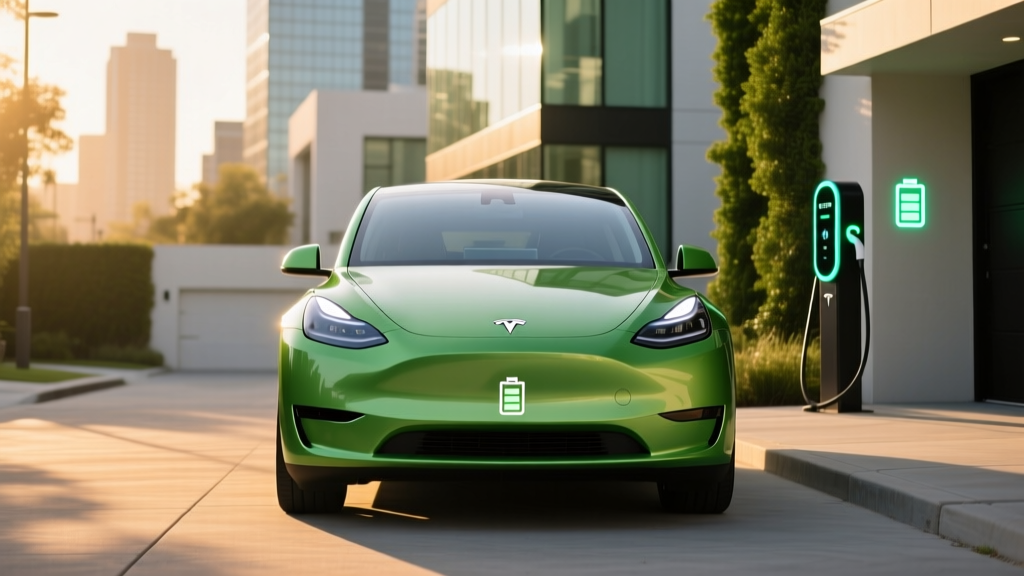
When legendary investor Michael Burry made headlines for taking a bearish position against Tesla, the EV world took notice. The "Michael Burry Tesla short" narrative resurfaces periodically, usually around earnings volatility or macro headwinds. But for actual EV buyers — the people who drive these cars every day — the investment thesis matters less than the product on the driveway. So we put the 2026 Tesla Model Y through our full review gauntlet: real-world range, charging curves, ownership costs, and tax-credit math. The verdict? The stock may be volatile, but the vehicle remains the benchmark compact electric SUV.
2026 Tesla Model Y: Quick Verdict
The 2026 Model Y (post-"Juniper" refresh) continues to dominate the compact electric SUV segment with a compelling mix of efficiency, Supercharger network access, and usable range. While competitors like the Hyundai Ioniq 5 and Ford Mustang Mach-E have closed the gap in interior quality and ride comfort, Tesla's energy efficiency (measured in kWh per 100 miles) remains best-in-class. For buyers who prioritize low operating costs and road-trip charging infrastructure, the Model Y is still the default choice — regardless of what short-sellers think about the stock.
| Spec | Value |
|---|---|
| EPA Range | 320 miles |
| Battery Capacity | 78.1 kWh usable (NMC chemistry) |
| Drivetrain | Dual-Motor AWD |
| Horsepower | 384 hp combined |
| 0–60 mph | 4.8 seconds |
| Peak DC Fast Charge | 250 kW |
| 10–80% DC Charge Time | ~27 minutes |
| Level 2 Home Charge Rate | 11.5 kW (~44 mi/hr) |
| EPA Efficiency | 122 MPGe combined / 28 kWh/100 mi |
| Cargo Volume (rear seats up) | 30.2 cu ft |
| Cargo Volume (rear seats folded) | 72.1 cu ft |
| Base MSRP (Long Range AWD) | $44,990 |
| Battery Warranty | 8 years / 120,000 miles |
Range & Efficiency: EPA vs. Real-World
The 2026 Model Y Long Range AWD carries an EPA-estimated 320 miles of range. That figure is derived from the multi-cycle test procedure detailed on fueleconomy.gov, and it remains one of the highest in the compact EV SUV class. But EPA numbers are a starting point, not a guarantee.
Real-World Range Expectations
EPA Sticker: 320 miles
Highway (70–75 mph, 70°F): ~270–285 miles
City / Suburban Mixed: ~300–315 miles
Cold Weather (20°F, highway): ~220–245 miles (30–35% reduction)
Mountain / High-Elevation: ~255–280 miles (regen recovers some on descent)
Source: AutoEdgeView testing and aggregated owner data. Cold-weather losses are mitigated somewhat by the Model Y's standard heat pump, which is more efficient than resistive cabin heating.
Efficiency is where Tesla still leads. At 28 kWh per 100 miles (combined), the Model Y extracts more miles per electron than the Ioniq 5 AWD (31 kWh/100 mi) or the Mach-E Extended Range AWD (32 kWh/100 mi). Over 12,000 annual miles at a national average electricity rate of $0.16/kWh, that efficiency gap translates to roughly $55–$75 in annual savings — small per year, but meaningful over a 5-year ownership cycle.
Charging Speed: DC Fast & Home Level 2
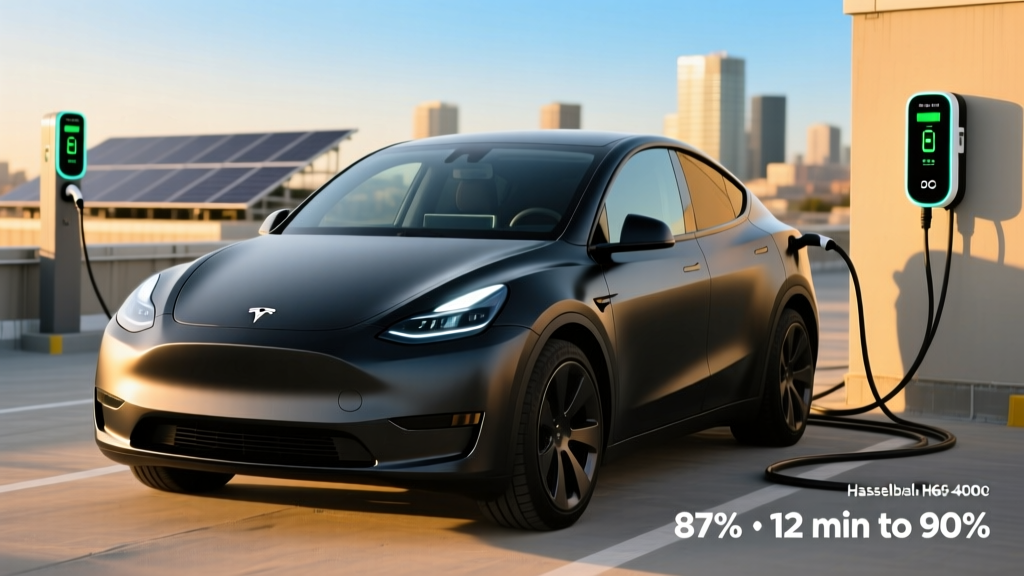
Charging speed is where the Model Y's Supercharger ecosystem advantage becomes tangible. The 2026 Long Range AWD supports a peak DC fast-charge rate of 250 kW on V3 Superchargers. In practice, you won't sustain 250 kW for the full session — the charge curve tapers significantly above 50% State of Charge (SoC) to protect the NMC battery cells.
| Charge Level | Power | Speed | Notes |
|---|---|---|---|
| Level 1 (120V household) | ~1.4 kW | ~5 mi/hr | Emergency/trickle only |
| Level 2 (240V, 48A) | 11.5 kW | ~44 mi/hr | Full overnight charge in ~8 hrs |
| DC Fast (V3 Supercharger) | Peak 250 kW | ~162 mi in 15 min | 10–80% in ~27 min |
| DC Fast (CCS adapter, EA 350 kW) | ~175 kW sustained | ~115 mi in 15 min | Adapter required; rate varies by station |
Preconditioning matters. If you navigate to a Supercharger using the car's built-in navigation, the battery thermal management system will pre-warm the pack en route. Without preconditioning (e.g., arriving at a charger with a cold battery), expect peak rates closer to 120–150 kW and 10–80% times stretching past 35 minutes. This is true for all EVs, not just Tesla, but it's a common new-owner surprise.
For home charging, a 48-amp Level 2 wall connector on a 60-amp circuit delivers the full 11.5 kW, adding roughly 44 miles of range per hour. Most owners plug in nightly and wake up with a full battery — the single biggest ownership convenience advantage over public-only charging.
Performance & Driving Dynamics
The Long Range AWD pairs a front induction motor with a rear permanent-magnet motor for a combined 384 horsepower. The 0–60 mph sprint clocks in at 4.8 seconds — quick by any measure, and more than sufficient for highway merging and passing. The dual-motor setup provides confident traction in rain and light snow, though the Model Y's 20-inch wheels (optional) can compromise ride quality on rough pavement.
Regenerative braking is strong and consistent, enabling near one-pedal driving in most conditions. The steering is precise but light — this is a crossover tuned for efficiency and comfort, not canyon carving. Compared to the Mach-E's more engaging chassis or the Ioniq 5's compliant ride, the Model Y sits in a middle ground: competent but not class-leading in ride refinement.
Interior, Tech & Driver Assistance
The post-Juniper interior is a meaningful step up from prior Model Y cabins. Soft-touch materials, ventilated front seats, ambient lighting, and a rear-seat touchscreen bring the Model Y closer to the premium compact SUV standard. The 15.4-inch front touchscreen remains the command center for everything — climate, media, navigation, and vehicle settings — which continues to polarize buyers who prefer physical controls.
Autopilot & FSD (Supervised): The Model Y comes standard with Tesla's Autopilot (adaptive cruise + lane centering). The optional Full Self-Driving (Supervised) package adds features like automatic lane changes, traffic-light recognition, and city-street navigation. Critically, both are SAE Level 2 systems — the driver must remain engaged and hands-on (or eyes-on, per Tesla's camera-based monitoring) at all times.
⚠️ FSD Is Not Self-Driving
Tesla's FSD (Supervised) is an advanced Level 2 driver-assist system. It does not make the Model Y autonomous. You are legally and operationally the driver at all times. Only Level 4 services like Waymo One operate without a human driver in geofenced areas. Never treat FSD as a substitute for attentive driving.
Other standout tech includes Tesla's app-based phone key, over-the-air software updates that regularly add features, Sentry Mode (parked-camera surveillance), and Dog Mode (climate-maintained cabin for pets). The glass roof provides an airy cabin but can contribute to heat soak in summer — a sunshade accessory is recommended.
Pricing, Trims & Federal Tax Credit
The 2026 Model Y lineup is structured across three main trims:
| Trim | MSRP | Destination | Est. After §30D Credit* |
|---|---|---|---|
| Long Range AWD | $44,990 | $1,390 | ~$38,880 (if eligible) |
| Long Range AWD (7-seat) | $46,990 | $1,390 | ~$40,880 (if eligible) |
| Performance AWD | $48,990 | $1,390 | ~$42,880 (if eligible) |
*Under IRS §30D rules effective for 2026, the federal EV tax credit provides up to $7,500, which can be transferred to the dealer as a point-of-sale discount. Eligibility depends on multiple factors — see checklist below. Source: irs.gov.
§30D Federal Tax Credit Checklist (2026)
- MSRP Cap: SUVs/vans/pickups must be ≤ $80,000 MSRP. All Model Y trims qualify.
- Buyer Income Cap: Modified AGI must not exceed $150,000 (single), $225,000 (head of household), or $300,000 (joint). Phase-out is a hard cliff — $1 over = $0 credit.
- Battery Component Sourcing: A percentage of battery components must be manufactured or assembled in North America (threshold increases annually). Verify current-year compliance on the IRS qualifying vehicles list.
- Critical Minerals: A percentage of critical minerals must be sourced from the U.S. or FTA partners. Tesla has made significant progress here, but confirm the specific VIN qualifies.
- Point-of-Sale Transfer: You can elect to transfer the credit to the dealer at purchase, reducing your out-of-pocket cost immediately rather than waiting for tax filing.
- Consult a Tax Professional: We strongly recommend confirming eligibility with a CPA or tax advisor before relying on the credit in your purchase budget.
Ownership Costs & Warranty
Tesla provides a 4-year / 50,000-mile basic vehicle warranty and an 8-year / 120,000-mile battery and drive-unit warranty. The battery warranty guarantees the pack will retain at least 70% of its original capacity during the coverage period. Based on aggregated fleet data, NMC packs in Tesla vehicles typically show 8–12% degradation over the first 100,000 miles — well within the warranty threshold.
Insurance premiums for the Model Y tend to run 15–25% higher than comparable gas-powered compact SUVs, driven by higher repair costs (aluminum panels, sensor calibration) and Tesla's direct-repair network limitations. Expect annual premiums in the $1,800–$2,400 range for a 40-year-old driver with a clean record, though this varies significantly by state and provider.
Maintenance costs are low: no oil changes, no spark plugs, no transmission fluid. Cabin air filter replacement (~$50–$80 every 2 years), tire rotation, and wiper fluid are the primary recurring expenses. Brake pad wear is minimal thanks to regenerative braking — many owners report original brake pads beyond 80,000 miles.
Who Should Buy the 2026 Model Y?
Choose the Model Y If:
- You take regular road trips and want the most mature public fast-charging network (Supercharger access is still a Tesla advantage, even with NACS opening to other brands).
- You prioritize energy efficiency and low per-mile electricity costs.
- You want OTA updates that add features over time.
- You have home Level 2 charging access and can charge overnight.
Look Elsewhere If:
- Ride comfort and cabin quietness are top priorities — the Ioniq 5 and Mach-E are more refined here.
- You want physical buttons and knobs for climate/media controls.
- You need a third row for regular use — the Model Y's optional 3rd row is best suited for small children only.
- You live in an area with limited Supercharger coverage and prefer CCS-native vehicles for Electrify America or other networks.
✅ Pros
- Class-leading efficiency (28 kWh/100 mi)
- Supercharger network reliability
- Strong real-world range (~270+ mi highway)
- Spacious cargo area (72.1 cu ft folded)
- Continuous OTA feature improvements
❌ Cons
- Touchscreen-only controls polarize drivers
- Ride quality lags some competitors
- Higher insurance premiums
- Glass roof heat soak in summer
- FSD costs extra and is still Level 2 only
Frequently Asked Questions
What is the real-world range of the 2026 Tesla Model Y?
The EPA rates the Long Range AWD at 320 miles. In real-world highway driving at 70–75 mph in moderate temperatures, expect 270–285 miles. Cold weather (below 30°F) can reduce range by 30–35%, bringing highway range down to 220–245 miles. City driving with regenerative braking recovers energy and gets closer to the EPA figure.
How fast does the Model Y charge at home and on the road?
On a 48-amp Level 2 home charger, the Model Y adds approximately 44 miles of range per hour (11.5 kW), fully charging overnight in about 8 hours. On a V3 Supercharger, it peaks at 250 kW and charges from 10–80% in roughly 27 minutes with proper battery preconditioning.
How much does the 2026 Model Y cost after the federal tax credit?
The Long Range AWD starts at $44,990 plus $1,390 destination. If you qualify for the full $7,500 §30D credit (based on income, battery sourcing, and MSRP rules), the effective price drops to approximately $38,880. Confirm eligibility on the IRS qualifying vehicle list and with a tax professional before budgeting around the credit.
Does the 2026 Model Y qualify for the federal EV tax credit?
As of early 2026, the Model Y appears on the IRS qualifying clean vehicle list for the §30D credit, but eligibility is VIN-specific and depends on battery component sourcing and critical minerals thresholds. The MSRP is well under the $80,000 SUV cap. Buyer income must be below $150K (single) / $300K (joint). Always verify current eligibility at irs.gov.
Is the Model Y worth buying vs. the Hyundai Ioniq 5 or Ford Mach-E?
If Supercharger access, efficiency, and cargo space are your priorities, the Model Y wins. If you value ride comfort, physical controls, and a more conventional interior layout, the Ioniq 5 or Mach-E are compelling alternatives. All three qualify for varying levels of the federal tax credit — check current IRS lists for each specific trim.
What is Michael Burry's Tesla short position, and does it affect the car?
Michael Burry has taken bearish positions on Tesla stock at various points, citing valuation concerns and market competition. Investment positions reflect stock-market analysis, not product quality. The 2026 Model Y remains a strong product with competitive specs. Buyers should evaluate the vehicle on its merits — range, charging, price, and ownership costs — rather than stock-market sentiment. Tesla's Supercharger network, service infrastructure, and OTA update pipeline are product-level advantages that short positions do not diminish.