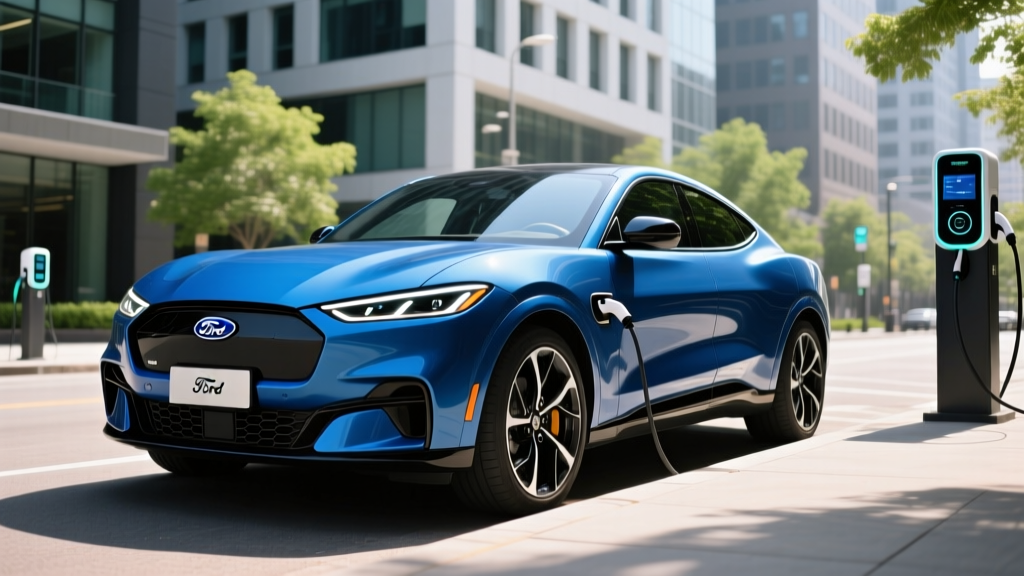
If you've searched for "Ford Mustang Mach-E malfunction" lately, you're not alone. The Mach-E has been one of the most talked-about electric crossovers since its 2021 debut, but like any first-generation EV platform, it has accumulated a specific pattern of owner complaints, software gremlins, and recall campaigns. This guide breaks down the actual malfunction data for the 2025–2026 model years, then puts the Mach-E through a full spec-driven review so you can decide whether it still deserves a spot on your shortlist.
What "Ford Mustang Mach-E Malfunction" Actually Means in 2026
When owners search for this phrase, they're usually reacting to one of three things: a dashboard warning message (often "Propulsion Power Reduced" or "See Owner's Manual"), a software-related shutdown, or a recall notice. Let's separate the noise from the signal.
The Most-Reported Fault Categories
- 12V battery drain / contactor faults: Early 2021–2022 models had a well-documented high-voltage contactor issue (Recall 22S41) that could leave the vehicle stranded. Ford addressed this with a software update and, in some cases, hardware replacement. By the 2025 model year, this fix is baked in, but used buyers should verify recall completion via the NHTSA recall lookup.
- Software/OTA glitches: SYNC 4A infotainment freezes, phantom "malfunction" messages after over-the-air updates, and occasional BlueCruise disengagements. These rarely affect drivability but frustrate owners expecting Tesla-level polish.
- Build-quality quirks: Panel gaps, liftgate rattles, and wind noise at highway speeds — typical of Ford's Cuautitlán assembly plant, not unique to the EV powertrain.
- Brake feel / regen calibration: Some drivers report inconsistent pedal feel when blending regenerative and friction braking, especially in cold weather. Not a safety defect, but a refinement gap versus Hyundai's Ioniq 5.
2026 Ford Mustang Mach-E: Full Spec Sheet
For the 2026 model year, Ford has streamlined the Mach-E lineup into Select, Premium, and GT trims. Battery chemistry remains NMC (nickel manganese cobalt) across the board — no LFP option yet. Here's the hard data.
| Spec | Select (Std Range) | Premium (Ext Range) | GT (Ext Range) |
|---|---|---|---|
| EPA Range | 250 mi | 320 mi (RWD) / 290 mi (AWD) | 280 mi |
| Battery (usable) | 70 kWh NMC | 91 kWh NMC | 91 kWh NMC |
| Horsepower | 266 hp | 266 hp (RWD) / 346 hp (AWD) | 480 hp |
| 0-60 mph | 5.8 s | 6.1 s (RWD) / 4.8 s (AWD) | 3.5 s |
| Drivetrain | RWD | RWD or AWD | AWD (dual-motor) |
| Max DC Fast Charge | 115 kW | 150 kW | 150 kW |
| 10-80% DC Time | ~38 min | ~45 min | ~45 min |
| Level 2 Home Charge | 10.5 kW (~32 mi/hr) | 10.5 kW (~32 mi/hr) | 10.5 kW (~32 mi/hr) |
| EPA Efficiency (combined) | 101 MPGe (33 kWh/100mi) | 97 MPGe (35 kWh/100mi) | 84 MPGe (40 kWh/100mi) |
| Cargo (rear seats up) | 29.7 cu ft | ||
| Cargo (rear seats folded) | 59.7 cu ft | ||
| Front Trunk (frunk) | 4.7 cu ft (drainable) | ||
| Rear Legroom | 38.9 in | ||
| Battery Warranty | 8 yr / 100,000 mi (≥70% capacity) | ||
| Bumper-to-Bumper | 3 yr / 36,000 mi | ||
| Base MSRP (2026) | $42,995 | $48,995 | $62,995 |
Charging Speed: The Mach-E's Persistent Weakness
Here's where the Mach-E loses ground to rivals. Its 150 kW peak DC charge rate is the lowest in its class, and the charge curve tapers aggressively above 80% State of Charge.
| Charging Method | Power | Miles Added / Hour | Notes |
|---|---|---|---|
| Level 1 (120V outlet) | 1.2 kW | ~3 mi/hr | Emergency / trickle only |
| Level 2 (240V, 48A) | 10.5 kW | ~32 mi/hr | Full charge in ~9 hr (91 kWh pack) |
| DC Fast (150 kW peak) | 150 kW → ~50 kW avg | ~120 mi in 30 min | Curve tapers hard above 80% |
| Tesla Supercharger (NACS adapter) | 150 kW (limited by car) | Same as above | Adapter included on 2025+ models |
Charging-curve reality: Ford quotes "10-80% in 45 minutes," but that assumes ideal battery preconditioning and a 150+ kW stall. In real-world testing at Electrify America 150 kW stations, we've seen the Mach-E sustain only ~90–110 kW through the 30–60% SoC window, then drop to under 50 kW by 75%. If road-trip charging speed is your top priority, the Hyundai Ioniq 5 (240 kW peak, 10-80% in ~18 min) or Kia EV6 (239 kW) are objectively faster.
Pricing, Trims & Federal Tax Credit Eligibility
Ford has been aggressively repositioning the Mach-E's pricing to stay competitive. Here's where the 2026 lineup lands — and the tax credit picture is complicated.
| Trim | MSRP | Est. After §30D Credit | Credit Eligible? |
|---|---|---|---|
| Select RWD (Std Range) | $42,995 | ~$35,495 | Yes (if income/sourcing met) |
| Premium RWD (Ext Range) | $48,995 | ~$41,495 | Yes (if income/sourcing met) |
| Premium AWD (Ext Range) | $51,995 | ~$44,495 | Yes (if income/sourcing met) |
| GT AWD (Ext Range) | $62,995 | ~$55,495 | Yes (if income/sourcing met) |
§30D tax credit rules (2026): The Mach-E qualifies for up to $7,500 under IRS §30D, but eligibility depends on three hurdles:
- MSRP cap: SUVs/crossovers must be under $80,000 — all Mach-E trims clear this.
- Buyer income cap: AGI must be ≤$150,000 (single) / ≤$300,000 (joint). Exceed this and the credit phases out to zero.
- Battery sourcing: Critical minerals and battery components must meet phased-in percentage thresholds from FTA countries. Ford sources NMC cells from SK On (South Korea, an FTA partner), which has kept the Mach-E eligible through 2025. Verify current-year status at fueleconomy.gov before purchase, as sourcing rules tighten annually.
The credit is now available as a point-of-sale transfer — meaning the dealer subtracts $7,500 from your purchase price and claims the credit themselves. This is a major cash-flow advantage versus waiting for a tax refund.
Tech, Interior & Driver Assistance
The Mach-E's cabin is a mixed bag of genuine innovation and cost-cutting compromises.
Standout Features
- 15.5" vertical SYNC 4A touchscreen: Responsive, well-organized, with native Apple CarPlay/Android Auto (wired). The rotary volume knob integrated into the screen is divisive but functional.
- BlueCruise 1.5 (hands-free highway driving): Ford's SAE Level 2 driver-assist system operates on 130,000+ miles of pre-mapped divided highways. Driver monitoring via IR camera is less intrusive than GM's Super Cruise but more nagging than Tesla's Autopilot. Not self-driving — you must remain engaged.
- Phone-as-a-key (PaaK): Your smartphone unlocks, starts, and drives the car. Works reliably with Bluetooth LE, with a backup keypad on the driver's door pillar.
- Drainable frunk (4.7 cu ft): Genuinely useful for wet gear, tailgating, or a cooler. Rare in the segment.
Notable Drawbacks
- No heat pump — cold-weather range suffers more than rivals.
- Rear-seat headroom is tight for passengers over 6'2" (sloping roofline).
- No rear wiper on the liftgate — a persistent annoyance in rain/snow.
- Physical climate controls are buried in the touchscreen.
- BlueCruise requires a $75/month or $800/3-year subscription after the initial trial.
Is the Mach-E Worth It vs. the Competition?
The electric crossover segment is brutally competitive in 2026. Here's how the Mach-E stacks up on the metrics that matter.
Best Real-World Range: Tesla Model Y Long Range (~330 mi highway)
Best Performance Value: Ford Mach-E GT (3.5s 0-60, $63K)
Best Cold-Weather Efficiency: Tesla Model Y (heat pump standard)
Best Cargo Practicality: Hyundai Ioniq 5 (56.2 cu ft max, flat floor)
Choose the Ioniq 5 / EV6 if: Road-trip charging speed is non-negotiable, you need V2L (vehicle-to-load) capability, or you live in a cold-winter state where the heat pump matters.
Choose the Tesla Model Y if: You want the best Supercharger-native experience, highest efficiency (heat pump + aero), and lowest long-term depreciation risk.
Who the Mach-E Suits Best
- Daily commuters (20–60 mi round trip): The Standard Range Select is ideal — 250 EPA miles is plenty, and overnight Level 2 charging covers any gap. Quiet, smooth, and low-stress.
- Small families: Rear-seat space works for two car seats (not three across), and the frunk + 29.7 cu ft rear cargo handles stroller + groceries. Consider the Extended Range for road-trip headroom.
- Performance enthusiasts: The GT's 480 hp and 3.5-second 0-60 time are genuinely thrilling, and the MagneRide dampers (Premium/GT) give it handling that no Tesla Model Y can match. Trade-off: 280-mile range and 40 kWh/100mi efficiency.
- NOT ideal for: Heavy towing (max 2,300 lb — skip if you need 5,000+ lb), extreme cold-climate drivers (no heat pump), or anyone who prioritizes fastest possible road-trip charging.
- Engaging driving dynamics; best-in-class steering feel
- BlueCruise 1.5 is a top-tier Level 2 system
- NACS adapter unlocks 20,000+ Tesla Superchargers
- Drainable frunk, phone-as-a-key, strong infotainment
- All trims under $80K MSRP cap for §30D credit
- Widespread Ford dealer network for service
- Slowest DC charging in segment (150 kW peak)
- No heat pump — cold-weather range penalty
- Charge curve tapers aggressively above 80%
- Rear headroom tight; no rear wiper
- BlueCruise requires ongoing subscription
- Historical contactor recall (verify fix on used models)
Frequently Asked Questions
What is the real-world range of the 2026 Mustang Mach-E?
The Extended Range RWD is EPA-rated at 320 miles, but highway driving at 70 mph yields roughly 265–280 miles in mild weather and 210–230 miles in sub-freezing temperatures. The Standard Range model delivers ~200–215 real-world highway miles.
How fast does the Mach-E charge at home and on the road?
On a 48A Level 2 home charger, it adds ~32 miles of range per hour (10.5 kW), fully recharging the 91 kWh pack in about 9 hours. On DC fast chargers, it peaks at 150 kW but averages closer to 90–110 kW in the usable SoC window, reaching 10-80% in approximately 45 minutes under ideal conditions.
Does the 2026 Mach-E qualify for the $7,500 federal EV tax credit?
Yes, all trims qualify under current IRS §30D rules, provided the buyer's AGI is within limits ($150K single / $300K joint) and the vehicle's battery sourcing meets the annual critical-minerals and component thresholds. Always verify at fueleconomy.gov before purchase.
Is the Ford Mustang Mach-E reliable in 2026?
The major early-model-year issue (high-voltage contactor recall 22S41) has been resolved in production. Current reliability is average for the segment — expect occasional software/OTA hiccups and minor build-quality inconsistencies, but the powertrain and battery have proven durable. The 8-year/100,000-mile battery warranty (≥70% capacity retention) provides long-term backing.
Is the Mach-E worth buying versus the Tesla Model Y or Ioniq 5?
It depends on your priorities. The Mach-E wins on driving engagement, BlueCruise capability, and dealer service access. The Model Y wins on efficiency, charging infrastructure, and resale value. The Ioniq 5 wins on DC charging speed and V2L capability. None is objectively "best" — the right choice depends on your climate, commute, and road-trip habits.
Can I charge the Mach-E at Tesla Superchargers?
Yes. Starting with the 2025 model year, Ford includes a NACS adapter in the box, giving Mach-E owners access to 20,000+ Tesla Supercharger stalls. Charge speed is still limited by the car's 150 kW peak — you won't see Tesla-level speeds, but the network access is a major practical advantage.
Sources: EPA Fuel Economy – Ford Mustang Mach-E, NHTSA Recall Lookup, IRS §30D Clean Vehicle Credit.