Quick Answer: Electric Power Steering in EVs
Every modern EV sold in the U.S. uses an electric power steering (EPS) system — a motor-driven setup that replaces the hydraulic pumps and fluid lines found in older gas cars. EPS draws power directly from the high-voltage battery, eliminates steering fluid entirely, and contributes roughly 1-3% to overall vehicle efficiency. For EV buyers, this means zero steering-fluid maintenance, fewer failure points, and slightly better range compared to hydraulic systems. Replacement EPS units run $1,200-$3,500 depending on the model, but warranty coverage typically spans the vehicle's basic 3-year/36,000-mile or powertrain 8-year/100,000-mile terms.
How Electric Power Steering Systems Work in EVs
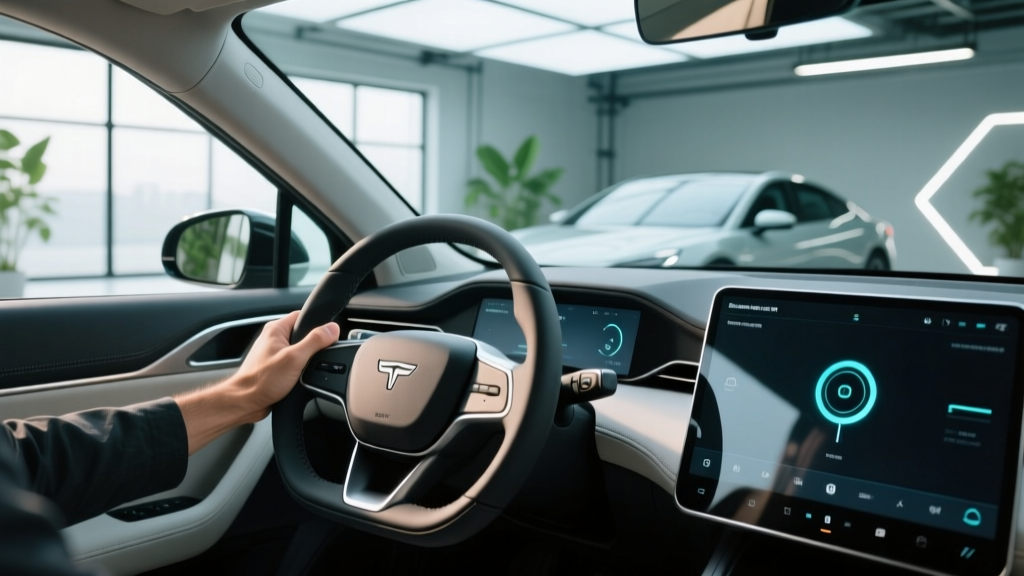
Electric power steering uses a dedicated electric motor — mounted either on the steering column (column-assist EPS) or directly on the steering rack (rack-assist EPS) — to provide steering assist based on input from torque sensors and vehicle speed data. When you turn the wheel, sensors detect your input force and direction, and an electronic control unit (ECU) commands the motor to apply proportional assist.
In EVs, EPS is the only steering technology used. There is no hydraulic pump, no power steering fluid reservoir, and no belt-driven accessory drive connected to an engine. The system draws electricity from the DC-DC converter, which steps down the high-voltage traction battery (typically 400V or 800V architecture) to the 12V or 48V systems that run vehicle electronics including EPS.
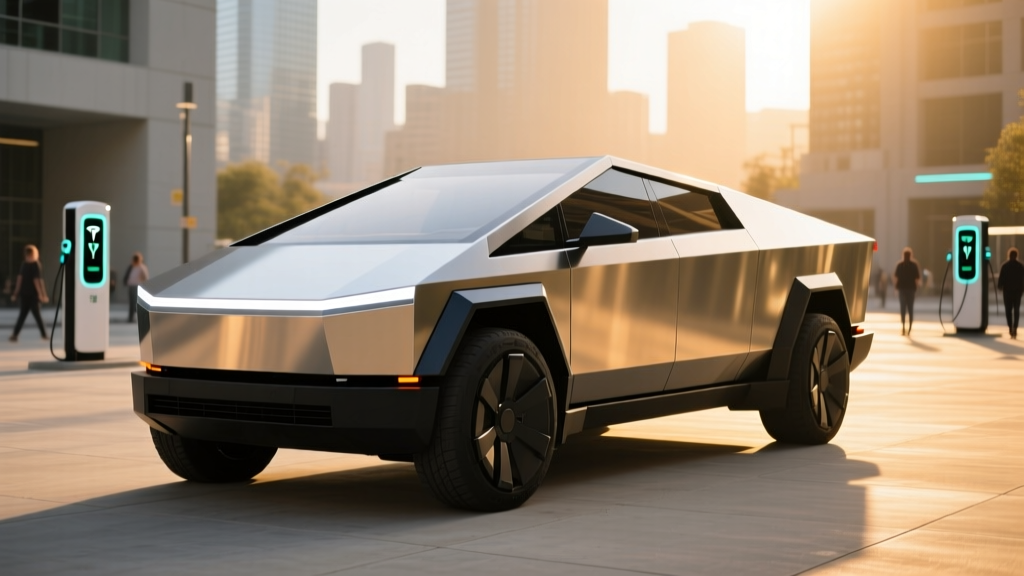
Rack-mounted EPS (common in vehicles like the Tesla Model Y, Hyundai Ioniq 5, and Ford Mustang Mach-E) generally provides more direct steering feel and better feedback than column-mounted setups, which are often found in budget-oriented models. Some 2026 models, including the Tesla Cybertruck, use steer-by-wire systems that eliminate the mechanical connection between the steering wheel and rack entirely, relying on redundant electric motors for safety.
EV vs Gas Car: Steering System Comparison
| Feature | EV (Electric Power Steering) | Gas Car (Hydraulic or EPS) |
|---|---|---|
| Assist Type | Electric motor (rack or column) | Hydraulic pump (belt-driven) or electric motor |
| Fluid Required | None | Power steering fluid (hydraulic) or none (EPS) |
| Maintenance Interval | None — sealed system | Fluid flush every 30,000-60,000 mi (hydraulic) |
| Energy Source | Traction battery via DC-DC converter | Engine accessory belt (hydraulic) or alternator (EPS) |
| Efficiency Impact | ~1-3% range benefit vs hydraulic | Hydraulic: 2-4 HP parasitic loss at engine |
| Typical Replacement Cost | $1,200-$3,500 (rack assembly) | $800-$2,200 (hydraulic pump) / $1,200-$3,000 (EPS rack) |
| Integration with ADAS | Full integration (lane-keep, auto-park, Autopilot) | Limited on hydraulic; full on newer EPS-equipped models |
| Steer-by-Wire Availability | Available (Tesla Cybertruck, Lexus RZ) | Not available in mass-market models |
Most new gas cars from 2020 onward also use EPS rather than hydraulic systems, so the steering-system gap between EVs and modern ICE vehicles has narrowed. The meaningful difference is that EVs exclusively use EPS and integrate it deeply with regenerative braking, stability control, and Level 2 driver-assistance systems like ADAS features monitored by NHTSA.
Real Ownership Costs: Steering System Maintenance
One of the most underappreciated EV ownership advantages is the near-total elimination of steering system maintenance. Here is a realistic cost breakdown over a 5-year, 75,000-mile ownership period:
| Steering-Related Cost Item | EV (EPS Only) | Gas Car (Hydraulic System) |
|---|---|---|
| Power steering fluid (3 flushes at ~$80-$120 each) | $0 | $240-$360 |
| Steering rack/boot inspection | Included in routine service | Included in routine service |
| Pump or motor replacement (probability-weighted) | ~$150 (low failure rate under warranty) | ~$300-$500 (hydraulic pump seals degrade) |
| Hose and line replacement | $0 (no hydraulic lines) | $200-$400 (if leaks develop) |
| Total 5-Year Estimated Cost | ~$150 | ~$740-$1,260 |
These savings are modest in isolation — roughly $600-$1,100 over five years — but they compound with other EV maintenance advantages (no oil changes, no transmission fluid, fewer brake replacements due to regen) to create a total maintenance savings of $3,000-$5,000 over the same period, according to U.S. Department of Energy data on fueleconomy.gov.
How EPS Impacts Range, Efficiency, and Regenerative Braking
Electric power steering is a minor but measurable contributor to EV efficiency. A typical EPS system draws 50-150 watts during normal driving and up to 300-500 watts during aggressive low-speed maneuvering (parallel parking, U-turns). Compare this to a hydraulic pump that continuously draws 2-4 horsepower (1,500-3,000 watts) from the engine whenever the engine is running.
For context, an EV consuming 250 Wh/mi (a reasonable average for a midsize crossover like the Ioniq 5 or Model Y) uses about 300 watts of EPS power during active steering — roughly 0.2-0.5 Wh/mi of additional consumption. This is negligible in the context of total energy use, but the elimination of parasitic hydraulic losses is part of why EVs achieve higher overall drivetrain efficiency.
EPS also plays a critical role in regenerative braking coordination. When you lift off the accelerator, the vehicle's stability control ECU uses EPS data (steering angle, rate of turn) to determine how aggressively to apply regen without destabilizing the car. In vehicles with one-pedal driving modes (Nissan Ariya, Chevrolet Equinox EV, Tesla models), the EPS system constantly communicates with the motor controller to ensure smooth torque transitions during deceleration while cornering.
Common Misconceptions About EV Steering Systems
| Myth | Fact |
|---|---|
| "EVs still need power steering fluid changes" | No EV uses hydraulic power steering. All use sealed electric motors with no fluid. |
| "If the battery dies, you lose steering entirely" | EPS runs on the 12V system via the DC-DC converter. If the HV battery is depleted, the 12V battery provides limited steering assist. If both fail, manual steering is still mechanically possible (though very heavy). |
| "Electric steering feels numb compared to hydraulic" | Early EPS systems (2008-2015 era) were criticized for lack of feedback. Modern 2026 EPS systems from manufacturers like BMW, Porsche, and Hyundai use sophisticated torque-simulation algorithms and rack-mounted motors that provide substantial road feel. |
| "Steer-by-wire is unsafe because there's no mechanical link" | Steer-by-wire systems (Tesla Cybertruck, Lexus RZ 450e) use triple-redundant motors and independent ECUs. They must meet the same FMVSS safety standards as conventional steering, per NHTSA regulations. |
| "EPS repairs are more expensive than hydraulic" | EPS rack replacements ($1,200-$3,500) are comparable to hydraulic rack replacements ($1,000-$2,800). The difference is that EPS systems fail far less frequently because there are no fluid seals to degrade. |
What First-Time EV Buyers Should Know About Steering
If you are transitioning from a gas car to an EV, the steering experience will feel familiar — modern EPS is standard across nearly all new vehicles regardless of powertrain. However, there are a few EV-specific considerations:
- Steering weight varies by drive mode. Most EVs let you select comfort, normal, and sport steering profiles. The difference is software-defined — the same motor applies different resistance curves. Try each mode during your test drive.
- One-pedal driving affects steering feel during deceleration. When regen braking is active while turning, you may feel subtle steering weight changes as the stability system modulates torque. This is normal.
- ADAS integration is deeper in EVs. Lane-keeping assist, automated parking, and highway driving systems (Ford BlueCruise, GM Super Cruise, Tesla Autopilot) all command the EPS motor directly. Ensure you understand which features are Level 2 driver-assist (you must remain engaged) versus hands-free variants that still require eyes-on-road attention.
- Cold weather slightly increases steering effort. At temperatures below 20°F, EPS motor lubricants thicken and the system may feel marginally stiffer for the first few minutes of driving. This is temporary and not a malfunction.
- Steer-by-wire models have a learning curve. If you are considering a Cybertruck or Lexus RZ, expect a 1-2 week adjustment period to the steering ratio and feedback characteristics, which differ from mechanically linked systems.
Decision Framework: Steering System Considerations for Your EV Purchase
Choose a rack-mounted EPS model (Hyundai Ioniq 5, Ford Mach-E, BMW i4) if:
- You prioritize steering feel and feedback for spirited driving
- You want proven, conventional EPS architecture with widespread service support
- You plan to keep the vehicle 8+ years and want straightforward out-of-warranty repair options
Choose a column-mounted EPS model (Nissan Leaf, Chevrolet Bolt EV/EUV, base Hyundai Kona Electric) if:
- You prioritize lower purchase price and daily-commute comfort over steering precision
- You drive primarily in urban environments where steering feel is less critical
- You want maximum cabin space (column EPS packaging is more compact)
Consider steer-by-wire (Tesla Cybertruck, Lexus RZ) if:
- You want the latest technology and accept the early-adopter risk of limited long-term reliability data
- You value variable steering ratios that adapt to speed without mechanical constraints
- You understand that out-of-warranty steer-by-wire repairs may cost $4,000-$6,000+ due to redundant motor and ECU complexity
FAQ: Electric Power Steering in EVs
Does electric power steering affect my EV's range?
Minimally. EPS draws 50-150 watts during normal driving, which translates to roughly 0.2-0.5 Wh/mi of additional consumption on a vehicle averaging 250 Wh/mi. The bigger efficiency story is that EVs avoid the 2-4 HP continuous parasitic loss of hydraulic pumps found in older gas cars, contributing to 1-3% better overall drivetrain efficiency.
Can I still steer my EV if the battery completely dies?
Yes, but with significant effort. The mechanical linkage between the steering wheel and rack remains intact in all conventional EPS vehicles. Without electric assist, steering becomes very heavy — comparable to driving a classic car without power steering. Steer-by-wire vehicles (Cybertruck, Lexus RZ) have backup battery systems and redundant motors specifically to address this scenario.
How long does an EV electric power steering system last?
EPS systems are designed to last the life of the vehicle. Unlike hydraulic pumps, there are no seals, hoses, or fluid to degrade. Most EPS failures that do occur happen within the first 3-5 years and are covered under the basic warranty (typically 3 years/36,000 miles) or the EV-specific component warranty (often 5 years/60,000 miles). Check your specific vehicle's warranty documentation for coverage details.
Is steer-by-wire safe for daily driving?
Steer-by-wire systems in production vehicles meet all applicable Federal Motor Vehicle Safety Standards (FMVSS). They use triple-redundant motor and ECU architectures so that a single-point failure cannot result in loss of steering. That said, the technology is newer, and long-term (10+ year) reliability data is limited. Early adopters should factor in potentially higher out-of-warranty repair costs.
Do I need to do any maintenance on my EV's electric power steering?
No routine maintenance is required. EPS is a sealed system with no fluid, no filter, and no scheduled service interval. During regular tire rotations or annual inspections, a technician may check the steering rack boots for tears and verify that the system has no stored fault codes, but there are no owner-serviceable components.