Hyundai's Concept-to-Production Pipeline: What You Need to Know
If you've been searching for the Hyundai Ioniq concept, you've likely encountered a tangle of show-car names — Prophecy, RN22e, Seven, 45 — and wondered which ones you can actually buy. Hyundai's Ioniq sub-brand has been one of the most prolific concept-to-production pipelines in the EV industry, and understanding which concepts became real cars (and which remain previews of future models) is essential before you head to a dealer or place a reservation.
As of 2026, Hyundai has translated several headline concepts into production Ioniq models, while others preview vehicles still in development. This guide maps each major Hyundai Ioniq concept to its production reality — with exact EPA range, charging speeds, pricing, and tax-credit eligibility for the models you can buy today.
Concept-to-Production Map: Which Hyundai Ioniq Concepts Became Real EVs?
| Concept Name | Debuted | Production Model | Status (2026) |
|---|---|---|---|
| 45 Concept | 2019 (IAA Frankfurt) | Ioniq 5 (SUV/CUV) | On sale since 2022; refreshed for 2025+ |
| Prophecy Concept | 2020 | Ioniq 6 (sedan) | On sale since 2023; 2026 model year available |
| Seven Concept | 2021 (LA Auto Show) | Ioniq 9 (3-row SUV) | On sale (2025 launch; 2026 MY available) |
| RN22e Concept | 2022 | Ioniq 6 N / future N performance EV | Preview only — no confirmed production date |
| Concept Three | 2025 | Next-gen compact Ioniq (likely Ioniq 2/4) | Announced — expected late 2026 or 2027 |
The pattern is clear: Hyundai uses its Ioniq concepts as direct previews of production vehicles, typically bringing them to market 2-3 years after the concept debut. The 45 → Ioniq 5, Prophecy → Ioniq 6, and Seven → Ioniq 9 pipeline has been remarkably faithful to the original designs.
The Production Reality: Ioniq 6 (From Prophecy Concept)
The Prophecy concept's flowing, low-drag silhouette became the Ioniq 6 sedan, currently the most range-efficient vehicle in Hyundai's Ioniq lineup. Here's what the 2026 model delivers:
| Spec | Ioniq 6 SE RWD (Long Range) | Ioniq 6 SEL/Limited AWD |
|---|---|---|
| EPA Range | 361 miles | 316 miles |
| Battery (usable) | 77.4 kWh (NMC) | 77.4 kWh (NMC) |
| Horsepower | 225 hp | 320 hp |
| 0-60 mph | 6.1 sec | 4.5 sec |
| Drivetrain | RWD single motor | AWD dual motor |
| MPGe (combined) | 140 MPGe | 111 MPGe |
| Efficiency | 24 kWh/100mi | 30 kWh/100mi |
| Max DC Fast Charge | ~240 kW (peak) | ~240 kW (peak) |
| 10-80% DC Time | ~18 minutes | ~18 minutes |
| Level 2 Rate | 10.9 kW (~44 mi/hr) | 10.9 kW (~44 mi/hr) |
| Base MSRP | ~$38,650 | ~$44,100 (SEL) / ~$51,100 (Limited) |
Real-World Range Reality: The Ioniq 6 SE RWD's EPA rating of 361 miles is among the highest of any EV on sale. In real-world highway driving at 70-75 mph, expect roughly 300-320 miles before needing a charge. In freezing temperatures (below 25°F), range can drop 20-30%, putting real-world winter highway range closer to 250-270 miles. The sedan's low 0.21 Cd drag coefficient is a major reason it outperforms similarly sized SUVs on efficiency. (Source: EPA / fueleconomy.gov)
The Production Reality: Ioniq 5 (From 45 Concept)
The angular 45 Concept became the retro-futuristic Ioniq 5 crossover, Hyundai's volume-selling Ioniq model. For 2026, it receives updated battery chemistry options and the high-performance Ioniq 5 N variant.
| Spec | Ioniq 5 SE RWD (Std Range) | Ioniq 5 SEL/Limited AWD (Long Range) | Ioniq 5 N |
|---|---|---|---|
| EPA Range | 245 miles | 303 miles (SEL) / 290 miles (Limited) | 221 miles |
| Battery (usable) | 58 kWh (LFP option) | 77.4 kWh (NMC) | 84 kWh (NMC) |
| Horsepower | 168 hp | 320 hp | 641 hp (N Grin Boost) |
| 0-60 mph | 7.4 sec | 4.5 sec | 3.25 sec |
| Max DC Fast Charge | ~150 kW | ~240 kW (peak) | ~240 kW (peak) |
| 10-80% DC Time | ~25 minutes | ~18 minutes | ~18 minutes |
| Base MSRP | ~$42,900 | ~$47,650 / ~$53,500 | ~$67,500 |
The Ioniq 5's 800V architecture — shared with the Ioniq 6 — enables that class-leading 18-minute 10-80% DC fast charge when you find a 350 kW-capable station. On more common 150 kW chargers, expect 10-80% in roughly 25-28 minutes. The charge curve tapers significantly above 80%, so plan your stops around 80% for the fastest overall trip times.
The Newest Arrival: Ioniq 9 (From Seven Concept)
The Seven Concept's lounge-like three-row interior previewed the Ioniq 9, Hyundai's flagship electric SUV that launched for the 2025 model year and carries into 2026. It directly targets the Kia EV9, Rivian R1S, and Tesla Model X in the three-row electric SUV segment.
| Spec | Ioniq 9 SE RWD | Ioniq 9 SEL/Limited AWD |
|---|---|---|
| EPA Range | ~335 miles | ~300 miles |
| Battery (usable) | 110.3 kWh (NMC) | 110.3 kWh (NMC) |
| Horsepower | 215 hp | 378 hp |
| 0-60 mph | ~8.0 sec | ~5.0 sec |
| Max DC Fast Charge | ~240 kW (peak) | ~240 kW (peak) |
| 10-80% DC Time | ~24 minutes | ~24 minutes |
| Passenger / Cargo | 7 seats / 22 cu ft (behind 3rd row) | 7 seats / 22 cu ft |
| Base MSRP | ~$57,400 | ~$65,000+ (Limited) |
The Ioniq 9's 110.3 kWh battery is the largest in the Hyundai Ioniq lineup. Its larger battery mass means longer DC charge sessions (the bigger pack takes more total energy to fill from 10-80%, even at similar peak kW rates). Interior space is generous: second-row captain's chairs with available relaxation functions echo the Seven Concept's "lounge" philosophy.
Concepts Still in the Pipeline: RN22e and Concept Three
Two notable Hyundai Ioniq concepts remain unproduced as of 2026:
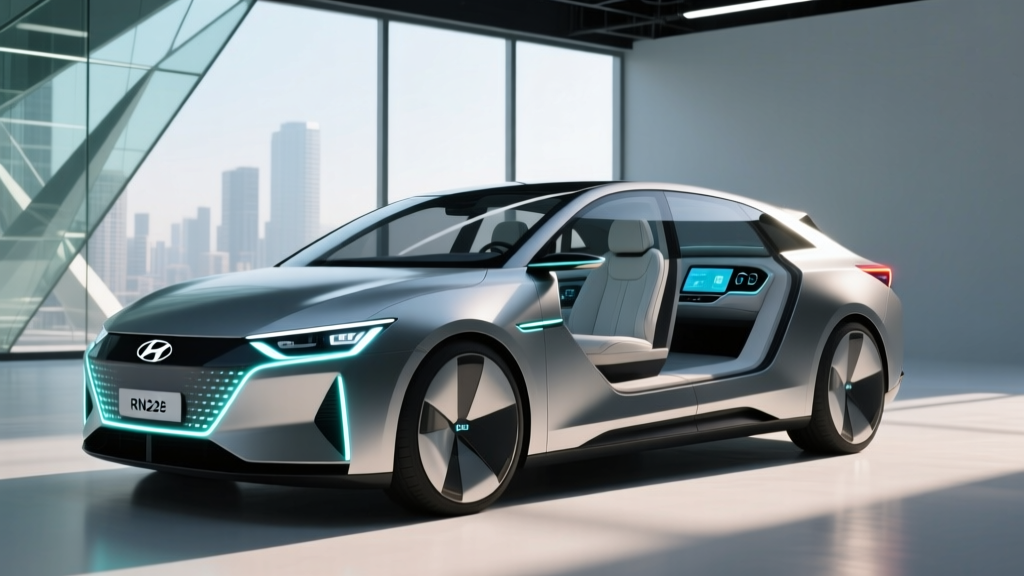
- RN22e (2022): A track-focused performance sedan based on the Ioniq 6 body with 700+ hp, torque vectoring, and aggressive aero. It previews Hyundai N's electric performance future. While elements have appeared in the Ioniq 5 N, a dedicated RN22e production model has not been confirmed. Enthusiasts should watch for a potential Ioniq 6 N announcement.
- Concept Three (2025): A compact, affordable EV concept previewing a smaller Ioniq model expected to slot below the Ioniq 5, potentially priced in the low $30,000s. Expected production: late 2026 or 2027. Specs are preliminary and unconfirmed.
Neither vehicle is available for purchase. Hyundai has not published final EPA range, pricing, or battery specs for these concepts.
Federal Tax Credit Eligibility (§30D) for Production Ioniq Models
Under current IRS §30D rules (source: IRS.gov), here's how the production Ioniq models fare:
- MSRP Cap: SUVs (Ioniq 5, Ioniq 9) must be under $80,000 MSRP; sedans (Ioniq 6) must be under $55,000 MSRP. The Ioniq 6 Limited and Ioniq 5 N may exceed these caps depending on options.
- Buyer Income Cap: Modified AGI must not exceed $150,000 (single), $225,000 (head of household), or $300,000 (joint filers).
- Battery Sourcing: Critical minerals and battery component requirements phase in annually. Hyundai has moved significant battery production to the Metaplant America facility in Georgia, improving domestic sourcing compliance.
- Point-of-Sale Transfer: Eligible buyers can transfer the credit to the dealer at purchase, reducing the purchase price immediately rather than waiting for a tax refund.
- Maximum Credit: Up to $7,500 if both critical-minerals and battery-component requirements are met; $3,750 if only one is satisfied.
| Model / Trim | Base MSRP | Est. Credit | Effective Price (est.) |
|---|---|---|---|
| Ioniq 6 SE | ~$38,650 | Up to $7,500 | ~$31,150 |
| Ioniq 5 SE Std Range | ~$42,900 | Up to $7,500 | ~$35,400 |
| Ioniq 5 SEL AWD | ~$47,650 | Up to $7,500 | ~$40,150 |
| Ioniq 9 SE | ~$57,400 | Up to $7,500 | ~$49,900 |
Eligibility depends on buyer income, MSRP cap compliance, and battery-sourcing rules. Confirm with a tax professional before purchasing. Rules are current for 2026 and subject to legislative change.
Charging Infrastructure: What Ioniq Owners Actually Experience
All production Ioniq models (5, 6, and 9) share Hyundai's E-GMP platform with 800V electrical architecture. This is a significant real-world advantage:
| Charging Level | Power | Ioniq 5/6 (77.4 kWh) | Ioniq 9 (110.3 kWh) |
|---|---|---|---|
| Level 1 (120V household) | ~1.4 kW | ~3-5 mi/hr | ~3-4 mi/hr |
| Level 2 (240V home) | 10.9 kW | ~44 mi/hr (full in ~7.5 hr) | ~36 mi/hr (full in ~10.5 hr) |
| DC Fast (350 kW station) | ~240 kW peak | 10-80% in ~18 min | 10-80% in ~24 min |
| DC Fast (150 kW station) | ~150 kW sustained | 10-80% in ~28 min | 10-80% in ~36 min |
| DC Fast (50 kW station) | ~50 kW | 10-80% in ~70 min | 10-80% in ~100 min |
Key charging insight: The 800V system's advantage is most pronounced at 350 kW-capable chargers (like Electrify America's newest stations). At more common 150 kW chargers, the Ioniq charges at similar speeds to 400V competitors like the Volkswagen ID.4 or Ford Mustang Mach-E. Your real-world charging speed depends heavily on the stations available along your routes. (Source: Hyundai USA)
For home charging, a Level 2 installation on a 240V/48A circuit will fully recharge any Ioniq overnight. Budget $800-$2,500 for a professional Level 2 home installation (charger + electrician + permit), with potential panel upgrades adding $1,500-$3,000 if your home has a 100A or older service.
Warranty, Tech, and Ownership Practicalities
Hyundai backs all Ioniq production models with one of the strongest warranties in the EV segment:
- Battery warranty: 10 years / 100,000 miles (capacity retention threshold: 70% of original capacity)
- Powertrain warranty: 10 years / 100,000 miles
- New vehicle warranty: 5 years / 60,000 miles
- Roadside assistance: 5 years / unlimited miles
Standard and available tech across the Ioniq lineup includes:
- Hyundai Digital Key 2: Use your smartphone or smartwatch as a key fob via NFC and UWB
- Highway Driving Assist 2 (HDA2): SAE Level 2 driver assistance with lane-centering, adaptive cruise, and lane-change assist — not self-driving; requires hands-on-wheel supervision
- Vehicle-to-Load (V2L): Power external devices (up to 3.6 kW) from your Ioniq's battery via an interior or exterior outlet — useful for camping, tailgating, or emergency backup
- OTA Updates: Over-the-air software updates for powertrain, infotainment, and ADAS calibration
- 12.3-inch dual displays: Integrated instrument cluster and infotainment screens with wireless Apple CarPlay and Android Auto
Notable drawbacks: The Ioniq 6's sloping roofline compromises rear headroom and trunk opening size compared to the Ioniq 5. The Ioniq 5's rear wiper was absent on early models (added in refreshes). Hyundai's infotainment, while functional, lacks the polish of Tesla's interface. None of the Ioniq models offer a front trunk (frunk) of meaningful size — a missed opportunity given the E-GMP platform's packaging potential.
Pros and Cons: The Hyundai Ioniq Lineup at a Glance
✅ Pros
- Class-leading 800V charging (10-80% in 18 min on 350 kW chargers)
- Ioniq 6 SE achieves 361 mi EPA — top-tier efficiency at 140 MPGe
- 10-year/100,000-mi battery warranty exceeds most competitors
- V2L capability standard across the lineup
- Georgia-built (Metaplant America) improves tax credit sourcing compliance
- Distinctive design — stands out vs. conservative competitors
❌ Cons
- No meaningful frunk on any Ioniq model
- Ioniq 6 rear visibility and cargo access compromised by fastback shape
- Ioniq 9 pricing starts near $57K — premium territory for a Hyundai badge
- Level 2 ADAS (HDA2) requires hands-on; no hands-free option like GM Super Cruise
- Dealer markups on high-demand trims (especially Ioniq 5 N) remain common
- Public charging reliability still varies — 800V advantage wasted on broken chargers
Decision Framework: Which Ioniq Production Model Fits You?
- Choose the Ioniq 6 if: You prioritize maximum range and efficiency, commute long distances, and prefer a sedan. The SE RWD at 361 mi EPA and ~$31,150 (after credit) is one of the best value-per-mile-of-range EVs on sale.
- Choose the Ioniq 5 if: You want a practical crossover with hatchback versatility, need AWD for snow-belt climates, or want the performance of the Ioniq 5 N. It's the most versatile Ioniq for daily family use.
- Choose the Ioniq 9 if: You need three rows of seating and are willing to pay a premium. It competes with the Kia EV9 (its platform sibling) but offers a more upscale interior and Hyundai's warranty.
- Wait for a concept-derived future model if: You want a compact, affordable Ioniq (Concept Three preview) or a dedicated performance sedan (RN22e preview). Neither is available for purchase in 2026.
Frequently Asked Questions
Can I buy a Hyundai Ioniq concept car?
No. Hyundai's Ioniq concepts (Prophecy, RN22e, Seven, 45, Concept Three) are show vehicles. However, the 45, Prophecy, and Seven concepts directly became the production Ioniq 5, Ioniq 6, and Ioniq 9 respectively. The RN22e and Concept Three preview future models that are not yet available for purchase.
What is the real-world range of the Ioniq 6?
The Ioniq 6 SE RWD carries an EPA rating of 361 miles. In real-world highway driving at 70-75 mph, expect 300-320 miles. In cold weather (below 25°F), range drops to approximately 250-270 miles on the highway. The AWD models rate at 316 miles EPA with proportionally lower real-world figures.
How fast does the Ioniq 5 charge at home and on the road?
At home on a Level 2 (240V/10.9 kW) charger, the Ioniq 5 Long Range adds roughly 44 miles per hour of charging, reaching a full charge in about 7.5 hours. On a 350 kW DC fast charger, it peaks at approximately 240 kW and charges from 10-80% in about 18 minutes. On a 150 kW DC charger, 10-80% takes roughly 28 minutes.
How much does an Ioniq cost after the federal tax credit?
If you qualify for the full $7,500 §30D credit (income within limits, MSRP within caps, battery sourcing requirements met), the Ioniq 6 SE drops to approximately $31,150, the Ioniq 5 SE Standard Range to about $35,400, and the Ioniq 9 SE to roughly $49,900. Eligibility varies — confirm with the IRS's clean vehicle credit page and a tax professional.
Is the Hyundai Ioniq 5 or 6 worth buying vs. Tesla, Ford, or Kia?
The Ioniq 5 and 6 compete strongly on charging speed (800V is faster than most competitors), warranty coverage (10yr/100k vs. Tesla's 8yr/120k), and design. The Tesla Model 3/Y still leads in Supercharger network access (though Hyundai now has NACS adapters for Supercharger access) and software polish. The Kia EV6/EV9 share the E-GMP platform with similar specs. The Ford Mustang Mach-E offers comparable range but slower DC charging. Your best choice depends on which body style, charging ecosystem, and design language you prefer.
Does the Ioniq lineup qualify for the federal EV tax credit?
Most Ioniq production models qualify for up to $7,500 under §30D, provided the buyer's income falls within IRS caps ($150K single / $300K joint), the vehicle MSRP is under the limit ($55K for sedans, $80K for SUVs), and battery-sourcing requirements are met. Hyundai's Georgia manufacturing improves sourcing compliance. The Ioniq 6 Limited and Ioniq 5 N may exceed MSRP caps. Always verify current eligibility at IRS.gov before purchasing.