The Quick Answer: Is the Ford Mustang Mach-E Electric?
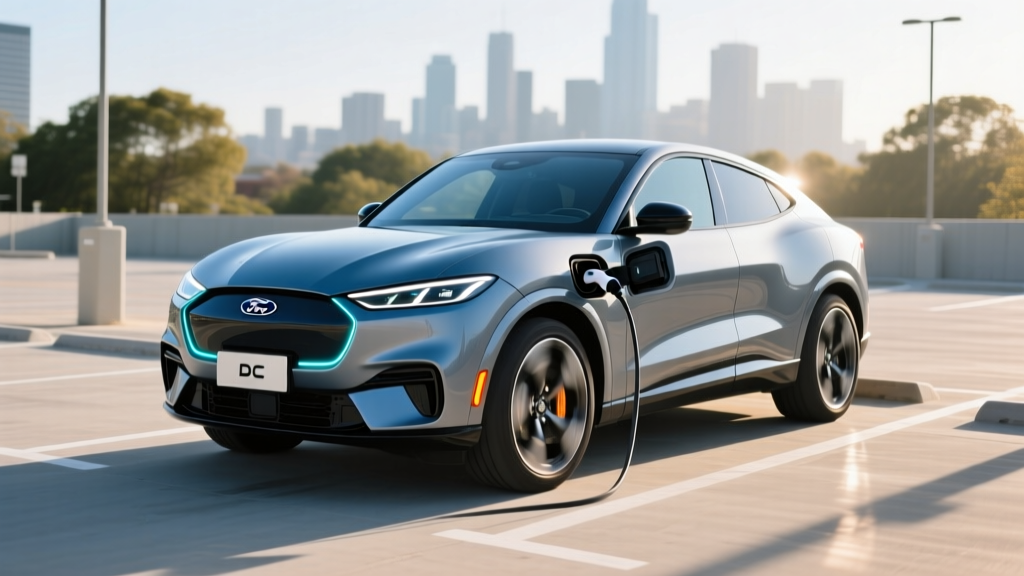
Yes — the Ford Mustang Mach-E is a fully electric, battery-powered crossover SUV with no internal combustion engine and no plug-in hybrid variant. It runs exclusively on a lithium-ion traction battery paired with one or two electric motors, depending on trim. Since its 2021 debut, the Mach-E has been Ford's flagship battery-electric vehicle (BEV), competing directly with the Tesla Model Y, Hyundai Ioniq 5, and Chevrolet Blazer EV.
For 2026, Ford continues to refine the Mach-E lineup with updated battery options, a growing NACS charging ecosystem, and software-driven feature additions. Below, we break down everything a real buyer needs to know: EPA range versus real-world expectations, DC fast-charging reality (not just peak kW), federal tax credit eligibility under current IRS §30D rules, and whether this electric Mustang earns its badge.
2026 Ford Mustang Mach-E Specs at a Glance
| Spec | Value |
|---|---|
| EPA Range | Up to 320 miles (Extended Range RWD) |
| Battery Capacity | 91 kWh usable (Extended Range, NMC chemistry) |
| Drivetrain | Rear-wheel drive (single motor) or AWD (dual motor) |
| Horsepower | 290 hp (RWD) / 365 hp (AWD ER) |
| 0–60 mph | ~5.1 sec (AWD Extended Range) |
| Max DC Fast Charge | 150 kW peak |
| 10–80% DC Charge Time | ~38 minutes |
| Level 2 Home Charging | 10.5 kW (~32 miles per hour) |
| EPA Efficiency | 101 MPGe combined / 33 kWh/100 mi (ER RWD) |
| Cargo Volume | 29.7 cu ft (rear seats up) / 59.7 cu ft (folded) |
| Front Trunk (Frunk) | 4.7 cu ft (drainable, with divider) |
| Base MSRP | $38,990 (Select RWD Standard Range) |
| Battery Warranty | 8 years / 100,000 miles |
Sources: fueleconomy.gov, Ford.com Mach-E specifications.
Real-World Range: What the EPA Sticker Doesn't Tell You
EPA Estimate: 320 miles (Extended Range RWD)
Real-World Highway (70 mph): ~265–285 miles
Cold Weather (below 32°F): ~220–250 miles
Mixed Commuter Driving: ~290–310 miles
The 320-mile EPA figure applies to the Extended Range RWD trim under the agency's mixed-drive cycle. In practice, sustained highway driving at 70–80 mph reduces range by roughly 10–17%, because aerodynamic drag dominates at higher speeds and regenerative braking opportunities diminish. In our experience and consistent with third-party testing, expect around 265–285 miles on a full charge during a road trip.
Cold weather is the Mach-E's biggest range adversary, as it is for all BEVs. Lithium-ion batteries lose efficiency in freezing temperatures, and cabin heating draws significant energy. The Mach-E uses a resistive PTC heater rather than a heat pump (a feature found on the Hyundai Ioniq 5 and Tesla Model Y), which means winter range loss can reach 25–30% in sub-freezing conditions. If you live in the northern U.S. and commute more than 60 miles round-trip in winter, the Extended Range battery is strongly recommended over the Standard Range.
The Standard Range trims carry a smaller 70 kWh usable battery and achieve an EPA rating of around 250 miles. Real-world highway drops that to roughly 210–220 miles — adequate for city commuters with home charging, but limiting for road-trip use.
Charging Speed: DC Fast Charging and Home Level 2
Charging speed is where the Mach-E reveals its most significant competitive gap. The 2026 Mach-E peaks at 150 kW on DC fast chargers, which trails the Hyundai Ioniq 5's 240 kW and the Tesla Model Y's ~250 kW capability. The 10–80% charge takes approximately 38 minutes at a capable station.
| Charging Level | Power | Speed / Time |
|---|---|---|
| Level 1 (120V household) | ~1.4 kW | ~3 miles per hour |
| Level 2 (240V home, Ford Connected Charge Station) | 10.5 kW | ~32 miles per hour / full charge in ~10 hours |
| DC Fast Charge (CCS/NACS adapter) | 150 kW peak | 10–80% in ~38 minutes |
Charging curve reality: The Mach-E does not sustain 150 kW throughout the session. Peak power holds roughly from 10–40% State of Charge (SoC), then tapers to around 100 kW by 60% SoC, and drops further above 80%. This taper behavior is normal for NMC chemistry but means the last 20% of a charge session takes disproportionately longer. On road trips, plan stops around the 10–80% window for the fastest throughput.
For home charging, the Ford Mobile Power Cord (included) provides Level 1 charging at ~3 miles per hour — useful for overnight top-ups but impractical for daily driving beyond 30–40 miles. The Ford Connected Charge Station or any quality 48-amp Level 2 charger on a 240V/60A circuit delivers 10.5 kW, adding about 32 miles per hour of charging. A full overnight charge from 20% takes roughly 8–10 hours. Installation costs for a Level 2 home setup typically range from $500 to $2,000 depending on your electrical panel's capacity and the run distance — budget for a licensed electrician and possible panel upgrade if you're in an older home.
Connector note: The 2026 Mach-E ships with a NACS (Tesla-style) charge port, giving it native access to Tesla Supercharger stations via Ford's partnership. This is a major practical advantage over the CCS port on earlier model years, which required a cumbersome adapter for Supercharger access.
Performance, Efficiency, and Driving Dynamics
The Mach-E's driving character is where the Mustang badge earns some legitimacy. The dual-motor AWD Extended Range produces 365 horsepower and 428 lb-ft of torque, delivering a 0–60 mph time of approximately 5.1 seconds. The GT trim pushes that to 480 hp and a 3.5-second sprint. Steering is direct, body control is firm but compliant, and the low center of gravity (from the under-floor battery pack) gives it confident cornering for a crossover.
Efficiency varies by trim. The Extended Range RWD achieves 101 MPGe combined (33 kWh per 100 miles), which is competitive with the Tesla Model Y Long Range but trails the lighter Hyundai Ioniq 5 (114 MPGe). The AWD variants drop to approximately 93–96 MPGe. At a national average electricity rate of $0.16/kWh, driving 100 miles in the ER RWD costs roughly $5.28 — about one-third the cost of a 25 MPG gas crossover at $3.50/gallon.
One-pedal driving is available and well-calibrated, with strong regenerative braking that can bring the Mach-E to a complete stop without touching the brake pedal in most city traffic. The brake pedal feel is linear and avoids the mushy regen-blending common in some early EVs.
Interior, Cargo, and Technology
The Mach-E's cabin is spacious for its class. Rear legroom measures 38.1 inches — enough for adults on longer trips — and the flat floor (no transmission tunnel) makes the middle seat usable. Cargo space is 29.7 cubic feet behind the rear seats and 59.7 cubic feet with them folded, placing it slightly behind the Model Y (30.2/76.2 cu ft) but ahead of the Ioniq 5 (27.2/59.3 cu ft).
The drainable front trunk (frunk) is a standout feature at 4.7 cubic feet — large enough for a gym bag or groceries, and the drain plug makes it practical for tailgating with ice and beverages.
The centerpiece of the interior is the 15.5-inch vertically oriented SYNC 4A touchscreen, which handles navigation, climate, and media. Wireless Apple CarPlay and Android Auto are standard. Over-the-air (OTA) software updates continue to add features post-purchase. However, the near-total elimination of physical buttons — even for climate control — draws criticism from drivers who prefer tactile access while driving.
Standard driver-assistance technology includes Ford Co-Pilot360 2.0 with automatic emergency braking, lane-keeping assist, blind-spot monitoring, and adaptive cruise control. Available BlueCruise (Ford's Level 2 hands-free highway driving system) operates on pre-mapped divided highways. Important: BlueCruise is an SAE Level 2 system — it requires the driver to remain attentive and does not make the Mach-E self-driving. The system monitors driver eye gaze and will disengage if attention lapses.
Pricing, Trims, and Federal Tax Credit Eligibility
| Trim | Drivetrain | MSRP |
|---|---|---|
| Select (Standard Range) | RWD | $38,990 |
| Select (Extended Range) | RWD | $43,990 |
| Premium (Extended Range) | AWD | $51,490 |
| GT (Extended Range) | AWD | $59,990 |
| Rally (Extended Range) | AWD | $61,990 |
Prices exclude destination charge (~$1,895). Specs subject to model-year updates; verify at Ford.com.
Does the Mach-E Qualify for the Federal EV Tax Credit?
Tax credit eligibility under IRS §30D is one of the most buyer-confused areas of EV purchasing. Here's the current framework:
- Maximum credit: Up to $7,500, split between a $3,750 critical-minerals component and a $3,750 battery-components component.
- MSRP cap: The vehicle must have an MSRP at or below $80,000 for SUVs (the Mach-E qualifies on all trims).
- Buyer income cap: Modified adjusted gross income must not exceed $150,000 (single), $225,000 (head of household), or $300,000 (married filing jointly).
- Battery sourcing: The percentage of critical minerals and battery components sourced from the U.S. or free-trade-agreement partners must meet annually increasing thresholds. Sourcing requirements tighten each year.
- Point-of-sale transfer: Eligible buyers can transfer the credit to the dealer at purchase, reducing the upfront price rather than waiting for a tax refund.
The Mach-E's battery sourcing has been a moving target as Ford adjusts supply chains. Some model-year configurations have qualified for the full $7,500, others for $3,750, and some for none — depending on the specific battery pack's mineral and component origins. Always verify current eligibility on the IRS Clean Vehicle credit lookup tool or with your dealer at the point of sale. A tax professional can confirm whether your income and filing status meet the caps.
Mach-E vs. the Competition: Is It Worth Buying?
- Engaging driving dynamics; best-in-class handling for an electric crossover
- NACS port provides native Tesla Supercharger access
- Spacious cabin with practical drainable frunk
- BlueCruise hands-free highway driving (Level 2) is well-implemented
- Strong OTA update track record; features improve post-purchase
- Competitive pricing, especially at the Select trim level
- 150 kW DC fast-charging speed lags key competitors (Ioniq 5: 240 kW)
- No heat pump — cold-weather range loss is more pronounced
- Touchscreen-only climate controls are a distraction while driving
- Extended Range and GT trims push past $50K quickly
- Rear visibility is limited by thick C-pillars
Decision Framework: Who Should Buy the Mach-E?
Choose the Mach-E if:
- You prioritize driving engagement and want an EV that feels sporty on back roads
- You want Supercharger access without adapters (2026 NACS port)
- Your daily commute is under 80 miles and you have Level 2 home charging
- You value a usable frunk and hands-free highway driving
Look elsewhere if:
- You take frequent 400+ mile road trips and want the fastest possible DC charging (consider Ioniq 5 or Model Y)
- You live in a consistently cold climate and need a heat pump for winter range preservation
- You prefer physical buttons for climate and audio controls
Warranty and Long-Term Ownership
Ford covers the Mach-E's high-voltage battery and electric powertrain components for 8 years or 100,000 miles, whichever comes first. The battery warranty guarantees that capacity will not fall below 70% of its original state of health (SoH) during that period. The bumper-to-bumper limited warranty is 3 years / 36,000 miles.
Long-term battery degradation data from early 2021–2022 Mach-E owners shows modest capacity loss — typically 5–8% over the first 60,000 miles — which is consistent with NMC chemistry managed by an active liquid thermal management system. Ford's battery management system (BMS) maintains a buffer at the top and bottom of the charge range to protect cell longevity, which is why the "usable" kWh figure is lower than the gross cell capacity.
Insurance costs for the Mach-E tend to run 15–25% higher than a comparable gas-powered Ford Edge, reflecting higher repair costs and parts pricing common across the EV segment. Shop multiple quotes before purchase.
Frequently Asked Questions
Is the Ford Mustang Mach-E a hybrid or fully electric?
Fully electric. The Mach-E is a battery-electric vehicle (BEV) with no gasoline engine. It cannot run on fuel and must be charged from an external power source. There is no hybrid or plug-in hybrid version.
What is the real-world range of the Mustang Mach-E?
The Extended Range RWD achieves 320 miles EPA. In real-world highway driving at 70 mph, expect 265–285 miles. In freezing temperatures, range may drop to 220–250 miles due to battery chemistry limitations and cabin heating demand. The Standard Range trims offer ~250 miles EPA, or ~210 miles highway.
How fast does the Mach-E charge at home and on road trips?
At home on a 240V Level 2 charger (48 amps), the Mach-E charges at 10.5 kW, adding roughly 32 miles of range per hour — a full overnight charge from 20% takes about 8–10 hours. On DC fast chargers, it peaks at 150 kW, completing a 10–80% charge in approximately 38 minutes. Expect real-world road-trip stops to take 35–45 minutes depending on charger availability and battery preconditioning.
Does the 2026 Mach-E qualify for the $7,500 federal tax credit?
It depends on the specific battery configuration and your income. The Mach-E meets the $80,000 MSRP cap for SUVs. However, the full $7,500 credit requires that both critical minerals and battery components meet IRS sourcing thresholds, which change annually. Some configurations qualify for $7,500, some for $3,750, and some for $0. Your modified adjusted gross income must also be below IRS limits. Verify current eligibility via the IRS Clean Vehicle credit page or at the dealership point of sale.
Is the Mach-E worth buying over the Tesla Model Y or Hyundai Ioniq 5?
It depends on your priorities. The Mach-E offers the most engaging driving dynamics of the three and now has native Supercharger access via NACS. The Model Y leads in charging speed (~250 kW), cargo space, and Supercharger network maturity. The Ioniq 5 charges fastest of all (240 kW) and includes a heat pump for better cold-weather performance. If driving feel and Supercharger access matter most, the Mach-E is a strong pick. If fast road-trip charging and winter efficiency are top priorities, the Ioniq 5 or Model Y may serve you better.
Does BlueCruise make the Mach-E self-driving?
No. BlueCruise is an SAE Level 2 driver-assistance system. It can control steering, acceleration, and braking on pre-mapped divided highways, but the driver must remain attentive and ready to take over at any moment. The system uses a driver-facing camera to monitor eye gaze. It does not replace an engaged driver and is not autonomous (Level 4) in any sense.
Always confirm the latest specifications, pricing, and tax credit eligibility directly with Ford and the IRS before making a purchase decision. Incentive rules and vehicle configurations change frequently.