Quick Verdict: Is Leasing the 2026 Tesla Model 3 the Smart Move?
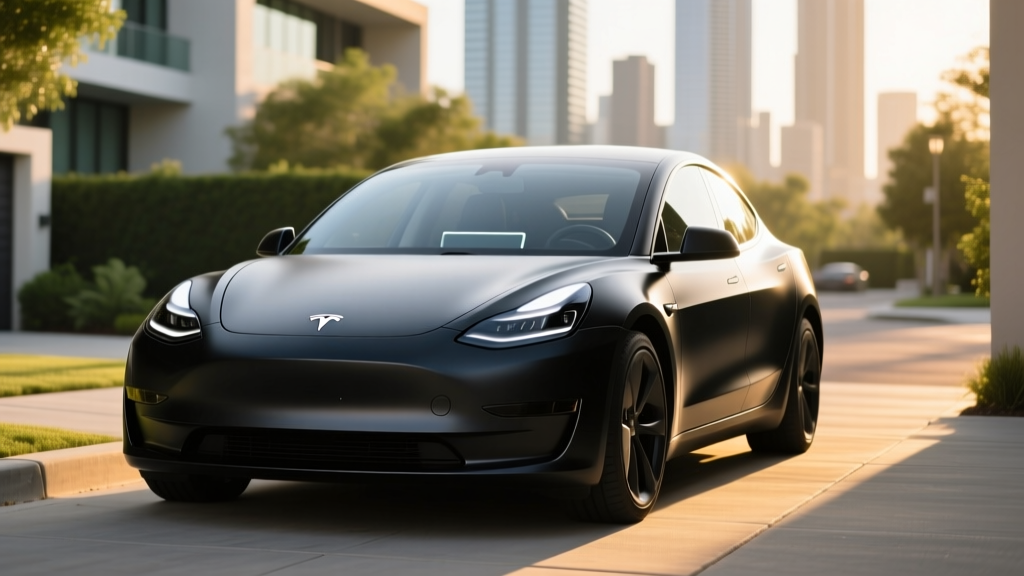
The 2026 Tesla Model 3 remains the default sedan for EV shoppers who want efficiency, charging infrastructure access, and over-the-air updates — all starting under $40,000. But with the refreshed "Highland" platform now fully matured into its second production year, the lease-or-buy calculus has shifted. A lease lets you lock in the $7,500 federal tax credit as a point-of-sale lease rebate regardless of your personal income or the vehicle's battery-sourcing compliance — a loophole that makes leasing the Model 3 attractive even for buyers who would otherwise be disqualified from the purchase credit.
This review covers the 2026 Model 3 lineup — Standard Range RWD, Long Range AWD, and Performance — with exact specs, real-world range expectations, charging data, and a lease-versus-buy decision framework built for actual shoppers.
2026 Tesla Model 3: Trim Lineup and Key Specs
| Specification | Standard Range RWD | Long Range AWD | Performance |
|---|---|---|---|
| Base MSRP | $38,990 | $45,990 | $52,990 |
| EPA Range | 272 mi | 341 mi | 315 mi |
| Battery Capacity (usable) | ~57.5 kWh | ~75 kWh | ~75 kWh |
| Battery Chemistry | LFP (lithium iron phosphate) | NMC (nickel manganese cobalt) | NMC |
| Drivetrain | Rear-wheel drive (single motor) | Dual-motor AWD | Dual-motor AWD |
| Horsepower | 271 hp | 346 hp | 510 hp |
| 0–60 mph | 5.8 sec | 4.2 sec | 2.9 sec |
| Top Speed | 125 mph | 125 mph | 163 mph |
| EPA Efficiency | 142 MPGe / 24 kWh/100mi | 132 MPGe / 26 kWh/100mi | 121 MPGe / 28 kWh/100mi |
| Max DC Fast Charge | 170 kW | 250 kW | 250 kW |
| 10–80% DCFC Time | ~25 min | ~18 min | ~18 min |
| Level 2 Charge Rate | 11.5 kW (~44 mi/hr) | 11.5 kW (~44 mi/hr) | 11.5 kW (~44 mi/hr) |
| Battery Warranty | 8 yr / 100,000 mi | 8 yr / 120,000 mi | 8 yr / 120,000 mi |
| Vehicle Warranty | 4 yr / 50,000 mi | 4 yr / 50,000 mi | 4 yr / 50,000 mi |
All trims seat five passengers, offer 23.0 cubic feet of cargo space (including the front trunk/frunk), and come standard with Tesla's 15.4-inch center touchscreen running the latest software, basic Autopilot (Level 2 driver assist), and access to the Supercharger network — now the largest reliable DC fast-charging network in North America.
Real-World Range: What the EPA Number Doesn't Tell You
The Long Range AWD's 341-mile EPA rating is among the best in the segment. But real-world results vary significantly based on driving style, temperature, and terrain:
- City / moderate weather (65°F): Expect 320–340 mi — EVs thrive in stop-and-go thanks to regenerative braking.
- Highway cruising (70–75 mph, 65°F): Expect 270–300 mi. Aerodynamic drag dominates at speed.
- Cold weather (30°F, mixed driving): Expect 230–270 mi. LFP batteries in the Standard Range trim lose proportionally more range in cold than NMC packs, sometimes 25–35%.
- Worst case (cold + highway + hills): Budget 200–220 mi for the Standard Range RWD in sub-freezing conditions.
Source: EPA / fueleconomy.gov
The Standard Range RWD's 272-mile EPA figure is the trim most vulnerable to range anxiety on longer trips. If your typical drive includes a 200-mile round trip in winter, you'll want the Long Range — or discipline yourself to charge to 100% before departing (which Tesla actually recommends for LFP batteries, unlike NMC chemistry where daily charging to 80% is preferred for longevity).
LFP vs. NMC: what it means for you. The Standard Range uses LFP chemistry — cheaper to produce, longer cycle life, and tolerant of regular 100% charges. The trade-off is lower energy density (less range per kWh) and worse cold-weather performance. The Long Range and Performance use NMC packs, which offer higher energy density and better cold-weather retention but benefit from staying between 20–80% State of Charge for daily use.
Charging Speed: DC Fast Charging and Home Level 2
| Charging Level | Standard Range RWD | Long Range AWD / Performance |
|---|---|---|
| Level 1 (120V household) | ~3 mi/hr (1.4 kW) | ~4 mi/hr (1.4 kW) |
| Level 2 (240V, 48A home charger) | 44 mi/hr (11.5 kW) | 44 mi/hr (11.5 kW) |
| DC Fast Charge (peak) | 170 kW peak | 250 kW peak |
| DCFC 10–80% | ~25 minutes | ~18 minutes |
| DCFC 10–80% miles added | ~190 mi | ~240 mi |
| Connector | NACS (native) | NACS (native) |
The charge-curve reality. Tesla's peak 250 kW rate on Long Range and Performance trims is not sustained. The pack charges aggressively from roughly 10–45% SoC, then tapers progressively. From 80–100%, the rate drops sharply — often below 30 kW. This is why the industry standard metric is 10–80% time. If you're road-tripping, plan to leave Superchargers at 80% rather than waiting for a full fill; that last 20% can add 15+ minutes for minimal range gain.
Home charging math. A full Level 2 home session from 20% to 80% on the Long Range takes roughly 4 hours at 11.5 kW — easily accomplished overnight. Most owners who charge at home never visit a public DC fast charger except on road trips. A Tesla Wall Connector (~$425) installed on a 60-amp circuit by a licensed electrician typically costs $1,200–$2,500 total including panel assessment and permit. If your home has a 200-amp panel with spare capacity, you're in good shape. Older 100-amp panels may require a $2,000–$4,000 upgrade.
All 2026 Model 3 trims use the native NACS (North American Charging Standard) connector. This matters: Tesla's Supercharger network now has over 28,000 stalls in North America, and other automakers are adopting NACS through adapters. You're getting native access to the most reliable DC network without any adapter hassle.
Lease vs. Buy: Pricing, Tax Credits, and the §30D Loophole
| Trim | Base MSRP | Purchase §30D Credit | Lease Credit (pass-through) | Effective Lease Starting Price |
|---|---|---|---|---|
| Standard Range RWD | $38,990 | Up to $7,500* | Up to $7,500 | ~$31,490 equivalent |
| Long Range AWD | $45,990 | Up to $7,500* | Up to $7,500 | ~$38,490 equivalent |
| Performance | $52,990 | Up to $7,500* | Up to $7,500 | ~$45,490 equivalent |
*Purchase credit subject to buyer income caps, battery sourcing requirements, and MSRP limits. Lease credit is applied by the lessor and typically passed through as a capitalized-cost reduction. See IRS §30D guidelines.
Why leasing can unlock the credit when buying cannot. Under current IRS rules, the §30D clean vehicle credit for purchases has three hurdles that disqualify many buyers:
- Buyer income caps: AGI must not exceed $150,000 (single), $225,000 (head of household), or $300,000 (joint filers).
- MSRP caps: The vehicle's manufacturer's suggested retail price must be $55,000 or less for sedans (the Model 3 qualifies; the Performance trim at $52,990 clears this).
- Battery sourcing requirements: Increasingly strict critical-mineral and battery-component sourcing rules phase in each year. Tesla has worked to shift sourcing, but compliance can change model year to model year — check the current status on fueleconomy.gov before purchasing.
When you lease, however, the tax credit goes to the leasing company (the legal owner of the vehicle). Most lessors — including Tesla's own leasing arm — apply this as a capitalized-cost reduction, effectively passing the $7,500 savings to you as a lower monthly payment. Critically, this "commercial" lease credit path does not enforce the buyer income caps or the same battery-sourcing requirements that apply to purchases. This is the core reason many high-income shoppers and those uncertain about sourcing compliance choose to lease.
Typical 2026 Model 3 lease terms (illustrative):
- 36 months / 10,000 miles per year
- Standard Range RWD: ~$329–$399/month with $3,999 due at signing (after $7,500 lease credit applied)
- Long Range AWD: ~$449–$549/month with $3,999 due at signing
- Performance: ~$599–$699/month with $4,999 due at signing
Actual lease rates vary by credit tier, region, money factor, and residual value. Always request the full lease disclosure — money factor, residual percentage, and all fees — before signing. Compare the total lease cost (monthly × term + due at signing + disposition fee) against a purchase with financing to see which truly costs less over your ownership horizon.
Interior, Cargo, and Daily Usability
The 2026 Model 3's cabin is minimalist by design — some call it elegant, others find it sparse. The 15.4-inch touchscreen handles virtually all vehicle controls: climate, mirrors, glovebox, speedometer, and navigation. There are no physical instrument clusters or stalks; turn signals are on the steering wheel rim and gear selection is via the touchscreen or overhead console (with backup touch-capacitive controls added in the Highland refresh).
Dimensions that matter:
- Front legroom: 42.0 inches
- Rear legroom: 35.3 inches
- Cargo volume (rear trunk + frunk): 23.0 cu ft
- Ground clearance: 5.5 inches
- Curb weight: 3,862–4,034 lbs (depending on trim)
Rear-seat space is adequate for adults on shorter trips but tighter than a Hyundai Ioniq 6 or BMW i4. The fixed glass roof creates an airy feel but can radiate heat in summer — many owners add an aftermarket shade panel. The frunk (front trunk) holds roughly 3.1 cu ft, useful for charging cables or a small bag.
Notable drawbacks: The lack of physical buttons frustrates some drivers, especially for climate adjustments while driving. Turn signals on the steering wheel rim (rather than a traditional stalk) remain polarizing — most owners adapt within a week, but test-drive before committing. There is no Apple CarPlay or Android Auto; Tesla's native infotainment is the only option, though it includes Spotify, YouTube (parked), and a competent web browser.
Driver Assistance: Autopilot and FSD (Supervised)
Both Tesla's standard Autopilot and the optional Full Self-Driving (Supervised) package are SAE Level 2 driver-assistance systems. The driver must remain fully attentive, hands on or near the wheel, and ready to take over at any moment. Neither system makes the Model 3 a self-driving car. Level 4 driverless operation (no human needed) is currently limited to geofenced robotaxi services like Waymo in select cities.
Standard Autopilot includes Traffic-Aware Cruise Control and Autosteer (lane centering) on highways. FSD (Supervised), a $8,000 one-time purchase or $99/month subscription, adds automatic lane changes, traffic light and stop sign recognition, and Navigate on Autopilot for highway interchanges. In practice, FSD (Supervised) performs well on well-marked divided highways but still requires frequent interventions in construction zones, complex intersections, and adverse weather. It is a convenience feature, not a replacement for driving.
Safety ratings remain strong: the Model 3 earned a 5-star overall rating from NHTSA and a TOP SAFETY PICK+ designation from IIHS (applicable carryover to the 2026 model year).
Pros and Cons: The Honest Assessment
Pros
- Best-in-class Supercharger network access (native NACS, no adapter)
- Class-leading efficiency: 24–28 kWh/100mi depending on trim
- Strong real-world range on Long Range (300+ mi achievable in moderate conditions)
- Over-the-air updates continuously add features and improvements
- Lease credit loophole can deliver $7,500 savings regardless of buyer income
- Excellent safety ratings (NHTSA 5-star, IIHS TSP+)
- Low operating cost: ~$0.04–$0.06/mile on home electricity vs. $0.12–$0.16/mile for a comparable gas sedan
Cons
- No physical buttons or traditional turn-signal stalk — adaptation required
- No Apple CarPlay / Android Auto support
- Rear seat is snug for taller passengers on long trips
- Standard Range LFP battery loses significant range in cold weather (25–35%)
- Insurance premiums run 15–30% higher than comparable gas sedans in most states
- FSD (Supervised) is expensive and still requires full driver attention
- Lease end means no equity; if you drive 15,000+ mi/year, mileage penalties add up
Who Should Lease the 2026 Model 3 — and Who Shouldn't
Lease the Standard Range RWD if: You commute under 40 miles round-trip, charge at home nightly, live in a moderate climate, and want the lowest possible monthly payment with the $7,500 lease credit. This is a superb daily-driver EV for warm-climate commuters.
Lease the Long Range AWD if: You take regular road trips (200+ miles), live in a cold-weather state, or want the range buffer that eliminates daily charging stress. This is the best all-around Model 3 for most buyers.
Lease the Performance if: You want sports-sedan acceleration (2.9-sec 0–60) and don't mind a $600+/month payment. The track-tuned suspension and higher power output make it genuinely thrilling, but the efficiency hit (28 kWh/100mi) means more frequent charging.
Buy instead of leasing if: You drive over 15,000 miles per year (lease mileage penalties are steep), plan to keep the car 5+ years, qualify for the purchase credit, and want to build equity. Over a 5-year hold, buying typically costs less than two consecutive leases.
Consider a competitor if: You need a physical-button interior (BMW i4), more rear-seat room (Hyundai Ioniq 6), or a luxury badge with traditional dealership service (Mercedes EQB). The Model 3's service model — mobile rangers and limited service centers — can mean longer wait times for body repair in some markets.
Model 3 vs. Key Competitors: How It Stacks Up
| Spec | Tesla Model 3 LR AWD | Hyundai Ioniq 6 SE LR | BMW i4 eDrive40 |
|---|---|---|---|
| Base MSRP | $45,990 | $42,600 | $57,900 |
| EPA Range | 341 mi | 342 mi | 307 mi |
| Max DC Charge | 250 kW | 233 kW | 205 kW |
| 10–80% DCFC | ~18 min | ~18 min | ~31 min |
| Connector | NACS (native) | CCS (NACS adapter avail.) | CCS (NACS adapter avail.) |
| Rear Legroom | 35.3 in | 35.5 in | 32.8 in |
| Supercharger Access | Native | Via adapter (limited) | Via adapter (limited) |
The Model 3's structural advantage is native Supercharger access. While Hyundai, BMW, and others are gaining Supercharger compatibility through NACS adapters, the experience is not yet seamless — adapter availability, stall compatibility, and billing integration still vary. If road-trip charging reliability is your top priority, the Model 3 still leads.
Frequently Asked Questions
What is the real-world range of the 2026 Tesla Model 3?
The Long Range AWD achieves 270–340 miles depending on conditions: ~320–340 mi in city driving at moderate temperatures, ~270–300 mi on the highway, and ~230–270 mi in freezing weather. The Standard Range RWD's 272-mile EPA rating drops to roughly 190–230 mi in cold conditions. Plan conservatively for road trips.
How fast does the Model 3 charge at home and on DC fast chargers?
At home on a 240V Level 2 charger (11.5 kW), the Model 3 adds approximately 44 miles of range per hour — a full overnight session easily covers daily driving. On DC fast chargers, the Long Range and Performance peak at 250 kW and charge from 10–80% in roughly 18 minutes. The Standard Range peaks at 170 kW with a ~25-minute 10–80% time.
How much does the Model 3 cost after tax credits?
If you purchase and qualify for the full $7,500 federal credit under §30D, the Standard Range RWD effectively costs $31,490 and the Long Range AWD drops to $38,490. If you lease, the lessor typically receives the credit and applies it as a cap-cost reduction, yielding similar effective pricing regardless of your income level. State incentives (e.g., California, Colorado, New York) may stack on top — check your state's current programs.
Does the 2026 Model 3 qualify for the federal EV tax credit?
For purchases, eligibility depends on your income (AGI caps apply), the vehicle's MSRP (must be ≤$55,000 for sedans — all Model 3 trims qualify), and battery-component/critical-mineral sourcing rules that tighten annually. Check the latest eligibility status at fueleconomy.gov. For leases, the commercial vehicle credit pathway applies, and the lessor typically passes the $7,500 through as a lease incentive with fewer buyer restrictions.
Is it worth buying vs. key competitors like the Ioniq 6 or BMW i4?
The Model 3 wins on charging infrastructure (native Supercharger access), software updates, and efficiency. The Ioniq 6 matches its range at a lower price and offers physical buttons and CarPlay. The BMW i4 delivers a more traditional luxury experience with dealership service but costs significantly more and charges slower. If Supercharger reliability and tech-forward ownership matter most, the Model 3 is the strongest pick. If interior ergonomics or service convenience rank higher, test-drive the Ioniq 6 and i4 before committing.
What are the biggest pros and cons of the Model 3?
Top pros: Supercharger network access, excellent efficiency, strong range (Long Range), continuous OTA improvements, high safety ratings, low per-mile operating cost. Top cons: no physical buttons, no CarPlay/Android Auto, tight rear seat, LFP cold-weather range loss (Standard Range), higher insurance premiums, FSD still requires full driver attention.
What happens at the end of a Model 3 lease?
Tesla leases typically do not include a purchase option — you return the vehicle at lease end, pay any excess mileage or wear charges, and walk away (or lease/buy another vehicle). This is the main trade-off: you build no equity. If you drive 12,000+ miles per year, factor the mileage penalty ($0.20–$0.25/mile over the limit) into your total cost comparison versus buying.