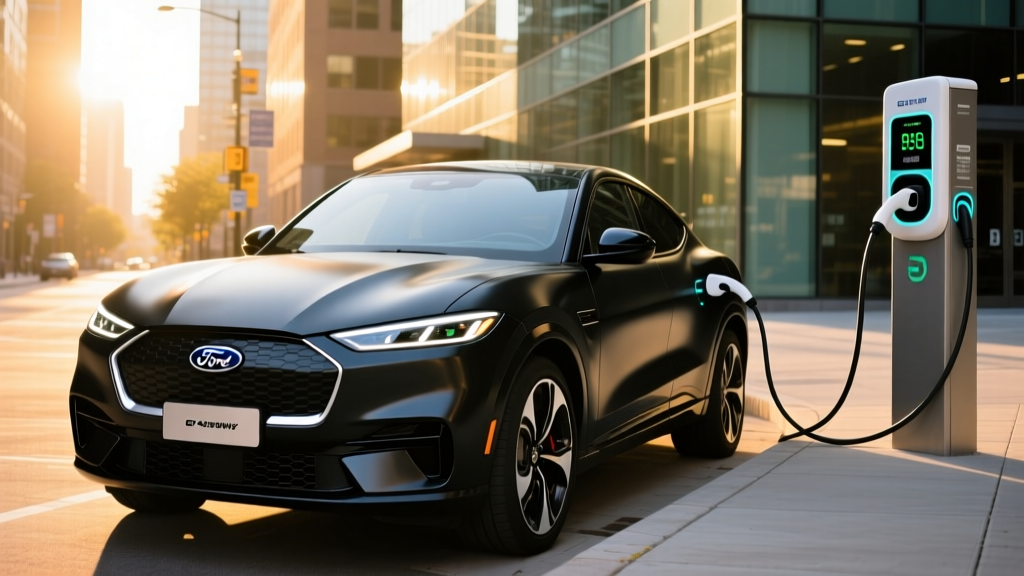
The 2025 Ford Mustang Mach-E enters its fifth model year with a significant battery chemistry shift, updated pricing, and continued access to the Tesla Supercharger network via the NACS charge port. As Ford's primary electric crossover, the Mach-E competes directly against the Tesla Model Y, Hyundai Ioniq 5, and Chevrolet Equinox EV in the mainstream two-row electric SUV segment. This review covers every spec that matters — real-world range, charging curves, tax-credit math, and whether the 2025 updates make it the one to buy.
Quick Verdict: Who the 2025 Mach-E Is For
The 2025 Mach-E is best suited for daily commuters and small families who want a sporty-driving electric crossover with strong Supercharger network access. The switch to an LFP (lithium iron phosphate) battery on Select and Premium trims lowers the entry price and improves long-term charge-cycle durability, while the GT trim retains the NMC chemistry for maximum performance. If you need three rows, maximum cargo volume, or over 350 miles of range, look at the Hyundai Ioniq 5 or Tesla Model Y Long Range instead.
Range, Battery, and Efficiency
EPA estimate: 250 mi (Select RWD, Standard Range) up to 320 mi (Premium RWD, Extended Range).
Real-world highway (70 mph, 75°F): Expect roughly 215–275 mi depending on trim, or about 12–15% below the EPA sticker at sustained highway speeds.
Cold weather (32°F and below): LFP-equipped trims may see 25–35% range reduction without preconditioning. Plan for 165–230 mi in freezing conditions. The heat pump on Extended Range trims helps mitigate this.
The headline change for 2025 is Ford's adoption of LFP chemistry for the Standard Range battery pack (used in Select and Premium trims). LFP cells trade some energy density for lower cost, longer cycle life, and no cobalt or nickel in the cathode. Ford rates the Standard Range pack at approximately 72 kWh usable, while the Extended Range pack (NMC chemistry) holds roughly 91 kWh usable.
| Trim / Config | Battery (kWh usable) | Chemistry | EPA Range (mi) | MPGe (city/hwy/combined) | kWh/100 mi |
|---|---|---|---|---|---|
| Select RWD (Std Range) | 72 | LFP | 250 | 111 / 94 / 103 | 33 |
| Select eAWD (Std Range) | 72 | LFP | 230 | 103 / 86 / 95 | 35 |
| Premium RWD (Ext Range) | 91 | NMC | 320 | 111 / 95 / 104 | 32 |
| Premium eAWD (Ext Range) | 91 | NMC | 290 | 101 / 86 / 94 | 36 |
| GT eAWD (Ext Range) | 91 | NMC | 280 | 94 / 80 / 87 | 39 |
| GT Perf Upgrade | 91 | NMC | 265 | 90 / 77 / 84 | 40 |
Source: fueleconomy.gov — EPA estimates. Your mileage will vary with driving style, temperature, and terrain.
Charging: DC Fast Charge and Home Level 2
The 2025 Mach-E comes equipped with a native NACS (North American Charging Standard) charge port, replacing the CCS1 port used on earlier models. This gives direct plug-in access to Tesla Superchargers with V3 (150 kW) and V4 cabinets, as well as the growing network of NACS-equipped Electrify America, EVgo, and ChargePoint stations.
| Charging Level | Power (kW) | Connector | Speed (mi/hr added) | 10–80% Time |
|---|---|---|---|---|
| Level 1 (120V household) | ~1.4 kW | NACS (J3400) | ~3–4 mi/hr | N/A (overnight partial) |
| Level 2 (240V home, 48A) | 11.5 kW | NACS | ~30 mi/hr | ~6.5–8 hr (full charge) |
| DC Fast Charge (Std Range, LFP) | Peak ~135 kW | NACS | ~240 mi/hr peak | ~33 min (10–80%) |
| DC Fast Charge (Ext Range, NMC) | Peak ~150 kW | NACS | ~270 mi/hr peak | ~28 min (10–80%) |
Charging-curve reality check: The 150 kW peak on Extended Range trims is sustained roughly from 10% to 35% SoC, then tapers progressively — dropping to around 80 kW by 60% and below 50 kW above 80%. The 10–80% time of ~28 minutes is competitive but not class-leading; the Hyundai Ioniq 5 with its 800V architecture can do 10–80% in roughly 18 minutes on a 350 kW charger.
LFP charging note: Ford recommends LFP-equipped (Standard Range) owners periodically charge to 100% for battery calibration — unlike NMC packs, which are best kept between 20–80% for daily use. This is an advantage for drivers who want a full battery every morning without long-term degradation concerns.
Home charging setup: Ford offers the Ford Connected Charge Station (48A, NACS connector, hardwired, ~$599) for Level 2 home charging. Expect a licensed electrician to charge $600–$1,500 for installation depending on your panel capacity and run distance. Homes with a 200A panel and a nearby garage subpanel will be on the lower end; older homes needing a panel upgrade could see $2,000–$3,500 total.
Performance and Driving Dynamics
| Trim | Drivetrain | Horsepower | Torque (lb-ft) | 0–60 mph (sec) |
|---|---|---|---|---|
| Select RWD | Rear-motor RWD | 266 hp | 387 | 6.3 |
| Select eAWD | Dual-motor AWD | 325 hp | 494 | 5.1 |
| Premium RWD (Ext Range) | Rear-motor RWD | 290 hp | 494 | 5.8 |
| Premium eAWD (Ext Range) | Dual-motor AWD | 365 hp | 500 | 4.8 |
| GT (Ext Range) | Dual-motor AWD | 480 hp | 634 | 3.8 |
| GT w/ Perf Upgrade | Dual-motor AWD | 480 hp | 700 | 3.5 |
The Mach-E has always been one of the better-driving electric crossovers, and the 2025 model carries that forward. The steering is communicative, body roll is well-controlled, and the GT with Performance Upgrade (3.5-second 0–60) is genuinely quick. The MagneRide adaptive dampers on the GT Performance Upgrade are worth the upcharge for anyone who enjoys spirited driving on back roads.
Regenerative braking offers three modes — Whisper, Engage, and Unbridled — with one-pedal driving available in the strongest regen setting. The brake pedal feel is among the best in the segment, avoiding the mushy blending that plagues some competitors.
Interior, Cargo, and Technology
Passenger space:
- Front headroom: 40.4 in | Front legroom: 43.3 in
- Rear headroom: 38.9 in | Rear legroom: 38.9 in
- Seating for 5 adults, though the rear middle seat is narrow for long trips
Cargo volume:
- Behind rear seats: 29.7 cu ft
- Rear seats folded: 59.7 cu ft
- Front trunk (frunk): 4.7 cu ft — drainable, useful for wet gear or groceries
The 2025 Mach-E's interior uses a 15.5-inch portrait-oriented touchscreen running Ford's SYNC 4A system. Wireless Apple CarPlay and Android Auto are standard. The digital instrument cluster is a 10.2-inch display. BlueCruise (Ford's Level 2 hands-free driver-assist system) is available on Premium and GT trims with a subscription after the initial trial period.
BlueCruise allows hands-free driving on pre-mapped divided highways (over 130,000 miles of Blue Zone roads in the US and Canada). However, the driver must remain attentive, and a driver-monitoring camera tracks eye gaze. You cannot nap, read, or disengage from the driving task. This is fundamentally different from Level 4 robotaxi services like Waymo.
Notable tech features:
- Ford Power-Up OTA (over-the-air) software updates for performance, maps, and features
- Phone-as-a-Key (Bluetooth proximity unlock and start)
- Intelligent Range prediction using real-time traffic, weather, and terrain data
- Available B&O 10-speaker premium audio system
Notable drawbacks:
- No rear wiper (a long-standing complaint Ford has not addressed)
- Frunk is small at 4.7 cu ft compared to some competitors
- BlueCruise requires a paid subscription after the trial — roughly $75/year or $200 for three years
- Build quality is good but not luxury-grade; some interior plastics feel budget-tier for the price
Pricing, Trims, and Federal Tax Credit
| Trim | Base MSRP | MSRP Cap (§30D) | Est. Credit | Effective Price (with credit) |
|---|---|---|---|---|
| Select RWD (Std Range) | $37,995 | Passes ($80K cap) | Up to $7,500* | ~$30,495* |
| Select eAWD (Std Range) | $40,995 | Passes | Up to $7,500* | ~$33,495* |
| Premium RWD (Ext Range) | $44,995 | Passes | Up to $7,500* | ~$37,495* |
| Premium eAWD (Ext Range) | $47,995 | Passes | Up to $7,500* | ~$40,495* |
| GT eAWD (Ext Range) | $54,995 | Passes | Up to $7,500* | ~$47,495* |
| GT Perf Upgrade | $59,495 | Passes | Up to $7,500* | ~$51,995* |
* Tax credit eligibility is not automatic. Per IRS §30D rules, the following must all be met:
- MSRP cap: SUVs/crossovers must be under $80,000 — all Mach-E trims qualify.
- Buyer income cap: Modified AGI ≤ $150,000 (single), $225,000 (head of household), $300,000 (married filing jointly).
- Battery sourcing: A percentage of critical minerals and battery components must be sourced from the US or free-trade-agreement partners. The exact credit amount ($3,750 or $7,500) depends on whether the vehicle meets the critical-minerals requirement, the battery-components requirement, or both. Ford has worked to localize supply chains, but verify current-year compliance at fueleconomy.gov before purchasing.
- Point-of-sale transfer: As of 2024, eligible buyers can transfer the credit to the dealer at purchase, reducing the purchase price immediately rather than waiting for a tax refund.
- North American final assembly: The Mach-E is assembled in Cuautitlán, Mexico — this has historically been a concern under §30D rules. Confirm the specific VIN's eligibility with your dealer and a tax professional.
As-tested pricing: A Premium eAWD with Extended Range, BlueCruise, panoramic roof, and destination charge typically lands around $51,000–$53,000 before incentives. The GT with Performance Upgrade and similar options can push past $63,000.
Warranty and Long-Term Ownership
| Coverage Type | Term |
|---|---|
| Bumper-to-Bumper (Limited) | 3 years / 36,000 miles |
| Powertrain | 5 years / 60,000 miles |
| EV Battery & Electric Components | 8 years / 100,000 miles |
| Battery Capacity Retention Guarantee | ≥ 70% SoH over 8 yr / 100,000 mi |
| Corrosion Perforation | 5 years / unlimited miles |
| Roadside Assistance | 5 years / 60,000 miles |
The 8-year/100,000-mile battery warranty with a 70% state-of-health floor is industry-standard, matching what Hyundai, Kia, and Tesla offer. The LFP chemistry on Standard Range trims may provide additional peace of mind: LFP cells typically degrade more slowly than NMC over thousands of charge cycles, though Ford's warranty terms are the same across chemistries.
Maintenance costs: As a BEV, the Mach-E has no engine oil, transmission fluid, spark plugs, or timing belts. Expect to budget for tire rotation, cabin air filter, brake fluid checks, and wiper fluid. Owners report annual maintenance costs of roughly $200–$400 — significantly less than a comparable gas-powered SUV. However, EV tires tend to wear faster due to vehicle weight and instant torque; budget $800–$1,400 for a set of replacement tires every 30,000–40,000 miles.
Insurance: EV insurance premiums remain higher than equivalent gas vehicles. Expect to pay 15–25% more than a comparable gas-powered Ford Edge or Escape, depending on your state, driving record, and coverage level. Get quotes before purchasing — this is an often-overlooked ownership cost.
How It Stacks Up Against Competitors
| Spec | Ford Mach-E Premium eAWD | Tesla Model Y LR AWD | Hyundai Ioniq 5 AWD | Chevy Equinox EV RS AWD |
|---|---|---|---|---|
| EPA Range | 290 mi | 308 mi | 290 mi | 285 mi |
| Battery (kWh usable) | 91 (NMC) | ~75 (NMC) | 77.4 (NMC) | 85 (NMC) |
| Peak DC Charge (kW) | 150 | 250 | 240 (w/ 800V) | 190 |
| 10–80% Time | ~28 min | ~25 min | ~18 min | ~30 min |
| 0–60 mph | 4.8 sec | 4.8 sec | 5.1 sec | ~6.0 sec |
| Base MSRP (AWD) | $47,995 | $47,990 | $50,850 | $43,900 |
| Cargo (behind rear) | 29.7 cu ft | 30.2 cu ft | 27.2 cu ft | 26.4 cu ft |
Where the Mach-E wins: Driving dynamics and steering feel remain a strong point. The NACS port gives native Supercharger access without an adapter. The LFP option on lower trims offers a lower entry price with excellent long-term battery durability. Ford's dealer network is also far more extensive than Tesla's for service in rural areas.
Where it falls short: DC fast-charging speed (150 kW peak) is the Mach-E's most significant competitive weakness. The Ioniq 5 charges nearly 40% faster thanks to 800V architecture. The Tesla Model Y charges at up to 250 kW on its own Supercharger network. If you road-trip frequently, those extra 10 minutes per stop add up.
Pros and Cons
Pros
- Native NACS port — direct Supercharger access without adapter
- LFP battery option on Select/Premium — lower cost, longer cycle life
- Engaging driving dynamics; GT is genuinely fast (3.5-sec 0–60)
- 320-mile max EPA range (Premium RWD Extended) is segment-competitive
- BlueCruise hands-free driving on 130,000+ miles of mapped highways
- Strong Ford dealer network for service in most US markets
- Drainable frunk is practical for wet/messy cargo
Cons
- 150 kW peak DC charging is slowest in its competitive set
- No rear wiper — a persistent oversight
- BlueCruise requires ongoing paid subscription after trial
- Frunk is small (4.7 cu ft) compared to some rivals
- Rear-seat space is adequate but not class-leading for families
- Some interior materials feel below the price point
- Assembly in Mexico may complicate §30D tax credit — verify by VIN
Decision Framework: Should You Buy the 2025 Mach-E?
Choose the 2025 Mach-E if:
- You want native Tesla Supercharger access without carrying an adapter
- You prioritize driving enjoyment and steering feel in an electric crossover
- You commute daily and road-trip 2–4 times per year (320-mi range covers most trips)
- You want LFP battery longevity on a budget (Select trim from ~$30,500 after credit)
- You prefer a traditional dealer experience for sales and service
Look elsewhere if:
- You road-trip weekly and need the fastest possible DC charging (Ioniq 5 or Model Y)
- You need three-row seating or maximum cargo space (Kia EV9, Tesla Model X)
- You want the lowest possible price in an electric crossover (Chevy Equinox EV starts lower)
- You require the longest EPA range in the segment (Lucid Air, Tesla Model S)
Frequently Asked Questions
What is the real-world range of the 2025 Ford Mustang Mach-E?
The EPA rates the Mach-E at 250–320 miles depending on trim and battery. In real-world highway driving at 70 mph in moderate temperatures, expect roughly 12–15% less than the EPA sticker — so about 215–275 miles. In freezing weather without preconditioning, LFP Standard Range trims may drop to 165–190 miles. Always precondition the battery before a fast-charge stop or a cold-weather drive to minimize losses.
How fast does the 2025 Mach-E charge?
On a DC fast charger, the Extended Range (NMC) trims peak at 150 kW and achieve 10–80% in approximately 28 minutes. The Standard Range (LFP) trims peak at about 135 kW with a 10–80% time of roughly 33 minutes. At home on a Level 2 (240V, 48A) charger, the Mach-E adds about 30 miles of range per hour, so a full overnight charge is easily achievable.
How much does the 2025 Mach-E cost after tax credits?
The Select RWD starts at $37,995 MSRP. If you qualify for the full $7,500 federal tax credit under §30D (meeting income caps, battery sourcing, and assembly requirements), the effective price drops to approximately $30,495. Higher trims see similar reductions. However, eligibility is not guaranteed — confirm your specific VIN's credit status at fueleconomy.gov and consult a tax professional before purchase.
Does the 2025 Mach-E qualify for the $7,500 federal EV tax credit?
It may, but eligibility depends on multiple factors. All trims pass the $80,000 MSRP cap for SUVs. The buyer must meet income thresholds (≤$150K single, ≤$300K joint). Battery component and critical-mineral sourcing requirements must be satisfied, and the vehicle must undergo final assembly in North America. The Mach-E is assembled in Cuautitlán, Mexico — verify the specific VIN's assembly location and sourcing compliance at fueleconomy.gov and with the IRS before assuming the credit applies.
Is the Mach-E worth buying vs. the Tesla Model Y or Hyundai Ioniq 5?
The Mach-E offers better steering feel and a more traditional dealer experience than Tesla, plus native NACS Supercharger access. However, it charges slower than both the Model Y (250 kW peak) and the Ioniq 5 (240 kW on 800V). If charging speed on road trips is your top priority, the Ioniq 5 wins. If you want the Supercharger ecosystem with a more conventional crossover, the Mach-E or Model Y are both strong choices. Test-drive all three before deciding.
What is the battery warranty on the 2025 Mach-E?
Ford covers the high-voltage battery and electric drivetrain components for 8 years or 100,000 miles, whichever comes first. The warranty guarantees the battery will retain at least 70% of its original capacity (state of health) over that period. If degradation exceeds 30% within the warranty window, Ford will repair or replace the battery at no cost.