Why Buyers Are Leasing a Used Tesla in 2026
Leasing a used Tesla has become one of the most financially attractive paths into EV ownership this year. With new-vehicle prices still elevated and the used market saturated with off-lease 2023-2025 Model 3 and Model Y units, savvy shoppers can secure a well-equipped electric sedan or crossover for hundreds less per month than a brand-new equivalent. But used Teslas carry unique considerations that gas-car buyers never face: battery degradation, warranty transferability, Supercharger network changes, and software feature lockouts. This guide gives you the exact numbers and decision framework to lease a used Tesla with confidence.
Spec Snapshot: 2023-2025 Model 3 and Model Y at a Glance
| Spec | 2024 Model 3 Long Range AWD | 2024 Model Y Long Range AWD |
|---|---|---|
| EPA Range | 341 miles | 308 miles |
| Battery Capacity (usable) | ~75 kWh (NMC) | ~75 kWh (NMC) |
| Peak DC Fast Charge | 250 kW | 250 kW |
| 10-80% DC Fast Charge | ~27 minutes | ~27 minutes |
| Level 2 Home Charge (11.5 kW) | ~44 mi/hr | ~40 mi/hr |
| 0-60 mph | 4.2 seconds | 4.8 seconds |
| Horsepower | 346 hp | 384 hp |
| Drivetrain | Dual-Motor AWD | Dual-Motor AWD |
| EPA Efficiency | 131 MPGe / 25 kWh/100mi | 117 MPGe / 28 kWh/100mi |
| Cargo Volume | 23 cu ft (trunk+frunk) | 76 cu ft (rear seats folded) |
| Battery Warranty | 8 yr / 120,000 mi | 8 yr / 120,000 mi |
| Original Base MSRP | $47,740 | $48,240 |
Real-World Range: What the EPA Sticker Doesn't Tell You
2024 Model Y Long Range AWD: EPA 308 miles — expect ~245-270 miles highway; ~200-230 miles in sub-freezing cold. The crossover's larger frontal area increases aerodynamic drag at speed.
Tesla's EPA range estimates remain among the most accurate in the industry, but physics still applies. Highway speeds above 70 mph increase energy consumption non-linearly — a 75 mph cruise will drain the ~75 kWh NMC battery roughly 15-20% faster than the combined EPA cycle suggests. Cold weather is the bigger shock for first-time EV lessees: lithium-ion cells experience increased internal resistance below 32°F, and running the resistive cabin heater (the refreshed Model 3 "Highland" uses a more efficient heat pump) can cut range 20-30%. Always precondition the battery while plugged in before a cold-weather drive to mitigate this loss.
For a used Tesla with 30,000-50,000 miles on the odometer, expect 3-6% battery degradation based on fueleconomy.gov data and owner-reported State of Health (SoH) figures. A 2023 Model 3 Long Range that originally delivered 341 EPA miles may realistically show 320-330 miles at 100% charge after two years of moderate use. This is well within normal parameters and covered under Tesla's battery warranty if capacity drops below 70% within 8 years or 120,000 miles.
Charging Speed: DC Fast, Level 2, and the Supercharger Advantage
| Charging Level | Power / Rate | Miles Added | Use Case |
|---|---|---|---|
| Level 1 (120V household) | ~1.4 kW | ~4-5 mi/hr | Emergency / overnight trickle |
| Level 2 (240V, 48A) | 11.5 kW | 40-44 mi/hr | Daily home charging |
| DC Fast (Tesla Supercharger V3) | Peak 250 kW | ~170 mi in 15 min | Road trips |
| DC Fast (CCS adapter, 350 kW station) | Peak ~200 kW | ~140 mi in 15 min | Non-Tesla networks |
The 250 kW peak DC fast-charge rate on Model 3 and Model Y Long Range variants is impressive on paper, but real-world charging follows a curve, not a flat line. Peak 250 kW is only achievable between roughly 10-25% State of Charge (SoC) with a preconditioned battery. The rate tapers to ~150 kW by 40%, ~100 kW by 60%, and drops sharply above 80% to protect the NMC cells. A realistic 10-80% session at a V3 Supercharger takes approximately 27 minutes — still class-leading for this price segment.
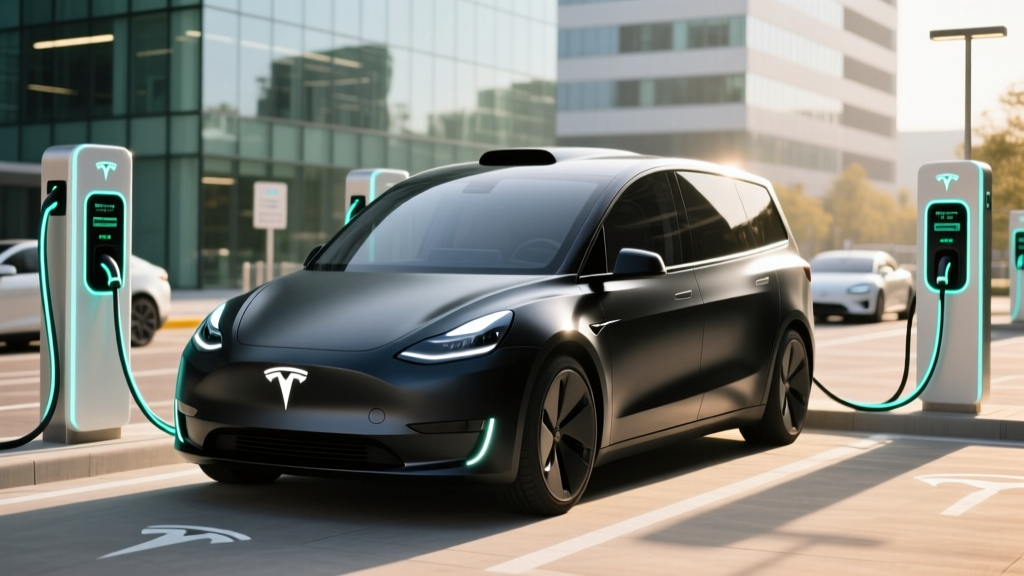
One major advantage of leasing a used Tesla in 2026: Tesla opened its Supercharger network to non-Tesla EVs via NACS, but Tesla owners still benefit from native plug-and-charge integration, automatic billing, and the most reliable DC fast-charging network in North America. The Tesla Supercharger network now exceeds 6,000 stations and 60,000 individual chargers in the U.S. alone. For used models originally delivered with a CCS port (some 2023 units), Tesla provides a free adapter, though charge speeds may be slightly reduced on third-party networks.
For home Level 2 charging, budget $600-$1,200 for a Tesla Wall Connector and $800-$2,500 for professional installation by a licensed electrician, depending on your panel capacity and conduit run length. A 200-amp electrical panel with spare capacity is typically sufficient; older homes may require a panel upgrade ($1,500-$3,000+).
Used Tesla Pricing: Lease Costs, Tax Credits, and Total Value
| Cost Factor | 2023 Model 3 LR (30K mi) | 2024 Model Y LR (20K mi) |
|---|---|---|
| Typical Used Market Price | $28,000-$32,000 | $34,000-$38,000 |
| Estimated Monthly Lease* (36 mo) | $350-$450 | $425-$550 |
| Federal Used EV Tax Credit (§25E) | Up to $4,000 | Up to $4,000 |
| Effective Price After Credit | $24,000-$28,000 | $30,000-$34,000 |
| Original MSRP (when new) | $47,740 | $48,240 |
*Lease pricing varies by dealer, credit tier, money factor, and residual value. Independent EV leasing companies and Tesla's own certified pre-lease programs offer varying terms.
The federal used EV tax credit (IRS §25E, not §30D — which applies only to new vehicles) is a critical advantage for used Tesla lessees and buyers. Per IRS guidelines, qualifying buyers can claim up to $4,000 or 30% of the sale price (whichever is less) on a used EV purchased from a licensed dealer for $25,000 or more. Income caps apply: $75,000 single / $112,500 head of household / $150,000 married filing jointly. The vehicle must be at least two model years old, and the credit can only be claimed once per VIN. As of 2026, this credit can be transferred to the dealer at the point of sale, reducing your out-of-pocket cost immediately.
Important caveat: if you are truly leasing (not purchasing) a used Tesla, the §25E credit typically goes to the leasing company, not the lessee. Some lessors pass the savings through as a capitalized-cost reduction; others do not. Always confirm with the leasing entity whether the tax credit is reflected in your monthly payment before signing.
Battery Health, Warranty, and What to Inspect Before Signing
The single most important factor when leasing a used Tesla is battery State of Health (SoH). Tesla's NMC battery packs in the Model 3 and Model Y Long Range are warranted for 8 years or 120,000 miles, whichever comes first, with a minimum 70% capacity retention. This warranty transfers automatically to subsequent owners and lessees — no paperwork required.
Before committing to a used Tesla lease, request the battery health readout from the vehicle's service menu (Settings → Service → Battery Health Test). Most 2023-2024 units with under 50,000 miles will show 94-98% SoH, reflecting Tesla's conservative buffer management and active thermal conditioning. Units that were frequently DC fast-charged to 100% and stored in hot climates may show slightly higher degradation (90-94%), still well above the 70% warranty threshold.
Beyond the battery, inspect:
- Tire wear: Teslas are heavy (Model Y LR: ~4,400 lbs) and torque-rich. Expect tire replacement every 25,000-35,000 miles. Budget $800-$1,400 for a set of EV-optimized tires.
- Suspension components: Early 2023 Model Y units had reports of premature control-arm wear. Tesla issued service bulletins; confirm any recall work was completed.
- Software/FSD status: Full Self-Driving (Supervised) capability does not always transfer with a used Tesla. If the original owner purchased FSD, it may or may not remain on the vehicle depending on how it was transferred. Verify in the Tesla app before signing.
- 12V battery: Teslas use a small 12V lithium auxiliary battery. These typically last 3-5 years; a replacement runs ~$250-$350.
Tech, Driver Assistance, and the Autopilot Reality Check
The 2024-2025 "Highland" refresh Model 3 introduced a significantly updated interior: ventilated front seats, ambient lighting, a rear touchscreen for passengers, improved sound insulation, and a revised suspension for better ride quality. The Model Y received its own "Juniper" refresh for the 2025 model year with similar upgrades. Used 2023 (pre-refresh) units are less expensive but lack these refinements — a key price-to-value trade-off.
Standard Autopilot (Traffic-Aware Cruise Control + Autosteer) is included on every Tesla and handles highway lane-keeping competently. FSD (Supervised), a $8,000 original purchase or $99/month subscription, adds automatic lane changes, intersection handling, and parking assistance — but still requires constant driver supervision. Real-world FSD performance in 2026 has improved substantially in urban environments, but it remains a convenience feature, not an autonomy solution. Do not pay a premium on a used Tesla solely for FSD unless you plan to use it daily and understand its limitations as documented by NHTSA.
The Tesla infotainment system remains best-in-class for responsiveness and over-the-air update frequency. Netflix, YouTube, and gaming are available while parked. However, the lack of Apple CarPlay and Android Auto continues to frustrate some buyers who prefer phone-mirrored navigation and music apps.
Pros, Cons, and Who Should Lease a Used Tesla
Pros
- Access to the most reliable DC fast-charging network in North America (Supercharger)
- Class-leading efficiency: 25-28 kWh/100mi means lower per-mile electricity cost
- Over-the-air updates continue adding features to 2023-2025 vehicles
- Strong resale value retention relative to other used EVs
- Federal used-EV tax credit up to $4,000 reduces effective cost
- Minimal maintenance: no oil changes, brake pads last 80,000+ miles with regen
Cons
- No Apple CarPlay / Android Auto support
- FSD (Supervised) is Level 2 only — not self-driving, and may not transfer with used purchase
- Insurance premiums 15-25% higher than comparable gas sedans/crossovers
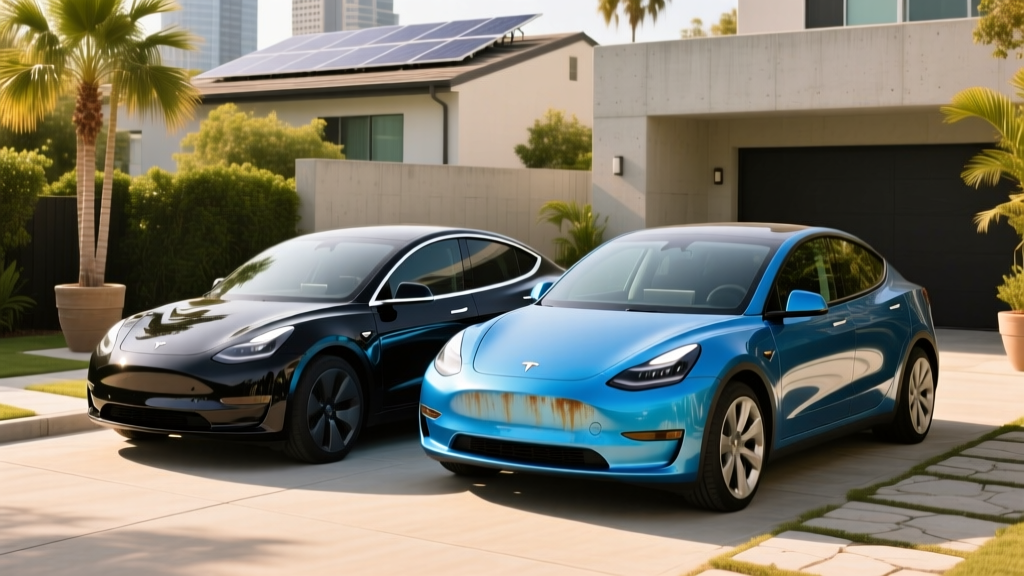
- Panel-stretching and build-quality inconsistencies on pre-2024 units
- Lease structures may not pass through the §25E tax credit to the lessee
- Touchscreen-dependent controls (no physical buttons for climate, mirrors, glovebox)
Who this EV suits best
Lease a used Tesla Model 3 if: you're a commuter covering 30-60 miles daily, have home Level 2 charging access, prioritize low running costs, and want a tech-forward sedan without the new-car depreciation hit.
Lease a used Tesla Model Y if: you need crossover cargo space (up to 76 cu ft with seats folded), regularly carry rear-seat passengers, take road trips where Supercharger density matters, and want the practicality of an SUV footprint with EV efficiency.
Look elsewhere if: you lack reliable home or workplace charging, frequently tow heavy loads (Model Y towing is rated 3,500 lbs but range drops dramatically), need physical controls, or require CarPlay for fleet/employer compatibility.
Frequently Asked Questions
What is the real-world range of a used 2023-2024 Model 3 or Model Y?
A lightly used Model 3 Long Range delivers approximately 270-290 real-world highway miles (EPA 341) and a Model Y Long Range delivers 245-270 miles (EPA 308). Cold weather reduces these figures by 20-30%. Battery degradation on a 2-3 year old unit typically accounts for an additional 3-6% loss from original capacity.
How fast does a used Tesla charge at home and on road trips?
At home on a 240V Level 2 charger (11.5 kW), a Model 3 Long Range gains roughly 44 miles of range per hour — a full overnight session easily replenishes daily driving. On a Tesla V3 Supercharger, the 10-80% session takes approximately 27 minutes, though the charge curve tapers significantly above 80% SoC.
Does a used Tesla qualify for the federal EV tax credit?
Used Teslas purchased from a licensed dealer can qualify for the IRS §25E used clean vehicle credit of up to $4,000, subject to buyer income caps ($75K single / $150K joint) and a $25,000 minimum sale price. The vehicle must be at least two model years old. If you are leasing rather than purchasing, the credit typically goes to the lessor — confirm whether savings are passed through.
Is leasing a used Tesla worth it vs. buying a new Hyundai Ioniq 5 or Ford Mustang Mach-E?
A used Model 3/Y undercuts new competitors on price ($28K-$38K vs. $42K-$52K new) while offering comparable or better range, efficiency, and charging infrastructure access. However, new competitors like the Ioniq 5 offer 800V architecture for faster DC charging peaks, physical controls, CarPlay, and the full $7,500 new-vehicle §30D tax credit. The decision hinges on whether you value Tesla's Supercharger ecosystem and software vs. the warranty and feature freshness of a new EV.
What should I check before leasing a used Tesla?
Prioritize: battery State of Health (request the in-car health test), remaining warranty coverage (8yr/120K-mi battery, 4yr/50K-mi basic), tire condition, suspension service history, and whether FSD or any software features transfer with the vehicle. Also confirm your home electrical panel can support a Level 2 charger installation.
How does insurance cost compare on a used Tesla?
Expect to pay 15-25% more for insurance on a Model 3 or Model Y compared to a gas-powered Camry or RAV4, reflecting higher repair costs and parts pricing. Tesla offers its own insurance product in many states that uses real-time driving data and can be competitive — get quotes from both Tesla Insurance and traditional carriers before finalizing your lease.