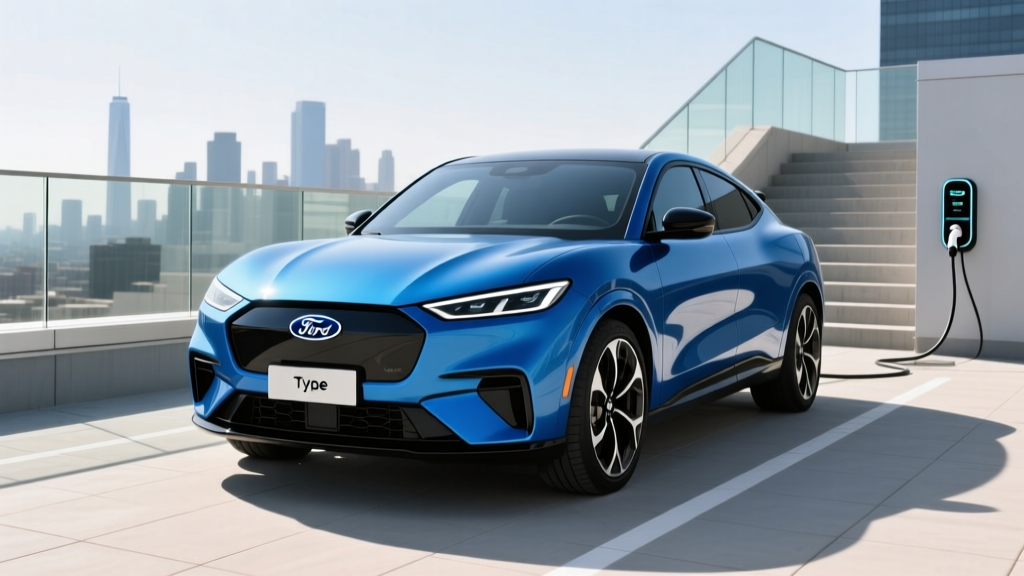
The Short Answer on the Ford Maverick EV
As of early 2026, Ford has not yet released a production Maverick EV. The Maverick is currently available as a conventional hybrid (HEV) and a turbocharged gas model, but no fully electric variant is on sale or officially confirmed for the 2026 model year. Ford executives have acknowledged they are evaluating electrified options for the Maverick lineup, and industry analysts expect a Maverick EV or plug-in hybrid could arrive for the 2027 or 2028 model year — but any specs circulating online are speculative until Ford makes a formal announcement.
This guide breaks down what we know, what's realistic to expect based on Ford's existing EV platform technology, and how a future Maverick EV would likely compare to the current hybrid Maverick and competitors like the Hyundai Santa Cruz and the upcoming electric midsize trucks.
What We Know About a Potential Maverick EV
Ford's compact unibody pickup has been a runaway sales success since its 2022 launch, with the hybrid powertrain accounting for a significant share of Maverick orders. That popularity — combined with Ford's stated commitment to electrifying its core nameplates — makes a Maverick EV a logical next step. However, Ford has been deliberate about timing.
Here's what we can reasonably project based on Ford's existing EV architecture and public statements:
| Specification | Projected Estimate | Basis |
|---|---|---|
| Battery Capacity | 65–80 kWh usable | Similar to base Mustang Mach-E / Ford Escape PHEV-derived pack scaling |
| Battery Chemistry | LFP (standard range) / NMC (extended range) | Ford's stated LFP adoption for cost reduction in entry-level EVs |
| EPA Range | 230–300 miles (est.) | Weight and aero penalty of truck bed vs. Mach-E efficiency |
| Peak DC Fast Charge Rate | 150–180 kW (est.) | Consistent with Ford's current 400V architecture, not 800V |
| 10–80% DC Charge Time | ~28–35 minutes (est.) | Based on similar pack sizes on Ford's 400V systems |
| Level 2 AC Charge Rate | 10.5 kW / ~32 hours (0–100%) | Ford's standard onboard charger spec |
| Horsepower | 210–290 hp (est.) | Single-motor RWD or dual-motor AWD configurations |
| 0–60 mph | 5.5–7.5 seconds (est.) | Depending on motor configuration |
| Towing Capacity | 2,000–4,000 lbs (est.) | Current gas Maverick tows 2,000–4,000 lbs |
| Starting MSRP | $30,000–$38,000 (est.) | Current Maverick Hybrid starts ~$28,000; EV premium likely $5K–$10K |
| Battery Warranty | 8 years / 100,000 miles | Federal minimum for EV batteries; Ford typically matches |
Important caveat: Every number above is an analyst projection, not a Ford specification. Ford has not published official specs for a Maverick EV. When and if the vehicle is announced, actual figures may differ substantially.
Maverick Hybrid vs. a Future Maverick EV: The Numbers
The strongest comparison for a prospective Maverick EV buyer isn't a gas truck — it's the Maverick Hybrid that already exists. The current Maverick 2.5L FHEV delivers exceptional efficiency for a pickup, which raises the bar any EV variant must clear to justify a price premium.
| Metric | Maverick Hybrid (2025/2026) | Maverick EV (Projected) |
|---|---|---|
| Powertrain | 2.5L 4-cyl + electric motor (FHEV) | Battery electric (BEV) |
| EPA Fuel Economy / Efficiency | 42 city / 33 hwy / 37 combined MPG | ~95–110 MPGe combined (est.) |
| Range | ~500+ miles (16.5-gal tank) | ~230–300 miles (est.) |
| Refuel / Recharge Time | ~5 minutes at a gas station | ~30 min (10–80% DC fast); ~8 hrs (Level 2 home) |
| Fuel/Energy Cost per Mile | ~$0.09/mi (at $3.30/gal, 37 MPG) | ~$0.04/mi (at $0.14/kWh avg US electricity) |
| Annual Fuel/Energy Cost (12K mi) | ~$1,080 | ~$480 |
| Estimated Annual Maintenance | ~$450 (oil changes, filters, brakes) | ~$200 (no oil, fewer brake replacements due to regen) |
| Base MSRP | ~$28,000 | $30,000–$38,000 (est.) |
| Federal Tax Credit (§30D) | Not eligible | Up to $7,500 — subject to income, MSRP cap, and battery sourcing rules |
The hybrid Maverick already delivers ~500 miles of range and 37 MPG combined for under $30,000. A Maverick EV would need to offer a compelling advantage — lower running costs, stronger performance, or eligibility for the federal §30D tax credit — to justify a higher purchase price and reduced range.
Real-World Ownership Considerations
If you're weighing whether to wait for a Maverick EV or buy the hybrid now, several practical factors will determine which makes more sense for your situation.
Home Charging Access
EV ownership economics depend heavily on home charging. A Level 2 home charger (240V, typically 32–48 amps / 7.7–11.5 kW) adds roughly 25–35 miles of range per hour of charging, meaning a full overnight charge is realistic for daily driving needs. Installation costs range from $500–$2,500 depending on panel capacity and wiring distance — and can exceed $4,000 if your home needs a 200-amp panel upgrade.
If you rely exclusively on public charging, your per-mile energy cost rises significantly (DC fast charging often costs $0.30–$0.50/kWh at networks like Electrify America or EVgo), narrowing or eliminating the cost advantage over the Maverick Hybrid's $0.09/mile.
Climate and Range Impact
Battery range drops in cold weather — typically 15–30% at temperatures below 30°F, depending on whether the vehicle uses a heat pump for cabin heating. A projected 260-mile Maverick EV could realistically deliver 180–220 miles in winter conditions. The Maverick Hybrid experiences a much smaller efficiency penalty in cold weather (~5–10% MPG reduction) and maintains its 500-mile range regardless of temperature.
Driving Patterns
If your daily driving is under 60 miles and you can charge at home, an EV's lower per-mile cost and reduced maintenance deliver genuine savings. If you frequently tow, drive long highway stretches, or live in a region with sparse DC fast-charging infrastructure, the Maverick Hybrid's flexibility and proven 500-mile range remain hard to beat.
Cost Breakdown: 5-Year Ownership Projection
Below is a projected 5-year / 60,000-mile ownership cost comparison. Note that the Maverick EV figures are estimates based on comparable Ford EVs and segment averages.
| Cost Category | Maverick Hybrid | Maverick EV (Projected) |
|---|---|---|
| Purchase Price (base MSRP) | $28,000 | $34,000 (est. mid-range) |
| Federal Tax Credit | $0 | –$7,500 (if eligible; subject to §30D rules) |
| Effective Purchase Price | $28,000 | $26,500 (if credit applies) |
| Home Charger Install | $0 | $1,200 (avg. Level 2 install) |
| Fuel / Energy (60K miles) | $5,400 | $2,400 (home charging avg.) |
| Maintenance (5 years) | $2,250 | $1,000 |
| Insurance (5-year avg.) | $6,500 | $7,200 (EVs typically 8–12% higher) |
| Estimated Depreciation | $10,500 | $12,000 (EV depreciation still volatile) |
| Total 5-Year Cost | $52,650 | $50,300 (with credit) / $57,800 (without) |
The Maverick EV's ownership math works if you qualify for the full §30D tax credit and charge primarily at home. Without the credit — which has MSRP caps (vans/SUVs/trucks capped at $80,000, which a Maverick would clear), buyer income limits ($150K single / $300K joint for new vehicles), and battery component/critical mineral sourcing requirements — the hybrid is the more economical choice at current pricing.
Check current eligibility details at IRS.gov §30D, as sourcing rules tighten annually and point-of-sale transfer options are available through registered dealers.
Tax Credit Eligibility: What a Maverick EV Buyer Must Know
If Ford prices a Maverick EV between $30,000–$38,000, it would fall well under the §30D MSRP cap of $80,000 for trucks. However, the credit is far from guaranteed. Here's the eligibility checklist:
§30D New Clean Vehicle Credit Requirements (2026)
- Buyer Income Cap: Modified AGI ≤ $150,000 (single) or ≤ $300,000 (married filing jointly)
- MSRP Cap: ≤ $80,000 for vans, SUVs, and pickup trucks
- Battery Component Sourcing: Increasing percentage of battery components must be manufactured or assembled in North America (phased thresholds by year)
- Critical Minerals: Increasing percentage of critical minerals must be sourced from the US or free-trade-agreement countries
- Final Assembly: Vehicle must undergo final assembly in North America
- Point-of-Sale Transfer: Eligible buyers can transfer the credit to the dealer at purchase, reducing the purchase price directly (even if tax liability is lower than the credit amount)
- Manufacturer Cap: The previous 200,000-vehicle per-manufacturer cap was eliminated; Ford is not capped out
The battery sourcing requirements are the biggest wildcard. Ford has been working to localize its LFP battery supply chain (partnering with CATL on a Michigan plant), but whether a future Maverick EV's battery meets the critical-mineral thresholds in its launch year is uncertain. Consult a tax professional and verify current rules at fueleconomy.gov before counting on the credit in your purchase budget.
Common Misconceptions About a Maverick EV
| Myth | Fact |
|---|---|
| "The Maverick EV is available to order now." | It is not. Ford has not launched or opened orders for a Maverick EV as of early 2026. Only the hybrid and gas variants are available. |
| "An EV Maverick will have 400+ miles of range." | Extremely unlikely for a compact truck on Ford's current 400V architecture. Expect 230–300 miles realistically, given the weight and aerodynamic penalty of a truck bed. |
| "It will charge as fast as a Tesla or Hyundai Ioniq 5." | Ford's current EVs use a 400V electrical architecture, limiting peak DC charge rates to ~150–180 kW. Hyundai/Kia's E-GMP and Tesla's latest platforms use 800V-class systems enabling 250–350 kW peaks. |
| "The tax credit is guaranteed on any new Ford EV." | §30D eligibility depends on battery sourcing, buyer income, and MSRP — not just the badge. Sourcing rules change annually. |
| "I should wait for the EV instead of buying the hybrid." | The Maverick Hybrid is a proven, highly efficient truck available today at ~$28K. A Maverick EV is at least 1–2 years away with unconfirmed pricing and specs. |
Decision Framework: Should You Wait or Buy Now?
If-Then Decision Guide
Buy the Maverick Hybrid NOW if:
- You need a truck within the next 6–12 months
- Your daily driving exceeds 60 miles or includes frequent long trips
- You lack reliable home charging access
- You live in a cold climate where EV range loss is significant
- You want to stay under $30,000 before incentives
- You tow regularly (towing dramatically reduces EV range)
Wait for a Maverick EV (or other compact electric truck) if:
- Your daily commute is under 50 miles and you can install a Level 2 home charger
- You want the lowest possible per-mile energy cost (~$0.04/mi vs. ~$0.09/mi)
- You qualify for the full §30D tax credit and it would meaningfully reduce your effective purchase price
- You're willing to wait until at least 2027–2028 for a confirmed product
- You prioritize zero tailpipe emissions for local air quality
- You want EV instant torque and a quieter driving experience
Competitive Landscape: What Else Is Coming
The Maverick EV wouldn't enter an empty segment. Ford will be watching how competitors position their compact and midsize electric trucks:
- Hyundai Santa Cruz: Currently gas-only; Hyundai has not confirmed an EV variant, but the Ioniq pickup concept signals interest.
- Chevrolet Montana / compact truck plans: GM has hinted at smaller electric trucks leveraging its Ultium platform, though nothing is confirmed for the US compact segment.
- Rivian R2: Announced for 2026 at ~$45,000 starting — larger and more expensive than a Maverick, but fully electric with projected 300+ mile range.
- Tesla next-gen platform: Speculation about a smaller Tesla truck persists, but nothing is officially announced.
The Maverick's advantage — if Ford executes — is price. A sub-$35,000 electric pickup with 250+ miles of range, the NACS charge port (Ford's EVs now use Tesla's connector standard, granting access to the Supercharger network), and Ford's dealer/service footprint would be extremely competitive.
Frequently Asked Questions
Is the Ford Maverick EV available to buy in 2026?
No. Ford has not announced a production Maverick EV. The Maverick is currently sold as a hybrid (FHEV) and a 2.0L turbo gas model. Any Maverick EV is expected no earlier than the 2027 or 2028 model year.
How much would a Maverick EV cost?
Based on Ford's EV pricing strategy and the current Maverick's positioning, a reasonable estimate is $30,000–$38,000 depending on trim and battery size. The §30D tax credit could reduce that by up to $7,500 for eligible buyers, but credit eligibility depends on battery sourcing rules that are still evolving.
Will the Maverick EV use the Tesla NACS charging connector?
Very likely. Ford has committed to adopting the NACS (North American Charging Standard) connector across its EV lineup starting with 2025 model-year vehicles. A future Maverick EV would almost certainly ship with NACS, granting native access to Tesla Superchargers — currently the most reliable and extensive DC fast-charging network in the US.
Is the Maverick Hybrid better than waiting for an EV?
For most buyers today, yes. The Maverick Hybrid delivers 37 MPG combined, 500+ miles of range, a ~$28,000 starting price, and zero range anxiety in cold weather or on road trips. A Maverick EV may offer lower running costs and tax credit eligibility, but it remains at least 1–2 years away with unconfirmed specs and pricing.
What is the difference between kW and kWh?
This is the most common EV confusion. kWh (kilowatt-hours) measures battery capacity — the total energy stored, like gallons in a gas tank. A 75 kWh battery holds 75 kilowatt-hours of energy. kW (kilowatts) measures power — the rate at which energy flows, like the flow rate of a gas pump. A 150 kW DC fast charger delivers energy at 150 kilowatts. Higher kWh = more range. Higher kW = faster charging.
Can I tow with a Maverick EV?
Projected towing capacity would likely match the current Maverick's 2,000–4,000 lbs (depending on configuration). However, towing significantly reduces EV range — expect a 30–50% range reduction when towing near max capacity. The Maverick Hybrid also loses efficiency while towing, but its 500-mile range provides a much larger buffer.