If you've been watching the EV incentive landscape shift beneath your feet, you've likely heard about the Ford GM EV lease credit extension — the strategy that lets automakers pass a federal tax credit through to lessees even when buyers of the same vehicle wouldn't qualify. Heading into 2026, this lease-loophole remains one of the most practical ways to drive a domestic EV at a meaningful discount, but the math is more nuanced than the headline "$7,500 off." Below, I'll break down the real 5-year cost of ownership, the exact IRS rules that make the lease passthrough work, and where Ford and GM EVs actually land once you factor in insurance, depreciation, charging, and maintenance.
How the Lease Credit Extension Actually Works
The so-called lease loophole is rooted in how the IRS treats commercial vs. personal clean vehicle credits. Under IRS §30D, the personal new clean vehicle credit — up to $7,500 — carries strict buyer income caps, MSRP caps, and critical-mineral/battery-component sourcing rules. But vehicles leased to consumers are technically owned by the financing entity (Ford Credit, GM Financial, etc.), which qualifies them instead for the commercial clean vehicle credit under §45W. The leasing company claims the credit and, in most cases, passes it through to the lessee as a capitalized-cost reduction.
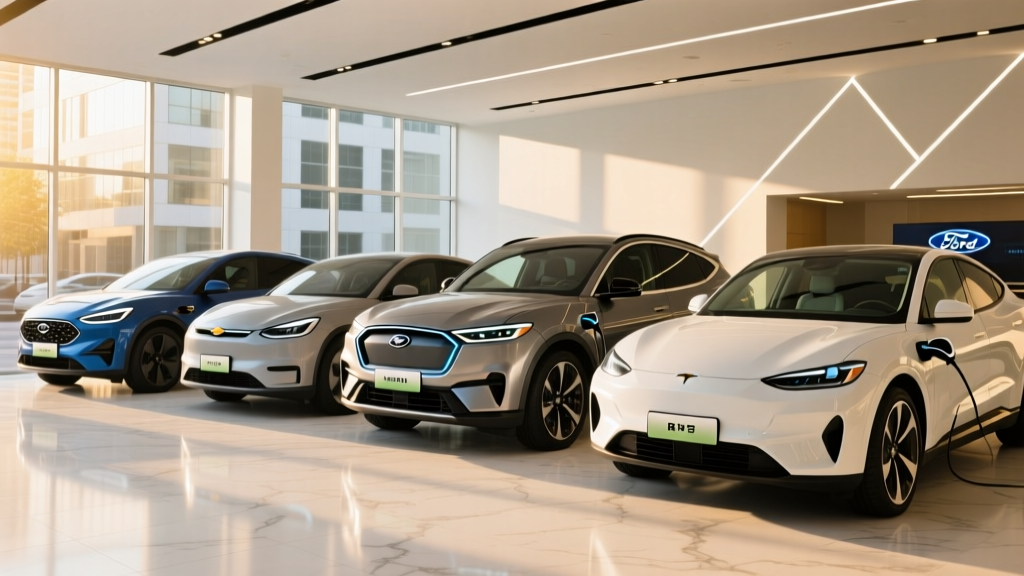
For 2026, both Ford and GM have continued to honor this passthrough on most of their core EV lineup — the Mustang Mach-E, F-150 Lightning, Chevrolet Equinox EV, Blazer EV, Silverado EV, and Cadillac Lyriq — even on trims that would fail §30D's battery-sourcing test if purchased outright. This is the "extension" shoppers are referring to: Ford Credit and GM Financial have not pulled back from the §45W passthrough structure as of early 2026, despite periodic industry speculation that they would.
§30D Purchase Credit — 2026 Eligibility Checklist
- Income cap: AGI ≤ $150,000 single / $225,000 head of household / $300,000 joint
- MSRP cap: ≤ $80,000 for SUVs/pickups/vans; ≤ $55,000 for sedans
- Battery sourcing: Critical minerals and battery components must meet escalating domestic/free-trade thresholds (updated annually by Treasury)
- Point-of-sale transfer: Eligible buyers can apply the credit as a down-payment reduction at the dealer
- Lease alternative: §45W commercial credit claimed by lessor, typically passed through — bypasses sourcing and MSRP limits
Five-Year Total Cost of Ownership: The Real Numbers
Incentive headlines only matter if the underlying ownership math works. Here's a 5-year TCO comparison for a realistic mid-trim EV — say a 2026 Ford Mustang Mach-E Premium (extended-range AWD, ~$49,995 MSRP) — against a comparably equipped gas midsize SUV averaging 26 MPG combined. Assumptions: 15,000 miles/year, $0.16/kWh home charging, $3.60/gallon gas, Midwest insurance market.
| Category | EV (with lease credit) | Gas SUV |
|---|---|---|
| Purchase/lease net cost | $42,495 (after $7,500 passthrough) | $44,500 |
| Fuel / energy (75k mi) | $3,600 (3.0 mi/kWh × $0.16) | $10,385 (26 MPG × $3.60) |
| Maintenance | $1,800 | $4,200 |
| Insurance (5 yr) | $11,400 | $8,750 |
| Depreciation (est. 5-yr) | $22,000 | $18,500 |
| Total 5-yr TCO | $81,295 | $86,335 |
The EV wins by roughly $5,000 over five years, but notice where: it's almost entirely on fuel and maintenance. Insurance and depreciation claw back a meaningful chunk. If you can't charge at home and are paying $0.45/kWh on DC fast charging, the fuel line balloons to ~$10,100 and the EV actually loses the TCO comparison. Home Level 2 charging is, in practice, the single biggest determinant of whether EV ownership economics work.
Fuel Savings: The $/Mile Math That Matters
Generic "EVs are cheaper to run" claims are useless without the underlying arithmetic. Here's the cost-per-mile calculation you should run for your own situation.
Cost Per Mile — EV vs Gas (2026)
| Scenario | EV (3.0 mi/kWh) | Gas SUV (26 MPG) |
|---|---|---|
| Home L2 at $0.16/kWh vs $3.60/gal | $0.053/mi | $0.138/mi |
| Public DCFC at $0.45/kWh vs $3.60/gal | $0.150/mi | $0.138/mi |
| Utility off-peak rate $0.09/kWh vs $3.60/gal | $0.030/mi | $0.138/mi |
At home rates, the EV saves roughly $0.085 per mile — or $6,375 over 75,000 miles. At public DC fast-charger rates, the EV is actually more expensive per mile than a 26-MPG gas SUV. This is why apartment dwellers without workplace or home charging should approach EV ownership with eyes open. Per fueleconomy.gov, the 2026 Mach-E extended-range AWD is rated at 3.0 miles per kWh combined; real-world highway driving at 75 mph in cold weather will drop that closer to 2.4-2.6 mi/kWh.
Maintenance: Where EVs Quietly Win
EVs have roughly 1/20th the moving parts of an internal-combustion powertrain. No oil changes, no spark plugs, no timing belts, no transmission fluid flushes, and far less brake wear thanks to regenerative braking (most EV owners report original brake pads at 80,000+ miles).
| Service | EV | Gas |
|---|---|---|
| Oil & filter changes | $0 | $750 |
| Brake pads (front + rear) | $0-300 | $900 |
| Transmission fluid | $0 | $250 |
| Coolant / spark / belts | $150 | $800 |
| Tires (heavier EV wear) | $1,200 | $900 |
| Cabin filter / wipers / misc. | $450 | $600 |
| Total | $1,800–2,100 | $4,200 |
The one line where EVs spend more is tires. Heavier curb weight and instant torque wear tires faster; budget for one extra set over five years versus a gas counterpart.
Insurance: The Uncomfortable Premium Reality
EV insurance typically runs 15-30% higher than an equivalent gas vehicle. Why? Three structural reasons: (1) higher repair costs after collision due to battery-pack safety protocols and specialized high-voltage training for body shops, (2) elevated total-loss rates because even minor undercarriage damage can condemn a battery pack, and (3) higher initial vehicle values. For the Mach-E Premium AWD example, expect roughly $2,280/year vs. $1,750/year for a similarly priced gas SUV — a $2,650 penalty over five years. Tesla owners often see even higher premiums; Ford and GM EVs tend to land closer to the 20% uplift shown here. Always get quotes from three carriers before signing a lease.
Depreciation and Resale: The Wildcard Line
EV depreciation has been volatile since 2022. Used EV prices crashed in 2023-2024 after Tesla's aggressive new-vehicle price cuts pulled the whole segment down, then stabilized in 2025 as transaction volumes normalized. As of early 2026, mainstream domestic EVs (Mach-E, Equinox EV, Blazer EV) are depreciating at roughly 45-55% over five years — slightly worse than the 40-45% typical for gas midsize SUVs.
The lease structure, ironically, neutralizes this risk: your residual is contractually set, and the lessor (Ford Credit, GM Financial) eats the resale variance. For buyers planning to trade in at lease end, this is a genuine advantage over purchasing in a segment where residual values remain hard to forecast. If you plan to keep the vehicle 8+ years, depreciation matters far less and the battery warranty — 8 years / 100,000 miles on both Ford and GM packs, with a 70% capacity retention threshold per federal mandate — becomes the relevant protection.
State, Local, and Utility Incentives
Beyond the federal lease credit, incentives vary significantly by jurisdiction. California's CVRP, Colorado's state credit (up to $5,000 in 2026 for income-qualified buyers), and utility rebates from providers like Xcel Energy, PG&E, and ConEdison can stack another $1,000–$5,000 on top. Home Level 2 charger rebates (often $500–$1,500) and off-peak charging credits are common. Always check your state energy office and utility — these programs change annually and some have income caps or application deadlines.
Decision Framework: Should You Lease or Buy in 2026?
The Ford GM EV lease credit extension works best for a specific buyer profile. Use this framework:
Lease if: the purchased vehicle would fail §30D sourcing rules, your AGI exceeds the income cap, you want to lock in a residual and avoid depreciation risk, you plan to drive 10,000–15,000 miles/year, and you have home Level 2 charging to capture the $0.03–0.05/mile electricity rate.
Buy outright if: you qualify for §30D on the specific VIN (verify critical-mineral compliance on the EPA/DOE fuel-economy site), you drive 8+ years per vehicle, you can apply the $7,500 point-of-sale transfer against a down payment, and you want to avoid lease-end disposition fees and mileage penalties.
Walk away if: you have no access to home or workplace Level 2 charging and would rely entirely on DC fast charging — the fuel-cost advantage disappears, and public-charger reliability remains inconsistent in many regions.
Frequently Asked Questions
How much does it really cost to own an EV over 5 years?
For a mid-trim 2026 domestic EV like the Mach-E Premium AWD with home charging and the lease credit applied, expect roughly $81,000 all-in over 5 years / 75,000 miles — about $5,000 less than a comparable gas SUV, with savings coming almost entirely from fuel and maintenance. Without home charging, the EV typically costs more.
Do I qualify for the federal tax credit?
For a purchase, you must meet AGI caps ($150k/$225k/$300k by filing status), the vehicle must be under the MSRP cap ($80k SUVs/trucks, $55k sedans), and the battery must meet 2026 critical-mineral and component sourcing thresholds — which disqualify several trims. Via a Ford or GM lease, the §45W commercial credit typically bypasses those restrictions, which is why the lease passthrough remains popular.
How much do I save on fuel and maintenance?
At $0.16/kWh home charging, expect roughly $6,375 in fuel savings over 75,000 miles vs. a 26-MPG gas SUV, plus $2,100–2,400 in maintenance savings. Combined: about $8,500. Those savings shrink or reverse if you rely on DC fast charging at $0.40–0.50/kWh.
Are EVs more expensive to insure?
Yes, typically 15-30% more than an equivalent gas vehicle due to higher repair costs, battery-pack total-loss exposure, and elevated vehicle values. Budget an extra $2,000–3,000 over five years.
How well do EVs hold their value?
As of 2026, mainstream EVs depreciate roughly 45-55% over five years — slightly worse than comparable gas SUVs. Leasing transfers this risk to the lessor. Long-term ownership (8+ years) reduces the relevance of resale value, with the 8-year/100,000-mile federal battery warranty providing the main protection.
Sources: IRS.gov — Clean Vehicle Credits; fueleconomy.gov (DOE/EPA); manufacturer spec sheets for 2026 Ford and GM EV lineups. Tax-credit rules are current as of early 2026 and subject to change — consult a tax professional for your specific situation.