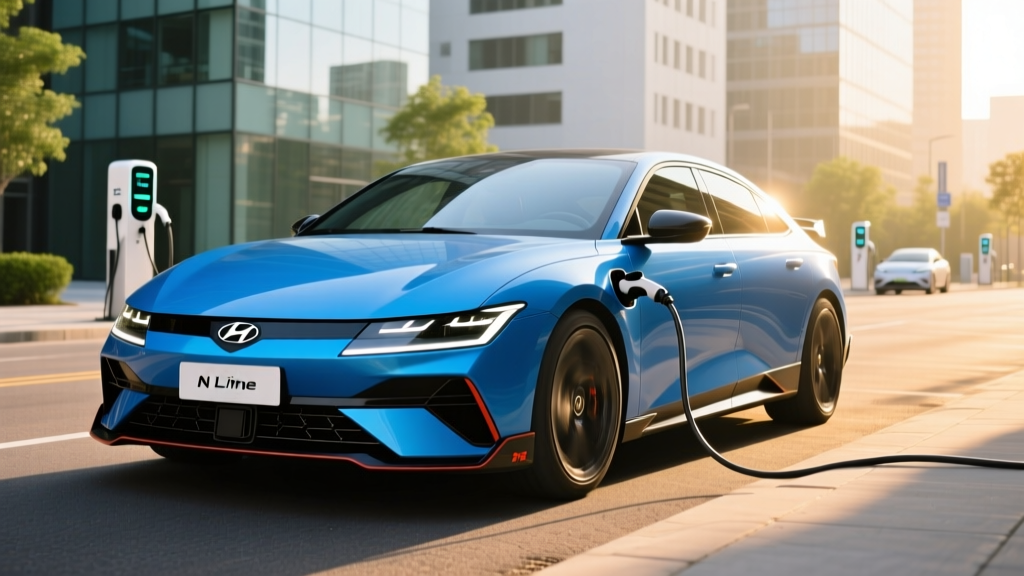
The Hyundai Ioniq 6 has always been an efficiency-first aerodynamic sedan, but the N Line variant adds a sporty edge without sacrificing the range and rapid charging that made the platform a standout. For 2026, the Ioniq 6 N Line slots between the comfort-oriented SEL/Limited trims and the track-focused Ioniq 6 N, offering a sport-tuned suspension, aggressive styling, and the same class-leading 800V electrical architecture that enables blistering DC fast-charge speeds. This review breaks down every number that matters — from real-world range and charging curves to total cost after federal tax credits.
2026 Ioniq 6 N Line at a Glance: Key Specs
| Spec | Value |
|---|---|
| EPA Range (Long Range RWD) | 361 miles |
| EPA Range (AWD) | 290 miles |
| Battery (usable) | 77.4 kWh (Long Range) / 54.0 kWh (Standard Range) |
| Battery Chemistry | NMC (Nickel Manganese Cobalt) |
| Max DC Fast Charge | ~240 kW (Long Range), 800V architecture |
| 10–80% DC Charge Time | ~18 minutes (Long Range, optimal conditions) |
| Level 2 Home Charging | 10.9 kW onboard charger (~44 mi/hr) |
| 0–60 mph (RWD Long Range) | ~6.2 seconds |
| 0–60 mph (AWD) | ~4.5 seconds |
| Horsepower | 225 hp (RWD) / 320 hp (AWD) |
| Drivetrain | RWD or Dual-Motor AWD |
| MPGe (RWD LR Combined) | 140 MPGe |
| Efficiency | 24 kWh/100 mi (RWD LR) |
| Cargo Volume | 12.3 cu ft trunk + 0.5 cu ft frunk |
| Rear Legroom | 35.1 inches |
| Base MSRP (est.) | ~$47,500 (N Line RWD) |
| Battery/Powertrain Warranty | 10 years / 100,000 miles |
Range and Efficiency: EPA Sticker vs. Real-World Miles
The Ioniq 6 platform's teardrop shape — a drag coefficient of just 0.21 — pays its biggest dividends on the highway, where aerodynamic drag dominates energy consumption. The Long Range RWD N Line carries a 77.4 kWh usable battery pack and earns an EPA-estimated 361 miles of range, placing it among the most efficient sedans in its class. The AWD variant drops to roughly 290 miles due to the added mass and friction of the front motor.
EPA estimate: 361 miles (RWD Long Range) / 290 miles (AWD)
Highway driving (70–80 mph, moderate temps): Expect ~290–310 miles for RWD; ~230–250 miles for AWD. The Ioniq 6's aero advantage narrows the gap between city and highway efficiency compared to boxier EVs, but sustained high speeds still cost range.
Cold weather (below 30°F): Plan for a 20–30% reduction. The NMC pack and heat pump help, but winter highway driving could yield as little as ~220–250 miles in the RWD model. Verify current EPA data at fueleconomy.gov.
Practical takeaway: For road trips, budget charging stops every 200–230 miles in the RWD model to keep the battery in its fastest-charging SoC window (10–80%).
Efficiency is rated at approximately 140 MPGe combined (24 kWh per 100 miles) for the RWD Long Range — among the best in the midsize electric sedan segment. The Standard Range variant with its 54.0 kWh pack sacrifices range (EPA ~240 miles) but shaves weight and cost, and its smaller battery can charge from 10–80% even faster in absolute time.
Charging Speed: 800V Architecture Makes a Real Difference
Hyundai's E-GMP platform runs on an 800-volt electrical architecture — the same voltage class found in the Porsche Taycan and Kia EV6 GT — and it shows on the charging curve. The Long Range N Line can accept up to approximately 240 kW at a compatible 350 kW DC fast charger. In controlled testing, the 10–80% charge completes in roughly 18 minutes, which remains one of the fastest real-world charge times in the segment.
| Charge Level | Power | Time (10–80%) | Miles Added per Hour |
|---|---|---|---|
| Level 1 (120V household) | ~1.4 kW | N/A (days for full charge) | ~4–5 mi/hr |
| Level 2 (240V home, 48A) | 10.9 kW | ~6 hours (full) | ~44 mi/hr |
| DC Fast Charge (350 kW station) | Peak ~240 kW | ~18 min (10–80%) | ~700+ mi/hr equivalent |
| DC Fast Charge (150 kW station) | ~150 kW sustained | ~25 min (10–80%) | ~450 mi/hr equivalent |
Charging curve reality check: The ~240 kW figure is a peak, not a sustained rate. Expect maximum charge speeds between roughly 10–55% State of Charge (SoC). Above 55%, the curve tapers progressively — dropping to ~150 kW by 65% SoC and ~80 kW by 75% SoC. This is normal for NMC chemistry and thermal management, but it means a 10–90% charge takes considerably longer than 10–80%. For road trips, charge to 80% and go; the last 20% isn't worth the wait unless you absolutely need the range to reach your next stop.
For home Level 2 charging, the 10.9 kW onboard charger is robust. On a 48-amp, 240V circuit, you'll replenish about 44 miles of range per hour — more than enough to wake up with a full battery after overnight charging. A standard NACS port is included on the 2026 model year, granting native access to Tesla Supercharger stations (V3 and V4) without an adapter, dramatically expanding the usable fast-charging network.
Performance and Driving Dynamics
The N Line designation brings more than appearance upgrades. Hyundai equips it with a sport-tuned adaptive suspension, firmer bushings, quicker steering ratio, and larger brakes compared to the SEL and Limited trims. The result is a sedan that feels genuinely engaging on back roads while remaining composed over rough pavement — a balance that many sport-trim EVs fail to strike.
In the RWD Long Range configuration, the single rear motor produces 225 horsepower and 258 lb-ft of torque, delivering a 0–60 mph time of approximately 6.2 seconds. That's brisk enough for confident highway merging and passing, if not neck-snapping. The dual-motor AWD variant bumps output to 320 hp and 446 lb-ft, cutting the 0–60 time to roughly 4.5 seconds — serious acceleration that rivals performance sedans costing twice as much.
The N Line's regenerative braking system offers multiple levels of intensity selectable via steering-wheel paddles, including an i-Pedal mode for true one-pedal driving that brings the car to a complete stop. The transition between regen and friction braking is well-calibrated, avoiding the grabby feel that plagues some competitors.
Interior, Tech, and Cargo Space
Inside, the Ioniq 6 N Line features Hyundai's dual 12.3-inch curved display cluster running the latest infotainment software with wireless Apple CarPlay and Android Auto. The N Line gets sport bucket seats with enhanced bolstering, an N-branded steering wheel, aluminum pedals, and dark interior trim accents. Over-the-air (OTA) updates keep the software current without dealer visits.
The driver-assistance suite is comprehensive: Hyundai SmartSense includes adaptive cruise control with stop-and-go, lane-keeping assist, blind-spot monitoring with rear cross-traffic alert, and Highway Driving Assist 2 (HDA2), which provides lane-centering and automated lane changes on divided highways. HDA2 is an SAE Level 2 system — it requires continuous driver supervision and is not a self-driving feature.
Cargo space is the Ioniq 6's most commonly cited drawback. The sleek fastback roofline yields just 12.3 cubic feet of trunk volume — competitive with a compact sedan but significantly less than the Ioniq 5's 27.2 cu ft hatchback area. The front trunk (frunk) adds a modest 0.5 cu ft — enough for a charging cable bag but not much more. Rear-seat legroom at 35.1 inches is adequate for adults but tighter than the Ioniq 5 or Tesla Model 3. If cargo versatility is a priority, the Ioniq 6's sedan form factor demands compromise.
Pricing, Trims, and Federal Tax Credit Eligibility
The 2026 Ioniq 6 N Line is offered in RWD and AWD configurations, with the Long Range 77.4 kWh battery as the primary offering. Estimated pricing starts around $47,500 for the N Line RWD, with the AWD variant adding approximately $3,500. A fully loaded N Line AWD with premium packages lands near $54,000 before destination charges.
| Trim | Est. MSRP | §30D Credit Potential | Est. Net Price |
|---|---|---|---|
| N Line RWD (Long Range) | ~$47,500 | Up to $7,500* | ~$40,000 |
| N Line AWD (Long Range) | ~$51,000 | Up to $7,500* | ~$43,500 |
| N Line AWD w/ Premium Pkg | ~$54,000 | Up to $7,500* | ~$46,500 |
*Federal §30D tax credit eligibility is not guaranteed and depends on multiple factors that change regularly.
- MSRP cap: Sedans must be at or below $55,000 MSRP — the N Line RWD qualifies; the fully loaded AWD may exceed the cap.
- Buyer income limits: AGI must not exceed $150,000 (single), $225,000 (head of household), or $300,000 (joint filers).
- Battery sourcing: Critical minerals and battery components must meet escalating domestic-sourcing thresholds that tighten each year. Hyundai has been working to shift battery supply chains to qualify, but eligibility can change by model year and production batch.
- Point-of-sale transfer: Eligible buyers can apply the credit as an upfront discount at the dealership rather than waiting for a tax refund, per current IRS rules. Verify current §30D rules at IRS.gov.
- Recommendation: Confirm eligibility with your dealer and a tax professional before purchasing. Battery sourcing compliance can vary by production month.
Ioniq 6 N Line vs. Key Competitors
The Ioniq 6 N Line competes in a crowded field of sporty electric sedans. Here's how it stacks up on the metrics that matter most:
| Metric | Ioniq 6 N Line (RWD LR) | Tesla Model 3 LR RWD | BMW i4 eDrive40 | Polestar 2 LR SM |
|---|---|---|---|---|
| EPA Range | 361 mi | 363 mi | 301 mi | 315 mi |
| Battery (usable) | 77.4 kWh | ~75 kWh | 81.5 kWh | 78 kWh |
| Peak DC Charge | ~240 kW | ~250 kW | ~205 kW | ~205 kW |
| 10–80% DC Time | ~18 min | ~20 min | ~31 min | ~28 min |
| 0–60 mph | ~6.2 sec | ~5.8 sec | ~5.5 sec | ~5.9 sec |
| Base MSRP | ~$47,500 | ~$44,000 | ~$57,000 | ~$50,000 |
| Battery Warranty | 10 yr / 100k mi | 8 yr / 120k mi | 8 yr / 100k mi | 8 yr / 100k mi |
The Ioniq 6 N Line's primary advantages are its 800V charging speed (only the Model 3 rivals it here), class-leading efficiency, and Hyundai's generous 10-year powertrain warranty. The Tesla Model 3 undercuts on price and offers a more spacious interior plus access to the Supercharger network (though the Ioniq 6 now has native NACS access too). The BMW i4 delivers superior build quality and driving refinement but charges slower and costs significantly more. The Polestar 2 is stylish and well-built but trails on range and charging speed.
Pros and Cons: The Honest Assessment
Pros
- Best-in-class 800V DC fast charging — 18 min 10–80%
- Outstanding aero efficiency: 140 MPGe combined
- 10-year / 100,000-mile battery warranty
- N Line suspension is genuinely well-tuned for daily driving
- Native NACS port for Tesla Supercharger access
- Strong driver-assist suite (HDA2)
- Competitive pricing vs. European rivals
Cons
- Tight cargo space (12.3 cu ft trunk, tiny frunk)
- Rear-seat headroom compromised by fastback roofline
- AWD variant drops range to ~290 miles
- Infotainment learning curve vs. Tesla's simplicity
- Rear visibility is limited; relies heavily on camera
- §30D credit eligibility uncertain by production batch
- N Line pricing pushes close to $55K MSRP cap
Who Should Buy the Ioniq 6 N Line?
The Ioniq 6 N Line is best suited for daily commuters and road-trip enthusiasts who prioritize charging speed and efficiency over cargo versatility. If your routine involves a long highway commute and you value the ability to add 200+ miles of range during a quick rest stop, the 800V architecture is a tangible advantage you'll use regularly. The sport-tuned suspension rewards drivers who enjoy an engaging drive without the harshness of a full performance model.
It's less ideal for families needing maximum cargo space or those who regularly haul rear-seat passengers over long distances — the fastback roofline creates compromises in both trunk and headroom. Buyers in those roles should consider the Ioniq 5 or Hyundai's upcoming three-row EV offerings.
If you can confirm §30D eligibility for your specific vehicle and tax situation, the Ioniq 6 N Line RWD becomes a compelling value proposition — a 361-mile, rapid-charging sport sedan for roughly $40,000 after credit, backed by the industry's longest warranty.
Frequently Asked Questions
What is the real-world range of the Ioniq 6 N Line?
The EPA rates the Long Range RWD at 361 miles. In real-world highway driving at 70–80 mph in moderate temperatures, expect approximately 290–310 miles. In cold weather (below 30°F), plan for 220–250 miles. The AWD variant's real-world range drops to roughly 230–250 miles on the highway.
How fast does the Ioniq 6 N Line charge?
On a 350 kW DC fast charger, the Long Range model peaks at approximately 240 kW and charges from 10–80% in about 18 minutes under optimal conditions (battery preconditioned, moderate ambient temperature). On a home Level 2 charger at 10.9 kW, expect roughly 44 miles of range added per hour, or a full charge in about 6 hours.
Does the Ioniq 6 N Line qualify for the $7,500 federal tax credit?
It may, depending on your income, the specific vehicle's MSRP (must be ≤$55,000 for sedans), and whether its battery meets current critical-mineral and component sourcing thresholds under §30D. Hyundai has been shifting supply chains to comply, but eligibility can vary by production batch. Confirm with your dealer and consult IRS.gov or a tax professional before relying on the credit.
Is the Ioniq 6 N Line worth buying over the Tesla Model 3?
If you value faster 800V charging, a more traditional (if button-heavy) interior, a longer battery warranty (10 years vs. 8), and a sport-tuned ride, the Ioniq 6 N Line is a strong alternative to the Model 3. The Tesla wins on interior space, slightly lower pricing, and the maturity of its Supercharger network — though native NACS on the Ioniq 6 narrows that gap considerably. Test-drive both; the choice often comes down to interior preference and which brand's software ecosystem you prefer.
What battery chemistry does the Ioniq 6 N Line use?
The Ioniq 6 N Line uses NMC (nickel manganese cobalt) chemistry in both the Standard Range and Long Range packs. NMC offers higher energy density than LFP (lithium iron phosphate), contributing to the Ioniq 6's strong range figures, though it is more sensitive to sustained high state-of-charge storage. Hyundai recommends charging to 80% for daily use and 100% only when needed for long trips to optimize long-term battery health.
How does the N Line differ from the standard Ioniq 6 trims?
The N Line adds sport-tuned adaptive suspension, larger brakes, a more aggressive exterior aero kit, unique 20-inch wheels, sport bucket seats, an N-branded steering wheel, and specific drive mode tuning. It does not share the Ioniq 6 N's 641-hp dual-motor powertrain or track-oriented hardware — think of it as a sport-appearance and handling package rather than a full performance variant.