Quick Verdict: The Electric Truck That Still Sets the Benchmark
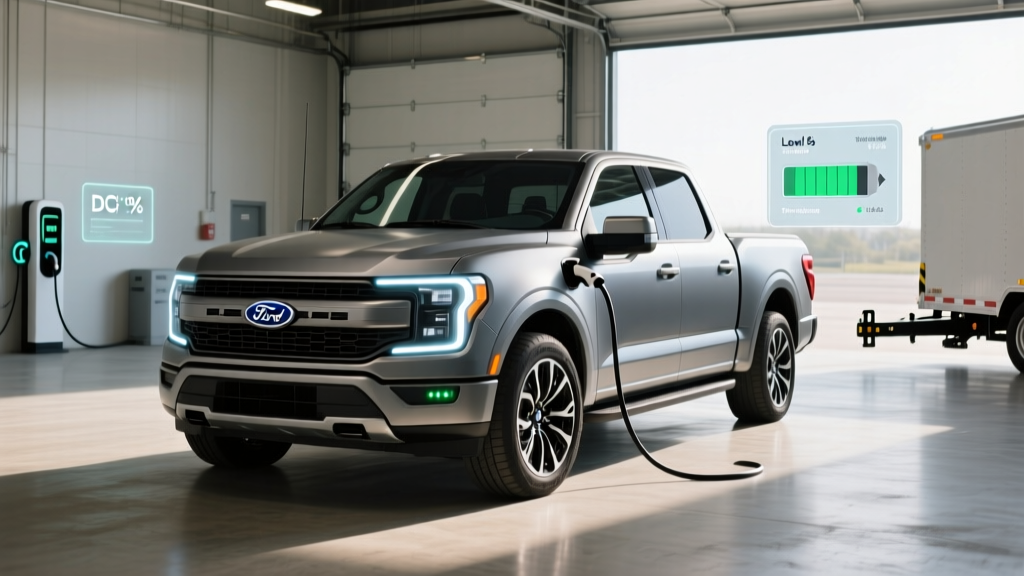
The Ford F-150 Lightning remains the electric pickup that mainstream truck buyers actually recognize — it looks like an F-150, works like an F-150, and in Extended Range form delivers an EPA-estimated 320 miles. For 2026, Ford has refined the powertrain software for slightly better highway efficiency and expanded BlueCruise hands-free zones, but the fundamental formula hasn't changed: a body-on-frame truck with a massive frunk, V2L capability, and real towing capacity. If you've been searching for information on the 2003 Ford F150 rim bolt pattern to cross-reference wheel compatibility with the Lightning's 6×135 mm lug configuration, this review covers that along with every spec that matters for a purchase decision.
The Lightning isn't the longest-range electric truck (Rivian R1T Max Pack hits 410 miles) and it isn't the quickest (Rivian tri-motor beats it to 60 by a full second). But it is the most practical full-size electric truck for buyers who need a conventional truck footprint, a dealership network they trust, and a price that — after the federal tax credit — undercuts nearly every competitor.
Range, Battery, and Real-World Efficiency
Standard Range (98 kWh usable): EPA 240 miles — expect ~195-210 miles highway at 70 mph, ~170 miles in sub-30°F winter conditions.
Extended Range (131 kWh usable): EPA 320 miles — expect ~260-280 miles highway at 70 mph, ~225-245 miles in sub-30°F winter conditions.
The F-150 Lightning uses NMC (nickel manganese cobalt) lithium-ion pouch cells supplied by SK On through the BlueOval SK joint venture. The Standard Range pack holds 98 kWh of usable capacity; the Extended Range pack holds 131 kWh usable. Ford does not currently offer an LFP (lithium iron phosphate) option in the Lightning, meaning you should plan to charge to 80% for daily driving and reserve 100% charges for road trips to minimize long-term degradation — a standard NMC care protocol.
Efficiency on the Extended Range 4×4 model is rated at 70 MPGe combined (48 kWh/100 mi) per fueleconomy.gov. In real-world mixed driving, expect closer to 44-48 kWh/100 mi on the highway and 40-42 kWh/100 mi in city driving where regenerative braking recovers more energy. Towing a 5,000-lb trailer will push consumption to 70-80 kWh/100 mi, effectively cutting range to 160-185 miles on the Extended Range pack — a critical planning factor if you tow frequently.
| Spec | Standard Range | Extended Range |
|---|---|---|
| Battery (usable) | 98 kWh NMC | 131 kWh NMC |
| EPA Range | 240 mi | 320 mi |
| Horsepower | 452 hp | 580 hp |
| Torque | 775 lb-ft | 775 lb-ft |
| 0-60 mph | ~4.5 sec | ~3.8 sec |
| Drivetrain | Dual-motor AWD | Dual-motor AWD |
| Max DC Charge Rate | 120 kW | 150 kW |
| 10-80% DCFC Time | ~44 min | ~41 min |
| Max Tow Capacity | 7,700 lb | 10,000 lb |
| MPGe (combined) | 76 MPGe | 70 MPGe |
Charging: DC Fast Charge, Level 2, and the Bolt Pattern Question
Charging speed is where the Lightning shows its age relative to 800-volt rivals. The Extended Range model peaks at 150 kW on a DC fast charger (CCS1 connector; NACS adapter available for Tesla Supercharger access). That 150 kW peak is sustained roughly from 10% to 45% SoC, after which the charge curve tapers to ~100 kW through 65%, then drops further. A 10-80% session takes approximately 41 minutes at a 150+ kW station — adequate for road-trip stops but noticeably slower than the Hyundai Ioniq 5's 18-minute 10-80% on its 800V architecture.
The Standard Range pack peaks at 120 kW and requires about 44 minutes for 10-80%, largely because the smaller pack can't accept as high a C-rate.
| Level | Power | Miles Added/Hour | Full Charge Time |
|---|---|---|---|
| Level 1 (120V) | ~1.4 kW | ~3 mi/hr | 6+ days (Ext. Range) |
| Level 2 (240V, 48A) | 11.5 kW | ~23 mi/hr | ~14 hours (Ext. Range) |
| Level 2 (240V, 80A dual) | 19.2 kW | ~38 mi/hr | ~8 hours (Ext. Range) |
| DC Fast (peak) | 150 kW (Ext.) / 120 kW (Std.) | ~230 mi/hr at peak | 10-80% in ~41 min |
Ford includes a 32-amp mobile charger with the truck (Level 1/Level 2 capable via a 240V NEMA 14-50 outlet). For the 80A home charging option, Ford's dual onboard charger system requires a hardwired 100-amp circuit — budget $1,500-$3,000 for a licensed electrician to install, depending on your panel capacity and run length.
Wheel Bolt Pattern: F-150 Legacy Compatibility
For owners cross-referencing the 2003 Ford F-150 rim bolt pattern with the 2026 Lightning: the 2003 F-150 used a 5×139.7 mm (5×5.5 inch) bolt pattern on most trims. The 2026 F-150 Lightning uses a 6×135 mm bolt pattern — the same 6-lug pattern Ford moved to on the F-150 starting with the 2004 model year. Wheels from a 2003 F-150 will not fit the Lightning. However, wheels from any 2004-2026 F-150 with the 6×135 mm pattern will physically bolt on, though you must verify offset, center bore (87.1 mm on the Lightning), and load rating to ensure safe fitment on the heavier electric truck (Lightning curb weight exceeds 6,500 lbs on Extended Range trims). Always confirm load rating — EV-specific wheels are rated for the higher vehicle mass.
Pricing, Trims, and Federal Tax Credit Eligibility
The 2026 F-150 Lightning lineup starts at $54,995 for the Pro Standard Range and climbs to $96,874 for the Platinum Extended Range. Here's the full trim ladder:
| Trim | Battery | MSRP | Est. After §30D Credit |
|---|---|---|---|
| Pro | Standard Range | $54,995 | $47,495* |
| XLT | Standard Range | $59,995 | $52,495* |
| XLT | Extended Range | $69,995 | $62,495* |
| Lariat | Extended Range | $76,995 | $69,495* |
| Flash | Extended Range | $72,995 | $65,495* |
| Platinum | Extended Range | $96,874 | $96,874** |
*Assumes full $7,500 federal tax credit eligibility. **Platinum exceeds the $80,000 MSRP cap for trucks under IRS §30D and does not qualify.
- MSRP cap: Trucks/vans/SUVs must have MSRP ≤ $80,000 (Platinum excluded)
- Buyer income cap: AGI ≤ $300,000 (joint) / $225,000 (head of household) / $150,000 (single)
- Battery sourcing: Critical minerals and battery components must meet phased-in percentages per IRS qualifying vehicle list — verify the Lightning's current status before purchase
- Point-of-sale transfer: You can transfer the credit to the dealer for an immediate price reduction at purchase
- Assembly: Must be assembled in North America (Lightning is built in Dearborn, MI ✓)
Performance, Towing, and Cargo
Every F-150 Lightning is dual-motor AWD. The Standard Range produces 452 hp and 775 lb-ft of torque, reaching 60 mph in approximately 4.5 seconds. The Extended Range bumps output to 580 hp (same 775 lb-ft torque), dropping the 0-60 time to roughly 3.8 seconds — quick enough to embarrass most sports cars at stoplights, which never stops being amusing in a 6,700-lb truck.
Towing capacity tops out at 10,000 lbs (Extended Range with Max Trailer Tow Package). Standard Range models max at 7,700 lbs. Payload ranges from 1,800 to 2,235 lbs depending on configuration. The critical caveat: towing at or near max capacity will cut your range roughly in half. Plan charging stops accordingly — a 320-mile truck becomes a 160-mile truck with a heavy trailer.
Cargo dimensions remain a Lightning strength:
- Mega Power Frunk: 14.1 cu ft (400 lbs payload capacity) — lockable, drainable, with 120V outlet
- Bed: 5.5 ft (67.1 cu ft) or 6.5 ft (77.3 cu ft) depending on configuration
- Front legroom: 43.9 inches
- Rear legroom: 41.2 inches (SuperCrew)
- Pro Power Onboard: Up to 9.6 kW of V2L (vehicle-to-load) output via bed and frunk outlets — enough to power tools at a job site or run essentials during an outage
Tech, Driver Assistance, and Standout Features
The Lightning runs Ford's SYNC 4A infotainment on a 12-inch touchscreen (15.5-inch portrait screen on Lariat and above). Wireless Apple CarPlay and Android Auto are standard. BlueCruise 1.2 is available on prequalified divided highways — this is a SAE Level 2 hands-free system, meaning the driver must remain attentive and a camera monitors eye gaze. It is not self-driving. BlueCruise works well on mapped interstates but disengages on secondary roads and in construction zones.
Standard driver assists include automatic emergency braking with pedestrian detection, lane-keeping, blind-spot monitoring with trailer coverage, and rear automatic braking. The available Intelligent Range system uses navigation, traffic, and weather data to refine range estimates in real time — and it's notably accurate, typically within 5% of actual consumption on planned routes.
- 320-mile Extended Range is practical for most road trips
- Mega Power Frunk (14.1 cu ft) is genuinely useful daily storage
- Pro Power Onboard 9.6 kW V2L replaces a portable generator
- Real 10,000-lb towing (with range planning)
- Conventional truck appearance — no "spaceship" styling
- Eligible for full $7,500 federal credit (trims under $80K MSRP)
- BlueCruise hands-free on 130,000+ miles of mapped highways
- DC fast charging peaks at 150 kW — slower than 800V rivals
- Towing cuts range nearly in half (160-185 mi with heavy trailer)
- Platinum trim ($96,874) exceeds §30D tax credit MSRP cap
- No LFP battery option for care-free 100% daily charging
- Rear seat is upright; long rides less comfortable than crew-cab ICE trucks
- Charge port on driver-side front fender — awkward for some parking orientations
- 6,500+ lb curb weight increases tire wear costs
Lightning vs. Rivian R1T and Chevy Silverado EV
The Lightning's closest competitors are the Rivian R1T (adventure-oriented, more expensive) and the Chevy Silverado EV (newer platform, 4WT steering, longer range on top trims). The R1T offers up to 410 miles (Max Pack) and far more off-road capability but starts at $79,900 — above the §30D MSRP cap for trucks. The Silverado EV 4WT tops 400 miles but is also pricey and availability remains limited.
The Lightning's advantage is value: an XLT Extended Range at ~$62,500 after the credit delivers 320 miles, 580 hp, and 10,000-lb towing in a package backed by Ford's dealer network. For fleet buyers and traditional truck owners making the switch, that dealer familiarity matters. The Rivian is the better driver's truck and the Silverado EV has more range, but neither matches the Lightning's price-to-capability ratio at the mid-trim level.
Warranty and Long-Term Ownership
Ford covers the Lightning's battery and electric powertrain for 8 years or 100,000 miles, whichever comes first, with a capacity retention threshold of 70%. If the pack degrades below 70% of original capacity within the warranty period, Ford will repair or replace it. The bumper-to-bumper warranty is 3 years/36,000 miles, and the safety restraint system is covered for 5 years/60,000 miles.
Long-term battery degradation data on the Lightning is still maturing (the model launched in 2022), but early fleet data and SK On cell testing suggest NMC packs in Ford's thermal management system retain approximately 90-93% capacity at 100,000 miles under normal use patterns. Avoid repeated DC fast charging above 90% SoC and avoid prolonged storage at 100% or below 10% to maximize longevity.
Who Should Buy the F-150 Lightning?
- You need a full-size truck for work or family and want to electrify without learning a new form factor
- You tow occasionally (under 7,000 lbs most of the time) and can charge at home
- You want V2L/Pro Power Onboard for job-site power or home backup
- You value a conventional dealership experience for service and warranty work
- Your budget is $55,000-$77,000 and you qualify for the §30D credit
- You tow heavy (>8,000 lbs) daily — range loss will frustrate you
- You need 350+ miles of range without a mid-size bed compromise (consider Rivian R1T Max Pack or Silverado EV)
- You want the fastest DC charging available (Hyundai Ioniq 5 or any 800V platform)
- You prefer LFP chemistry for stress-free daily 100% charging (Tesla Model Y Standard Range, or wait for future LFP trucks)
Frequently Asked Questions
What is the real-world range of the F-150 Lightning?
The Extended Range Lightning is EPA-rated at 320 miles. In real-world highway driving at 70 mph, expect 260-280 miles. In cold weather (below 30°F), expect 225-245 miles due to battery resistance and cabin heating load. Standard Range models deliver roughly 195-210 highway miles in moderate temps.
How fast does the Lightning charge at home and on the road?
On a DC fast charger, the Extended Range peaks at 150 kW and charges 10-80% in about 41 minutes. At home on a 48-amp Level 2 (240V), you'll add roughly 23 miles per hour — a full overnight charge from 20% takes about 11 hours. The optional 80A dual-charger setup adds 38 miles per hour, cutting a full charge to about 8 hours.
How much does the F-150 Lightning cost after tax credits?
The Pro Standard Range starts at $54,995 and drops to approximately $47,495 after the full $7,500 federal §30D credit (if you meet income caps and the vehicle meets battery-sourcing requirements). The popular XLT Extended Range at $69,995 falls to about $62,495. The Platinum ($96,874) exceeds the $80,000 truck MSRP cap and does not qualify for the federal credit.
Does the 2003 Ford F-150 rim bolt pattern fit the Lightning?
No. The 2003 F-150 used a 5×139.7 mm (5-lug) bolt pattern. The 2026 Lightning uses a 6×135 mm (6-lug) pattern, which Ford adopted for the F-150 starting in 2004. Wheels from any 2004-2026 F-150 with the 6×135 mm pattern will physically bolt on, but you must verify offset, center bore (87.1 mm), and load rating for the Lightning's heavier curb weight.
Is the Lightning worth buying vs. the Rivian R1T or Silverado EV?
For value, yes. The Lightning XLT Extended Range at ~$62,500 after the credit offers the best price-per-mile-of-range in the full-size electric truck segment. The Rivian R1T is more capable off-road and quicker but starts above the tax-credit MSRP cap. The Silverado EV offers more range on top trims but is pricier and less widely available. For most truck buyers, the Lightning is the rational choice.
What is the Lightning's battery warranty?
Ford warrants the battery and electric powertrain for 8 years or 100,000 miles with a 70% capacity retention threshold. If degradation drops the pack below 70% of original capacity within that window, Ford covers repair or replacement.