The Quick Verdict: Does the Cadillac Lyriq Qualify for the Federal Tax Credit?
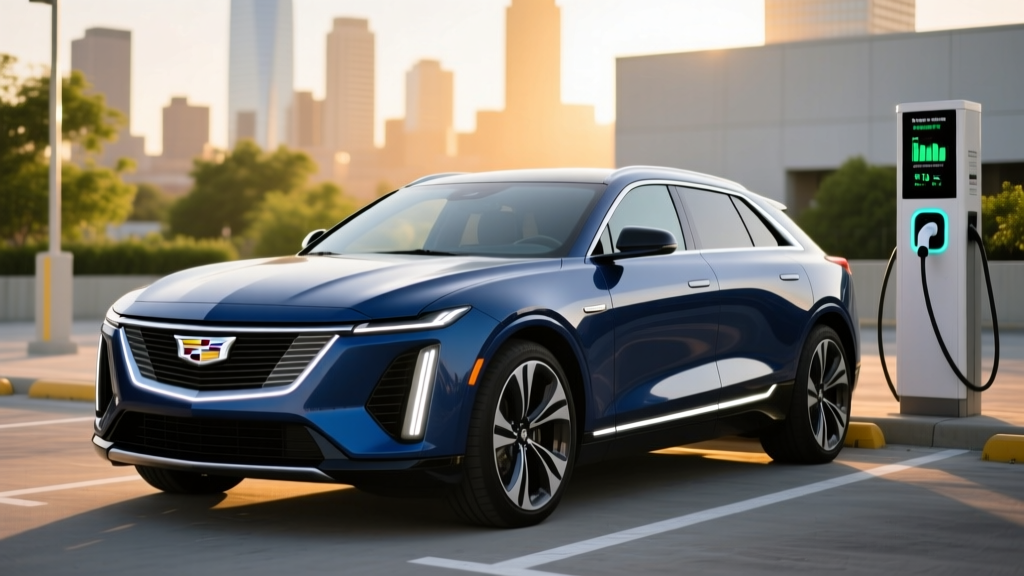
The 2026 Cadillac Lyriq is one of the most compelling luxury electric SUVs on the market — but whether you can claim the full $7,500 federal EV tax credit under IRS §30D depends on a web of income limits, battery-sourcing rules, and MSRP caps that trip up many buyers. As of the 2026 model year, the Lyriq qualifies for up to $7,500 in federal tax credits, but only if you meet every eligibility requirement. The point-of-sale transfer option means you can apply the credit directly to your purchase price at the dealership rather than waiting to claim it on your tax return — a significant cash-flow advantage.
Below, we dissect the exact rules, run the five-year ownership math, and show you where the Lyriq saves money — and where it quietly costs more than a comparable gas SUV like the Cadillac XT5 or BMW X5.
Cadillac Lyriq 2026: Core Specs at a Glance
| Spec | Value |
|---|---|
| Base MSRP (Luxury 1 FWD) | $58,590 |
| AWD / Sport Trims | $62,090 – $73,590 |
| EPA Range (FWD) | 314 miles |
| EPA Range (AWD) | 307 miles |
| Battery (usable) | 102 kWh, NMC chemistry |
| Peak DC Fast Charge | 190 kW |
| 10–80% DC Charge Time | ~33 minutes |
| Level 2 Charge Rate | 19.2 kW (11.5 kW on some trims) |
| Horsepower (FWD / AWD) | 340 hp / 500 hp |
| 0–60 mph (AWD) | 4.6 seconds |
| MPGe (combined, FWD) | 89 MPGe |
| Battery/Powertrain Warranty | 8 years / 100,000 miles |
Federal Tax Credit Eligibility: IRS §30D Rules for 2026
The federal EV tax credit under IRS §30D remains one of the most impactful purchase incentives available — but it is not automatic. For the 2026 Cadillac Lyriq, here is the full eligibility checklist you must satisfy:
- MSRP Cap: The Lyriq is classified as an SUV under IRS rules, so the MSRP cap is $80,000. All current Lyriq trims fall under this threshold, including the top Sport AWD at ~$73,590 before options.
- Buyer Income Limits (Modified AGI):
- Married filing jointly: ≤ $300,000
- Head of household: ≤ $225,000
- Single / all other filers: ≤ $150,000
- Battery Component Sourcing: To qualify for the full $7,500, the vehicle must meet both the critical minerals requirement ($3,750) and the battery component manufacturing requirement ($3,750). GM has worked to domesticate its Ultium battery supply chain, with battery cell production at the Ultium Cells joint-venture plants in Ohio and Tennessee. As of 2026, the Lyriq meets both requirements for the full credit — but always verify at the point of sale, as sourcing rules tighten annually.
- Point-of-Sale Transfer: You can elect to transfer the credit to the dealer at purchase, reducing your out-of-pocket cost immediately rather than waiting for a tax refund. The dealer must be registered with the IRS Energy Credits Online system.
- Vehicle Assembly: The Lyriq is assembled at GM's Spring Hill, Tennessee plant, satisfying the North American final assembly requirement.
Five-Year Total Cost of Ownership: Lyriq vs. Gas Luxury SUV
Sticker price is only the entry point. Here is a realistic five-year / 75,000-mile ownership comparison between the 2026 Cadillac Lyriq (Luxury 1 FWD) and a comparably equipped 2026 Cadillac XT5 (Premium Luxury AWD, 2.0T, ~$56,000 MSRP, 24 MPG combined).
| Category | Cadillac Lyriq (EV) | Cadillac XT5 (Gas) |
|---|---|---|
| Purchase Price (MSRP) | $58,590 | $56,000 |
| Federal Tax Credit (§30D) | –$7,500 | $0 |
| Effective Purchase Price | $51,090 | $56,000 |
| Fuel / Charging (75k mi) | $4,500 | $9,375 |
| Maintenance (5 years) | $1,800 | $4,200 |
| Insurance (5 years) | $12,500 | $9,500 |
| Estimated Depreciation | $22,000 | $19,600 |
| Total 5-Year Cost | $91,890 | $98,675 |
Net savings over 5 years: ~$6,785 in favor of the Lyriq — but that margin is far narrower than many EV advocates suggest, and it depends entirely on qualifying for the full tax credit and maintaining moderate insurance rates.
Charging vs. Gas: The Per-Mile Math
The Lyriq's efficiency is rated at 89 MPGe combined, which translates to roughly 34 kWh per 100 miles. Here is how fuel costs break down:
| Scenario | Cost/Mile | Cost for 75,000 Miles |
|---|---|---|
| Lyriq — Home charging ($0.14/kWh avg) | $0.048 | $3,600 |
| Lyriq — Mixed home/public ($0.22/kWh blended) | $0.075 | $5,625 |
| Lyriq — Public DCFC only ($0.40/kWh) | $0.136 | $10,200 |
| XT5 — Gasoline ($3.50/gal, 24 MPG) | $0.146 | $10,938 |
The takeaway is clear: home charging is where the savings live. If you charge predominantly at home on a standard residential rate, the Lyriq costs roughly one-third what the XT5 burns in gas. If you rely exclusively on public DC fast chargers ( Electrify America, EVgo, etc.), the cost advantage nearly disappears. This is the single most important variable in EV ownership economics.
Maintenance Savings: Where the Lyriq Wins Decisively
Electric vehicles eliminate the maintenance categories that plague internal-combustion ownership. The Lyriq has no engine oil, no transmission fluid, no spark plugs, no timing chain, and no exhaust system. Here is what that looks like over five years:
| Service Item | Lyriq (EV) | XT5 (Gas) |
|---|---|---|
| Oil Changes | $0 | $900 (6 changes) |
| Brake Pads / Rotors | $300 (regen extends life 2–3×) | $1,200 |
| Transmission Fluid | $0 | $350 |
| Engine Air Filter | $0 | $150 |
| Coolant Flush | $150 | $300 |
| Tire Rotation / Replacement | $1,350 (EVs are heavier, eat tires faster) | $1,100 |
| Cabin Filter / Wipers / Misc | $200 | $200 |
| Total Maintenance | ~$2,000 | ~$4,200 |
The Lyriq's regenerative braking system dramatically reduces brake wear — many EV owners report original brake pads lasting 80,000+ miles. However, EV tires wear faster due to the vehicle's higher curb weight (the Lyriq tips the scales at ~5,700 lbs for AWD) and the instant torque delivery. Budget for one tire replacement within five years.
Insurance Costs: The Uncomfortable Reality
Here is where EV ownership stings. Insurance premiums for the Cadillac Lyriq are typically 25–35% higher than for a comparable gas-powered luxury SUV. Based on national averages for a 40-year-old driver with a clean record:
- Lyriq average annual premium: $2,400–$2,700/year
- XT5 average annual premium: $1,800–$2,000/year
Why the gap? Insurers price based on repair cost data, and EVs present several challenges:
- Battery replacement cost: A Lyriq Ultium battery pack replacement runs $15,000–$22,000 out of warranty. Even minor battery enclosure damage in a collision can trigger a total-loss declaration.
- Specialized repair labor: High-voltage systems require certified EV technicians, and fewer body shops have that certification. Scarcity drives up labor rates.
- Higher parts costs: EV-specific components (power electronics, onboard chargers, thermal management systems) carry premium pricing.
- Vehicle weight: Heavier vehicles cause more damage to other cars in multi-vehicle accidents, increasing liability exposure.
Shop multiple insurers — companies like Progressive, Geico, and Tesla Insurance (where available) have begun offering more competitive EV rates as their actuarial data matures. Some states also offer EV insurance discounts.
Depreciation and Resale Value: The EV Wildcard
EV depreciation has been volatile. The Lyriq, as a relatively new nameplate (launched for the 2023 model year), does not yet have a long-term resale track record. However, we can extrapolate from broader luxury EV trends:
- 5-year depreciation (luxury EVs, 2020–2025 data): 40–55% on average, compared to 35–45% for luxury gas SUVs.
- Lyriq-specific factors helping retention: GM/Cadillac brand loyalty, competitive 314-mile range, and the Ultium platform's modularity give it an edge over shorter-range competitors.
- Headwinds: Rapid EV technology advancement means a 2026 Lyriq may look dated by 2031 when solid-state or semi-solid batteries reach mainstream production. Aggressive price cuts by Tesla and new Chinese-market entrants (where available) compress used-EV values.
Our estimate: the Lyriq will retain roughly 55–60% of its effective purchase price (post-credit) after five years, translating to a resale value of approximately $28,000–$31,000. This is competitive within the luxury EV segment but still trails the best gas luxury SUVs.
Lyriq Charging at Home: What You Need to Know
The Lyriq supports up to 19.2 kW Level 2 AC charging on equipped trims (11.5 kW on base configurations). At 19.2 kW, you add roughly 52 miles of range per hour — enough to fully replenish overnight. At 11.5 kW, it is about 31 miles per hour, still sufficient for daily driving needs.
For DC fast charging, the Lyriq peaks at 190 kW. On a 350 kW Electrify America or EVgo station, expect a 10–80% charge in approximately 33 minutes. Note that charging speed tapers significantly above 80% SoC to protect the NMC battery — a 10–100% session will take closer to 55 minutes.
Home Level 2 charger installation typically costs $800–$2,500 (equipment + licensed electrician + permit), depending on whether your electrical panel needs an upgrade to support a 60-amp circuit.
Frequently Asked Questions
How much does it really cost to own a Cadillac Lyriq over 5 years?
Approximately $91,890 over five years and 75,000 miles, assuming you qualify for the full $7,500 federal tax credit, charge predominantly at home, and carry standard luxury-SUV insurance. Without the tax credit, that number climbs to ~$99,390, making the Lyriq more expensive than a gas XT5 over the same period.
Do I qualify for the Cadillac Lyriq EV tax credit?
You qualify for up to $7,500 if: (1) your modified AGI is under $150k single / $300k joint, (2) you purchase the vehicle new for personal use, (3) the Lyriq meets the battery-sourcing requirements at time of delivery (it does as of 2026), and (4) the MSRP is under $80,000 (all trims qualify). Verify current status at irs.gov before purchase.
How much do I save on fuel and maintenance vs. a gas SUV?
With home charging, expect to save roughly $4,875–$5,500 on fuel and $2,200–$2,400 on maintenance over five years compared to a gas luxury SUV averaging 24 MPG. Combined savings: approximately $7,000–$7,900. However, higher insurance premiums (~$3,000 more over 5 years) eat into that advantage.
Are EVs more expensive to insure than gas cars?
Yes, typically 25–35% more expensive for comparable luxury vehicles. The Lyriq's higher repair costs, specialized labor requirements, and expensive battery pack drive up premiums. Shop around — some insurers have become more competitive on EV rates as their data improves.
How well does the Cadillac Lyriq hold its value?
Estimated 5-year retention is 55–60% of effective purchase price (after tax credit), or roughly $28,000–$31,000 in resale value. This is competitive for a luxury EV but trails established gas luxury SUVs. Rapid technology evolution and competitive pricing pressure remain depreciation headwinds for all EVs.
Can I use the tax credit as a point-of-sale discount?
Yes. Under the 2024+ IRS rules, you can elect to transfer the full credit amount to the dealer at purchase, reducing your down payment or financed amount immediately. The dealer must be registered with the IRS Energy Credits Online portal. You still must meet all income and eligibility requirements — the dealer will require you to attest to your income level at the time of sale.