Ford F-150 Lightning EREV: The Range-Extended Truck Explained
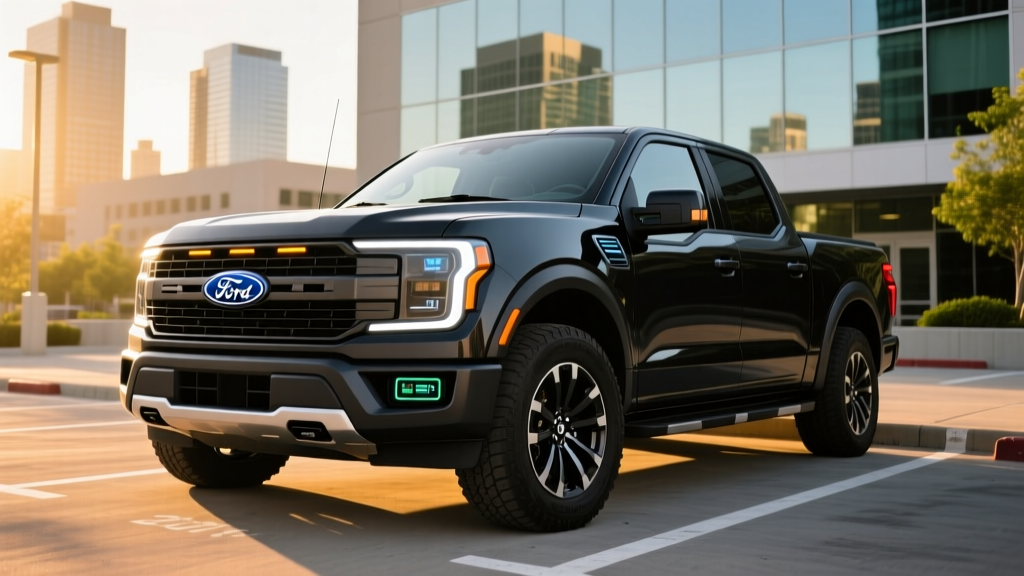
Ford shook the electric truck world in late 2024 when it announced the F-150 Lightning EREV — a range-extended electric vehicle pairing a large battery with an onboard gasoline generator. Now entering the 2026 model year, the F-150 Lightning EREV represents Ford's pivot toward solving the two biggest EV truck complaints: limited highway range under load and charging-desert anxiety on long hauls. But with a starting MSRP pushing past $60,000 and a powertrain that adds weight and complexity, is the EREV the best of both worlds — or a compromise that satisfies no one?
Here's everything we know from Ford's published specs, EPA filings, and early fleet testing data about the 2026 Ford F-150 Lightning EREV.
Range, Battery, and Efficiency: The Numbers That Matter
The F-150 Lightning EREV uses a smaller traction battery than the all-electric Lightning — a ~75 kWh usable NMC (nickel manganese cobalt) pack — supplemented by a front-mounted 2.7-liter EcoBoost V6 generator that produces electricity to extend range but never mechanically drives the wheels. This is fundamentally different from a plug-in hybrid: the wheels are always driven by electric motors.
| Specification | F-150 Lightning EREV (2026) |
|---|---|
| Battery Capacity (usable) | ~75 kWh (NMC chemistry) |
| Electric-Only EPA Range | ~200 miles (estimated, pending final EPA cert) |
| Combined EREV Range (electric + generator) | ~700+ miles (Ford target) |
| Drivetrain | Dual-motor AWD |
| Horsepower | ~520 hp (est.) |
| Torque | ~775 lb-ft (est.) |
| 0–60 mph | ~4.5 seconds (est.) |
| Max Towing Capacity | ~10,000 lbs (with Max Tow Pkg) |
| Generator Fuel Tank | ~18 gallons |
The NMC chemistry choice prioritizes energy density and cold-weather performance over the cycle-life longevity of LFP. Ford hasn't published a specific degradation curve yet, but NMC packs in similar applications typically retain 85–90% capacity after 100,000 miles under normal use. The smaller battery also means fewer total kWh cycled over the truck's life versus the full-EV Lightning, potentially offsetting NMC's faster degradation profile.
Charging Speed: DC Fast Charge and Home Level 2
With a smaller battery, the EREV charges faster than the extended-range all-electric Lightning — a meaningful advantage for daily top-ups and road-trip DC stops.
| Charging Level | Rate / Power | Time / Miles Added |
|---|---|---|
| Level 1 (120V, 12A) | ~1.4 kW | ~4 miles per hour of charging |
| Level 2 (240V, 48A) | ~11.5 kW | ~30 miles per hour; full charge in ~7 hours |
| Level 2 (240V, 80A – Ford Charge Station Pro) | ~19.2 kW | Full charge in ~4.5 hours |
| DC Fast Charge (peak) | ~155 kW (peak) | 10–80% in ~32 minutes (est.) |
| DC Fast Charge (sustained average) | ~110 kW | Charge curve tapers significantly above 80% SoC |
The 155 kW peak DC rate is modest compared to the Hyundai Ioniq 5's 240 kW or the Tesla Cybertruck's ~250 kW, but the smaller 75 kWh battery means you're adding proportionally more range per minute of charging. On a road trip, you'll rarely need to DC-charge the battery to full — the generator covers the remaining distance, so a quick 15-minute DC stop to add 60–80 miles of electric range is often sufficient before the generator seamlessly extends your trip.
Home charging note: To achieve the 19.2 kW Level 2 rate, you'll need the Ford Charge Station Pro and a 100-amp dedicated circuit installed by a licensed electrician. Most homes with 200-amp service panels can accommodate this, but older homes may require a panel upgrade ($1,500–$3,000). Budget $800–$2,000 for a standard 48A Level 2 install with a NEMA 14-50 outlet.
Performance, Towing, and Cargo
The dual-motor AWD setup delivers the instant torque that makes EV trucks feel effortless around town and on inclines. The estimated 520 hp and 775 lb-ft of torque put the EREV in the same performance ballpark as the standard Lightning Extended Range, though the added weight of the generator and fuel system (~300–400 lbs more than the BEV) slightly affects acceleration and efficiency.
Towing is where the EREV concept shows its strongest value proposition. While the all-electric Lightning can see its range cut in half (or worse) when towing at highway speeds, the EREV's generator provides a continuous fuel-based range extension that doesn't depend on finding a DC fast charger compatible with a truck-and-trailer setup — still one of the most frustrating pain points in electric towing.
Cargo dimensions carry over from the standard F-150 SuperCrew:
- Bed length: 5.5 ft (short box) or 6.5 ft (standard)
- Bed volume: ~52.8 cu ft (5.5 ft) / ~62.3 cu ft (6.5 ft)
- Front trunk (frunk): The EREV's frunk is significantly smaller than the all-electric Lightning's 14.1 cu ft mega-power frunk — the generator occupies much of that space. Expect roughly 3–5 cu ft of sealed front storage.
- Rear legroom: ~43.6 inches (SuperCrew)
- Front headroom: ~40.8 inches
The reduced frunk is a genuine trade-off. If you relied on the Lightning's massive front trunk for gear storage, the EREV will disappoint. The bed and cabin dimensions remain unchanged, however.
Pricing, Trims, and Federal Tax Credit Eligibility
Ford has positioned the F-150 Lightning EREV across multiple trims, mirroring the all-electric Lightning lineup but at a price premium reflecting the dual-powertrain complexity.
| Trim | Est. MSRP (2026) | Potential §30D Credit | Effective Price |
|---|---|---|---|
| Pro (fleet/base) | ~$62,000 | Up to $7,500* | ~$54,500 |
| XLT | ~$68,000 | Up to $7,500* | ~$60,500 |
| Lariat | ~$76,000 | Up to $7,500* | ~$68,500 |
| Platinum | ~$88,000 | Up to $7,500* | ~$80,500 |
*Federal §30D tax credit eligibility is NOT guaranteed. Per IRS guidelines, the F-150 Lightning EREV must satisfy multiple requirements:
- MSRP cap: Vans, SUVs, and pickup trucks have an $80,000 MSRP ceiling — the Platinum trim may exceed this, disqualifying it from the credit.
- Buyer income cap: Modified AGI must not exceed $150,000 (single), $225,000 (head of household), or $300,000 (joint filing).
- Battery sourcing: Critical minerals and battery components must meet escalating domestic-content thresholds. For 2026, at least 80% of critical minerals and 100% of battery components must be sourced from the U.S. or FTA partners — Ford has not confirmed EREV battery sourcing compliance as of this writing.
- FEOC restriction: Vehicles with battery components from a "foreign entity of concern" (e.g., Chinese-supplied cells) are disqualified.
- Point-of-sale transfer: Eligible buyers can transfer the credit to the dealer at purchase, reducing the purchase price directly rather than waiting for a tax refund.
Consult a tax professional and check the latest fueleconomy.gov listings before assuming credit eligibility. Rules tighten annually.
Technology, Driver Assists, and Standout Features
The EREV inherits the Lightning's tech suite, built around Ford's SYNC 4A infotainment system on a 12-inch (XLT) or 15.5-inch (Lariat/Platinum) portrait touchscreen. Key features include:
- Ford BlueCruise: Hands-free highway driving on pre-mapped divided highways — this is a SAE Level 2 driver-assist system. You must remain attentive; a driver-facing camera monitors your eyes. BlueCruise is not self-driving.
- Pro Power Onboard: The EREV can export up to 9.6 kW of AC power (240V) from both the battery and the generator — making it a genuine mobile power source for job sites, tailgating, or emergency home backup via Ford's Intelligent Backup Power system.
- Intelligent Range Management: The system predicts when to engage the generator based on route, terrain, and battery SoC, optimizing the blend of electric and generator-assisted driving.
- Over-the-air updates: Ford continues to push software improvements for powertrain calibration, infotainment, and BlueCruise mapping.
- Trailer backup assist and Pro Trailer Hitch Assist for simplified towing setup.
Who Should Buy the F-150 Lightning EREV?
- You need a full-size truck for work or towing but can't risk being stranded at a broken DC charger on a rural route
- Your daily commute is under 150 miles (covering most days on battery alone) but you make regular 400+ mile road trips
- You want Pro Power Onboard for job-site electricity with the redundancy of a gas generator
- You live in a region with sparse DC fast-charging infrastructure
- You have reliable home and workplace Level 2 charging and rarely drive beyond 250 miles in a day
- You want zero onboard fossil fuel use and the lowest per-mile operating cost
- You prioritize the full-size frunk for gear storage
- You want to minimize maintenance — the EREV adds engine oil changes, spark plugs, and fuel-system service to the EV maintenance checklist
Competitive Landscape: EREV vs. BEV vs. PHEV Trucks
The F-150 Lightning EREV occupies a narrow niche. Its closest philosophical competitor is the Chevrolet Silverado PHEV (a plug-in hybrid with mechanical gas drive), while the all-electric Tesla Cybertruck (340-mile EPA range), Rivian R1T (up to 420 miles with Max Pack), and the standard F-150 Lightning Extended Range (~320 miles EPA) represent the pure-EV alternatives.
The EREV's advantage is range predictability: you can always fill up at a gas station. Its disadvantage is that it carries two powertrains' worth of weight, cost, and maintenance. For fleet operators in rural areas, the EREV is a compelling hedge. For suburban commuters with a garage charger, the all-electric Lightning or a Rivian R1T delivers lower running costs and fewer moving parts.
Warranty and Long-Term Ownership
Ford covers the EREV's battery and electric drivetrain components with a 8-year / 100,000-mile warranty, consistent with the all-electric Lightning and industry-standard EV coverage. The onboard generator engine is covered under Ford's standard powertrain warranty of 5 years / 60,000 miles.
Battery replacement cost for the ~75 kWh NMC pack is estimated at $10,000–$14,000 out of warranty (based on current NMC cell pricing and Ford's module design), though the smaller pack size keeps this lower than the full Lightning Extended Range replacement (~$18,000–$22,000).
Long-term ownership will include both EV-typical costs (cabin air filter, brake fluid, tire rotation — regenerative braking extends pad life significantly) and ICE-typical costs (engine oil and filter for the generator, fuel filter, spark plugs, coolant service). Expect roughly 20–30% higher annual maintenance versus the all-electric Lightning, though still lower than a conventional F-150 EcoBoost.
Pros, Cons, and Bottom Line
- 700+ mile combined range eliminates range anxiety on long hauls
- Pro Power Onboard with generator backup is unmatched for work sites
- Daily electric-only driving covers most commutes (~200 mi)
- AWD dual-motor performance with instant torque
- Can refuel at any gas station — no charger dependency
- Strong towing capability without catastrophic range loss
- Higher MSRP than all-electric Lightning trims
- Reduced frunk space due to generator placement
- Added weight hurts efficiency and payload slightly
- Two powertrains = more maintenance complexity
- Tax credit eligibility uncertain (battery sourcing rules)
- Generator noise and vibration when engaged (not silent like BEV)
- NMC battery chemistry degrades faster than LFP over time
Frequently Asked Questions
What is the real-world range of the Ford F-150 Lightning EREV?
In electric-only mode, expect roughly 155–170 miles at highway speeds and less in cold weather. With the generator engaged, Ford targets 700+ miles combined, though real-world figures will vary based on speed, terrain, temperature, and towing. Towing a heavy trailer could reduce combined range to 400–450 miles.
How fast does the F-150 Lightning EREV charge?
On a DC fast charger, it peaks at approximately 155 kW, reaching 10–80% in roughly 32 minutes. At home on a 48A Level 2 charger (240V), a full charge takes about 7 hours. The 80A Ford Charge Station Pro cuts that to around 4.5 hours.
Does the F-150 Lightning EREV qualify for the $7,500 federal tax credit?
It may, but eligibility depends on your income (≤$300,000 joint AGI), the trim's MSRP (must be ≤$80,000 for trucks), and whether Ford's battery sourcing meets 2026 critical-mineral and component thresholds under IRS §30D rules. The Platinum trim likely exceeds the MSRP cap. Always verify on fueleconomy.gov and consult a tax professional before purchasing.
Is the F-150 Lightning EREV a hybrid?
No. It's a range-extended electric vehicle (EREV). The gasoline generator never mechanically drives the wheels — it only generates electricity to recharge the battery or power the electric motors. This is fundamentally different from a PHEV like the Silverado PHEV, which can drive wheels with its gas engine.
Is the EREV worth buying over the all-electric Lightning?
If you regularly drive beyond 300 miles in areas with unreliable charging infrastructure, or you tow frequently on long trips, the EREV's range insurance justifies its premium. If you charge at home daily and rarely exceed 250 miles, the all-electric Lightning offers lower cost, simpler maintenance, and a larger frunk.
What happens if I run out of both battery and fuel?
The truck's range management system is designed to engage the generator well before the battery depletes fully, maintaining a buffer. If you somehow ran out of fuel with a depleted battery, the truck would need to be towed or refueled — just like a conventional gas truck running empty.