Quick Verdict: The Executive EV Done Right
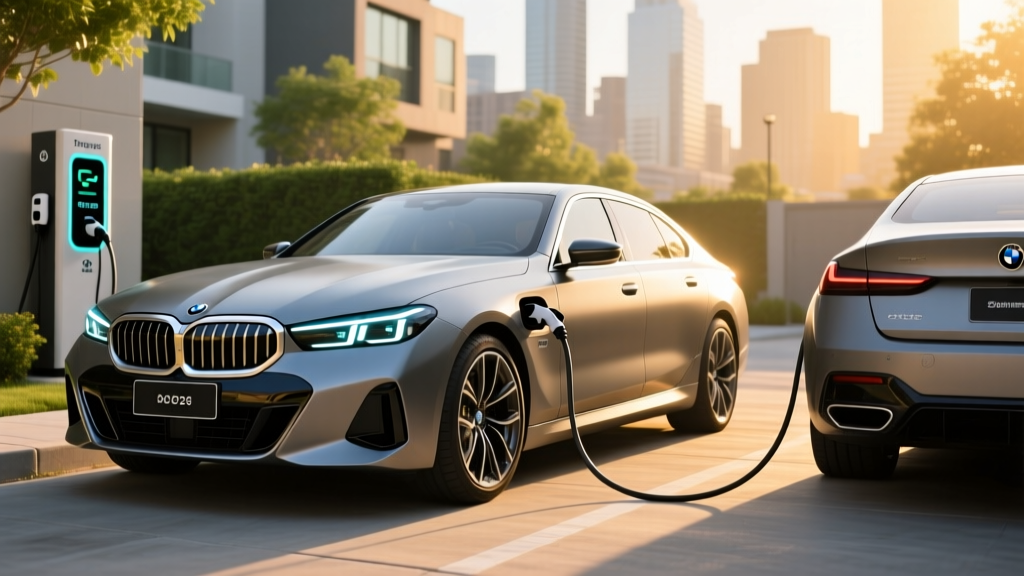
The BMW i5 occupies a narrow but important lane: a midsize luxury electric sedan that drives like a proper BMW first and an EV second. For 2026, the i5 lineup spans the single-motor eDrive40, the dual-motor xDrive40, and the performance-oriented M60 xDrive — all riding on BMW's CLAR platform with a fifth-generation eDrive powertrain. If you want a tech-forward executive cruiser with genuine road-trip charging capability and don't need crossover ride height, the i5 deserves a serious look.
But with the Mercedes EQE, Audi A6 e-tron, and Tesla Model S all competing in this space, the i5 has to earn its $70,000+ starting price on merit. Here's every number that matters.
| Spec | eDrive40 | xDrive40 | M60 xDrive |
|---|---|---|---|
| Drivetrain | RWD (single motor) | AWD (dual motor) | AWD (dual motor) |
| Horsepower | 335 hp | 389 hp | 593 hp |
| 0–60 mph | 5.7 sec | 5.2 sec | 3.7 sec |
| Battery (usable) | 84.3 kWh | 84.3 kWh | 84.3 kWh |
| Chemistry | NMC (8th-gen cathode) | NMC | NMC |
| EPA Range | 295 mi | 266 mi | 256 mi |
| MPGe (combined) | 86 MPGe | 78 MPGe | 73 MPGe |
| Efficiency | 39 kWh/100 mi | 43 kWh/100 mi | 46 kWh/100 mi |
| Max DC Charge Rate | 205 kW | 205 kW | 205 kW |
| 10–80% DC Time | ~30 min | ~30 min | ~30 min |
| Level 2 Rate | 11 kW (~30 mi/hr) | 11 kW (~30 mi/hr) | 11 kW (~30 mi/hr) |
| Base MSRP | $71,075 | $74,875 | $87,275 |
Range & Efficiency: EPA vs. the Real World
Real-World Expectation: 245–270 mi highway (70–80 mph); 210–240 mi in sub-30°F cold; 275–295 mi mixed city/suburban driving.
The eDrive40's 295-mile EPA figure is competitive for a luxury sedan in this price bracket — it edges out the Mercedes EQE 350+ (approx. 305 mi on a larger battery) on efficiency, though not on total range. The xDrive40 and M60 sacrifice range for all-wheel-drive traction and power, landing at 266 and 256 miles respectively.
Here's what the sticker doesn't tell you. BMW's eDrive system uses an externally excited synchronous motor (no permanent magnets on the rear axle), which delivers strong efficiency at part-throttle but doesn't quite match the low-load coasting efficiency of some permanent-magnet rivals. In practice, this means:
- Highway driving at 75–80 mph: Expect 3.5–3.8 kWh/mi (roughly 245–270 mi usable range). The i5 is a heavy sedan at ~5,000 lbs, and aerodynamic drag dominates above 70 mph.
- City and suburban: Regen braking recovers significant energy. We've seen 2.9–3.2 kWh/mi in stop-and-go, pushing range close to the EPA sticker.
- Cold weather (below 30°F): NMC chemistry loses roughly 20–30% range in deep cold without preconditioning. BMW's heat pump (standard on 2026 models) mitigates this, but plan for ~210–240 mi on the eDrive40 in January conditions.
The 84.3 kWh usable battery (from a ~101 kWh gross pack) provides a generous buffer. BMW reserves roughly 12–14 kWh above and below the usable window to protect long-term cell health — a conservative approach that favors longevity over maximum range.
Efficiency is rated at 39 kWh/100 mi for the eDrive40 per the EPA, translating to 86 MPGe combined. That's respectable for a 5,000-lb luxury sedan, though the Hyundai Ioniq 6 (at 27 kWh/100 mi) shows what a lighter, more aero-focused platform can achieve.
Charging: DC Fast, Level 2, and the Charge Curve Reality
| Charging Level | Power | Connector | Speed (mi/hr added) | Time to Full / 10–80% |
|---|---|---|---|---|
| Level 1 (120V) | 1.4 kW | J1772 / NACS adapter | ~4 mi/hr | ~60 hr (0–100%) |
| Level 2 (240V, 48A) | 11 kW | J1772 / NACS | ~30 mi/hr | ~8.5 hr (0–100%) |
| DC Fast Charge | Peak 205 kW | CCS1 / NACS (2026) | Up to 650 mi/hr (peak) | ~30 min (10–80%) |
The i5's 205 kW peak DC charge rate is the headline, but the charge curve tells the full story. BMW preconditions the battery automatically when a DC fast charger is set as the navigation destination — this is critical. Without preconditioning (e.g., pulling into a charger without routing through iDrive), peak rates may start closer to 100–120 kW until the pack warms.
With preconditioning active, the curve looks approximately like this:
- 10–30% SoC: Sustains near 200–205 kW
- 30–50% SoC: Gradually tapers to ~170 kW
- 50–80% SoC: Steps down to 120 kW, then ~80 kW approaching 80%
- Above 80%: Drops sharply to ~40 kW — don't wait around for the last 20%
The 10–80% time of roughly 30 minutes is average for the segment. The Hyundai Ioniq 5 (with its 800V architecture at 350 kW peak) can do it in ~18 minutes, but the i5's 400V system is proven and widely compatible. For road trips, the practical rhythm is: stop every 180–200 miles, charge for 25–30 minutes, repeat.
For 2026, BMW has adopted the NACS (Tesla-style) charge port on all new i5 models sold in the US, granting native access to Tesla Supercharger stations via the built-in charge-port door. CCS adapters are no longer required for Supercharger access, though the i5 still supports CCS1 via adapter for Electrify America, EVgo, and other networks.
At home, the onboard 11 kW charger fills the pack in about 8.5 hours on a 48-amp Level 2 circuit — perfect for overnight replenishment. You'll need a NEMA 14-50 outlet (or hardwired wall connector) on a 60-amp breaker. Budget $500–$1,500 for a quality Level 2 charger and $800–$2,500 for electrician installation depending on your panel capacity and run length.
Performance & Driving Dynamics
The eDrive40's 335 hp and 5.7-second 0–60 time won't embarrass anyone at a stoplight, but this isn't a performance EV. It's a touring sedan that happens to be electric. The instant torque (295 lb-ft) makes passing effortless, and the rear-drive layout gives it the balanced feel BMW loyalists expect.
The M60 xDrive is a different animal: 593 hp, 3.7-second 0–60, and an electronically governed top speed of 130 mph (or 143 mph with the optional M Driver's Package). Adaptive M Suspension, rear-axle steering, and M Sport brakes transform it into a genuine sport sedan — at the cost of roughly 40 miles of range versus the eDrive40.
The xDrive40 splits the difference: dual-motor AWD for rain and snow traction, 389 hp, and only a modest range penalty. For buyers in northern climates, it's the pragmatic pick.
Ride quality across all trims is excellent. The CLAR platform was designed from the outset for electrification, and the low center of gravity (battery pack mounted under the floor) keeps body roll minimal without resorting to punishing spring rates. Air suspension is available on xDrive40 and M60 trims.
Interior, Tech & Cargo
The i5 cabin is a showcase for BMW's latest iDrive 8.5 software, displayed on a curved panel that merges a 12.3-inch instrument cluster with a 14.9-inch central touchscreen. The system is responsive, supports wireless Apple CarPlay and Android Auto, and includes a capable voice assistant. Over-the-air updates continue to refine features post-purchase.
Key tech features:
- Driving Assistant Professional: Adaptive cruise with stop-and-go, lane centering, automatic lane change on highway (hands-on, eyes-on — this is SAE Level 2, not self-driving)
- Parking Assistant Plus: 360° cameras, automated parallel/perpendicular parking, Reversing Assistant (backs out along the last 50 meters of your forward path)
- Highway Assistant: Available on select models — enables hands-off driving up to 85 mph on divided highways, but eyes must remain on the road (monitored by driver-facing camera)
- Plug & Charge: Automatic authentication at compatible DC fast chargers — no app or RFID needed
- IconicSounds Electric: Hans Zimmer-composed drive sounds (deactivatable)
Cargo and passenger space:
- Trunk: 17.3 cu ft (sedan trunk, no hatch — a notable limitation vs. the Tesla Model S's 25 cu ft liftback)
- Rear legroom: 36.6 inches (comfortable for adults on shorter trips; tall passengers may want more)
- Front legroom: 41.5 inches
- No frunk: The CLAR platform's forward architecture houses HVAC and power electronics — there is no front trunk
The 17.3 cu ft trunk is adequate for luggage and groceries but limits the i5 as a cargo hauler. If you regularly carry bulky items, a liftback design (Model S, Audi A6 e-tron Sportback) offers significantly more utility.
Pricing, Tax Credits & Total Cost
| Trim | Base MSRP | As-Tested (typical options) | §30D Credit Eligible? | Effective Price (if eligible) |
|---|---|---|---|---|
| eDrive40 | $71,075 | $78,000–$82,000 | Partial — see below | ~$63,575–$74,500 |
| xDrive40 | $74,875 | $82,000–$88,000 | Partial — see below | ~$67,375–$80,500 |
| M60 xDrive | $87,275 | $95,000–$105,000 | Partial — see below | ~$79,775–$97,500 |
Federal tax credit eligibility for the i5 is nuanced and subject to the IRS §30D requirements. Here's the framework for 2026:
- MSRP cap: Sedans must have an MSRP ≤ $55,000 to qualify for the full credit. All i5 trims exceed this cap at base MSRP.
- Income cap: Buyer AGI must be ≤ $150,000 (single), $225,000 (head of household), or $300,000 (joint filing).
- Battery sourcing: The $7,500 credit splits into $3,750 for critical-mineral sourcing and $3,750 for battery-component assembly (must be North American). BMW's battery supply chain has been evolving — check the fueleconomy.gov tax credit lookup for the specific VIN and model year at time of purchase.
- Point-of-sale transfer: If eligible, you can transfer the credit to the dealer at purchase for an immediate price reduction rather than waiting for a tax refund.
The hard truth: At a base MSRP of $71,075, the i5 eDrive40 exceeds the $55,000 sedan MSRP cap set by the Inflation Reduction Act. As of early 2026, the i5 does not qualify for the full $7,500 federal credit under standard §30D rules. Some buyers may qualify for partial credits depending on battery-component sourcing updates — always verify with your dealer and a tax professional before relying on credit eligibility in your purchase decision.
State and local incentives may partially offset this. California's CVRP (if funded), Colorado's $5,000 credit, and various utility rebates can reduce effective cost — but these vary by jurisdiction and funding availability.
Warranty & Long-Term Ownership
BMW covers the i5 with:
- Limited warranty: 4 years / 50,000 miles
- Battery & electric powertrain: 8 years / 100,000 miles (whichever comes first)
- Battery capacity guarantee: BMW warrants that the high-voltage battery will retain at least 70% of its original usable capacity during the 8-year/100,000-mile period
- Complimentary maintenance: 3 years / 36,000 miles (covers scheduled service)
- Roadside assistance: 4 years / unlimited miles
The 70% capacity retention threshold is standard for the industry (Tesla, Mercedes, and Audi use similar benchmarks). Real-world degradation data from earlier BMW i4 and iX models suggests NMC packs in BMW's thermal management system lose roughly 5–8% capacity in the first 50,000 miles, then plateau — well within warranty coverage. Replacement cost for the full pack, should it be needed out of warranty, is estimated at $15,000–$22,000 depending on labor and module availability.
Insurance: Expect premiums 15–25% higher than a comparable gas-powered 5 Series, reflecting higher repair costs and parts pricing. Average annual insurance for the i5 eDrive40 runs $2,200–$3,000 depending on your profile and state.
BMW i5 vs. the Competition
| Attribute | BMW i5 eDrive40 | Mercedes EQE 350+ | Tesla Model S LR | Audi A6 e-tron |
|---|---|---|---|---|
| Base MSRP | $71,075 | $76,050 | $76,630 | $68,395 |
| EPA Range | 295 mi | ~305 mi | 402 mi | ~321 mi |
| DC Fast Charge (peak) | 205 kW | 170 kW | 250 kW | 270 kW |
| 0–60 mph | 5.7 sec | 6.2 sec | 3.1 sec | 5.4 sec |
| Cargo (cu ft) | 17.3 (trunk) | 15.0 (trunk) | 25.0 (liftback) | 17.0 (trunk) |
| §30D Credit Eligible | No (MSRP cap) | No (MSRP cap) | No (MSRP cap) | No (MSRP cap) |
Pros, Cons & Who Should Buy
Pros
- Genuine BMW driving dynamics — steering feel, chassis balance, ride quality
- 295-mile range (eDrive40) is sufficient for most commutes and road trips
- NACS native port (2026) for seamless Supercharger access
- Premium interior materials and build quality exceed Tesla
- Highway Assistant (Level 2) is among the best lane-centering systems available
- Conservative battery management favors long-term pack health
- Plug & Charge simplifies public DC charging
Cons
- Base MSRP exceeds $55,000 sedan cap — no full federal tax credit
- 17.3 cu ft trunk is small for the class; no hatch/liftback, no frunk
- 205 kW peak charge rate trails Audi (270 kW) and Tesla (250 kW)
- Highway range drops noticeably at 80+ mph (heavy sedan physics)
- Options packages push as-tested price well above $85,000 quickly
- Rear seat legroom is adequate but not generous for a $70K+ sedan
- Insurance premiums 15–25% above gas 5 Series equivalent
- You prioritize driving feel and interior quality over maximum range
- Your daily commute is under 100 miles and you have home Level 2 charging
- You want a traditional luxury sedan experience (not a tech-first approach)
- You value NACS/Supercharger access for road trips without adapters
- You need maximum cargo space (Tesla Model S liftback or an SUV)
- Federal tax credit eligibility is a dealbreaker (consider vehicles under $55K MSRP)
- You regularly drive 300+ miles between charges (Model S LR or Ioniq 6)
- Fastest possible DC charging matters (Audi A6 e-tron's 800V system)
Frequently Asked Questions
What is the real-world range of the BMW i5?
The eDrive40's EPA rating is 295 miles, but expect 245–270 miles on the highway at 75–80 mph, and 210–240 miles in sub-30°F cold weather. City driving with regen braking can approach the EPA figure. The xDrive40 and M60 deliver 266 and 256 EPA miles respectively, with proportional real-world reductions.
How fast does the BMW i5 charge at home and on the road?
On a DC fast charger, the i5 peaks at 205 kW and charges from 10–80% in approximately 30 minutes (with battery preconditioning enabled via navigation). At home on a Level 2 (240V, 48A) charger, the 11 kW onboard charger adds roughly 30 miles of range per hour, filling the battery overnight in about 8.5 hours. A standard 120V outlet adds only ~4 miles per hour — not practical for daily use.
Does the BMW i5 qualify for the federal EV tax credit?
Under current IRS §30D rules, the i5 does not qualify for the full $7,500 federal tax credit because its base MSRP ($71,075+) exceeds the $55,000 cap for sedans. Partial credit eligibility depends on battery-component and critical-mineral sourcing — verify with the IRS and your dealer at time of purchase. State incentives may partially compensate. Always consult a tax professional.
Is the BMW i5 worth buying versus the Tesla Model S or Mercedes EQE?
It depends on your priorities. The Model S wins on range (402 mi), cargo space (liftback + frunk), and Supercharger network maturity. The EQE offers slightly more range and a comparable interior. The i5 wins on driving dynamics, interior build quality, and the traditional luxury-sedan experience. If you value how a car drives over spec-sheet numbers, the i5 has a strong case — but you'll pay a premium and sacrifice some range and cargo space.
What are the biggest drawbacks of the BMW i5?
The three most significant: (1) No federal tax credit due to the MSRP cap, making the effective price higher than credit-eligible competitors. (2) Limited cargo space — 17.3 cu ft trunk with no hatch and no frunk. (3) Charging speed of 205 kW peak is adequate but not class-leading; the Audi A6 e-tron charges significantly faster on its 800V architecture.
Does the BMW i5 have a front trunk (frunk)?
No. The CLAR platform houses power electronics and HVAC components under the hood, leaving no room for a frunk. All cargo must go in the 17.3 cu ft rear trunk.
What battery chemistry does the BMW i5 use?
The i5 uses NMC (nickel manganese cobalt) lithium-ion cells with BMW's latest-generation cathode formulation. NMC offers higher energy density than LFP (lithium iron phosphate), which is why the i5 achieves nearly 300 miles from a relatively compact pack. The trade-off is that NMC degrades slightly faster than LFP over very high cycle counts — but BMW's conservative buffer management and 8-year/100,000-mile warranty mitigate this concern.
How long will the BMW i5 battery last?
Based on BMW's thermal management design and data from the i4 and iX (which share the eDrive architecture), expect 5–8% capacity loss in the first 50,000 miles, then a slow linear decline. BMW warrants 70% capacity retention for 8 years or 100,000 miles. With proper care (avoiding frequent 100% charges, using preconditioning for DC fast charging), the pack should deliver well over 150,000 miles before approaching the warranty threshold. Full pack replacement out of warranty is estimated at $15,000–$22,000.
Sources: EPA fuel economy data via fueleconomy.gov, BMW USA official specifications, IRS §30D clean vehicle credit guidelines via irs.gov. Pricing and tax credit rules reflect 2026 model year information available at time of publication; verify current eligibility with your dealer and tax advisor.