The Rivian Skateboard Platform: Engineering That Defines the R1 Lineup
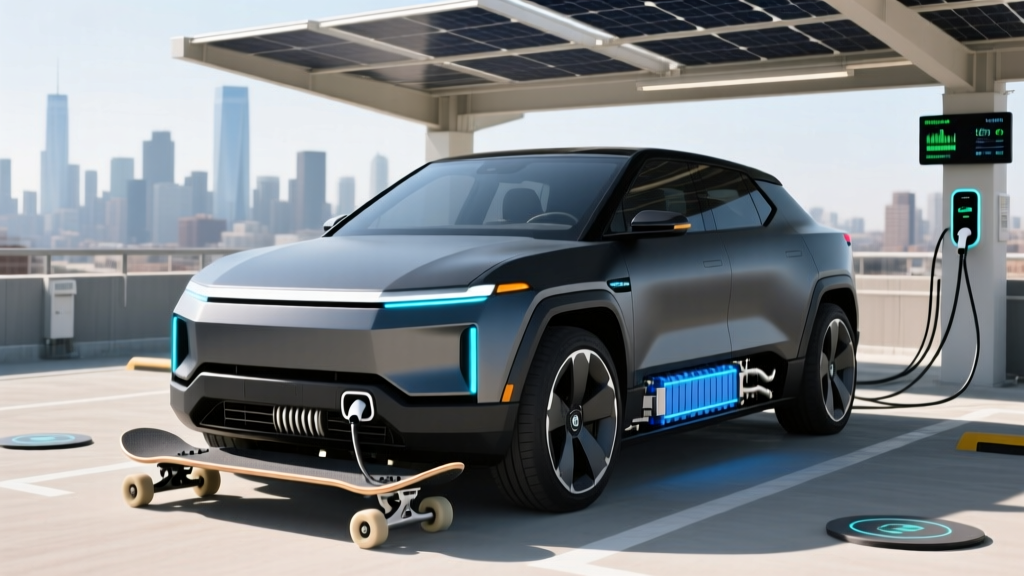
If you've researched the Rivian R1T truck or R1S SUV, you've likely encountered the term "Rivian skateboard platform" — the modular, flat architecture that houses the battery pack, motors, suspension, and thermal management in a single structural slab beneath the vehicle floor. It's the reason both vehicles share a near-identical driving character despite very different body styles, and it's the engineering foundation that Rivian has iterated on since the 2022 launch generation.
For 2026, the Rivian skateboard platform underpins the refreshed R1 Dual-Motor, Performance Dual-Motor, and Tri-Motor configurations across both the R1T (truck) and R1S (three-row SUV). This review breaks down exactly what the platform delivers in measurable terms: range, charging speed, performance, cost, and real-world ownership practicality.
Spec Table: 2026 Rivian R1 Platform at a Glance
| Specification | Dual-Motor (Standard) | Performance Dual-Motor | Tri-Motor |
|---|---|---|---|
| EPA Range (R1S / R1T, Max Pack) | ~410 mi / ~420 mi | ~390 mi / ~400 mi | ~370 mi / ~380 mi |
| Battery (usable, Max Pack) | ~141 kWh, NMC | ~141 kWh, NMC | ~141 kWh, NMC |
| Battery (usable, Standard Pack) | ~106 kWh, NMC | ~106 kWh, NMC | N/A |
| Peak DC Fast Charge | ~200 kW | ~220 kW | ~220+ kW |
| 10–80% DC Charge Time | ~38 min | ~34 min | ~34 min |
| Level 2 Home Charging | 11.5 kW (~25 mi/hr) | 11.5 kW (~25 mi/hr) | 11.5 kW (~25 mi/hr) |
| 0–60 mph | ~4.5 sec | ~3.4 sec | ~2.9 sec |
| Horsepower | 533 hp | 665 hp | 850+ hp |
| Drivetrain | AWD (dual-motor) | AWD (dual-motor) | AWD (tri-motor) |
| MPGe (combined, est.) | ~73 MPGe | ~70 MPGe | ~65 MPGe |
| Efficiency (kWh/100 mi) | ~46 kWh | ~48 kWh | ~52 kWh |
| Base MSRP (R1T / R1S) | $71,700 / $77,700 | $81,700 / $85,700 | $101,700 / $105,700 |
| Battery/Powertrain Warranty | 8 yr / 175,000 mi | 8 yr / 175,000 mi | 8 yr / 175,000 mi |
Source: Rivian official specifications and fueleconomy.gov. Figures reflect Max Pack configurations unless noted. Standard Pack range scales proportionally (~300–330 mi EPA). Specs subject to final EPA certification for 2026 model year.
Real-World Range: What the EPA Number Doesn't Tell You
Real-World Highway (70–75 mph, mild weather): ~340–370 miles
Real-World Highway (cold weather, 20–30°F): ~270–310 miles
City/Mixed Commuting: ~380–410 miles (regen-friendly)
The Rivian skateboard platform houses one of the largest battery packs in any production consumer EV. The Max Pack's ~141 kWh usable capacity (NMC chemistry) is a brute-force approach to range — but physics imposes penalties on a vehicle with the R1's frontal area and weight (roughly 7,000 lbs curb weight for the R1T).
In real-world highway driving at sustained 70–75 mph speeds, expect to consume roughly 46–52 kWh per 100 miles depending on configuration, terrain, and temperature. That translates to 340–370 miles before you'd want to stop and charge. In cold weather, battery thermal management demands plus reduced regenerative braking efficiency and cabin heating draw can push consumption above 55 kWh/100 mi, reducing effective range by 25–35%.
The Standard Pack (~106 kWh usable) delivers approximately 300–330 miles EPA and around 250–280 miles in real-world highway use. For most daily commuters who charge at home nightly, the Standard Pack is sufficient and shaves roughly $6,000 off the purchase price while reducing vehicle weight by several hundred pounds — which marginally improves efficiency.
Key insight for platform shoppers: The skateboard's low center of gravity and structural battery enclosure contribute to stable handling and impressive crash-test performance, but the energy density tradeoff versus lighter crossovers (like the Tesla Model Y or Hyundai Ioniq 5) means you'll spend more per mile on electricity and more time at DC fast chargers on road trips.
Charging Performance: DC Fast Charge Curve and Home Level 2
The Rivian skateboard platform supports DC fast charging at up to approximately 200–220 kW depending on the motor configuration. Here's what that looks like in practice:
| Charging Level | Power (kW) | Approx. Miles Added Per Hour | Notes |
|---|---|---|---|
| Level 1 (120V outlet) | ~1.4 kW | ~3 mi/hr | Emergency/trickle only |
| Level 2 (240V, 48A) | 11.5 kW | ~25 mi/hr | Full charge overnight (~12–14 hrs for Max Pack) |
| DC Fast Charge (peak) | 200–220 kW | ~140 mi in 20 min | Peak rate sustained to ~50% SoC, then tapers |
| DC Fast Charge (10–80%) | Avg ~150 kW | — | ~34–38 min depending on pack and config |
The charge curve matters more than peak kW. The Rivian skateboard platform holds near-peak charge rate from roughly 10% to 50% state of charge, then progressively tapers. From 80% to 100%, charging slows dramatically to protect the NMC cells — a full 80–100% top-off can add another 40+ minutes. For road trips, plan stops around the 10–80% window for the best time efficiency.
Rivian uses the NACS (Tesla-style) connector on 2026 models, granting native access to Tesla Supercharger stations — a significant advantage for road-trip charging infrastructure reliability. The Rivian Adventure Network (the brand's proprietary DC fast-charging network) continues to expand along popular overland and adventure routes.
For home Level 2 charging, the onboard 11.5 kW charger requires a 60-amp circuit (48A continuous draw). Budget $800–$2,500 for a quality Level 2 wall connector and professional installation, plus a potential $1,500–$4,000 panel upgrade if your home has a 100-amp electrical service (a 200-amp panel is strongly recommended for any EV with a pack this large).
Performance and Drivetrain: What the Skateboard Delivers
The skateboard platform's defining performance trait is torque vectoring via independent motors. The Dual-Motor setup places one motor on each axle for true AWD with instant torque distribution. The Tri-Motor adds a second rear motor for a combined 850+ horsepower and sub-3-second 0–60 mph times in the R1T.
Real-world driving impressions: the R1T and R1S feel remarkably planted for their size. The skateboard's low battery placement gives these vehicles a center of gravity closer to a sedan than a traditional body-on-frame truck or SUV. Air suspension (standard on all trims) provides up to 14.9 inches of ground clearance in Off-Road mode and drops the vehicle for easier highway cruising and entry/exit.
Towing capacity reaches 11,000 lbs for the R1T and 7,700 lbs for the R1S — class-leading among electric pickups and SUVs. However, towing at capacity will cut range roughly in half. Plan for ~180–210 miles effective range when towing 8,000+ lbs, and factor in more frequent charging stops on any trip with a trailer.
Pricing, Trims, and Federal Tax Credit Eligibility
| Configuration | R1T MSRP | R1S MSRP | §30D Tax Credit Eligible? |
|---|---|---|---|
| Dual-Motor, Standard Pack | $71,700 | $77,700 | Potential partial (see rules below) |
| Dual-Motor, Max Pack | $77,700 | $83,700 | Unlikely — exceeds MSRP cap for trucks/SUVs |
| Performance Dual-Motor, Max | $81,700 | $85,700 | No — exceeds MSRP cap |
| Tri-Motor, Max Pack | $101,700 | $105,700 | No — exceeds MSRP cap |
Federal tax credit reality check: Under IRS §30D rules, the new clean vehicle credit offers up to $7,500, but several restrictions apply. For trucks, vans, and SUVs, the MSRP cap is $80,000. For sedans, it's $55,000. Buyer income caps apply ($150K single / $300K joint filer AGI). Additionally, battery component and critical mineral sourcing requirements must be met — and these requirements tighten annually.
Most Rivian R1 configurations exceed the $80,000 MSRP cap for trucks and SUVs. The base Dual-Motor R1T with Standard Pack at $71,700 technically falls under the cap, but you must also satisfy the battery sourcing requirements, which have eliminated credit eligibility for many vehicles with non-North-American mineral supply chains. Check the latest eligibility list at irs.gov before assuming credit qualification. Rivian does offer a point-of-sale transfer option if you do qualify, reducing your purchase price at the dealer rather than waiting for a tax refund.
As-tested pricing with common options (premium interior, 22-inch wheels, Max Pack upgrade) typically lands between $78,000 and $110,000 depending on configuration.
Cargo, Passenger Space, and Daily Practicality
The skateboard platform's flat floor enables packaging advantages that body-on-frame vehicles can't match:
- R1T bed: 4.5 feet (54 inches) with a unique Gear Tunnel pass-through (available on certain trims) adding ~11.6 cu ft of enclosed, lockable side-access storage.
- R1T front trunk (frunk): ~11.1 cu ft — large enough for charging cables, a soft cooler, or a small duffel.
- R1S cargo (behind third row): ~10.5 cu ft; behind second row: ~46 cu ft; max with all rear seats folded: ~92 cu ft.
- Passenger space: Front headroom ~40.8 in, rear legroom ~38.2 in (R1S). Third row fits adults under ~5'8" for short trips.
The R1S three-row SUV configuration is the stronger family hauler, while the R1T appeals to buyers who need a truck bed for gear, bikes, or light construction materials. Both vehicles share the skateboard's flat floor, which means no transmission tunnel hump — the rear middle seat is genuinely usable for a third adult.
Standout Tech, Driver Assists, and Drawbacks
Tech highlights:
- Rivian's Driver+ system is an SAE Level 2 hands-on driver-assistance feature with lane centering and adaptive cruise on mapped highways. It is not autonomous driving — the driver must remain attentive and keep hands on the wheel.
- 15.6-inch center touchscreen running Rivian's proprietary OS with over-the-air updates, integrated trip planning with automatic charging stops, and a camp mode that maintains cabin climate overnight.
- Four-zone air suspension with automatic load-leveling and adjustable ride height.
- Built-in air compressor accessible from the bed and interior for tire inflation and gear.
- V2H (vehicle-to-home) capability planned via bidirectional charging hardware — enabling the R1's massive battery to serve as home backup power.
Notable drawbacks:
- Efficiency: At 46–52 kWh/100 mi, the R1 platform consumes significantly more energy per mile than lighter EVs. Charging costs on road trips add up — roughly $0.15–$0.20 per mile at public DC fast chargers.
- Charge speed vs. competitors: At ~200–220 kW peak, the R1 charges slower than 800V-architecture vehicles like the Hyundai Ioniq 5 (peak ~240 kW, 10–80% in ~18 min) or the Porsche Macan EV (~270 kW). The large battery means longer absolute charge times.
- Service network: Rivian's service center footprint remains smaller than legacy automakers, and mobile service availability varies by region. Wait times for collision repair can be lengthy in some markets.
- Insurance: Premium EV SUVs and trucks typically carry 15–30% higher insurance costs than comparable gas vehicles. Get quotes before purchasing.
Who the Rivian Skateboard Platform Is Built For
Not ideal for: Budget-conscious buyers, high-mileage commuters prioritizing lowest cost-per-mile, apartment dwellers without home charging, or buyers who prioritize the fastest possible DC charge times on road trips.
Pros and Cons Summary
Pros
- Class-leading range with Max Pack (400+ mi EPA)
- Genuine off-road capability with air suspension and quad-motor torque vectoring
- Excellent build quality and thoughtful adventure-oriented design details
- NACS connector for native Supercharger access
- Industry-leading 8 yr / 175,000 mi battery warranty
- Strong towing capacity (11,000 lbs R1T)
Cons
- High energy consumption (46–52 kWh/100 mi)
- DC charge times longer than 800V competitors
- Most trims exceed §30D tax credit MSRP cap
- Premium pricing ($71K–$110K+)
- Limited service center availability in some regions
- Cold-weather range loss significant on such a large pack
Frequently Asked Questions
What is the real-world range of the Rivian R1 on the skateboard platform?
With the Max Pack (~141 kWh), expect 340–370 miles in real-world highway driving in mild weather, and 270–310 miles in cold conditions (20–30°F). The Standard Pack (~106 kWh) delivers approximately 250–280 miles highway. City driving with frequent regenerative braking opportunities yields results closer to the EPA sticker.
How fast does the Rivian R1 charge at home and on the road?
At home on a Level 2 (240V, 48A) charger, the R1 adds approximately 25 miles of range per hour at 11.5 kW. A full Standard Pack charge takes roughly 9–10 hours; the Max Pack takes 12–14 hours. On DC fast chargers, peak rate is 200–220 kW, with a 10–80% session taking 34–38 minutes. The charge curve tapers significantly above 80%.
How much does a Rivian R1 cost after potential tax credits?
The base R1T Dual-Motor Standard Pack starts at $71,700. If you qualify for the full $7,500 §30D federal credit (subject to MSRP cap, income limits, and battery sourcing requirements), the effective price drops to ~$64,200. However, most R1 configurations exceed the $80,000 MSRP cap for trucks/SUVs, making credit eligibility unlikely for anything above the base trim. State incentives may apply additionally — check your local energy office.
Does the Rivian R1 qualify for the federal EV tax credit?
Only the base Dual-Motor R1T (MSRP $71,700) falls under the $80,000 MSRP cap for trucks. The R1S base MSRP of $77,700 also technically qualifies on price, but you must meet buyer income caps ($150K single / $300K joint) and the vehicle must satisfy increasingly strict battery component and critical mineral sourcing requirements. Always verify current eligibility at irs.gov before purchasing.
Is the Rivian R1 worth buying versus key competitors?
Against the Ford F-150 Lightning, the R1T offers superior range, performance, and off-road capability but at a $15,000–$25,000 price premium. Against the Tesla Cybertruck, the R1T provides a more conventional and practical truck bed, better interior quality, and a proven NACS charging ecosystem, though the Cybertruck undercuts on price in certain trims. For three-row electric SUV buyers, the R1S competes with the Kia EV9 (lower price, less range) and the Tesla Model X (similar price, faster charging, less off-road capability). The Rivian skateboard platform is best justified for buyers who prioritize adventure capability, build quality, and maximum range over lowest purchase price.
What battery chemistry does the Rivian skateboard platform use?
Rivian uses NMC (nickel manganese cobalt) lithium-ion cells in both the Standard and Max battery packs. NMC offers higher energy density than LFP (lithium iron phosphate), which is essential for fitting 141 kWh into the skateboard footprint. The tradeoff is that NMC cells prefer not to sit at 100% state of charge for extended periods — Rivian recommends daily charging to 80–90% and reserving 100% charges for road trips.
For the latest Rivian specifications and configurator pricing, visit rivian.com. EPA efficiency data available at fueleconomy.gov.