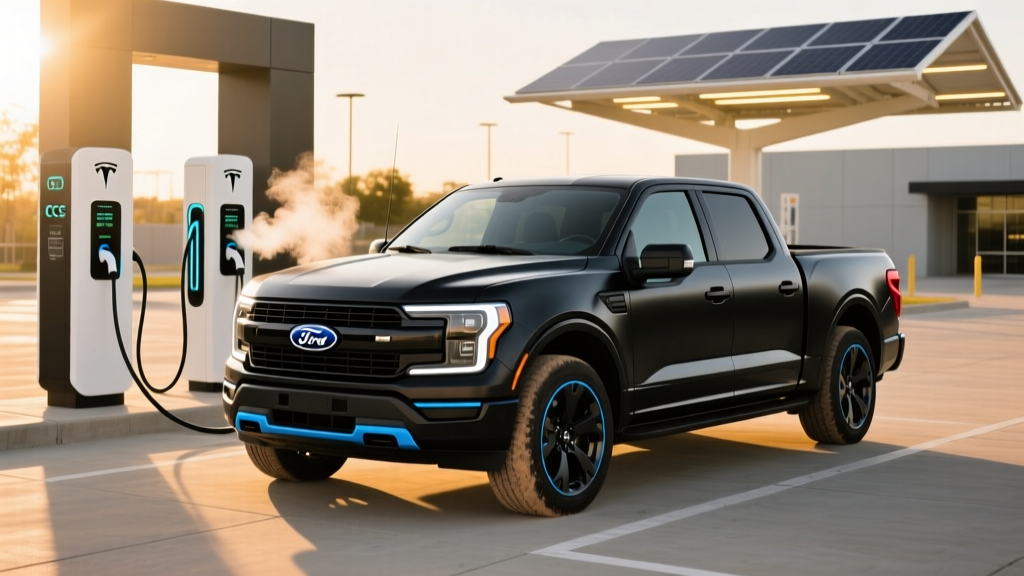
The Ford F-150 Lightning remains one of the most compelling electric trucks on the market in 2026, blending work-truck utility with sports-car acceleration. If you've been searching for the Ford F-150 Lightning 0-60 time, the answer is a brisk 3.8 seconds in the extended-range dual-motor configuration — a figure that embarrasses most V8 pickups off the line. But straight-line speed is only part of the ownership equation. This review breaks down the real-world range, charging behavior, tax credit math, and daily practicality you need to know before signing a purchase order.
Quick Verdict: Who the Lightning Is For
The F-150 Lightning excels as a daily-driver work truck, a family hauler with a massive frunk, and a job-site power source thanks to Pro Power Onboard. It is not the best choice for heavy long-distance towing, where range drops sharply. Buyers who commute, haul gear or passengers regionally, and can charge at home will extract the most value. If your primary use case involves 200-mile towing loops in winter, a diesel or a plug-in hybrid truck may serve you better until battery energy density improves.
Performance: The Ford F-150 Lightning 0-60 Story
Ford offers the Lightning with two battery options, both paired with a dual-motor all-wheel-drive powertrain. The standard-range model uses a 98 kWh usable battery (NMC chemistry) producing 563 horsepower and 775 lb-ft of torque. The extended-range pack bumps capacity to 131 kWh usable, raising output to 580 hp while maintaining the same torque figure.
| Specification | Standard Range | Extended Range |
|---|---|---|
| 0-60 mph | ~4.5 seconds | 3.8 seconds |
| Horsepower | 563 hp | 580 hp |
| Torque | 775 lb-ft | 775 lb-ft |
| Drivetrain | Dual-motor AWD | Dual-motor AWD |
| Max Towing (w/ Max Tow Pkg) | 7,700 lbs | 10,000 lbs |
| Max Payload | 2,235 lbs | 1,800 lbs |
| Battery Chemistry | NMC (nickel manganese cobalt) | NMC |
The 3.8-second extended-range run is legitimate and repeatable on a prepared surface, though like most EVs, back-to-back launches will heat-soak the battery and traction control will intervene to protect the pack. The standard-range truck's 4.5-second result still outpaces a gas F-150 5.0L V8 by a wide margin. In everyday driving, the instant torque makes highway merging and city acceleration effortless, and the one-pedal driving mode with aggressive regen reduces brake wear substantially.
EPA Range vs. Real-World Miles
EPA Estimated Range: 240 miles (Standard Range) | 320 miles (Extended Range)
Real-World Expectation: In mixed driving at moderate temperatures (60-80°F), expect 220-290 miles respectively. Sustained 75 mph highway driving drops the extended-range model to roughly 250-270 miles. In sub-30°F winter conditions with cabin heat, plan for a 25-35% reduction — bringing the extended-range truck down to approximately 200-230 miles. Towing a 5,000-lb trailer at highway speed cuts range roughly in half.
The EPA figures come from the official fueleconomy.gov listing, which also rates the extended-range Lightning at 78 MPGe combined (roughly 48 kWh per 100 miles). The standard-range truck is slightly more efficient at 78 MPGe combined as well, consuming about 43 kWh/100 mi due to the lighter pack. These efficiency numbers mean the Lightning costs approximately $0.12-$0.14 per mile to fuel on a national-average residential electricity rate of $0.17/kWh — roughly half the per-mile cost of a gas F-150 4x4 at $3.40/gallon.
One factor working in the Lightning's favor is its standard heat pump (on 2025+ models), which reduces winter efficiency losses compared to resistive heating. Still, cold-weather buyers in northern states should spec the extended-range pack to maintain a usable buffer below freezing.
Charging: DC Fast, Level 2, and Home Setup
The Lightning's charging architecture uses a CCS1 connector (though Ford now provides NACS adapters for Tesla Supercharger access as of late 2024, and 2026 models are expected to ship with a native NACS port). Here is what charging looks like across all three levels:
| Charging Level | Power / Rate | Speed | Time |
|---|---|---|---|
| Level 1 (120V household) | ~1.4 kW | ~3 mi/hr | Not practical for full charge |
| Level 2 (240V home, 32A) | 7.7 kW | ~20 mi/hr | ~16 hrs (std) / ~22 hrs (ext) |
| Level 2 (240V home, 48A) | 11.5 kW | ~30 mi/hr | ~10 hrs (std) / ~14 hrs (ext) |
| Level 2 (80A Ford Charge Station Pro) | 19.2 kW | ~50 mi/hr | ~6 hrs (std) / ~8 hrs (ext) |
| DC Fast Charge (peak) | 150 kW | ~170 mi/hr | 10-80% in ~41 min |
The 150 kW peak DC fast-charge rate is the Lightning's most notable weakness in 2026. Competitors like the Rivian R1T and the Chevrolet Silverado EV accept 200+ kW, shaving 10-15 minutes off a road-trip stop. The Lightning's charge curve is relatively flat to 60% SoC, then tapers noticeably past 80%, which is why Ford (and most EV makers) quote the 10-80% figure. Expect the 80-100% top-off to add another 30+ minutes — plan your DCFC stops accordingly and charge only to 80% on road trips.
For home charging, the 80-amp Ford Charge Station Pro is the gold standard, but it requires a 100-amp dedicated circuit. Most homes will need an electrical panel upgrade ($1,500-$3,000 on top of the $1,200-$1,500 charger cost and $500-$1,500 installation). A 48-amp Level 2 on a 60-amp circuit is a more practical fit for most 200-amp home panels and still replenishes a full overnight charge for daily commuters driving under 100 miles.
Interior, Cargo, and Technology
The Lightning's cabin mirrors the gas F-150's layout, meaning generous space and functional storage. The headline feature is the Mega Power Frunk — a 14.1 cubic-foot lockable front trunk with four 120V outlets, two USB ports, and a drain plug. It replaces the engine bay and serves as a weatherproof gear locker or tailgate-party cooler.
- Front legroom: 43.9 inches
- Rear legroom (SuperCrew): 43.6 inches
- Frunk volume: 14.1 cu ft (400 lbs max payload)
- Bed length: 5.5 ft (standard on all Lightnings)
- Bed volume: 52.8 cu ft
Infotainment runs Ford's SYNC 4A on either an 8-inch (Pro trim) or 12-inch touchscreen (Lariat and above). The 15.5-inch portrait screen from the Mustang Mach-E is not offered. Wireless Apple CarPlay and Android Auto are standard. The available Ford BlueCruise (SAE Level 2 hands-free driving) works on over 130,000 miles of pre-mapped divided highways, though the driver must remain attentive — this is not a Level 4 autonomous system.
Pro Power Onboard is available in 2.4 kW (standard) or 9.6 kW (optional) configurations, turning the Lightning into a mobile generator. The 9.6 kW version can run power tools, a job-site compressor, or even back up essential home circuits during an outage with the Ford Intelligent Backup Power system and compatible transfer switch.
Pricing, Trims, and Federal Tax Credit Eligibility
The 2026 F-150 Lightning lineup spans five trims. Here is the pricing breakdown with current §30D federal tax credit considerations:
| Trim | Base MSRP | §30D Credit Eligible? | Effective Price (if eligible) |
|---|---|---|---|
| Pro (Standard Range) | ~$55,000 | Yes (truck MSRP cap: $80K) | ~$47,500 |
| XLT (Standard Range) | ~$62,000 | Yes | ~$54,500 |
| Lariat (Extended Range) | ~$72,000 | Yes | ~$64,500 |
| Flash (Extended Range) | ~$68,000 | Yes | ~$60,500 |
| Platinum (Extended Range) | ~$86,000 | No (exceeds $80K truck cap) | $86,000 |
Critical §30D tax credit caveats for 2026: The IRS §30D credit of up to $7,500 requires the buyer to meet income caps ($150K single / $300K joint MAGI), the vehicle MSRP must not exceed $80,000 for trucks (the Platinum trim exceeds this), and the battery must satisfy critical-mineral and battery-component sourcing thresholds that tighten annually. As of 2026, the Lightning's battery sourcing qualifies, but buyers should verify current eligibility on the IRS qualified vehicles list before purchase. The credit can now be transferred to the dealer as a point-of-sale discount, reducing your out-of-pocket cost immediately rather than waiting for tax filing. Consult a tax professional for your specific situation.
Warranty and Long-Term Ownership
Ford backs the Lightning with a competitive warranty structure:
- Bumper-to-bumper: 3 years / 36,000 miles
- Powertrain: 5 years / 60,000 miles
- Battery & electric components: 8 years / 100,000 miles (retains ≥70% capacity)
The 8-year/100,000-mile battery warranty is industry-standard and matches rivals like Rivian and GM. Ford guarantees the pack will retain at least 70% of its original capacity during the warranty period. Based on data from early 2022-2023 Lightning owners, NMC pack degradation has been minimal — typically 3-5% loss over the first 30,000-40,000 miles — consistent with liquid-cooled packs from other OEMs. A full out-of-warranty battery replacement, should it ever be needed, is estimated at $15,000-$22,000 based on current Ford parts pricing, though this figure is expected to decline as battery costs continue to fall.
F-150 Lightning vs. Key Competitors
How does the Lightning stack up against the Rivian R1T and the Chevrolet Silverado EV?
| Spec | Ford F-150 Lightning (Ext.) | Rivian R1T (Dual Max) | Chevy Silverado EV (4WT) |
|---|---|---|---|
| EPA Range | 320 mi | 352 mi | 440 mi |
| 0-60 mph | 3.8 sec | 3.5 sec | 4.5 sec |
| Peak DC Charge | 150 kW | 220 kW | 350 kW |
| 10-80% DCFC | ~41 min | ~27 min | ~20 min |
| Max Towing | 10,000 lbs | 11,000 lbs | 10,000 lbs |
| Starting MSRP | ~$55,000 | ~$75,000 | ~$55,000 |
| §30D Credit Eligible | Most trims | Yes | Most trims |
The Lightning wins on value and dealer accessibility — Ford's 6,000+ dealerships dwarf Rivian's service footprint, and the Pro trim undercuts the R1T by $20,000. The Silverado EV offers superior range and charging speed but launched with fleet-oriented trims and a less refined ride. For buyers prioritizing acceleration feel, the Lightning's 3.8-second 0-60 is the sweet spot between the R1T's slightly quicker sprint and the Silverado EV's more relaxed pace.
Pros and Cons
Pros
- 3.8-second 0-60 (extended range) — among the fastest trucks sold
- 14.1 cu-ft Mega Power Frunk is best-in-class front storage
- Pro Power Onboard (up to 9.6 kW) for job-site or backup use
- Comfortable ride quality and quiet cabin at highway speed
- Eligible for full $7,500 §30D credit on most trims
- Wide Ford dealer network for service and parts
Cons
- 150 kW peak DC charging trails Rivian (220 kW) and Chevy (350 kW)
- Towing slashes range by ~50% at highway speeds
- Platinum trim exceeds $80K MSRP cap, forfeiting tax credit
- 5.5-ft bed only — no long-bed option
- Heavy curb weight (~6,500-6,800 lbs) increases tire wear
Frequently Asked Questions
What is the real-world range of the Ford F-150 Lightning?
Expect 220-290 miles in moderate conditions depending on battery pack choice. Highway driving at 75 mph reduces the extended-range model to roughly 250-270 miles, and winter temperatures below 30°F can drop range by 25-35%. Towing cuts range approximately in half.
How fast does the F-150 Lightning charge at home and on the road?
On a DC fast charger, the Lightning peaks at 150 kW, reaching 10-80% in approximately 41 minutes. At home on a 48-amp Level 2 charger (11.5 kW), you'll add about 30 miles per hour, fully replenishing the extended-range pack in roughly 14 hours. The available 80-amp Ford Charge Station Pro cuts that to about 8 hours.
How much does the F-150 Lightning cost after tax credits?
The Pro trim starts around $55,000 and drops to approximately $47,500 after the full $7,500 §30D federal credit (if you meet income and sourcing requirements). The popular Lariat Extended Range sits near $64,500 after credit. The Platinum trim at ~$86,000 does not qualify due to the $80,000 truck MSRP cap.
Does the F-150 Lightning qualify for the federal EV tax credit?
Most trims do qualify for up to $7,500 under IRS §30D, provided the buyer's MAGI is under $150K (single) or $300K (joint), the vehicle MSRP is under $80,000, and battery sourcing requirements are met. Always verify on the fueleconomy.gov tax credit page and consult a tax professional before purchasing.
Is the F-150 Lightning worth buying vs. the Rivian R1T or Silverado EV?
The Lightning is the best value play: lower starting price, broad dealer support, and excellent utility via the frunk and Pro Power Onboard. Choose the R1T if you need faster DC charging, more range, or a gear-tunnel storage system. Choose the Silverado EV if maximum range (440 mi) and 350 kW charging are your top priorities and you can find stock.
What is the Ford F-150 Lightning 0-60 time?
The extended-range dual-motor F-150 Lightning hits 0-60 mph in 3.8 seconds. The standard-range model does it in approximately 4.5 seconds. Both figures are for the dual-motor AWD configuration, which is the only drivetrain offered.
Sources: fueleconomy.gov (EPA), IRS §30D qualified vehicles, Ford Motor Company official specifications.