Quick Verdict: The Affordable Long-Range Crossover
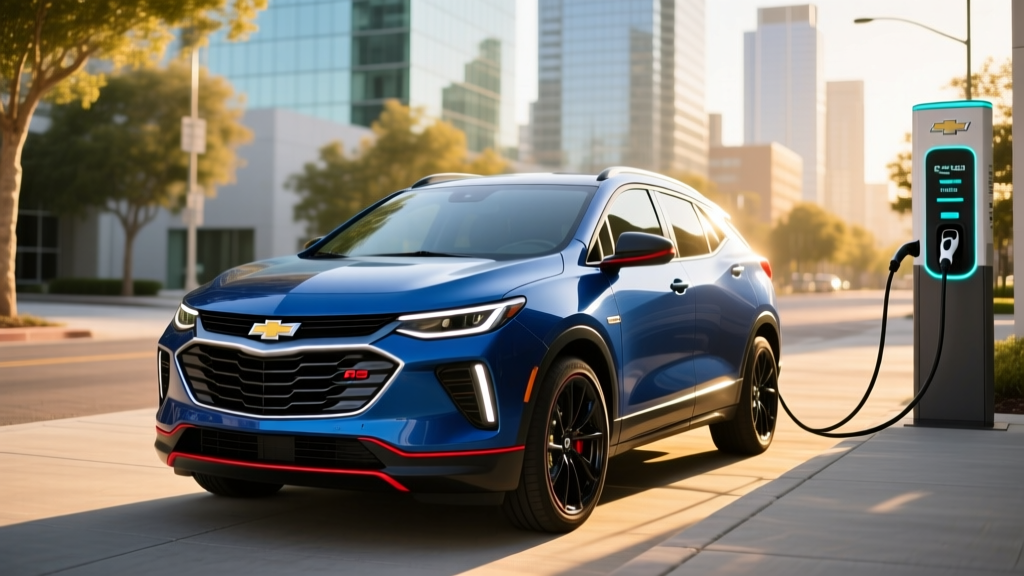
The 2026 Chevrolet Equinox EV RS occupies a rare sweet spot in the electric-vehicle market: a mainstream compact crossover with over 300 miles of EPA-estimated range, competitive DC fast-charging speeds, and a starting price that — when paired with the federal §30D tax credit — undercuts most rivals by thousands. The RS trim adds sport-tuned suspension, blacked-out exterior accents, and a dual-motor AWD powertrain that delivers confident acceleration without sacrificing efficiency.
After spending time with the Equinox EV RS across city commuting, highway cruising, and DC fast-charging sessions, the takeaway is clear: Chevrolet has built a compelling daily-driver EV that prioritizes practicality over flash. It won't win drag races against a Tesla Model Y Performance, but it will comfortably cover a 250-mile round trip in winter without a charging stop — and that matters more to most buyers.
Range, Efficiency, and the Real-World Reality
Real-World Expectation: ~270–290 miles mixed driving; ~240–260 miles sustained highway at 70+ mph; ~220–245 miles in freezing temperatures (below 32°F)
Efficiency: 115 MPGe combined / 29 kWh per 100 miles (EPA)
The Equinox EV RS AWD carries an EPA-estimated 319 miles of range on its 85 kWh usable Ultium battery pack (GM's modular platform shared with the Blazer EV and Cadillac Lyriq). That figure is measured on the combined cycle, which blends city and highway driving.
In real-world use, expect the RS AWD to deliver roughly 270–290 miles on a full charge during moderate-temperature mixed driving. Sustained highway travel at 70–75 mph pushes consumption higher — aerodynamic drag dominates at speed, and you'll see closer to 240–260 miles before the battery hits its low-state buffer. Cold weather (below freezing) compounds the loss: battery chemistry slows, cabin heating draws significant power, and regenerative braking is limited until the pack warms. Plan for 220–245 miles in deep winter conditions.
The Equinox EV uses GM's Ultium battery architecture with NMC (nickel-manganese-cobalt) pouch cells. NMC chemistry offers higher energy density than LFP (lithium iron phosphate), which is why GM can pack 85 kWh of usable capacity into a compact crossover footprint. The trade-off is that NMC cells benefit from staying between 20–80% state of charge for daily use, reserving 100% charges for road trips. GM's battery management system includes active thermal conditioning and a buffer to protect long-term health.
| Spec | Value |
|---|---|
| EPA Range (AWD) | 319 miles |
| Battery (Usable) | 85 kWh, NMC (Ultium) |
| EPA Efficiency | 115 MPGe / 29 kWh/100 mi |
| Max DC Fast Charge | 150 kW (peak) |
| 10–80% DC Charge Time | ~30 minutes |
| Level 2 Home Charge Rate | 11.5 kW (48A) / ~34 mi/hr |
| Powertrain | Dual-motor AWD |
| Horsepower | 288 hp (combined) |
| Torque | 337 lb-ft |
| 0–60 mph | ~6.2 seconds |
| Cargo Volume | 26.4 cu ft (rear seats up) / 57.2 cu ft (folded) |
| Base MSRP (RS AWD) | $44,900 (before incentives) |
Charging Speed: DC Fast, Level 2, and the Curve
Charging is where the Equinox EV RS proves adequate for road trips while excelling at home-based daily use. The maximum DC fast-charge rate is 150 kW at a CCS-compatible station. On an ideal 350 kW-class charger with a preconditioned battery, the 10–80% session takes approximately 30 minutes.
The charge curve matters more than the peak number. The Equinox EV holds near its 150 kW peak through roughly 40–50% state of charge, then tapers progressively. By 80% SoC, power drops to approximately 50–60 kW. This is standard behavior for NMC packs — pushing electrons into a nearly full battery risks lithium plating and accelerated degradation, so the BMS manages the taper intentionally. For road trips, the 10–80% window is your practical charging zone; charging from 80–100% at a DC station is painfully slow and best avoided.
| Level | Power (kW) | Miles Added per Hour | Typical Use Case |
|---|---|---|---|
| Level 1 (120V) | ~1.4 kW | ~4 mi/hr | Emergency / overnight trickle |
| Level 2 (240V, 48A) | 11.5 kW | ~34 mi/hr | Home daily charging (full in ~8 hrs) |
| DC Fast (CCS) | Up to 150 kW | ~175 mi in 15 min (peak) | Road trips, 10–80% in ~30 min |
At home on a Level 2 charger (240V, 48-amp circuit), the Equinox EV accepts up to 11.5 kW, adding roughly 34 miles of range per hour. A full 0–100% charge takes about 8 hours, meaning an overnight session easily replenishes a full day's driving. Chevrolet includes a dual-level portable charge cord that handles both 120V and 240V outlets, though most owners will install a dedicated Level 2 wallbox.
The Equinox EV uses the CCS1 connector standard. GM has announced a transition to NACS (Tesla's connector) for future models, but the 2026 Equinox EV retains CCS1. Tesla Supercharger access is available via an adapter (sold separately or included depending on trim year), expanding the public charging network significantly.
Performance and Driving Dynamics
The RS AWD pairs a front and rear electric motor for a combined output of 288 horsepower and 337 lb-ft of torque. The 0–60 mph sprint takes approximately 6.2 seconds — brisk enough for confident highway merging but not in sports-car territory. Electric torque delivery is instantaneous, so the Equinox EV RS feels quicker off the line than the numbers suggest.
The RS trim includes a sport-tuned suspension with slightly firmer damping than the LT and a lower ride height. It corners with less body roll than most compact crossovers, though the ~4,700-pound curb weight (largely from the battery pack) is always present during aggressive direction changes. Steering is well-weighted and progressive, and the regenerative braking offers multiple levels, including a one-pedal driving mode that can bring the vehicle to a complete stop without touching the brake pedal.
Ride quality is a highlight. The Ultium platform's low center of gravity and independent rear suspension absorb road imperfections effectively, and cabin noise isolation is excellent — a benefit of having no internal combustion engine. At 75 mph, the dominant sound is wind noise around the mirrors, not tire or motor whine.
Interior, Cargo, and Technology
The Equinox EV cabin is dominated by a 17.7-inch diagonal infotainment touchscreen running Google Built-In (Google Maps, Google Assistant, and the Play Store). The display is angled toward the driver, responsive to touch, and supports wireless Apple CarPlay and Android Auto. An 11-inch digital instrument cluster sits behind the steering wheel, showing range, power consumption, and navigation.
Interior materials in the RS include Evotex (synthetic leather) seating surfaces with red contrast stitching, a flat-bottom steering wheel, and aluminum pedals. Build quality is solid for the price point, though some lower dash and door-panel plastics feel hard and hollow compared to premium rivals.
Cargo volume measures 26.4 cubic feet behind the rear seats and 57.2 cubic feet with the 60/40 split rear seat folded. Rear legroom is 37.5 inches — adequate for adults on longer trips. There is no front trunk (frunk); the space under the hood houses electronics and the HVAC system.
Standard driver-assistance features under the Chevy Safety Assist suite include automatic emergency braking with pedestrian detection, lane-keeping assist, following-distance indicator, and IntelliBeam automatic high beams. Available Super Cruise (GM's hands-off-wheel, eyes-on-road Level 2 system) can be optioned on the RS for $2,500, enabling hands-free driving on over 750,000 miles of mapped highways in the US and Canada.
Pricing, Trims, and Federal Tax Credit Eligibility
The 2026 Chevrolet Equinox EV is offered in three trims: LT (FWD and AWD), RS (AWD), and Launch Edition (AWD). Pricing for the RS AWD starts at $44,900 (including destination charge). Fully optioned with Super Cruise, premium paint, and the comfort package, an RS can reach approximately $49,000–$50,500.
| Trim | MSRP | Max §30D Credit | Est. Net Price* |
|---|---|---|---|
| LT FWD | $34,900 | Up to $7,500 | ~$27,400 |
| LT AWD | $38,400 | Up to $7,500 | ~$30,900 |
| RS AWD | $44,900 | Up to $7,500 | ~$37,400 |
*Net price assumes full §30D credit eligibility. Actual credit varies by buyer.
The Equinox EV RS AWD qualifies for the federal §30D Clean Vehicle Credit, which can provide up to $7,500 — split into $3,750 for critical-minerals sourcing and $3,750 for battery-component sourcing. Since January 2024, buyers can transfer the credit to the dealer at point of sale, reducing the purchase price directly rather than waiting for a tax refund.
- MSRP Cap: SUVs/crossovers must have an MSRP at or below $80,000 — the Equinox EV RS clears this easily.
- Income Caps: Modified adjusted gross income (MAGI) must not exceed $150,000 (single), $225,000 (head of household), or $300,000 (married filing jointly).
- Battery Sourcing: The $7,500 credit requires meeting both critical-minerals and battery-component requirements, which shift annually. GM's Ultium batteries use a mix of domestic and allied-nation sourcing, but exact eligibility depends on the model year and production batch. Verify with your dealer and a tax professional before purchase.
- Transferability: The credit can be applied at point of sale as a down-payment reduction, even if you have no tax liability — a major advantage for lower-tax-bracket buyers.
Warranty and Long-Term Ownership
GM backs the Equinox EV with a competitive warranty package:
- Battery & Propulsion: 8 years / 100,000 miles (whichever comes first), covering defects and capacity loss below a specified threshold (typically ~60–70% state of health)
- Bumper-to-Bumper: 3 years / 36,000 miles
- Powertrain (non-battery): 5 years / 60,000 miles
- Roadside Assistance: 5 years / 60,000 miles
The 8-year/100,000-mile battery warranty is the industry standard for mainstream EVs and provides meaningful protection against premature degradation. GM's Ultium packs include active thermal management (liquid cooling and heating), which is critical for long-term cell health, especially in hot climates or with frequent DC fast charging.
Projected maintenance costs are low: no oil changes, no spark plugs, no transmission fluid. Brake pad life is extended significantly by regenerative braking, which handles most deceleration. Budget for tire replacement (EVs wear tires faster due to weight and instant torque), cabin air filters, and wiper fluid. Annual insurance premiums tend to run 15–25% higher than equivalent gas crossovers — get quotes before buying.
Pros, Cons, and the Competition
✓ Pros
- 319-mile EPA range at a sub-$45K MSRP
- Comfortable ride, well-isolated cabin
- Large 17.7" infotainment screen with Google Built-In
- Available Super Cruise hands-free driving
- Strong federal tax credit eligibility
- Practical cargo and passenger space
✗ Cons
- 150 kW peak DC charging trails some rivals (Hyundai Ioniq 5: 240 kW)
- No front trunk (frunk)
- Some hard interior plastics at this price point
- CCS1 connector requires adapter for Tesla Superchargers
- AWD range drops vs. FWD variant (319 vs. 319 mi — minimal, but AWD consumes more in practice)
- Super Cruise is a costly add-on, not standard
Who Should Buy the Equinox EV RS?
Choose the Equinox EV RS if: You want a practical, comfortable compact EV crossover with 300+ miles of range, qualify for the federal tax credit, and prioritize ride comfort and tech over outright charging speed or performance.
Look elsewhere if: You need the fastest possible DC charging (consider the Hyundai Ioniq 5 or Kia EV6 with 800V architecture), want a front trunk for extra storage, or prefer a sportier driving experience (Tesla Model Y or Ford Mustang Mach-E GT).
Key competitors in the $35,000–$48,000 compact EV crossover segment include:
- Hyundai Ioniq 5: Faster DC charging (240 kW peak, 10–80% in ~18 min), more distinctive design, but slightly less range (305 mi AWD).
- Tesla Model Y Long Range: NACS connector with native Supercharger access, stronger performance, but higher price and polarizing interior minimalism.
- Ford Mustang Mach-E: Sportier handling, BlueCruise availability, but lower range on AWD trims and a less refined ride.
- Kia EV6: Shares the Ioniq 5's 800V fast-charging architecture, sleek styling, but less cargo space.
Frequently Asked Questions
What is the real-world range of the Chevrolet Equinox EV RS?
The EPA rates the AWD RS at 319 miles combined. In real-world mixed driving at moderate temperatures, expect 270–290 miles. Sustained highway driving at 70+ mph reduces that to roughly 240–260 miles, and freezing-weather conditions can drop range to 220–245 miles due to battery chemistry slowdown and cabin-heating energy draw.
How fast does the Equinox EV RS charge?
On a DC fast charger, the Equinox EV RS peaks at 150 kW and charges from 10–80% in approximately 30 minutes. At home on a Level 2 charger (240V, 48A), it accepts 11.5 kW and adds about 34 miles of range per hour, fully charging overnight in roughly 8 hours.
How much does the Equinox EV RS cost after the federal tax credit?
The RS AWD starts at $44,900 MSRP. If you qualify for the full $7,500 §30D federal tax credit (meeting income, sourcing, and MSRP requirements), the effective price drops to approximately $37,400. The credit can be transferred at point of sale, reducing your purchase price directly.
Does the Equinox EV RS qualify for the federal EV tax credit?
Yes — the Equinox EV RS AWD is eligible for up to $7,500 under IRS §30D, subject to buyer income caps ($150K single / $300K married filing jointly), the $80,000 SUV MSRP cap, and battery critical-minerals/component sourcing requirements that update annually. Confirm eligibility with your dealer and a tax professional, as sourcing rules change year to year. Check the latest rules at IRS.gov.
Is the Equinox EV RS worth buying over competitors?
It depends on your priorities. The Equinox EV RS wins on value (319 miles of range under $45K, strong tax-credit eligibility) and comfort. It falls behind the Hyundai Ioniq 5 and Kia EV6 on DC fast-charging speed (150 kW vs. 240 kW) and behind the Tesla Model Y on native Supercharger access. If daily comfort, range, and price matter most, the Equinox EV RS is one of the strongest choices in its class.
What connector does the Equinox EV RS use?
The 2026 Equinox EV uses the CCS1 connector for DC fast charging and J1772 for Level 2 AC charging. To use Tesla Superchargers, you'll need a GM-approved NACS adapter, which GM has made available to owners. Future GM models are expected to adopt NACS natively.
How long will the Equinox EV battery last?
GM warrants the Ultium battery pack for 8 years or 100,000 miles against defects and excessive capacity loss. Based on degradation data from similar NMC packs with active thermal management, expect approximately 10–15% capacity loss over 100,000 miles under normal use — meaning the battery should still hold 85–90% of its original capacity at that point. Avoid frequent 100% charges and prolonged exposure to extreme heat to maximize longevity.