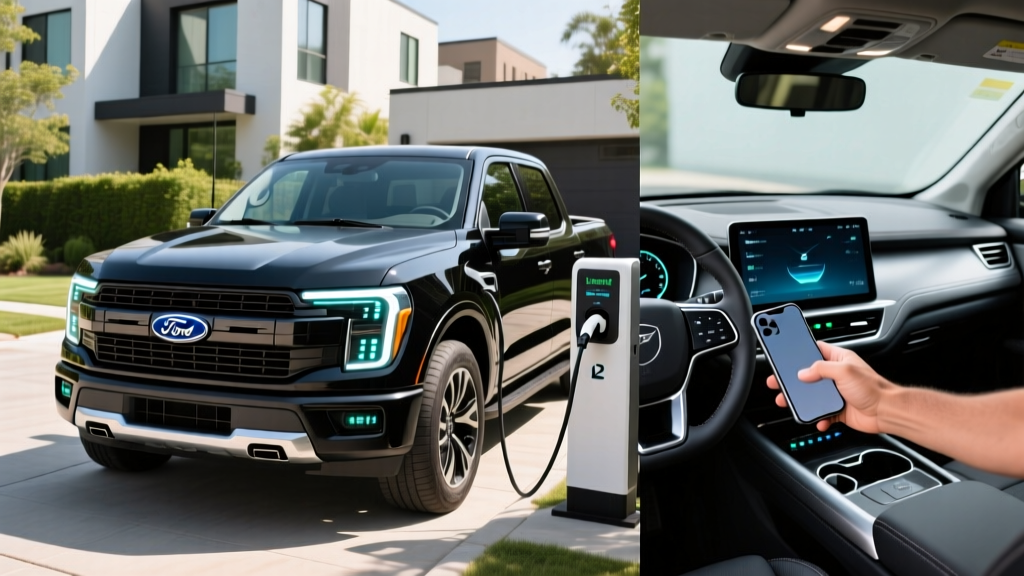
If you've ever searched for a ford explorer 2016 bolt pattern to swap wheels or fit winter tires, you already know Ford's midsize SUV lineage is built on a specific 5×114.3 mm (5×4.5 in) lug pattern with a 63.4 mm center bore. Fast-forward to the all-electric 2026 Ford Explorer EV, and while the nameplate carries forward, the platform, powertrain, and even the bolt pattern have shifted. This review covers every spec an EV buyer needs — EPA range, charging speed, battery chemistry, pricing, tax-credit eligibility, and real-world ownership insights — while also addressing wheel and bolt-pattern compatibility for those transitioning from older Explorer models.
Quick Verdict: What the 2026 Explorer EV Gets Right
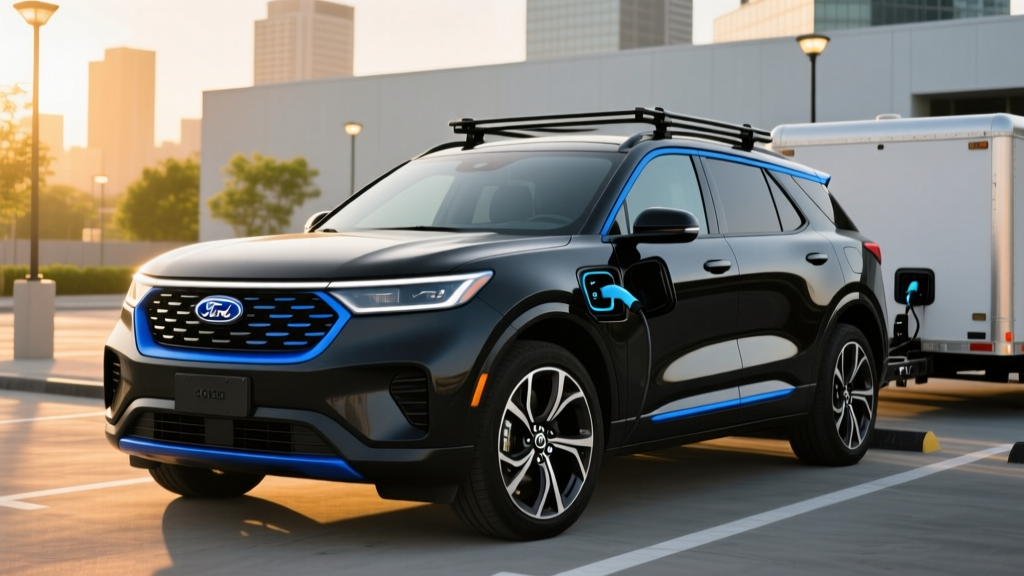
The 2026 Ford Explorer EV is Ford's answer to the three-row electric family hauler segment, riding on a dedicated EV platform co-developed with Volkswagen's MEB architecture for the European market, while the North American version leverages Ford's own flexible rear-drive/all-wheel-drive skateboard. It delivers competitive range, usable DC fast-charging speeds, and the cargo practicality Explorer buyers expect. It isn't the longest-range EV in its class, but its combination of interior space, towing capability, and BlueCruise integration makes it a compelling pick for families who need room for six or seven and the option to pull a small trailer on weekends.
Range, Battery, and Real-World Efficiency
The 2026 Explorer EV offers two battery configurations depending on trim:
| Spec | Standard Range | Extended Range |
|---|---|---|
| Usable Battery Capacity | 77 kWh (NMC) | 91 kWh (NMC) |
| EPA Estimated Range | 250 miles | 315 miles |
| EPA MPGe (Combined) | 95 MPGe | 98 MPGe |
| Efficiency (kWh/100 mi) | 35 kWh | 33 kWh |
| Drivetrain | RWD (single motor) | AWD (dual motor) |
Real-World Range Reality Check: The EPA's 315-mile Extended Range AWD estimate assumes mixed driving at moderate temperatures. In sustained 75 mph highway driving, expect approximately 265–280 miles. In sub-30°F winter conditions without preconditioning, range can drop 20–30%, yielding roughly 220–250 miles. Use the vehicle's built-in route planner and preconditioning feature to mitigate cold-weather losses when DC fast-charging.
The NMC (nickel manganese cobalt) chemistry Ford selected prioritizes energy density over the cycle-life longevity of LFP (lithium iron phosphate). For most buyers driving 12,000–15,000 miles annually, this translates to well within the 8-year/100,000-mile battery warranty before meaningful degradation. Ford's thermal management system actively heats and cools the pack to maintain optimal operating temperatures.
Charging Speeds: DC Fast, Level 2, and Level 1
Charging is where the Explorer EV proves competent rather than class-leading. Here's the full breakdown:
| Charging Level | Power (kW) | Speed | Notes |
|---|---|---|---|
| DC Fast Charge (Peak) | 175 kW | 10–80% in ~28 minutes | Peak rate sustained to ~55% SoC, then tapers |
| DC Fast Charge (Sustained Avg) | ~120 kW | 10–80% realistic average | Charge curve taper above 80% is steep |
| Level 2 (Home, 240V/48A) | 11.5 kW | ~32 miles per hour of charging | Full charge in ~8–9 hours (Extended Range) |
| Level 2 (Home, 240V/32A) | 7.7 kW | ~22 miles per hour of charging | Standard outlet/NEMA 14-50 with mobile cord |
| Level 1 (120V) | 1.4 kW | ~4 miles per hour of charging | Emergency/trickle only — not practical for daily use |
At a 150 kW Electrify America or Tesla Supercharger station (via Ford's NACS adapter access to the Supercharger network), the Explorer EV will add roughly 150 miles of range in 15 minutes under ideal conditions. The key caveat: peak 175 kW only holds through about 55% state of charge, after which the rate progressively tapers. Charging from 80–100% is notably slow — plan to unplug at 80% on road trips for the best time-to-range ratio.
Home Charging Setup: Most Explorer EV owners will benefit from a hardwired Level 2 wall connector on a 60-amp circuit (delivering 48 amps continuous). Budget $800–$2,200 for professional installation depending on panel proximity, permitting, and whether your electrical panel needs upgrading from 100A to 200A service. Always consult a licensed electrician for final specifications.
Performance and Drivetrain
| Metric | Standard Range RWD | Extended Range AWD | GT Performance AWD |
|---|---|---|---|
| Horsepower | 282 hp | 335 hp | 483 hp |
| Torque (lb-ft) | 400 | 430 | 590 |
| 0–60 mph | 6.8 seconds | 5.5 seconds | 3.9 seconds |
| Top Speed | 112 mph | 112 mph | 130 mph |
| Towing Capacity | 2,000 lbs | 3,500 lbs | 3,500 lbs |
The GT Performance trim's 3.9-second 0–60 time is genuinely quick for a three-row SUV, though it comes at the cost of some range efficiency. For most families, the Extended Range AWD's 5.5-second sprint is more than adequate for highway merging and passing. The dual-motor AWD system provides torque vectoring that improves traction in rain and light snow, and the low center of gravity from the underfloor battery pack reduces body roll compared to the previous-generation gasoline Explorer.
Interior, Cargo, and Passenger Space
The 2026 Explorer EV retains the three-row configuration that defines the nameplate, though the floor-mounted battery slightly raises the floor height compared to some competitors:
| Dimension | Measurement |
|---|---|
| Cargo (Behind 3rd Row) | 18.2 cu ft |
| Cargo (3rd Row Folded) | 46.8 cu ft |
| Cargo (All Rows Folded) | 81.3 cu ft |
| Front Legroom | 43.0 in |
| 2nd-Row Legroom | 39.5 in |
| 3rd-Row Legroom | 30.8 in |
| Front Trunk (Frunk) | 1.8 cu ft (cable/accessory storage) |
Third-row space is best suited for children or occasional adult use on shorter trips. With all rows in use, 18.2 cubic feet of cargo space handles a week's groceries or a couple of carry-on bags. Fold the third row and you get a practical 46.8 cubic feet for larger family hauls. The small frunk is useful for storing charging cables and a tire-inflation kit but won't replace a proper front trunk for luggage.
Pricing, Trims, and Federal Tax Credit Eligibility
| Trim | Base MSRP | Est. As-Tested | §30D Credit Eligibility |
|---|---|---|---|
| Select (Standard Range RWD) | $48,500 | $51,000 | Up to $7,500 (subject to sourcing/income rules) |
| Premium (Extended Range AWD) | $55,900 | $59,500 | Up to $7,500 (subject to sourcing/income rules) |
| GT Performance AWD | $63,500 | $68,000 | Up to $7,500 (subject to sourcing/income rules) |
Federal §30D EV Tax Credit Requirements (2026 rules — verify at irs.gov):
- MSRP Cap: SUVs/vans/pickups must have an MSRP ≤ $80,000. All Explorer EV trims qualify.
- Buyer Income Cap: Modified AGI must not exceed $150,000 (single), $225,000 (head of household), or $300,000 (joint).
- Battery Sourcing: Critical minerals and battery components must meet phased-in domestic/free-trade-partner sourcing thresholds. The full $7,500 requires meeting both the critical-minerals ($3,750) and battery-components ($3,750) requirements.
- Point-of-Sale Transfer: Eligible buyers can transfer the credit to the dealer at purchase, reducing the out-of-pocket price immediately rather than waiting for a tax refund.
- Assembly: Vehicle must undergo final assembly in North America. The Explorer EV qualifies.
Consult a tax professional for your specific situation. Sourcing requirements tighten annually — confirm current-year eligibility before purchase.
Bolt Pattern, Wheels, and Compatibility Note
For owners cross-shopping or upgrading from earlier Explorer generations: the gasoline 2016 Ford Explorer uses a 5×114.3 mm (5×4.5 in) bolt pattern with a 63.4 mm center bore and M14×1.5 lug nuts. The 2026 Explorer EV, built on a dedicated EV platform, uses a 5×112 mm bolt pattern with a 66.6 mm center bore. This means wheels from a 2016 Explorer will not directly fit the 2026 Explorer EV without adapters (which are not recommended for safety and warranty reasons). When sourcing aftermarket wheels or winter tire sets, confirm the 5×112 pattern and appropriate load rating for the EV's heavier curb weight (~5,200–5,600 lbs depending on trim).
Technology and Driver Assistance
The 2026 Explorer EV features Ford's latest SYNC 5 infotainment system on a 15.5-inch portrait touchscreen with wireless Apple CarPlay and Android Auto, over-the-air (OTA) software updates, and a digital instrument cluster. Key technology highlights:
- BlueCruise 1.5: Ford's Level 2 hands-free highway driving assist on pre-mapped divided highways. This is not autonomous driving — the driver must remain attentive, and an infrared camera monitors eye gaze. BlueCruise handles steering, acceleration, and braking on qualified roadways but requires hands-on-wheel readiness in construction zones and unmapped sections.
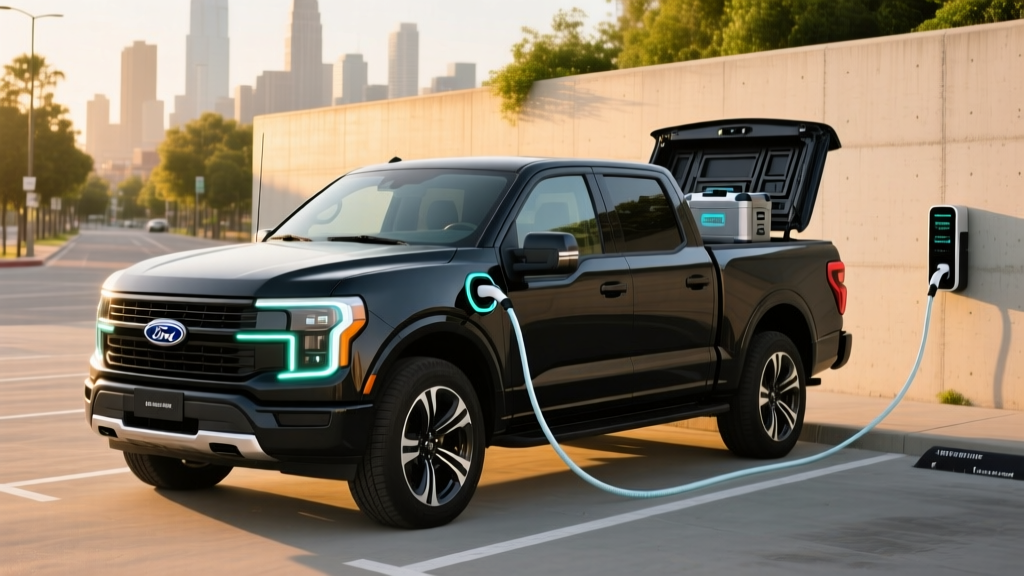
- Pro Power Onboard (optional): Vehicle-to-load (V2L) capability providing up to 2.4 kW of 120V AC power from the vehicle's battery — useful for tailgating, camping, or powering tools at a job site.
- Phone-as-a-Key: BLE-based digital key allows entry and start from your smartphone without fumbling for a fob.
- Intelligent Range Prediction: The navigation system factors in terrain, temperature, traffic, and driving style to provide real-time range estimates, reducing surprise range shortfalls on longer trips.
SAE Automation Level: BlueCruise is an SAE Level 2 driver-assistance system. The driver is responsible for vehicle operation at all times and must remain engaged. This is fundamentally different from Level 4 robotaxi services (like Waymo) that operate without a human driver in geofenced areas.
Warranty Coverage
| Component | Coverage |
|---|---|
| Battery Pack | 8 years / 100,000 miles (retains ≥70% capacity) |
| Electric Powertrain | 8 years / 100,000 miles |
| Bumper-to-Bumper | 3 years / 36,000 miles |
| Roadside Assistance | 5 years / 60,000 miles |
The 70% capacity retention threshold on the battery warranty is standard for the industry. Based on current NMC degradation data from similar packs, most owners will see roughly 5–8% capacity loss over the first 100,000 miles under normal use — well within the warranty buffer. Avoid habitual DC fast-charging to 100% and prolonged storage at extreme SoC levels to maximize long-term battery health. Source: fueleconomy.gov and Ford's official specifications.
Pros, Cons, and Who Should Buy
Pros
- Genuine three-row seating with usable cargo space
- 3,500-lb towing capacity (AWD trims) — competitive for the EV SUV class
- BlueCruise hands-free highway assist is well-calibrated
- Pro Power Onboard V2L adds practical utility
- Qualifies for up to $7,500 federal tax credit (verify sourcing rules)
- NACS adapter grants access to Tesla Supercharger network
Cons
- 175 kW peak DC charging is slower than Hyundai/Kia's 800V rivals (~240 kW)
- Third-row legroom is tight for adults on longer drives
- NMC chemistry may degrade faster than LFP over very high mileage
- Real-world winter range drops to ~220 miles (Extended Range)
- Frunk is small — mostly cable storage
- Bolt pattern change from older Explorers means no wheel carryover
Choose the 2026 Explorer EV if: You need a three-row electric SUV with towing capability, value hands-free highway driving, and mostly charge at home overnight. The Extended Range AWD Premium trim hits the sweet spot for most families.
Look elsewhere if: You prioritize the fastest possible DC charging (consider the Hyundai Ioniq 9 or Kia EV9 with 800V architecture), you need adult-friendly third-row space for daily use, or you primarily drive in extreme cold where range loss compounds on longer routes.
Frequently Asked Questions
What is the real-world range of the 2026 Ford Explorer EV?
The EPA rates the Extended Range AWD at 315 miles, but real-world highway driving at 75 mph yields approximately 265–280 miles in moderate temperatures. In winter conditions below 30°F, expect 220–250 miles without preconditioning. The Standard Range RWD model's 250-mile EPA estimate translates to roughly 210–225 miles in mixed real-world use.
How fast does the Explorer EV charge at home and on the road?
On a Level 2 home charger (11.5 kW / 48A), you'll gain approximately 32 miles of range per hour, fully charging the Extended Range pack overnight in ~8–9 hours. On a DC fast charger, the Explorer EV peaks at 175 kW, achieving a 10–80% charge in approximately 28 minutes, though the sustained average is closer to 120 kW due to charge-curve taper above 55% SoC.
How much does the 2026 Explorer EV cost after tax credits?
The base Select trim starts at $48,500 MSRP. If you qualify for the full $7,500 federal §30D credit (meeting income, MSRP, and battery-sourcing requirements), the effective price drops to approximately $41,000. The Premium Extended Range AWD at $55,900 would fall to roughly $48,400 after the credit. State and utility incentives may reduce the cost further — check fueleconomy.gov for current incentive details.
Does the 2026 Explorer EV qualify for the $7,500 federal EV tax credit?
All trims fall under the $80,000 SUV MSRP cap and are assembled in North America, so they meet the vehicle-level requirements. However, eligibility for the full $7,500 depends on your income (≤$300,000 joint AGI), the battery's critical-mineral sourcing, and component-origin rules, which tighten each year. Confirm current-year rules at irs.gov or consult a tax professional before relying on the credit.
Is the 2026 Explorer EV worth buying vs. the Kia EV9 or Hyundai Ioniq 9?
The Explorer EV competes closely with the Kia EV9 and Hyundai Ioniq 9 in the three-row electric SUV segment. The Korean rivals offer faster 800V DC charging (~240 kW peak, 10–80% in ~18 minutes) and slightly more third-row room. The Explorer EV counters with Ford's BlueCruise, Pro Power Onboard V2L, a strong dealer network for service, and competitive pricing. If DC charging speed is your top priority, the EV9/Ioniq 9 edge ahead. If you value Ford's ecosystem, towing capacity, and hands-free driving tech, the Explorer EV is a strong pick.
Will 2016 Explorer wheels fit the 2026 Explorer EV?
No. The 2016 gasoline Explorer uses a 5×114.3 mm bolt pattern, while the 2026 Explorer EV uses a 5×112 mm bolt pattern with a different center bore. Wheels are not directly interchangeable. When purchasing aftermarket or winter wheels, specify 5×112 with an appropriate load index for the EV's heavier weight.