Quick Answer: What Does Ford's $8.5 Billion EV Writedown Mean for Buyers?
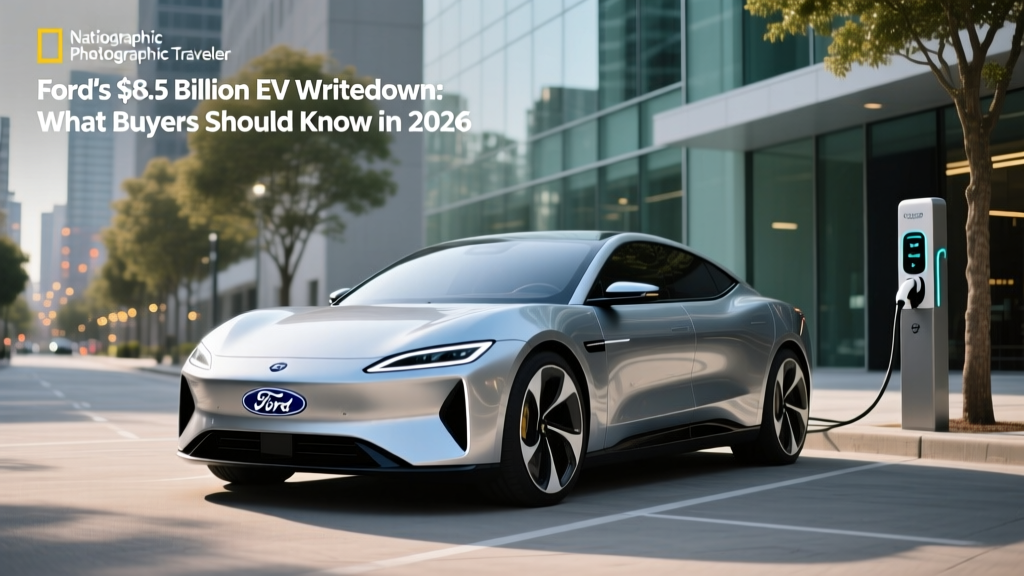
Ford's $8.5 billion EV writedown reflects the company's financial restructuring of its electric vehicle division — not a discontinuation of its EV lineup. For buyers, this means Ford's current EVs (the Mustang Mach-E and F-150 Lightning) remain fully supported with active production, warranty coverage, and OTA updates. The writedown signals Ford is scaling back future EV investment and pivoting toward hybrids, but existing models continue to receive competitive pricing and software improvements through 2026. If you're considering a Ford EV today, the vehicles are real, warrantied, and eligible for federal tax credits — the corporate accounting move doesn't diminish the product.
Understanding the Ford $8.5 Billion EV Writedown
In late 2024, Ford announced a massive $8.5 billion writedown tied to its Model e electric vehicle division. This wasn't a single event but a recognition that Ford's initial EV investment — which included battery plant construction, platform development, and manufacturing retooling — would not generate the returns originally projected. The writedown encompasses canceled or delayed next-generation EV programs, idled production capacity, and sunk costs in battery supply chains that Ford is now renegotiating.
For context, Ford's Model e division lost approximately $5.1 billion in 2024 alone, according to Ford's corporate filings. The company has since restructured its electrification strategy, emphasizing:
- Hybrid expansion: More investment in HEV and PHEV variants of popular models like the Maverick and Explorer
- Smaller, cheaper EVs: A pivot toward a next-generation affordable EV platform (announced for ~2027) rather than large premium models
- Range-extended EVs: Exploring EREV (extended-range electric vehicle) architectures that pair a small gas engine with a battery
- Continued support for current models: The Mustang Mach-E and F-150 Lightning remain in active production through 2026
The key takeaway: this is a corporate strategy correction, not a product recall or discontinuation. Ford EVs on dealer lots today are fully backed by the company's 8-year/100,000-mile battery warranty.
Ford's Current EV Lineup: 2026 Specs at a Glance
| Spec | 2026 Mustang Mach-E (Extended Range AWD) | 2026 F-150 Lightning (Extended Range) |
|---|---|---|
| EPA Range | 320 miles | 320 miles |
| Real-World Range (highway/cold) | ~260-285 mi | ~240-270 mi |
| Battery Capacity (usable) | 91 kWh (NMC) | 131 kWh (NMC) |
| Horsepower | 365 hp | 580 hp |
| 0-60 mph | 5.1 sec | 3.8 sec |
| Peak DC Fast Charge | 150 kW | 150 kW |
| 10-80% DC Charge Time | ~45 min | ~52 min |
| Level 2 Charge Rate | 10.5 kW (~37 mi/hr) | 19.2 kW (~45 mi/hr w/ 80A charger) |
| Starting MSRP | $43,995 (Select) | $54,995 (Pro) |
| Federal Tax Credit (§30D) | Up to $7,500 (eligibility varies) | Up to $7,500 (eligibility varies) |
| Battery Warranty | 8 yr / 100,000 mi (≥70% capacity) | 8 yr / 100,000 mi (≥70% capacity) |
Real-World Range Reality Check
The EPA estimates 320 miles for both the Mach-E Extended Range and F-150 Lightning Extended Range. In practice, expect 260-285 miles from the Mach-E during mixed highway driving in moderate temperatures. The Lightning, with its truck aerodynamics and heavier curb weight, typically delivers 240-270 miles in similar conditions. In sub-freezing weather, reduce these figures by 20-30% — cold temperatures slow battery chemistry and increase cabin heating demand. Preconditioning the battery while plugged in mitigates some of this loss.
EV vs. Gas vs. Hybrid: The Ford Cost Comparison
The writedown news makes buyers wonder whether Ford EVs still make financial sense compared to gas or hybrid alternatives. Here's a data-driven breakdown comparing the Mach-E against its closest internal-combustion sibling, the Ford Edge (discontinued after 2024 but representative of the midsize gas SUV segment), and the Ford Escape Hybrid as a PHEV/HEV benchmark.
| Metric | 2026 Mach-E (ER AWD) | Gas Midsize SUV (AWD, 25 MPG) | Ford Escape PHEV |
|---|---|---|---|
| MSRP (base) | $43,995 | $38,000 | $40,500 |
| After $7,500 Fed Credit | $36,495* | $38,000 | $33,000* |
| Fuel/Energy Cost per Mile | $0.045 (home L2, $0.14/kWh) | $0.136 ($3.40/gal, 25 MPG) | $0.055 (blended) |
| Annual Fuel Cost (12,000 mi) | $540 | $1,632 | $660 |
| 5-Year Fuel Cost | $2,700 | $8,160 | $3,300 |
| Maintenance (5-yr est.) | $1,800 | $3,500 | $2,800 |
| 5-Year Total (purchase + fuel + maint.) | $40,995 | $49,660 | $39,100 |
*Federal §30D credit eligibility depends on buyer income (AGI ≤ $150K single / $300K joint), vehicle MSRP caps ($55K SUVs), and battery critical-mineral sourcing requirements. Verify at IRS.gov and confirm with a tax professional. Point-of-sale transfer available at participating dealers.
5-Year Ownership Cost Breakdown: Mach-E vs. Gas SUV
| Cost Category | Mach-E ER AWD | Comparable Gas SUV | Difference |
|---|---|---|---|
| Net Purchase Price | $36,495 (after credit) | $38,000 | EV saves $1,505 |
| Home Charger Install (Level 2) | $1,200-$2,500 | $0 | EV adds ~$1,850 |
| Electricity / Fuel (5 years) | $2,700 | $8,160 | EV saves $5,460 |
| Maintenance (5 years) | $1,800 | $3,500 | EV saves $1,700 |
| Insurance (5 years) | $9,500 | $7,500 | EV adds ~$2,000 |
| Depreciation (5-yr est.) | ~55% | ~45% | EV loses ~$3,500 more |
| Net 5-Year Cost | ~$47,700 | ~$54,660 | EV saves ~$6,960 |
The Mach-E saves most buyers money over five years primarily through fuel and maintenance reductions, even accounting for higher insurance premiums and steeper depreciation. However, this assumes reliable home charging access. If you're dependent on public DC fast charging at $0.35-$0.50/kWh, your per-mile cost rises to $0.11-$0.16, narrowing the advantage significantly.
Charging Reality: What Ford EV Owners Actually Face
Ford was the first legacy automaker to gain access to Tesla's Supercharger network via the NACS adapter, and by 2026 all new Mach-E and Lightning models ship with the NACS charge port natively. This gives Ford EV owners access to over 20,000 Supercharger stalls nationwide — a meaningful advantage over CCS-only vehicles in charging-desert regions.
| Level | Power | Miles Added per Hour | Typical Use Case |
|---|---|---|---|
| Level 1 (120V) | 1.4 kW | ~4-5 mi/hr | Overnight trickle; emergency only |
| Level 2 (240V, 48A) | 10.5-11.5 kW | ~37-40 mi/hr | Home daily charging; full overnight refill |
| DC Fast (Tesla Supercharger V3) | 150 kW peak | ~200 mi in 30 min | Road trips; 10-80% in ~45 min (Mach-E) |
| DC Fast (350 kW stations) | 150 kW (vehicle-limited) | Same as above | Mach-E/Lightning capped at 150 kW regardless of station |
Charging Speed Limitation
Neither the Mach-E nor the F-150 Lightning supports charging above 150 kW DC. At a 350 kW Electrify America or Ionity station, these vehicles will still peak at 150 kW. Competitors like the Hyundai Ioniq 5 (peak 240 kW) and Porsche Taycan (peak 270 kW) charge significantly faster on compatible infrastructure. If road-trip charging speed is a top priority, this is a real limitation of Ford's current EV platform.
Common Misconceptions About the Writedown
| Myth | Fact |
|---|---|
| "Ford is killing its EVs" | Ford continues to produce and sell the Mach-E and Lightning in 2026. The writedown affects future programs, not current models. |
| "My warranty won't be honored" | Ford's 8-year/100,000-mile battery and powertrain warranty remains fully in effect. Warranties are legally binding obligations. |
| "Parts and service will disappear" | Ford has committed to continued parts supply and dealer service training for all current EV models. The NACS adapter is widely available. |
| "Ford EVs will be worthless" | Depreciation may accelerate slightly due to market perception, but Mach-E and Lightning retain functional value as proven EVs with Supercharger access. |
| "I should wait for Ford's next-gen EV" | Ford's next affordable EV platform isn't expected until 2027-2028. Current models are the only Ford BEVs available for the foreseeable future. |
Decision Framework: Should You Buy a Ford EV in 2026?
Choose the Mustang Mach-E if:
- You want a practical crossover with 300+ miles of EPA range and Supercharger access
- You have home Level 2 charging and drive under 250 miles daily
- You value Ford's dealer network for service over Tesla's direct model
- You qualify for the §30D tax credit, bringing the effective price below $37,000
- You don't need class-leading DC charge speeds (150 kW is adequate for most trips)
Choose the F-150 Lightning if:
- You need a full-size truck with 775 lb-ft of torque and up to 10,000 lb towing
- You can install a 60A-80A Level 2 circuit (the Lightning's 19.2 kW onboard charger is one of the fastest available)
- You want Pro Power Onboard (up to 9.6 kW V2L) for job sites or backup power
- Your daily driving is under 200 miles and you accept ~240-270 real-world range
Look elsewhere if:
- You need 350+ kW DC fast charging (consider Hyundai Ioniq 5/6 or Kia EV6/EV9)
- You want an LFP battery option for maximum cycle life (Ford uses NMC chemistry)
- You're concerned about long-term brand commitment to EVs — Tesla, Hyundai/Kia, and BMW have stronger announced EV pipelines
- You live in a charging desert without reliable public infrastructure and can't install home charging
First-Time EV Buyer Essentials
If the Ford writedown news has you researching EVs for the first time, here are the ownership fundamentals that apply regardless of brand:
- Home charging is non-negotiable for most owners. A Level 2 (240V) home installation costs $1,200-$2,500 for most homes, but may require a $2,000-$5,000 electrical panel upgrade if your home has a 100A service. Confirm with a licensed electrician before purchasing.
- kWh vs. kW matters. kWh measures battery capacity (energy in the tank); kW measures charging speed (flow rate). The Mach-E's 91 kWh battery charged at 10.5 kW takes roughly 8.7 hours from empty.
- Plan for cold-weather range loss. If you live in a climate with sustained sub-30°F winters, budget 25-30% range reduction. A 320-mile EPA rating becomes ~225-240 miles in January in Minnesota.
- Insurance costs more. EV insurance premiums run 15-25% higher than comparable gas vehicles due to repair costs and battery replacement exposure. Get quotes before committing.
- Tax credits have strings. The §30D credit requires the buyer to meet income caps, the vehicle to meet MSRP caps and battery-sourcing rules, and the manufacturer to have not exceeded the 200,000-vehicle phaseout (Ford has not). Always verify current-year rules at IRS.gov.
Frequently Asked Questions
Is Ford discontinuing the Mustang Mach-E or F-150 Lightning?
No. Both models remain in active production for the 2026 model year. The $8.5 billion writedown affects future EV programs and sunk investment costs, not current production vehicles. Ford has not announced an end date for either model.
Will Ford EVs lose access to Tesla Superchargers?
No. Ford's Supercharger access agreement with Tesla is a separate commercial partnership unaffected by the writedown. 2025+ Ford EVs ship with native NACS ports; older models use a Ford-provided NACS adapter for Supercharger compatibility.
Should I be worried about resale value after this news?
Expect slightly steeper depreciation than if Ford had doubled down on its EV strategy. However, the Mach-E and Lightning are proven, warrantied vehicles with Supercharger access — they retain functional value. If you plan to own the vehicle 5+ years, depreciation matters less than total cost of ownership, where the EV still wins on fuel and maintenance.
Is a Ford hybrid a safer bet than a Ford EV right now?
It depends on your driving pattern. If you lack home charging, drive over 300 miles regularly, or live in extreme cold, the Ford Maverick Hybrid (42 MPG combined) or Escape PHEV (37 miles electric-only, 405 miles total) may be more practical. If you charge at home and drive under 250 miles daily, the EV still offers lower per-mile operating costs and zero tailpipe emissions.
What happens to my Ford EV battery warranty if Ford restructures its EV division?
Warranty obligations are legal contracts that survive corporate restructuring. Ford's 8-year/100,000-mile battery warranty (covering capacity loss below 70%) remains binding. Even in a worst-case divestiture scenario, warranty obligations typically transfer to the acquiring entity or are administered through a trust.
Does the $8.5 billion writedown affect OTA software updates?
No. Ford continues to deliver over-the-air updates to the Mach-E and Lightning, including BlueCruise hands-free driving improvements, efficiency optimizations, and infotainment enhancements. The SYNC 4A platform remains actively supported.