Quick Verdict: The Model Y Refreshed for Texas Buyers
The 2026 Tesla Model Y (post-Juniper refresh) remains the benchmark compact electric SUV, and for buyers in Liberty Hill, TX — a fast-growing community northwest of Austin — it's arguably the most practical EV you can buy. With 320 miles of EPA-estimated range on the Long Range AWD trim, access to Tesla's 17,000+ North American Supercharger network, and strong efficiency figures, the Model Y fits Texas commuting, Hill Country road trips, and daily errands without compromise.
But the refreshed Model Y faces stiffer competition than ever from the Hyundai Ioniq 5, Ford Mustang Mach-E, and Chevrolet Equinox EV. This review breaks down exact specs, real-world range expectations in Central Texas heat, charging logistics in the Liberty Hill area, and whether the federal tax credit applies to your purchase.
Range, Battery, and Real-World Texas Efficiency
Real-World Expectation: ~270–290 miles highway at 70 mph; ~250–260 miles in summer heat with A/C; ~260–280 miles in mild Texas winter conditions.
The 2026 Model Y Long Range AWD uses a 78.1 kWh usable battery (approximately 82 kWh gross) with NMC (nickel-manganese-cobalt) chemistry supplied primarily by LG Energy Solution and Panasonic. The Standard Range RWD variant uses a ~60 kWh LFP (lithium iron phosphate) pack from CATL, which trades energy density for longevity and the ability to charge routinely to 100% without degradation concern.
| Trim | Battery (usable kWh) | Chemistry | EPA Range | MPGe (combined) | kWh/100 mi |
|---|---|---|---|---|---|
| Standard Range RWD | ~60 kWh | LFP | 290 mi | 123 MPGe | 27 |
| Long Range AWD | 78.1 kWh | NMC | 320 mi | 119 MPGe | 28 |
| Performance AWD | 78.1 kWh | NMC | 295 mi | 111 MPGe | 30 |
Efficiency is where Tesla still leads the pack. At 27–28 kWh per 100 miles, the Model Y extracts more miles per kilowatt-hour than the Ioniq 5 AWD (30 kWh/100 mi) or Mach-E Extended Range (31 kWh/100 mi), per fueleconomy.gov. For Liberty Hill owners paying Austin Energy's residential EV rate (~$0.11/kWh off-peak), that translates to roughly $2.97–$3.08 per 100 miles of home charging — about one-fifth the cost of a 25 MPG gas SUV at $3.20/gallon.
Texas heat note: Sustained 95°F+ summer days increase cabin cooling load. Expect 5–8% range reduction versus EPA in July/August highway driving. The Model Y's heat pump (standard on all 2026 trims) mitigates this far better than resistive HVAC systems in older EVs.
Charging Speed: Supercharger Access and Home Level 2
Charging is the Model Y's strongest ownership advantage, particularly for Liberty Hill residents who are 35–40 miles from central Austin but within easy reach of multiple Supercharger corridors.
| Charge Level | Power (kW) | Speed (miles/hr) | 10–80% Time | Notes |
|---|---|---|---|---|
| Level 1 (120V household) | ~1.4 kW | ~3–4 mi/hr | N/A (days) | Emergency/trickle only |
| Level 2 (240V, 48A Wall Connector) | 11.5 kW | ~37 mi/hr | ~7 hours (0–100%) | Full charge overnight |
| DC Fast (V3 Supercharger) | 250 kW peak | ~1,000 mi/hr peak | ~25 min (10–80%) | Sustained ~170 kW avg |
| DC Fast (V4 Supercharger) | 250 kW peak | ~1,000 mi/hr peak | ~22 min (10–80%) | Improved curve on Juniper |
The Juniper-refreshed Model Y charges at a peak 250 kW on DC fast charging, and Tesla's thermal preconditioning — which activates automatically when you navigate to a Supercharger — brings the pack to optimal temperature before you arrive. Real-world 10–80% sessions average 22–25 minutes at a V3 or V4 stall. Above 80% SoC, the charge curve tapers sharply (to ~40 kW), so plan to unplug at 80% on road trips.
Liberty Hill area charging: The closest Superchargers are in Cedar Park (~18 mi), Leander (~12 mi), and along the US-183 corridor. For Austin commutes, you'll pass multiple Supercharger and Electrify America stations. For NACS-native Tesla owners, adapter-free access to the Supercharger network remains a significant convenience advantage over CCS-equipped competitors, though the industry-wide NACS adoption means Ioniq 5 and F-150 Lightning owners can now access many of the same stalls.
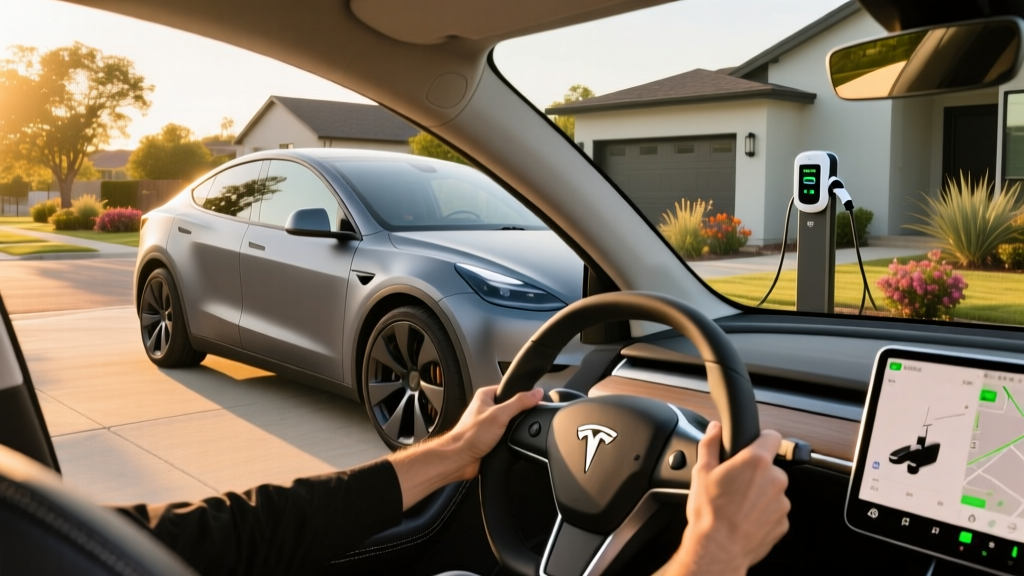
Home charging: A Tesla Wall Connector ($475) on a 60A/240V circuit delivers 11.5 kW (48A continuous) — enough to add ~37 miles of range per hour, or fully replenish a depleted Long Range pack in about 7 hours. Liberty Hill homes built after 2020 typically have 200A electrical panels with capacity for a 60A breaker. Budget $800–$1,500 for a standard Wall Connector install (short conduit run, no panel upgrade). Older homes may need a panel upgrade ($1,500–$3,000). Always consult a licensed electrician for a site assessment.
Performance and Drivetrain
| Trim | Drivetrain | Horsepower | 0–60 mph | Top Speed |
|---|---|---|---|---|
| Standard Range RWD | RWD (single motor) | ~315 hp | 5.8 sec | 135 mph |
| Long Range AWD | Dual-motor AWD | ~384 hp | 4.8 sec | 135 mph |
| Performance AWD | Dual-motor AWD | ~456 hp | 3.5 sec | 155 mph |
The Long Range AWD's 4.8-second 0–60 time is more than adequate for merging onto US-183 or passing on TX-29. The dual-motor setup provides confident all-wheel-drive traction during the occasional Texas ice storm (remember the 2023 freezes), and regenerative braking is strong enough for near one-pedal driving in stop-and-go traffic.
Ride quality on the Juniper refresh is noticeably improved over the pre-2025 Model Y — firmer damping, revised bushings, and acoustic glass reduce highway noise and harshness on the rougher stretches of the 183A toll road.
Interior, Tech, and Standout Features
The Juniper interior update brings a cleaner dashboard, ventilated front seats (finally), ambient lighting, a rear-seat touchscreen for climate/entertainment, and power-folding second-row seats. Cargo capacity remains a class strength:
- Cargo behind 2nd row: 34.3 cu ft
- Cargo with 2nd row folded: 72.1 cu ft
- Front trunk (frunk): 4.1 cu ft
- Rear legroom: 40.5 inches
- Front headroom: 41.0 inches
Tech highlights:
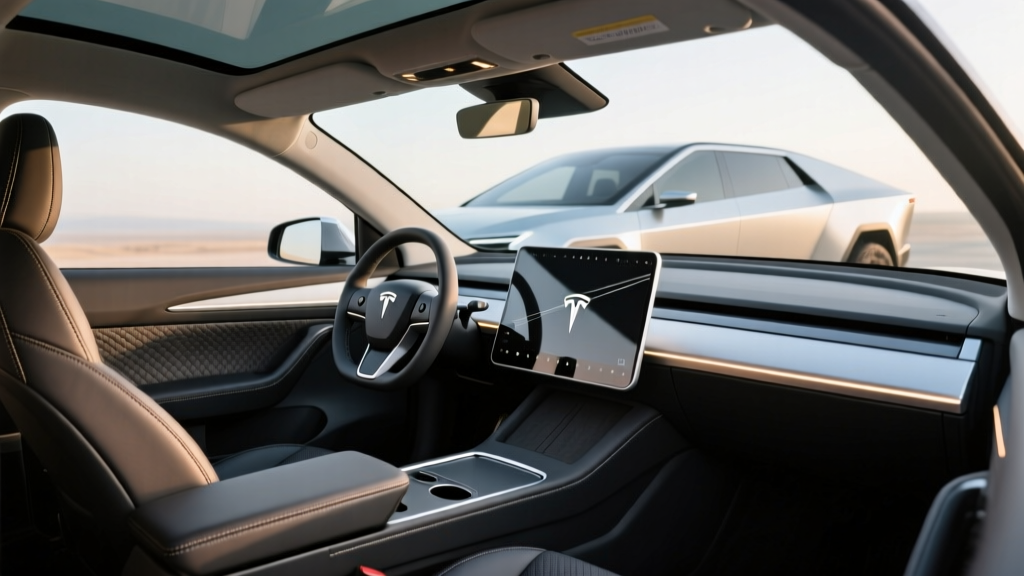
- 15.4-inch center touchscreen with Tesla OS (fast, responsive, no CarPlay/Android Auto)
- Standard Autopilot (SAE Level 2 — requires driver engagement at all times)
- Optional Full Self-Driving (Supervised) — still Level 2 despite the name; $8,000 one-time or $99/mo
- Sentry Mode dashcam recording, Dog Mode climate, and over-the-air updates
- HEPA cabin air filtration (Bioweapon Defense Mode)
Notable drawbacks: No Apple CarPlay or Android Auto (Tesla's native navigation is strong but some buyers want phone mirroring). The minimalist interior isn't for everyone — no physical buttons for climate, wipers, or glovebox (all screen-controlled). Panel gap quality, while improved on Juniper, still lags Hyundai and BMW at this price point.
Pricing, Tax Credits, and Total Cost
| Trim | Base MSRP | Destination | §30D Credit Potential | Effective Price (if eligible) |
|---|---|---|---|---|
| Standard Range RWD | $44,990 | $1,390 | Up to $7,500 | ~$38,880 |
| Long Range AWD | $48,990 | $1,390 | Up to $7,500 | ~$42,880 |
| Performance AWD | $53,490 | $1,390 | Up to $7,500 | ~$47,380 |
The IRS §30D federal tax credit offers up to $7,500 for qualifying new EVs, but eligibility is not automatic. You must meet all of the following:
- MSRP cap: SUVs must be ≤$80,000 (all Model Y trims qualify)
- Buyer income cap: AGI ≤$150,000 (single), $225,000 (head of household), $300,000 (joint)
- Battery sourcing: Critical minerals and battery components must meet escalating domestic/free-trade sourcing percentages (varies by model year — confirm current-year rules on IRS.gov)
- Point-of-sale transfer: You can transfer the credit to Tesla at purchase for an instant price reduction, or claim it on your tax return
Important: Battery-sourcing requirements have tightened annually since 2023. Some Model Y configurations may qualify for the full $7,500, a partial $3,750, or no credit depending on the specific battery pack and production batch. Always verify eligibility with Tesla at order time and consult a tax professional. Rules are subject to legislative change.
5-Year Ownership Cost (Long Range AWD, Liberty Hill estimate):
| Category | Estimated 5-Year Cost |
|---|---|
| Purchase (after $7,500 credit) | ~$42,880 |
| Home electricity (12,000 mi/yr, $0.11/kWh) | ~$1,850 |
| Insurance (Texas avg for Model Y) | ~$12,500 |
| Maintenance (tires, cabin filter, fluid top-off) | ~$1,800 |
| Estimated depreciation | ~$18,000 |
| Total 5-year cost | ~$77,030 |
Insurance is the Model Y's cost Achilles' heel — premiums in Texas average $2,400–$2,800/year, significantly higher than a comparable Toyota RAV4 Hybrid. Get quotes before purchasing.
Warranty and Battery Longevity
- Basic vehicle warranty: 4 years / 50,000 miles
- Battery & drive unit: 8 years / 120,000 miles (Long Range/Performance); 8 years / 100,000 miles (Standard Range)
- Capacity retention threshold: Tesla warrants ≥70% of original capacity during the warranty period
Real-world degradation data from Tesla's fleet shows NMC packs typically lose ~5–8% capacity in the first 50,000 miles, then plateau. LFP packs in the Standard Range model degrade more slowly and can be charged to 100% daily without concern — ideal for Liberty Hill commuters who need predictable range every morning.
Out-of-warranty battery replacement for a Model Y currently runs $12,000–$16,000 at Tesla Service Centers, though third-party options and refurbished packs are emerging at lower price points.
Model Y vs. the Competition: Who Wins?
| Spec | Tesla Model Y LR AWD | Hyundai Ioniq 5 AWD | Ford Mach-E ER AWD |
|---|---|---|---|
| EPA Range | 320 mi | 290 mi | 305 mi |
| Battery | 78.1 kWh (NMC) | 77.4 kWh (NMC) | 91 kWh (NMC) |
| DC Fast Charge | 250 kW | 240 kW (350 kW capable) | 150 kW |
| 10–80% Time | ~25 min | ~18 min (on 350 kW) | ~38 min |
| 0–60 mph | 4.8 sec | 5.1 sec | 5.6 sec |
| MPGe (combined) | 119 | 110 | 101 |
| Cargo (rear seats up) | 34.3 cu ft | 27.2 cu ft | 29.7 cu ft |
| Base MSRP (AWD) | $48,990 | $50,200 | $51,995 |
Choose the Ioniq 5 if: You want the fastest DC charging (on 350 kW stations), CarPlay/Android Auto, and a more distinctive design.
Choose the Mach-E if: You prefer Ford dealer service access, a more traditional interior layout, and available BlueCruise hands-free driving on mapped highways.
Pros and Cons
- Best-in-class efficiency (27–28 kWh/100 mi)
- 320-mile EPA range (Long Range AWD)
- Supercharger network — most reliable DC charging in the US
- Class-leading cargo volume (34.3 cu ft)
- Strong OTA updates keep the car improving post-purchase
- LFP option (Standard Range) for daily-charge convenience
- No Apple CarPlay / Android Auto
- Insurance premiums are high in Texas ($2,400–$2,800/yr)
- Minimalist controls (no physical buttons) frustrate some drivers
- FSD is expensive ($8,000) and still Level 2 — not autonomous
- Panel gap quality improving but not yet premium-tier
Who the Model Y Suits Best
Ideal for: Liberty Hill commuters driving 30–50 miles daily to Austin, Cedar Park, or Round Rock; families needing cargo space for strollers, groceries, and weekend Hill Country trips; road-trippers who value Supercharger reliability on I-10 to San Antonio or I-35 to Dallas.
Less ideal for: Buyers without home charging access (public-only charging is viable but less convenient); those who prioritize luxury interior materials over tech; anyone who needs a third row (look at the Model X or Kia EV9).
Frequently Asked Questions
What is the real-world range of the 2026 Tesla Model Y in Texas?
Expect 270–290 miles on the highway at 70 mph in mild weather, and 250–260 miles during peak summer heat with A/C running. The EPA rates the Long Range AWD at 320 miles, but sustained high-speed driving and cabin cooling reduce that figure by 10–15%.
How fast does the Model Y charge at home and on DC fast chargers?
On a home Tesla Wall Connector (11.5 kW / 240V / 48A), you'll add ~37 miles per hour — a full overnight charge in ~7 hours. On a V3/V4 Supercharger, peak rate is 250 kW with a 10–80% session taking ~22–25 minutes.
Does the 2026 Model Y qualify for the $7,500 federal EV tax credit?
It can, but eligibility depends on your income (≤$300,000 joint AGI), the MSRP cap (SUVs ≤$80,000 — all trims qualify), and battery-sourcing compliance, which changes annually. The credit can be transferred at point-of-sale for an instant price reduction. Verify current rules at IRS.gov and confirm with Tesla at order time.
Is the Model Y worth buying over the Hyundai Ioniq 5 or Ford Mach-E?
The Model Y wins on range, efficiency, cargo space, and Supercharger access. The Ioniq 5 charges faster at 350 kW stations and offers CarPlay. The Mach-E provides Ford dealer service familiarity and BlueCruise. If charging convenience and maximum range are your top priorities, the Model Y still leads.
What does home charging installation cost in Liberty Hill, TX?
A standard Tesla Wall Connector install (short run from a 200A panel with available capacity) typically costs $800–$1,500 including equipment, permit, and electrician labor. If your panel needs upgrading to 200A, add $1,500–$3,000. Always get a quote from a licensed electrician before committing.
How long will the Model Y battery last?
Tesla warranties the Long Range battery for 8 years / 120,000 miles at ≥70% capacity retention. Real-world fleet data shows NMC packs losing 5–8% in the first 50,000 miles, then stabilizing. Many Tesla packs reach 150,000–200,000+ miles before dropping below 80% original capacity.