Introduction: The Electric Trailblazer
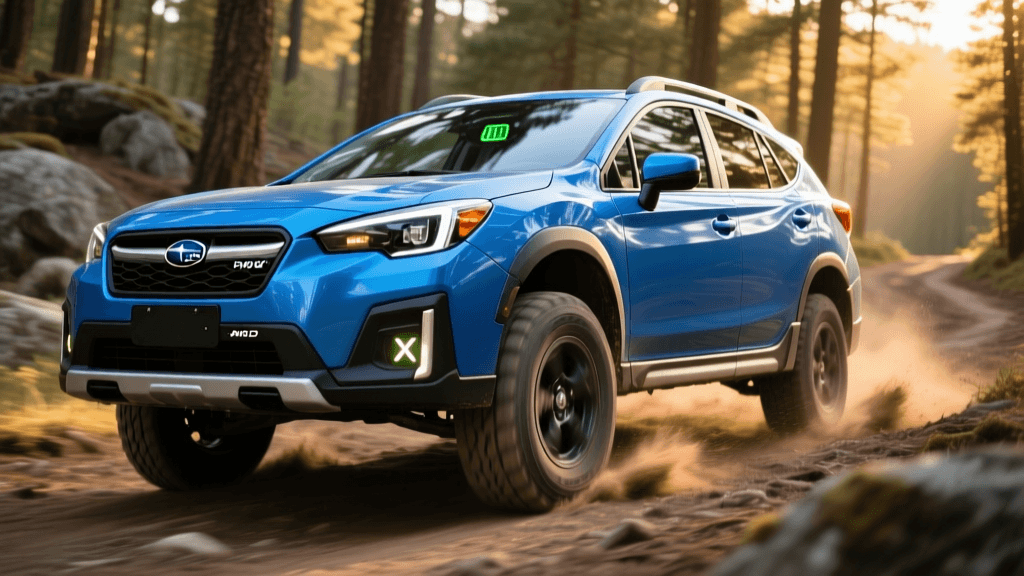
When Subaru announced its entry into the electric vehicle market, enthusiasts and loyal brand advocates had one primary question: Could an EV truly uphold the brand's legendary off-road heritage? The result is the Subaru Solterra, a compact electric SUV developed in conjunction with Toyota (sharing its platform with the bZ4X). While it arrives with modern EV amenities and a sleek design, its core mission remains rooted in the dirt, mud, and snow. In this comprehensive expert review, we dive deep into the Subaru Solterra's off-road capability and real-world range, providing actionable best practices for owners who want to push their electric rig beyond the pavement.
Unlike many EVs that prioritize blistering 0-60 mph times and ultra-low drag coefficients, the Solterra is engineered with rugged utility in mind. However, blending heavy battery packs with challenging terrain introduces unique variables regarding energy consumption, traction management, and vehicle protection. Whether you are navigating rocky fire roads, tackling muddy forest trails, or simply dealing with a snowed-in driveway, understanding how to optimize the Solterra's systems is critical for a safe and successful adventure.
Real-World Range vs. EPA Estimates on the Trail
The Subaru Solterra is equipped with a 72.8 kWh lithium-ion battery pack. According to Subaru's official specifications, the EPA-estimated range for the Solterra peaks at 228 miles (achieved on the Premium and Limited trims with 18-inch wheels). The Touring trim, which rides on larger 20-inch wheels, sees a slight reduction to 222 miles. However, as any seasoned EV owner knows, the EPA estimate is merely a baseline, and off-road driving drastically alters this equation.
During real-world trail testing, energy consumption spikes significantly. Off-roading involves constant low-speed, high-torque maneuvers, frequent stops and starts, and climbing steep gradients. Furthermore, the Solterra's boxy aerodynamics and relatively heavy curb weight (over 4,300 pounds) work against it at highway speeds on the way to the trailhead. Edmunds' real-world testing often highlights that mixed driving conditions can yield results slightly below the EPA estimate, and adding rugged all-terrain tires or a roof-top tent will further reduce your baseline range by 10% to 15%.
Expert Tip: Never plan an off-road excursion based on the EPA range. For trail driving, calculate your energy needs using a conservative estimate of 1.5 to 1.8 miles per kWh. If you are tackling steep elevation gains, assume your range will be cut in half on the ascent, though you will recapture a significant portion of that energy on the descent via regenerative braking.
Off-Road Capability: X-MODE and Grip Control
Subaru's Symmetrical All-Wheel Drive system is iconic, and the Solterra adapts this legacy for the electric era via dual electric motors (one on each axle, producing a combined 215 horsepower and 249 lb-ft of torque). The true magic, however, lies in the software: Subaru's X-MODE and Grip Control.
X-MODE Settings
The Solterra features a dual-function X-MODE system accessible via the center touchscreen. The two primary settings are:
- Snow/Dirt Mode: Ideal for gravel roads, light mud, and snow. It allows for slight wheel slip to help the vehicle 'dig' through loose surfaces and find traction.
- Deep Snow/Mud Mode: This setting applies more aggressive brake vectoring to spinning wheels, effectively acting like a virtual limited-slip differential. It is essential for deep ruts or when one or more wheels are lifted off the ground.
Grip Control
Think of Grip Control as off-road cruise control. It allows the driver to set a target speed (from 1 to 6 mph) while the vehicle's computer meticulously manages the throttle and brakes at each individual wheel. This allows you to focus entirely on steering and trail line selection without worrying about pedal modulation.
Spec Comparison: Solterra vs. EV Competitors
How does the Solterra stack up against other popular AWD electric crossovers when the pavement ends? Below is a data table comparing critical off-road metrics.
| Feature | Subaru Solterra | Ford Mustang Mach-E (AWD) | Hyundai Ioniq 5 (AWD) |
|---|---|---|---|
| Ground Clearance | 8.3 inches | 5.7 inches | 6.1 inches |
| EPA Range (Max) | 228 miles | 270 miles | 256 miles |
| Approach Angle | 18.1 degrees | 16.3 degrees | 17.5 degrees |
| Departure Angle | 25.4 degrees | 23.0 degrees | 25.0 degrees |
| AWD System | Dual Motor w/ X-MODE | Dual Motor | Dual Motor |
As the data illustrates, the Solterra's 8.3 inches of ground clearance gives it a distinct advantage over crossover-styled EVs like the Mach-E and Ioniq 5, allowing it to clear larger rocks and deeper ruts without scraping the undercarriage.
Expert Best Practices for Trail Driving the Solterra
To maximize your Solterra's potential and protect your investment, follow these expert best practices when venturing off-road.
1. Upgrade to EV-Specific All-Terrain Tires
The factory all-season tires are optimized for low rolling resistance and highway efficiency, not for gripping wet rocks or shedding mud. Upgrading to an all-terrain tire like the Falken Wildpeak A/T Trail or the Yokohama Geolandar A/T G015 is the single best modification you can make. These tires offer reinforced sidewalls for puncture resistance and deeper tread blocks for traction. Note: Expect a 10% to 15% drop in your daily driving range due to increased rolling resistance and weight, but the trade-off in trail safety is well worth it.
2. Maximize Regenerative Braking on Descents
One of the greatest advantages of an EV off-road is regenerative braking. When heading down steep, rocky inclines, use the paddle shifters behind the steering wheel to increase the regenerative braking level to its maximum setting. This slows the vehicle down without riding the mechanical friction brakes, preventing brake fade and overheating. Additionally, it feeds valuable energy back into the battery, effectively extending your range for the drive back home.
3. Manage Tire Pressures for Traction
Airing down your tires is a classic off-road technique to increase the contact patch and allow the tire to conform to uneven terrain, providing better grip and a smoother ride. For the Solterra, dropping the tire pressure from the factory 38 PSI down to 28-30 PSI can dramatically improve traction on sandy or rocky trails. However, you must carry a portable 12V air compressor to reinflate the tires to their proper specification before returning to highway speeds, otherwise, you risk severe tire damage and drastically reduced battery efficiency.
4. Install Underbody Protection
While the Solterra's battery pack is integrated into the chassis for structural rigidity and features a protective undercover, sharp rocks and hidden stumps can still cause catastrophic damage to an EV's battery casing. Investing in aftermarket steel or heavy-duty aluminum skid plates for the front motor, rear motor, and battery pan is highly recommended for anyone tackling moderate to difficult trails. As noted in Car and Driver's long-term reviews, protecting the undercarriage is paramount for EVs due to the exorbitant replacement costs of high-voltage battery packs.
Charging Off-Grid and Route Planning
The Solterra's DC fast-charging capabilities have been a point of contention among reviewers. The vehicle peaks at around 100 kW, meaning a 10% to 80% charge takes approximately 56 minutes. This is notably slower than the 800-volt architectures found in Hyundai and Kia EVs, which can achieve the same charge in under 20 minutes.
When planning an off-road adventure, you must factor in these charging times. Always use apps like PlugShare or ChargePoint to verify the presence of reliable DC fast chargers near your trailhead. Furthermore, utilize the Solterra's navigation system to route to a charger; this triggers the battery pre-conditioning system, warming the battery to the optimal temperature for faster charging, which is especially vital during cold-weather winter off-roading.
Conclusion
The Subaru Solterra is not a hardcore rock crawler, nor is it a long-distance highway cruiser with 350 miles of range. Instead, it occupies a highly specific and valuable niche: it is a capable, comfortable, and incredibly practical daily driver that can confidently handle forest service roads, snowy mountain passes, and moderate off-road trails. By understanding its range limitations, leveraging X-MODE and Grip Control, and making smart aftermarket upgrades like all-terrain tires and skid plates, owners can unlock the true spirit of the Solterra. It proves that the electric future of off-roading isn't just viable; with the right techniques, it is exceptionally rewarding.