The Fisker Ocean in 2026: What Buyers Need to Know Before Purchasing
The Fisker Ocean entered the electric SUV market with striking design, competitive range figures, and a sustainability-forward ethos. For 2026, the Ocean lineup spans three trims — Sport, Ultra, and Extreme — each targeting a different slice of the midsize EV SUV segment. This review breaks down real-world range, charging behavior, total cost after federal incentives, and whether the Ocean holds up against rivals like the Tesla Model Y, Hyundai Ioniq 5, and Ford Mustang Mach-E.
Henrik Fisker's brand has positioned the Ocean as a premium-but-accessible electric crossover with a focus on recycled materials, solar integration, and a distinctive California Mode open-air experience. But specs on paper only tell part of the story. Let's examine what ownership actually looks like.
Fisker Ocean Specifications at a Glance
| Spec | Sport (RWD) | Ultra (AWD) | Extreme (AWD) |
|---|---|---|---|
| EPA Range | 250 miles | 340 miles | 360 miles |
| Battery (usable) | ~80 kWh (LFP) | ~113 kWh (NMC) | ~113 kWh (NMC) |
| Horsepower | 275 hp | 540 hp | 550 hp |
| 0-60 mph | 6.9 sec | 3.9 sec | 3.7 sec |
| Drivetrain | RWD single motor | Dual-motor AWD | Dual-motor AWD |
| Max DC Fast Charge | ~175 kW | ~250 kW | ~250 kW |
| 10-80% DCFC Time | ~33 min | ~29 min | ~29 min |
| Level 2 Home Charge | 11 kW (~30 mi/hr) | 11 kW (~40 mi/hr) | 11 kW (~40 mi/hr) |
| MPGe (combined) | 110 MPGe | 101 MPGe | 100 MPGe |
| kWh/100 mi | 30 kWh | 33 kWh | 34 kWh |
| Base MSRP | $38,999 | $52,999 | $68,999 |
| Battery/Powertrain Warranty | 6 yr / 60,000 mi | 6 yr / 60,000 mi | 6 yr / 60,000 mi |
Sources: EPA / fueleconomy.gov, Fisker Inc. official specifications.
Real-World Range: What the EPA Sticker Doesn't Tell You
- Extreme (EPA 360 mi): Expect ~300-320 miles on mixed highway/city driving at moderate temperatures. Sustained 75+ mph highway driving drops this to ~270-290 miles.
- Ultra (EPA 340 mi): Real-world mixed driving yields ~280-305 miles. Highway-heavy trips at speed: ~260-280 miles.
- Sport (EPA 250 mi): Real-world mixed: ~215-230 miles. Highway at 75 mph: ~195-210 miles.
Cold-weather impact: In sub-freezing conditions (20-32°F), expect a 20-30% range reduction across all trims due to battery resistance and cabin heating demands. The Extreme's heat pump helps mitigate this compared to resistive heating, but physics still applies — a 360-mile EPA rating may yield 250-280 miles in harsh winter driving.
The Fisker Ocean's large 113 kWh NMC pack (Ultra/Extreme) provides genuine road-trip capability, but its curb weight — over 5,000 lbs for AWD trims — means efficiency suffers at higher speeds. The Sport's LFP battery is lighter but sacrifices range. For context, the Tesla Model Y Long Range achieves 330 EPA miles with a smaller pack due to superior aerodynamic efficiency.
Charging Speed: DC Fast Charging and Home Level 2
| Charging Level | Power / Rate | Miles Added per Hour | Use Case |
|---|---|---|---|
| Level 1 (120V) | ~1.4 kW | ~4-5 mi/hr | Overnight trickle / emergency |
| Level 2 (240V, 48A) | 11 kW | 30-40 mi/hr | Home daily charging |
| DC Fast Charge (Sport) | Peak ~175 kW | ~180 mi in 30 min | Road trips |
| DC Fast Charge (Ultra/Extreme) | Peak ~250 kW | ~210 mi in 30 min | Road trips |
Charging curve reality: The Ultra and Extreme peak at 250 kW only between roughly 10-35% State of Charge. Above 50%, the rate tapers to ~150 kW, and above 80% it drops sharply to ~50-70 kW to protect battery longevity. A 10-80% session takes approximately 29 minutes at a capable 350 kW charger (e.g., Electrify America or Ionity). Plan for 40-45 minutes if you're charging past 80%.
Preconditioning: The Ocean's navigation system can precondition the battery when a DC fast charger is set as your destination, warming or cooling the pack to optimize charge acceptance. Use this feature — arriving at a fast charger with a cold, un-preconditioned battery can add 10-15 minutes to your session.
Home charging: A full Level 2 charge (10-100%) on the Extreme's 113 kWh pack takes approximately 11-12 hours at 11 kW. Most owners will charge overnight and wake to a full battery. Installation of a 48A Level 2 home charger typically costs $800-$2,500 including electrical work, depending on panel proximity and local permitting.
Performance, Efficiency, and Driving Dynamics
The Ocean Extreme's 3.7-second 0-60 mph time places it firmly in performance-SUV territory, rivaling the Porsche Macan Electric and edging close to the Tesla Model Y Performance (3.5 sec). The Ultra's 3.9 seconds is nearly as quick and represents the value-performance sweet spot in the lineup.
The Sport's single-motor RWD layout delivers 275 hp and a 6.9-second sprint — adequate for commuting and merging but noticeably less urgent than the dual-motor trims. Where the Sport wins is efficiency: its lighter LFP pack and RWD drivetrain yield 110 MPGe combined and 30 kWh/100 mi, beating the AWD trims by 10%.
Ride and handling: The Ocean's suspension tuning leans comfort-oriented. Body roll is noticeable in aggressive cornering, and the 5,000+ lb curb weight is felt during direction changes. This is a cruiser, not a sports SUV. Road noise isolation is competitive with the segment, though some reviewers note wind noise around the California Mode roof opening at highway speeds.
Pricing, Tax Credits, and Total Cost
| Trim | Base MSRP | As-Tested (typical) | Est. After §30D Credit |
|---|---|---|---|
| Sport | $38,999 | $40,500 | ~$31,499 – $33,000* |
| Ultra | $52,999 | $55,500 | ~$45,499 – $48,000* |
| Extreme | $68,999 | $71,000 | ~$61,499 – $63,500* |
*Federal tax credit eligibility depends on multiple factors. See checklist below.
- MSRP cap: SUVs must be ≤ $80,000 (all Ocean trims qualify)
- Buyer income cap: AGI ≤ $150,000 (single) / $225,000 (head of household) / $300,000 (joint)
- Battery sourcing: Critical minerals and battery components must meet phased percentage thresholds from US or FTA-partner nations — verify current-year compliance on IRS.gov
- Point-of-sale transfer: Eligible buyers can transfer the credit to the dealer for an up-front price reduction (up to $7,500)
- Assembly: Vehicle must undergo final assembly in North America
Important: Battery-sourcing requirements tighten annually. Consult the IRS's current approved-vehicle list and a tax professional before relying on the full $7,500 credit. The Sport's LFP battery may face different sourcing hurdles than the NMC trims.
Interior, Cargo, and Standout Technology
Cargo volume: 32.5 cu ft behind the second row; approximately 65 cu ft with rear seats folded. This trails the Tesla Model Y (~76 cu ft max) but is competitive with the Ford Mustang Mach-E. There is no front trunk (frunk) — the space is occupied by HVAC components.
Passenger space: Front legroom measures 41.3 inches; rear legroom is 38.1 inches. The flat floor and panoramic roof contribute to an airy cabin feel. Rear seat comfort is adequate for adults on shorter trips, though the seat cushion is somewhat low, creating a knees-up posture for taller passengers.
Infotainment: A 17.1-inch rotating center touchscreen dominates the dash, toggling between a portrait "Control Mode" and a landscape "Hollywood Mode" for media streaming while parked. The interface runs Fisker's custom OS. Wireless Apple CarPlay and Android Auto are standard. A digital instrument cluster and head-up display round out the tech stack.
California Mode: The Ocean's signature feature — all glass surfaces above the beltline can open simultaneously (windows, rear hatch glass, and the solar roof panel slides back), creating a convertible-like open-air experience unique in the segment.
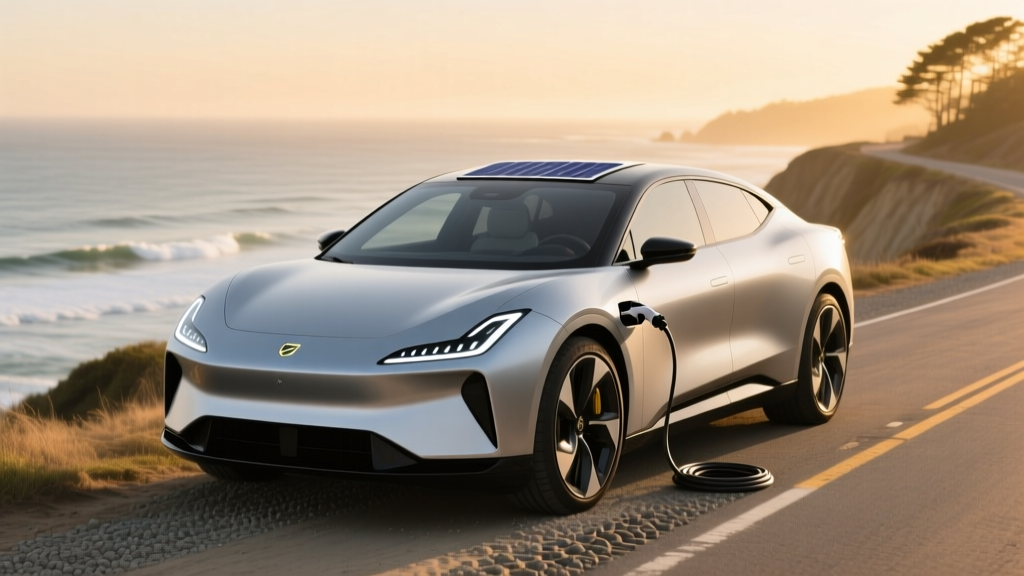
Solar roof: The Extreme trim includes a full-length solar panel roof that Fisker estimates can add up to 1,500 miles of range per year under optimal sun conditions. Real-world gains vary dramatically by climate and parking habits — expect 500-1,000 supplemental miles annually in most US regions.
Driver assistance: The Ocean ships with Fisker Intelligent Pilot, a Level 2 SAE driver-assist suite featuring adaptive cruise control, lane centering, automatic emergency braking, and blind-spot monitoring. This is not autonomous driving — the driver must remain engaged with hands on the wheel at all times. Fisker has announced a future "Fisker Intelligent Pilot 2.0" upgrade path, but as of 2026, hands-free driving is not available.
Pros, Cons, and Who the Fisker Ocean Suits Best
- Class-leading range on Ultra/Extreme trims (340-360 EPA miles)
- Unique California Mode open-air experience
- Sustainable/recycled interior materials
- Competitive pricing on Sport trim ($38,999 before credits)
- Strong DC fast-charge speeds (250 kW peak on Ultra/Extreme)
- Distinctive design stands out in a crowded segment
- No frunk — limits utility vs. Model Y
- Software polish lags behind Tesla and Hyundai/Kia
- Limited service center network compared to legacy brands
- Heavy curb weight impacts real-world highway efficiency
- 6-year/60,000-mi battery warranty trails industry standard (8/100,000)
- Brand longevity and parts availability remain unproven
- You want a distinctive, design-forward EV SUV that stands apart from the Tesla ubiquity
- Maximum range is a priority and you're willing to pay for the Extreme's 360 miles
- Open-air driving appeals to you (California Mode has no direct rival)
- You value sustainability-focused materials and solar supplementation
- You need maximum cargo utility and a frunk (consider Model Y or Ioniq 5)
- You rely on a dense dealer/service network for peace of mind
- Proven software reliability is a top priority
- You want hands-free highway driving (BlueCruise or Super Cruise vehicles)
Frequently Asked Questions
What is the real-world range of the Fisker Ocean?
The EPA rates the Extreme at 360 miles, the Ultra at 340, and the Sport at 250. In real-world mixed driving, expect roughly 300-320 miles (Extreme), 280-305 (Ultra), and 215-230 (Sport). Highway speeds above 75 mph and cold weather will reduce these figures by 10-30%.
How fast does the Fisker Ocean charge?
The Ultra and Extreme peak at 250 kW on DC fast chargers, achieving a 10-80% charge in approximately 29 minutes. The Sport peaks at ~175 kW with a 10-80% time of ~33 minutes. At home on Level 2 (11 kW), expect 30-40 miles of range per hour of charging.
Does the Fisker Ocean qualify for the federal EV tax credit?
The Ocean's MSRP falls under the $80,000 SUV cap, and final assembly occurs in North America. However, eligibility depends on your income, the battery's critical-mineral sourcing compliance, and current-year IRS rules. The full $7,500 credit is not guaranteed — verify on IRS.gov and consult a tax professional.
Is the Fisker Ocean worth buying vs. competitors?
Against the Tesla Model Y, the Ocean offers more distinctive design and open-air capability but trails in software polish, Supercharger network access (though NACS adapters are available), and service infrastructure. Versus the Hyundai Ioniq 5, the Ocean offers more range on upper trims but charges slower and costs more. The Ocean is best for buyers who prioritize design uniqueness and maximum range over ecosystem maturity.
What is the battery warranty on the Fisker Ocean?
Fisker provides a 6-year / 60,000-mile battery and powertrain warranty across all trims. This is below the industry standard of 8 years / 100,000 miles offered by most competitors (Tesla, Hyundai, Ford). Factor this into long-term ownership planning, especially if you intend to keep the vehicle beyond the warranty period.
What charging connector does the Fisker Ocean use?
The Ocean uses a CCS1 connector for DC fast charging and a J1772 connector for Level 2 AC charging. As the industry shifts toward NACS (Tesla's connector), Fisker has indicated NACS adapter compatibility for Supercharger access, but verify adapter availability and network terms before relying on it.
For the latest Fisker Ocean pricing and eligibility updates, consult Fisker's official site and the IRS clean vehicle credit page. Specifications and credit rules are subject to change — verify before purchasing.