The Quick Verdict on Ordering Tesla Model Y in 2026
If you're considering ordering Tesla Model Y this year, you're looking at one of the most refined, best-selling electric SUVs on the market — but also one whose pricing, trim structure, and tax-credit eligibility shift more often than nearly any competitor. The 2026 Model Y (refreshed for the 2025 model year with the "Juniper" update and carried forward) offers an EPA-estimated 320 miles of range on Long Range AWD, a 250 kW peak DC fast-charge rate, and a starting MSRP that undercuts many rivals once you factor in the federal §30D credit. It's the default choice for buyers who want the Supercharger network, minimalist tech, and strong efficiency — but it's not without compromises in ride comfort, service-center access, and interior material quality at this price point.
Range, Battery, and Real-World Efficiency
The 2026 Tesla Model Y is offered in three primary configurations, each with a different battery and drivetrain. Tesla does not officially publish usable kWh figures, but teardown data and EPA test documentation indicate the Long Range AWD uses an ~78 kWh usable NMC (nickel-manganese-cobalt) pack, while the Rear-Wheel Drive base model uses a ~60 kWh LFP (lithium iron phosphate) battery.
| Trim | EPA Range | Battery (usable, est.) | Chemistry | MPGe (combined) | kWh/100 mi |
|---|---|---|---|---|---|
| Long Range AWD | 320 mi | ~78 kWh | NMC | 111 MPGe | 28 |
| Rear-Wheel Drive | 290 mi | ~60 kWh | LFP | 117 MPGe | 27 |
| Performance AWD | 277 mi | ~78 kWh | NMC | 103 MPGe | 30 |
Efficiency is a genuine Tesla strength. At 27–30 kWh per 100 miles depending on trim, the Model Y extracts more miles per kilowatt-hour than nearly every competing electric SUV, including the Hyundai Ioniq 5 (30–34 kWh/100mi) and Ford Mustang Mach-E (31–35 kWh/100mi). This efficiency advantage compounds on road trips: fewer kWh consumed means shorter charging stops and lower electricity costs over time. Source: fueleconomy.gov.
Charging Speed: DC Fast, Level 2, and the Supercharger Advantage
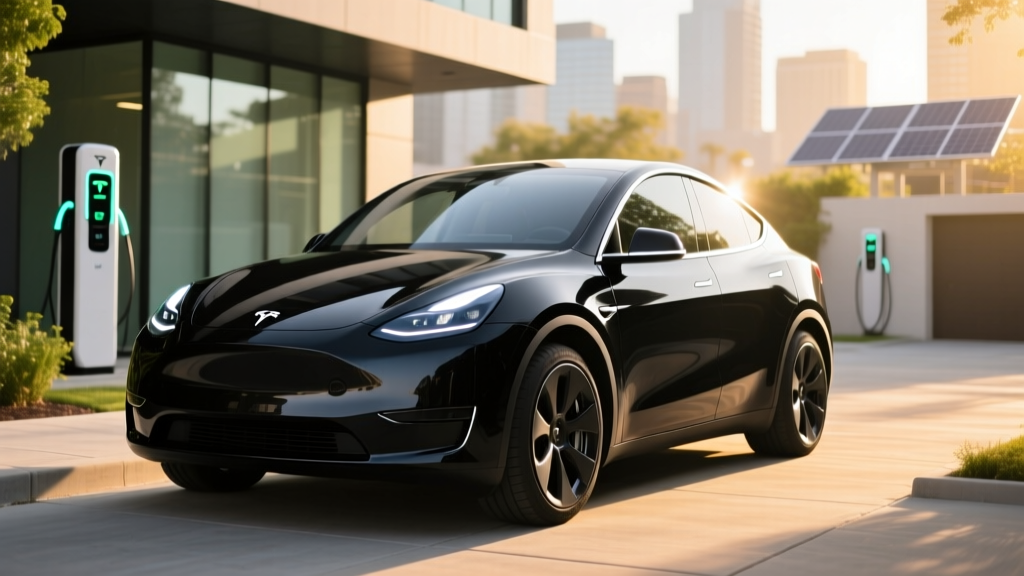
Charging speed is where ordering Tesla still carries a structural advantage. The Model Y Long Range and Performance support a peak DC fast-charge rate of 250 kW on V3 Superchargers (and can precondition to accept up to ~270 kW on V4 posts where available). The LFP Rear-Wheel Drive model peaks lower, around 170 kW, due to LFP chemistry's more conservative charge acceptance curve.
| Charge Method | Long Range / Performance | RWD (LFP) | Miles Added per Hour (est.) |
|---|---|---|---|
| DC Fast Charge (peak) | 250 kW | 170 kW | — |
| 10–80% DC Fast Charge | ~27 min | ~35 min | — |
| Level 2 (240V, 48A) | 11.5 kW | 11.5 kW | ~37 mi/hr |
| Level 1 (120V, 12A) | ~1.4 kW | ~1.4 kW | ~4 mi/hr |
A critical nuance most spec sheets omit: the charge curve. The Model Y Long Range hits 250 kW only between roughly 10–30% State of Charge. By 50% SoC, the rate tapers to ~150 kW, and above 80% it drops to under 50 kW. That 10–80% time of ~27 minutes is impressive, but a 10–95% session will take closer to 50 minutes. This taper is physics, not a flaw — all lithium-ion cells slow charging at higher SoC to protect battery longevity.
For home charging, Tesla's Wall Connector ($420) delivers up to 48 amps on a 60-amp circuit, adding roughly 37 miles of range per hour. A full overnight charge from 20% to 80% takes about 5–6 hours on Level 2. Most owners find plugging in nightly keeps the car perpetually topped up, eliminating range anxiety for daily driving. Installation typically costs $800–$2,000 depending on whether your electrical panel needs an upgrade. Always consult a licensed electrician for final specs.
The Supercharger network remains Tesla's strongest moat. With over 6,000 V3/V4 stalls across the U.S. (and growing), Tesla owners have access to the most reliable, widely distributed DC fast-charging network in North America. While NACS adapters now allow non-Tesla EVs to use many Supercharger stalls, Tesla-native vehicles still benefit from seamless plug-and-charge integration and real-time stall availability in the navigation system.
Performance and Drivetrain
The 2026 Model Y lineup covers a wide performance envelope:
- Long Range AWD: Dual-motor all-wheel drive, ~384 hp, 0–60 mph in 4.8 seconds. This is the volume trim and the best balance of range, power, and price.
- Rear-Wheel Drive: Single motor, ~295 hp, 0–60 mph in 6.6 seconds. Adequate for commuting and city driving; noticeably slower on highway merges.
- Performance AWD: Dual-motor, ~510 hp, 0–60 mph in 3.5 seconds. Track Mode included, but the 43-mile range penalty vs. Long Range is steep.
All trims use a single-speed reduction gear (no traditional transmission). Regenerative braking is strong but no longer offers a one-pedal driving mode toggle — Tesla removed the adjustable regen setting in 2024, and it has not returned. The fixed regen level is aggressive enough for most drivers but can feel abrupt in stop-and-go traffic until you adapt.
Pricing, Trims, and Federal Tax Credit Eligibility
Tesla adjusts pricing frequently — sometimes weekly — so treat these figures as current as of early 2026. Always confirm on Tesla's order page before configuring.
| Trim | Base MSRP | As-Tested (typical options) | Est. After §30D Credit |
|---|---|---|---|
| Rear-Wheel Drive | $44,990 | $44,990 | $37,490* |
| Long Range AWD | $48,990 | $50,490 | $41,490* |
| Performance AWD | $52,490 | $54,990 | $47,490* |
*Assumes full $7,500 §30D credit eligibility. See eligibility rules below.
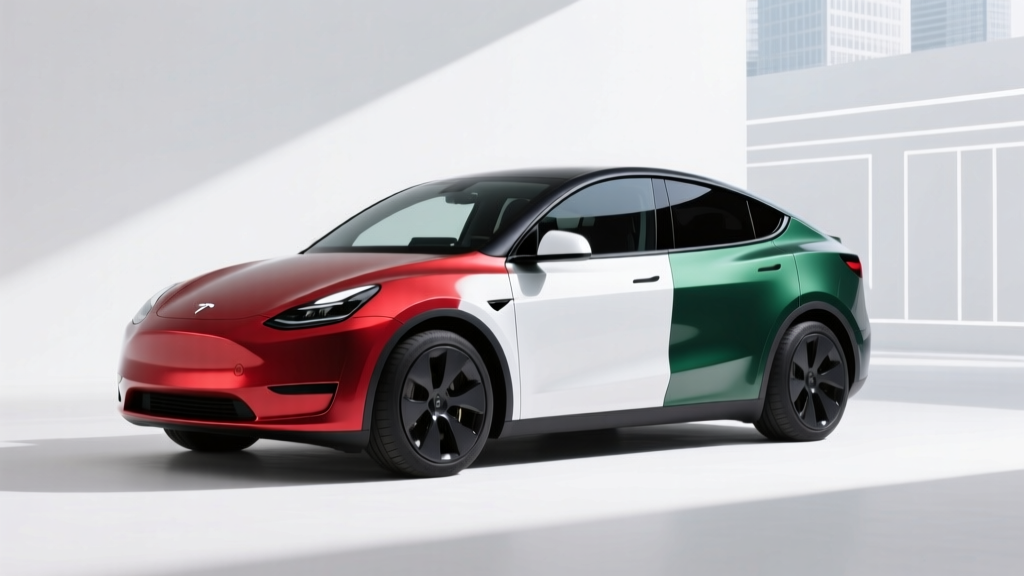
Common options that increase price: Ultra Red or Quicksilver paint ($1,500–$2,500), 20" Helix wheels ($1,500, with a ~10-mile range penalty), and Enhanced Autopilot ($6,000) or Full Self-Driving Supervised ($8,000).
Federal EV Tax Credit (§30D) Eligibility Rules
The Model Y qualifies for up to $7,500 under IRS §30D, but eligibility depends on several buyer- and vehicle-specific factors. As of 2026, the key requirements are:
- MSRP cap: SUVs must be under $80,000 — all Model Y trims qualify.
- Buyer income cap: Modified AGI must not exceed $150,000 (single), $225,000 (head of household), or $300,000 (joint filers).
- Battery sourcing: A portion of critical minerals and battery components must be sourced from the U.S. or FTA-partner countries. Tesla's Fremont and Austin-built Model Y generally meets these thresholds, but the IRS updates qualified-vehicle lists periodically.
- Point-of-sale transfer: Since 2024, eligible buyers can transfer the credit to the dealer at purchase, reducing the out-of-pocket price immediately rather than waiting for tax filing.
Always verify current eligibility on the IRS Clean Vehicle Credits page before ordering. Tax rules are subject to change, and consulting a tax professional is recommended for your specific situation.
Interior, Cargo, and Technology
The Juniper-refreshed Model Y interior is noticeably improved over the pre-2025 version: softer-touch materials, ventilated front seats, a rear-seat touchscreen for climate and media control, ambient lighting, and a power-folding second row. That said, at nearly $50,000, the cabin still lacks the material richness of a Genesis GV60 or BMW iX. Hard plastics appear on the lower door panels and center console sides.
Cargo and passenger dimensions:
- Cargo volume (behind 2nd row): 30.2 cu ft
- Cargo volume (2nd row folded): 72.1 cu ft
- Front trunk (frunk): 4.1 cu ft
- Rear legroom: 41.6 in
- Front headroom: 40.3 in
- Seating: 5 standard (7-seat option discontinued for 2026)
The 15.4-inch center touchscreen runs Tesla's proprietary infotainment OS — no Apple CarPlay or Android Auto. Instead, Tesla offers built-in Spotify, YouTube, Netflix (while parked), and a surprisingly good navigation system with real-time Supercharger routing and preconditioning. The phone-as-key system works reliably via Bluetooth, and the Tesla app provides remote climate control, charge monitoring, and location tracking.
Driver assistance: All Model Y trims include basic Autopilot (adaptive cruise control + lane centering) as standard. This is an SAE Level 2 system — it does not drive the car autonomously. You must keep your hands on the wheel and eyes on the road at all times. Enhanced Autopilot ($6,000) adds auto lane-change, navigate-on-autopilot, and smart summon. Full Self-Driving Supervised ($8,000) adds traffic-light/stop-sign recognition and city-street autosteer, but remains Level 2 and requires constant driver supervision. See NHTSA's guidance on automated driving for context on SAE levels.
Warranty, Ownership Costs, and Longevity
Tesla's warranty structure is competitive but not class-leading:
- Basic vehicle warranty: 4 years / 50,000 miles
- Battery & drive unit: 8 years / 120,000 miles (Long Range, Performance) — retains ≥70% capacity
- Battery & drive unit (RWD/LFP): 8 years / 100,000 miles — retains ≥70% capacity
The 70% retention threshold is standard across the industry. Real-world degradation data from Tesla's fleet reports and third-party tracking (e.g., Recurrent Auto) suggests Model Y batteries typically lose 5–8% capacity over the first 100,000 miles, with the curve flattening significantly afterward. LFP batteries in the RWD model show even slower degradation and can be charged to 100% daily without the longevity concerns that apply to NMC packs (where 80% daily charge is recommended).
Total cost of ownership favors the Model Y over gas equivalents. At $0.14/kWh (national average home electricity), a full charge costs roughly $11 on the Long Range model. Over 15,000 miles/year, that's ~$580 in home electricity vs. ~$1,800 in gasoline for a comparable 25 MPG gas SUV. Insurance is the offset: Model Y premiums average 15–25% higher than equivalent gas crossovers, driven by repair-cost data from low-speed collisions. Get a quote before ordering.
Pros and Cons
Pros
- Best-in-class efficiency (27–30 kWh/100mi) stretches range and lowers charging costs
- Supercharger network: 6,000+ U.S. stalls with plug-and-charge simplicity
- 250 kW DC fast charging, 10–80% in ~27 minutes (Long Range)
- Strong over-the-air updates continuously add features
- LFP option (RWD) allows daily 100% charging with minimal degradation
- Spacious cargo area (72.1 cu ft folded) with flat load floor
- Competitive pricing after $7,500 §30D credit
Cons
- Ride quality is firm; road noise is noticeable on coarse pavement
- No Apple CarPlay or Android Auto — Tesla's ecosystem is mandatory
- FSD ($8,000) remains Level 2 and does not justify the cost for most buyers
- Service center wait times can stretch weeks in less-populated areas
- Limited color/wheel options compared to legacy-brand configurators
- Regenerative braking is not adjustable — fixed aggressive mode only
- Build quality has improved but still shows occasional panel-gap variation
Who Should Order the Tesla Model Y (and Who Shouldn't)
Order the Model Y if: You want the most efficient electric SUV with the best public-charging network, you charge at home most nights, you value OTA updates and minimalist tech, and you qualify for the §30D credit. The Long Range AWD at ~$41,500 after credit is the sweet spot for families and commuters who take occasional road trips.
Look elsewhere if: You prioritize ride comfort and cabin luxury (consider the Genesis GV60 or BMW iX), you need Apple CarPlay (Hyundai Ioniq 5, Kia EV6), you tow frequently (the Rivian R1S or F-150 Lightning are better suited), or you live in an area with no nearby Tesla service center.
Frequently Asked Questions
What is the real-world range of the 2026 Tesla Model Y?
The EPA rates the Long Range AWD at 320 miles, but expect 265–285 miles in sustained highway driving and 200–230 miles in freezing winter conditions. The RWD (LFP) starts at 290 EPA miles and sees slightly less cold-weather loss.
How fast does the Model Y charge at home and on the road?
On a 250 kW DC Supercharger, the Long Range charges 10–80% in about 27 minutes. At home on a Level 2 Wall Connector (11.5 kW), it adds ~37 miles of range per hour, fully replenishing overnight.
How much does the Model Y cost after the federal tax credit?
If you qualify for the full $7,500 §30D credit (income and sourcing requirements apply), the RWD starts at ~$37,490 and the Long Range AWD at ~$41,490. Confirm eligibility on the IRS website before ordering.
Does the 2026 Tesla Model Y qualify for the $7,500 federal EV tax credit?
Yes — all trims fall under the $80,000 SUV MSRP cap, and U.S.-built Model Y generally meets battery-sourcing requirements. However, buyer income caps ($150K single / $300K joint) apply, and IRS qualified-vehicle lists update periodically. Always verify before purchase.
Is the Model Y worth buying vs. the Hyundai Ioniq 5 or Ford Mustang Mach-E?
The Model Y wins on efficiency, Supercharger access, and cargo space. The Ioniq 5 offers 800V architecture (faster 10–80% in ideal conditions), Apple CarPlay, and a more comfortable ride. The Mach-E provides a more traditional driving feel and better dealer-service access. Test-drive all three before ordering.
Is Tesla's Full Self-Driving worth the $8,000 cost?
For most buyers, no. FSD Supervised is an SAE Level 2 driver-assist system that requires constant attention. It handles many city and highway scenarios well but makes unpredictable errors at construction zones, unmapped intersections, and in heavy rain. Basic Autopilot (included) covers highway commuting adequately. The $8,000 investment has not demonstrated clear resale-value recovery.
How long will the Model Y battery last?
Tesla warranties the battery for 8 years / 120,000 miles (Long Range) or 8 years / 100,000 miles (RWD) at ≥70% capacity retention. Fleet data suggests most packs lose only 5–8% in the first 100K miles and can last 200,000+ miles before approaching the warranty threshold. LFP packs in the RWD model degrade even more slowly.