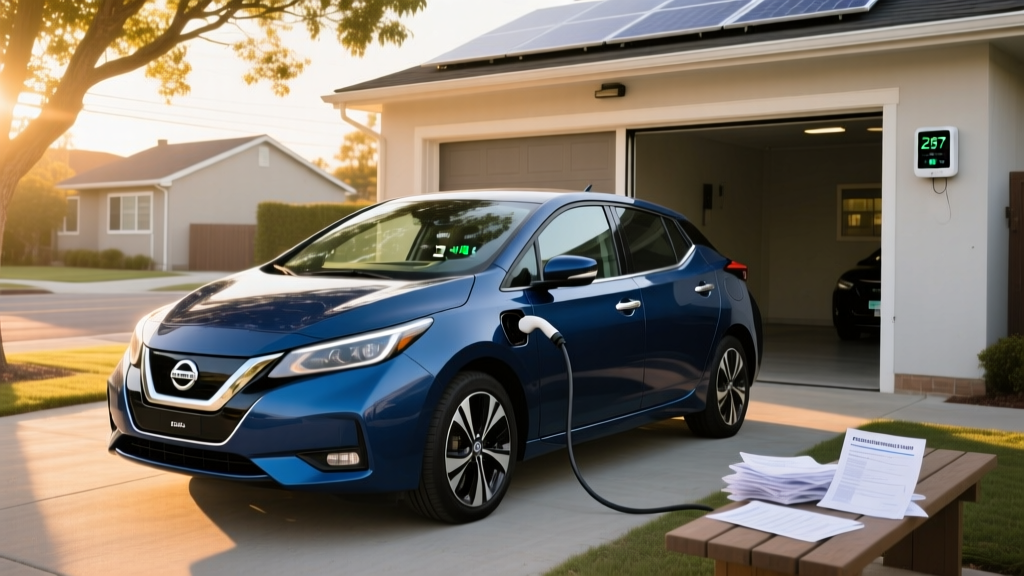
The Nissan Leaf holds a unique place in EV history: it's the electric car that proved battery-electric daily driving was viable for ordinary buyers, starting all the way back in 2011. But for shoppers considering a new or used Leaf today, one question dominates the research phase — how long will the battery actually last? This deep-dive on Nissan Leaf longevity examines real-world degradation data, current specs, charging realities, and whether this veteran EV still makes financial sense in a market now crowded with longer-range alternatives.
Quick Verdict: Is the Nissan Leaf Still Worth It?
The 2025 Nissan Leaf (carried into 2026 with minimal changes) remains one of the most affordable new EVs you can buy, starting under $29,000 before incentives. Its air-cooled battery architecture — unchanged since the car's debut — is both its greatest vulnerability and a well-understood quantity. Leaf batteries demonstrably degrade faster than liquid-cooled competitors, particularly in hot climates, but Nissan's 8-year/100,000-mile battery warranty provides a meaningful backstop. For budget-focused commuters who can charge at home and don't need road-trip range, the Leaf's value proposition holds. For everyone else, the longevity concerns and CHAdeMO charging standard make it increasingly hard to recommend over liquid-cooled rivals.
Nissan Leaf Specs at a Glance
| Specification | Leaf S (40 kWh) | Leaf SV Plus (60 kWh) |
|---|---|---|
| EPA Range | 149 miles | 212 miles |
| Battery Capacity (usable) | ~39 kWh | ~59 kWh |
| Battery Chemistry | NMC (laminated) | NMC (laminated) |
| Thermal Management | Passive air-cooled | Passive air-cooled |
| Motor Output | 147 hp / 236 lb-ft | 214 hp / 250 lb-ft |
| 0–60 mph | ~7.9 sec | ~6.5 sec |
| Drivetrain | FWD | FWD |
| Max DC Fast Charge | 50 kW (CHAdeMO) | 100 kW (CHAdeMO) |
| Level 2 Charge Rate | 6.6 kW | 6.6 kW |
| EPA Efficiency | 111 MPGe (30 kWh/100mi) | 109 MPGe (31 kWh/100mi) |
| Cargo Volume | 23.6 cu ft (rear seats up) | 23.6 cu ft (rear seats up) |
| Base MSRP (2025) | $28,140 | $36,190 |
Source: fueleconomy.gov and Nissan USA specifications.
Range and Efficiency: EPA Sticker vs. Real-World Miles
Leaf S (40 kWh): EPA 149 mi → Expect 110–130 mi highway, 90–110 mi in freezing weather.
Leaf SV Plus (60 kWh): EPA 212 mi → Expect 165–190 mi highway, 140–165 mi in freezing weather.
The Leaf lacks a heat pump, so cold-weather range loss is significant — typically 25–35% below EPA in sustained sub-32°F driving with cabin heat on.
The Leaf SV Plus's 212-mile EPA rating sounds adequate for daily commuting and moderate errands, but real-world ownership requires understanding where those miles disappear. The Leaf's passive air-cooling system means the battery operates at ambient-adjacent temperatures. In summer heat, the battery management system (BMS) may restrict power output to protect cells — you'll notice reduced regen and acceleration on hot days after DC fast charging. In winter, the absence of a heat pump means cabin heating draws directly from the traction battery via resistive elements, consuming 3–5 kW continuously.
On a 70-mph highway loop in moderate (65°F) conditions, the SV Plus typically delivers 175–190 miles before reaching 5% state of charge. Push speeds to 80 mph or encounter headwinds, and that figure drops toward 155–165 miles. City driving with frequent regenerative braking opportunities can actually exceed the EPA estimate, with some owners reporting 220+ miles in stop-and-go traffic at moderate temperatures.
Efficiency-wise, the Leaf SV Plus returns roughly 31 kWh per 100 miles — competitive with similarly sized EVs. The lighter 40 kWh Leaf S achieves 30 kWh/100mi, making it slightly more efficient per mile but with a much smaller fuel tank, so to speak.
Battery Longevity: The Core Question
This is where Nissan Leaf longevity separates from the rest of the EV market. The Leaf uses NMC (nickel manganese cobalt) cells in a laminated pouch format manufactured by Envision AESC (formerly NEC/AESC). Unlike Tesla, Hyundai, GM, and most other automakers, Nissan has never equipped the Leaf with active liquid thermal management. The battery relies on passive air cooling — essentially ambient airflow and limited forced-air circulation.
Degradation Data: What Owners Actually Report
Real-world data from Leaf owner communities and fleet studies paints a consistent picture:
- Years 1–3: Typical capacity loss of 5–10%, with faster loss in hot climates (Arizona, Texas, Middle East).
- Years 4–6: Degradation curve flattens; total loss typically 12–20% from new.
- Years 7–10: Wide variance. Mild-climate Leafs may retain 75–82% capacity; hot-climate examples can drop to 65–72%.
- High-mileage examples (100k+ miles): Many 2013–2017 Leafs with 100,000+ miles report 65–75% state of health (SoH), with some hot-climate cars falling below the 70% threshold that triggers warranty replacement.
The Nissan battery warranty guarantees that the high-voltage battery will retain at least 66% of original capacity (9 out of 12 bars on the dashboard capacity gauge) for 8 years or 100,000 miles, whichever comes first. If it drops below that threshold within the warranty period, Nissan will replace or recondition the battery at no cost.
Why the Air-Cooled Design Matters
Lithium-ion cells degrade faster when held at high temperatures, especially at high states of charge. The Leaf's passive cooling means:
- Repeated DC fast charging heats the pack with no active cooling to shed that heat. Back-to-back 50–100 kW sessions cause measurable accelerated degradation.
- Hot-climate parking in direct sunlight with a full charge is the worst-case scenario for calendar aging.
- Cold-climate owners actually see slower degradation, though winter range suffers significantly.
For context, liquid-cooled packs from Hyundai (Ioniq 5), Tesla (Model 3/Y), and GM (Ultium platform) maintain cells within a narrow 68–86°F operating window regardless of ambient conditions. Data from those platforms consistently shows 5–10% degradation over 150,000+ miles — a meaningfully better longevity profile.
Battery Replacement Cost
Out-of-warranty battery replacement remains a financial landmine. As of 2025–2026, a refurbished 40 kWh Leaf battery runs approximately $6,500–$8,500 installed at a Nissan dealer, while the 60 kWh SV Plus pack is $9,000–$12,000. Third-party refurbishers offer somewhat lower pricing, but availability varies by region. These costs represent 25–40% of the vehicle's original MSRP — a critical factor in total cost of ownership calculations.
Charging: CHAdeMO in an NACS/CCS World
| Charging Level | Power / Connector | Leaf S (40 kWh) | Leaf SV Plus (60 kWh) |
|---|---|---|---|
| Level 1 (120V) | ~1.4 kW / J1772 | ~3–4 mi/hr | ~3–4 mi/hr |
| Level 2 (240V) | 6.6 kW / J1772 | ~20 mi/hr (7–8 hr full) | ~22 mi/hr (9–10 hr full) |
| DC Fast | CHAdeMO | 50 kW peak | 100 kW peak |
| 10–80% DC Fast | CHAdeMO | ~45–50 min | ~40–45 min |
The Leaf's charging story is its most significant competitive liability in 2026. Nissan adopted CHAdeMO for DC fast charging — a Japanese standard that has been decisively losing the North American connector war. Tesla's NACS connector is now the dominant standard, with Ford, GM, Rivian, Hyundai, and most others switching to NACS for 2025+ models. Electrify America, the largest non-Tesla DC network, still supports CHAdeMO at many stations but has signaled future builds will be NACS-focused.
Charging speeds compound the problem. The Leaf S tops out at just 50 kW on DC fast charge — painfully slow by 2026 standards when competitors hit 150–350 kW. The SV Plus improves to 100 kW peak, but the air-cooled battery means the charge curve tapers aggressively: you'll see 100 kW only briefly at low state of charge, with speeds dropping to 40–50 kW above 60% SoC to protect the cells from heat damage. A 10–80% session in the SV Plus typically takes 40–45 minutes, compared to 18–25 minutes in liquid-cooled competitors.
At home on Level 2, the Leaf's 6.6 kW onboard charger is adequate — a full overnight replenishment is straightforward for both battery sizes. Installation of a 240V/32A home charger typically costs $500–$1,500 depending on panel proximity, and this is where the Leaf excels: wake up to a full battery every morning, and the DC fast-charge limitations become irrelevant for daily use.
Performance, Interior, and Technology
The Leaf SV Plus delivers 214 horsepower and 250 lb-ft of instant torque through a front-mounted single-speed motor. The 0–60 mph sprint takes approximately 6.5 seconds — brisk enough for confident highway merging. The 40 kWh S model makes do with 147 hp and a 7.9-second 0–60, which feels adequate in town but strained at highway speeds.
Ride quality is a genuine strength. The Leaf's 3,400–3,600 lb curb weight (depending on trim) and soft suspension tuning absorb urban potholes with composure that heavier EVs can't match. The low center of gravity from the floor-mounted battery keeps body roll reasonable, though the skinny eco-focused tires (215/50R17 on SV Plus) give up grip early in corners.
Interior and Cargo
The Leaf's cabin is functional but dated. Hard plastics dominate the lower dashboard and door panels, and the 8-inch infotainment touchscreen (standard across trims) runs Nissan's older software with physical shortcut buttons — a plus for usability, a minus for modern aesthetics. Apple CarPlay and Android Auto are standard (wireless on SV Plus). Rear seat legroom measures 33.5 inches — tight for tall adults on longer trips but fine for children and average-height passengers.
Cargo space is a genuine advantage: 23.6 cubic feet behind the rear seats and 30.0 cubic feet with the 60/40 split rear seats folded. That hatchback practicality beats most compact SUVs and makes the Leaf a legitimate grocery-getter and gear-hauler for two people. There's no frunk — the space under the hood houses the motor, inverter, and 12V battery.
Driver Assistance
Nissan's ProPILOT Assist (standard on SV Plus, available on S) provides SAE Level 2 lane-centering and adaptive cruise control. It works competently on well-marked highways but requires continuous hands-on-wheel input and disengages in construction zones or faded lane markings. This is not autonomous driving — it's a driver aid that reduces fatigue on commutes. NHTSA's guidance on Level 2 systems is clear: the driver remains fully responsible at all times.
Pricing, Tax Credits, and Total Ownership Cost
| Trim | Base MSRP | Federal §30D Credit | Effective Price |
|---|---|---|---|
| Leaf S (40 kWh) | $28,140 | $3,750 (partial)* | ~$24,390 |
| Leaf SV Plus (60 kWh) | $36,190 | $3,750 (partial)* | ~$32,440 |
*As of the 2025–2026 tax year, the Leaf qualifies for a partial federal EV tax credit under IRS §30D rules. The credit amount depends on battery critical-mineral sourcing and component manufacturing requirements, which change annually. The Leaf's Japan-sourced battery has historically limited credit eligibility. Buyer income caps apply ($150k single / $300k joint for new vehicles). The credit can now be transferred to the dealer at point of sale as an immediate price reduction. Always verify current eligibility with your tax professional and the IRS before purchasing.
Five-Year Cost of Ownership Estimate
For a Leaf SV Plus driven 12,000 miles/year with home Level 2 charging at $0.14/kWh national average:
- Electricity cost (5 years): ~$2,580 (at 31 kWh/100mi)
- Maintenance (5 years): ~$800–$1,200 (cabin filters, brake fluid, tire rotation — no oil changes)
- Insurance (5 years): ~$7,500–$9,500 (varies significantly by driver/location)
- Estimated depreciation (5 years): ~$14,000–$17,000 (Leaf depreciation is steeper than Tesla/Hyundai due to battery longevity concerns)
- Total estimated 5-year cost: ~$25,000–$30,000
Compare this to a similarly priced gas compact hatchback burning $3.50/gallon at 30 MPG combined, and the Leaf saves roughly $4,000–$5,500 in fuel alone over five years. But higher depreciation and potential out-of-warranty battery costs narrow that gap substantially for second owners.
Nissan Leaf Longevity vs. Key Competitors
| Factor | Nissan Leaf SV Plus | Hyundai Kona Electric | Chevrolet Bolt EV/EUV |
|---|---|---|---|
| EPA Range | 212 mi | 261 mi | 259 mi (EV) |
| Battery Cooling | Passive air | Liquid | Liquid |
| DC Fast Charge | 100 kW (CHAdeMO) | 100+ kW (CCS/NACS) | 55 kW (CCS) |
| 10–80% DC Time | ~40–45 min | ~40 min | ~55 min |
| Expected 8-yr SoH | 72–82% | 85–92% | 85–90% |
| Starting MSRP | $28,140 | ~$32,975 | ~$26,500 (discontinued 2024, used market) |
- Lowest entry price among new EVs
- Comfortable ride, easy to park
- Strong hatchback cargo space (23.6 cu ft)
- Proven, simple powertrain — easy to service
- ProPILOT Assist included on SV Plus
- Excellent city efficiency with regen braking
- Air-cooled battery = faster degradation
- CHAdeMO connector is a dying standard
- Slow DC fast charging (50–100 kW peak)
- No heat pump — severe cold-weather range loss
- Dated interior materials and infotainment
- FWD only — no AWD option
- Limited federal tax credit due to battery sourcing
Who Should Buy the Nissan Leaf — And Who Shouldn't
Buy the Leaf if:
- You're a budget-first buyer needing a new EV under $30,000
- You can charge at home every night (Level 2)
- Your daily commute is under 60 miles round-trip
- You live in a mild climate (Pacific Northwest, coastal California)
- You rarely take road trips exceeding 150 miles
- You value low operating costs over cutting-edge tech
- You live in a hot climate (Arizona, Texas, Florida summers) — degradation accelerates
- You need reliable DC fast charging for road trips
- You want a battery that will retain 90%+ capacity after 5 years
- You need AWD for snow/ice
- You plan to keep the car 10+ years and 150,000+ miles
Frequently Asked Questions
How many miles can a Nissan Leaf last before the battery needs replacement?
Most Leaf batteries reach the 66% capacity warranty threshold between 90,000 and 130,000 miles in hot climates, and 120,000–160,000+ miles in mild climates. The car itself is mechanically simple and can exceed 200,000 miles with a battery replacement or reconditioning. The motor and inverter have proven extremely durable.
Does the Nissan Leaf qualify for the full $7,500 federal tax credit?
No. Under current IRS §30D rules, the Leaf qualifies for a partial credit (typically $3,750) because its battery components and critical minerals do not fully meet the domestic-sourcing requirements. Income caps apply ($150,000 single / $300,000 joint filers), and the MSRP must be under $55,000 for cars. The Leaf clears the MSRP cap easily. Verify current-year rules with a tax professional before purchasing.
Is CHAdeMO really a dead standard?
Not dead yet, but declining rapidly. Most new EVs sold in North America from 2025 onward use NACS (Tesla's standard) or CCS. Electrify America and other networks still maintain CHAdeMO connectors at existing stations, but new installations increasingly favor NACS. The only other new CHAdeMO vehicle in the US market is the Mitsubishi Outlander PHEV. Buying a CHAdeMO vehicle in 2026 means accepting shrinking public fast-charge access over the next 5–10 years.
Can I extend my Leaf battery's lifespan?
Yes, with disciplined habits: avoid DC fast charging when Level 2 is available, don't leave the car at 100% state of charge for extended periods (charge to 80% daily, 100% only before long trips), park in shade or a garage during hot months, and use the Leaf's built-in charge timer to avoid sitting at full charge overnight. These practices can add 2–4 years of useful battery life compared to aggressive charging habits.
Should I buy a used Nissan Leaf instead?
A used Leaf (2018+ second generation preferred) can be a compelling bargain — often $10,000–$18,000 for a well-maintained example. But check the battery capacity bars on the dash (12 is perfect, anything below 10 means notable degradation) and consider that the 8-year warranty clock started at original sale. A 2018 Leaf's battery warranty expires in 2026. Factor in potential replacement cost ($6,500–$12,000) when evaluating total value.