Fisker Ocean NYC: The Urban-Focused Electric SUV Under the Microscope
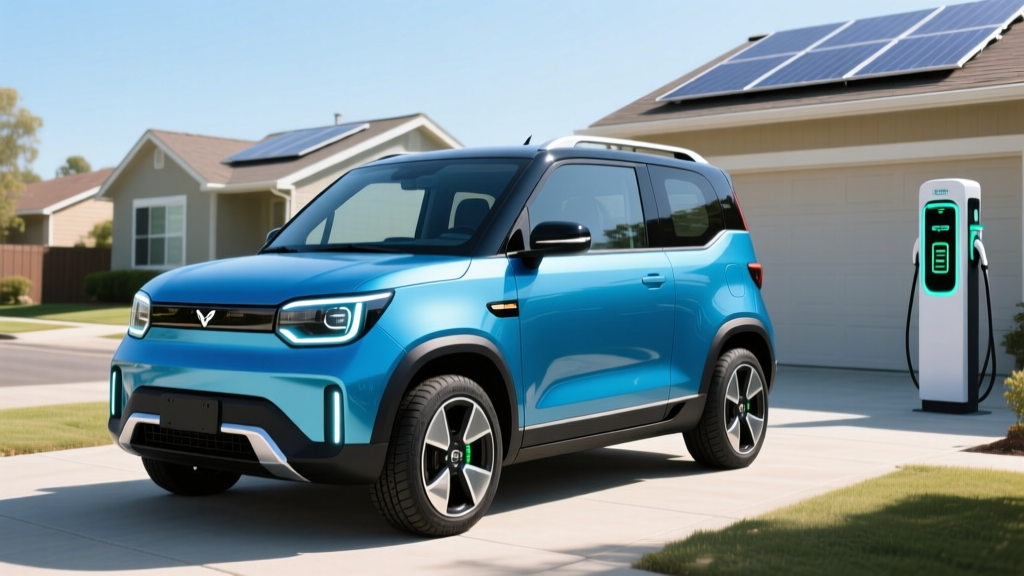
The Fisker Ocean was positioned as a stylish, sustainability-forward electric SUV, and the base-model Ocean (often referred to in early marketing as the "Sport" or entry-level trim) was designed with urban commuters in mind. For buyers in dense metro areas like New York City, the appeal was straightforward: a compact-footprint SUV with a lithium iron phosphate (LFP) battery, competitive EPA range, and a sub-$40,000 starting price before incentives. But how does the Fisker Ocean actually hold up for daily driving in stop-and-go city traffic, cold Northeast winters, and an urban charging landscape that ranges from convenient to frustrating?
This review breaks down the Fisker Ocean's EPA range versus real-world expectations, its charging behavior on DC fast chargers and Level 2 home setups, powertrain performance, interior practicality, and total ownership cost — all through the lens of someone navigating NYC streets, bridges, and parkways.
Range, Battery, and Efficiency: What the Numbers Actually Mean
| Spec | Value |
|---|---|
| EPA Estimated Range | 250 miles |
| Battery Capacity (Usable) | ~75 kWh |
| Battery Chemistry | LFP (Lithium Iron Phosphate) |
| Drivetrain | Single-Motor FWD |
| Horsepower | 275 hp |
| 0–60 mph | ~6.9 seconds |
| EPA Efficiency | ~105 MPGe combined / ~32 kWh/100 mi |
| Max DC Fast Charge | Up to 200 kW (peak) |
| 10–80% DC Charge Time | ~33 minutes (estimated) |
| Level 2 Home Charging | ~10.5 kW onboard charger |
| Cargo Volume (rear seats up) | ~28.5 cu ft |
| Cargo Volume (rear seats folded) | ~62 cu ft |
| Base MSRP | $37,499 |
| Battery/Powertrain Warranty | 6 years / 60,000 miles |
Real-World Range vs. EPA Sticker
EPA estimate: 250 miles
Real-world NYC commuting: Expect 220–245 miles in mild weather with regenerative braking maximized in stop-and-go traffic — city driving actually favors EV efficiency.
Highway driving (I-95, Palisades Pkwy at 65–75 mph): Expect 195–215 miles. Aerodynamic drag at sustained highway speeds cuts into the LFP pack's usable energy noticeably.
Cold weather (below 32°F, typical NYC January): Expect 165–195 miles. LFP chemistry is more susceptible to cold-weather capacity loss than NMC, and the base Ocean lacks a heat pump (standard only on higher trims), meaning cabin heating draws directly from the traction battery.
The LFP battery chemistry is a deliberate trade-off. LFP cells offer superior cycle life and thermal stability — they degrade more slowly over thousands of charge cycles and are less prone to thermal runaway. However, they have lower energy density than NMC (nickel manganese cobalt) packs, which is why the base Ocean carries a smaller usable capacity and lower EPA range than the dual-motor Extreme trim's 113 kWh NMC pack (EPA-rated at 350 miles). For NYC-based drivers who charge at home nightly and rarely exceed 100 miles round-trip, the LFP pack's longevity advantage matters more than the range deficit.
According to fueleconomy.gov, the Fisker Ocean's combined efficiency sits around 105 MPGe, which translates to roughly 32 kWh per 100 miles driven. That's competitive with the Hyundai Ioniq 5 and slightly behind the Tesla Model Y RWD, which benefits from a more aggressive heat-pump strategy and lighter curb weight.
Charging Speed: DC Fast Charging and Home Level 2
Charging speed is where LFP chemistry and the Ocean's thermal management system intersect — and where NYC owners need to set realistic expectations.
| Charging Level | Power / Rate | Time / Range Added |
|---|---|---|
| Level 1 (120V household) | ~1.4 kW | ~4–5 miles per hour |
| Level 2 (240V home/public) | ~10.5 kW (max onboard) | ~30–35 miles per hour; full charge in ~7–8 hours |
| DC Fast Charge (peak) | Up to 200 kW | 10–80% in ~33 minutes |
| DC Fast Charge (sustained avg.) | ~110–130 kW avg. | 10–80% real-world: ~35–40 minutes |
The 200 kW peak DC fast-charge figure sounds competitive, but as with all EVs, peak rate is not sustained rate. The Ocean's charge curve tapers significantly above 60% state of charge (SoC). In practice at Electrify America or Tesla Supercharger stations (via NACS adapter, if equipped for the model year), you'll see 150–180 kW in the 10–40% SoC window, dropping to 80–100 kW by 60%, and further to 40–50 kW above 80%. The 10–80% session averages closer to 110–130 kW, making the real-world session time about 35–40 minutes rather than the optimistic 33-minute estimate.
Cold-weather charging caveat: The base Ocean's battery preconditioning for DC fast charging is less aggressive than competitors like the Tesla Model Y or Hyundai Ioniq 5. In winter temperatures below 40°F, expect your first 10–15 minutes of a DC fast-charge session to run at significantly reduced power (sometimes under 50 kW) until the battery warms. Preconditioning the battery by navigating to a charger in the infotainment system helps, but the thermal management system on the base trim is a limitation worth knowing.
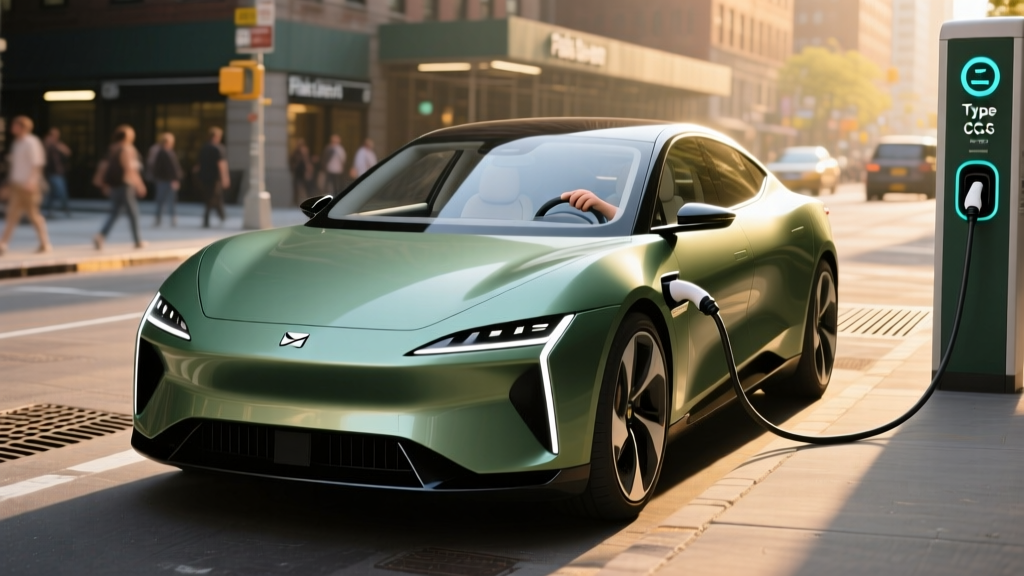
For NYC apartment dwellers without home charging, the Ocean's 10.5 kW Level 2 acceptance rate means a full charge at a public ChargePoint or EVgo Level 2 station takes roughly 7–8 hours from near-empty. Most NYC-based owners will rely on overnight public charging, workplace Level 2 chargers, or a combination — which is workable but requires planning compared to suburban owners with garage Level 2 setups.
Performance and Driving Dynamics in City Traffic
The single-motor front-wheel-drive powertrain produces 275 horsepower and launches the Ocean to 60 mph in approximately 6.9 seconds. That's adequate for highway merging and perfectly brisk for NYC stoplights. The instant torque delivery makes the Ocean feel quicker than its 0–60 time suggests in the 0–30 mph range, which is where most city driving happens.
The FWD layout is a cost-saving measure that also means the Ocean Sport/base lacks the all-wheel-drive traction that dual-motor competitors offer. For NYC winters — think slushy avenues and icy bridge ramps — this is a meaningful drawback. Quality winter tires are strongly recommended if you're relying on the base Ocean through a Northeast winter.
Regenerative braking is adjustable through the infotainment system, though the Ocean does not offer true one-pedal driving to a complete stop in the way a Nissan Leaf or Chevrolet Bolt does. You'll still use the friction brake pedal for final stops, which slightly reduces the efficiency benefit of regen in heavy traffic on the BQE or Cross Bronx Expressway.
Interior, Tech, and Practicality
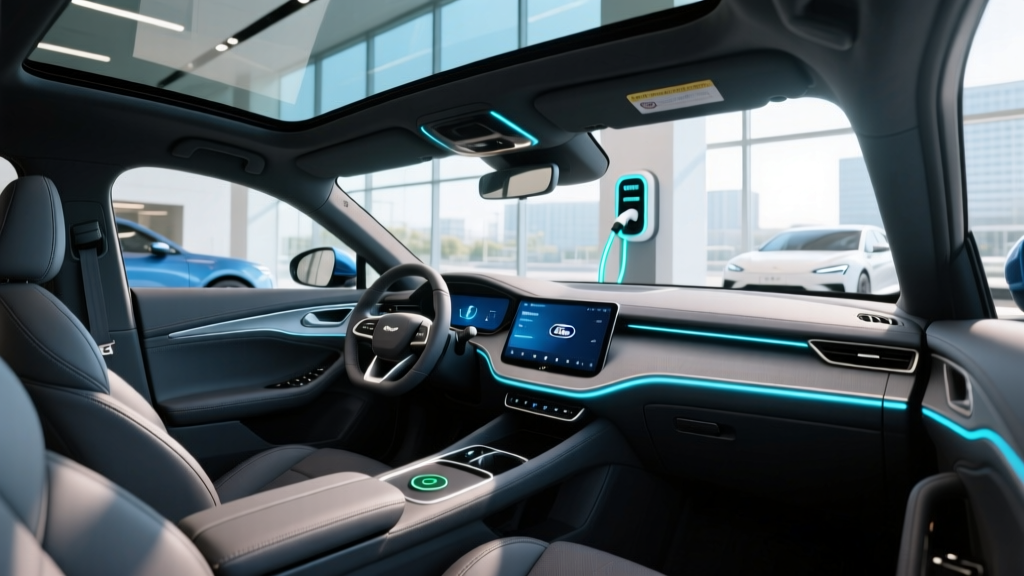
The Ocean's cabin is where Fisker tried to differentiate. The centerpiece is a 17.1-inch rotating center touchscreen ("Revolve" screen) that toggles between a landscape "Control" mode and a portrait "Hollywood" mode for media consumption while parked. The interface ran on a custom Android-based OS, though software refinement was a common criticism in early reviews — laggy responses, occasional glitches, and a learning curve compared to Tesla's or Hyundai's more polished systems.
The base trim still included:
- Digital instrument cluster
- Wireless Apple CarPlay and Android Auto
- Fisker Intelligent Pilot ADAS (SAE Level 2 driver-assist with adaptive cruise, lane centering, automatic emergency braking)
- Vegan leather upholstery and recycled-material interior trim
- Power liftgate
Cargo space is competitive: approximately 28.5 cubic feet behind the second row and 62 cubic feet with seats folded. There is no front trunk (frunk) on the FWD base model, which reduces utility for storing charging cables compared to the Hyundai Ioniq 5's 0.85 cu ft frunk or the Tesla Model Y's 4.1 cu ft frunk. Rear-seat legroom is adequate for adults at roughly 38.5 inches, though the seat cushion is mounted low, which compromises under-thigh support on longer trips.
ADAS Limitations: Fisker Intelligent Pilot
Fisker Intelligent Pilot is an SAE Level 2 driver-assistance system. It requires the driver to remain fully engaged, with hands on the wheel and eyes on the road at all times. It is not a self-driving or autonomous system. Lane centering can be inconsistent on faded NYC lane markings, and the adaptive cruise control can be slow to react to aggressive cut-ins common on the GWB and Holland Tunnel approaches. Always maintain active supervision.
Pricing, Tax Credits, and Total Cost of Ownership
| Item | Amount |
|---|---|
| Base MSRP (Sport/FWD) | $37,499 |
| Destination Fee | ~$1,295 |
| As-Tested Price (base w/ common options) | ~$39,500–$41,000 |
| Federal §30D Tax Credit (max) | Up to $7,500 (eligibility varies) |
| Estimated Price After Max Credit | ~$30,000–$31,500 |
The Fisker Ocean's base MSRP of $37,499 placed it well under the IRS §30D SUV MSRP cap of $80,000. However, qualifying for the full $7,500 federal tax credit depends on several factors that change annually:
- Buyer income caps: Modified adjusted gross income must not exceed $150,000 (single), $225,000 (head of household), or $300,000 (joint filers).
- Battery sourcing requirements: The percentage of critical minerals and battery components that must be sourced from the U.S. or free-trade-agreement countries increases each year. The Ocean's LFP battery, with supply chains tied to specific manufacturers, may or may not meet the current-year threshold for the full $3,750 critical-minerals half of the credit.
- Point-of-sale transfer: As of 2024+, eligible buyers can transfer the credit to the dealer at purchase, reducing the upfront price rather than waiting for a tax refund. Confirm dealer participation and your specific eligibility with a tax professional.
- Fisker's financial status: Fisker Inc. filed for bankruptcy in mid-2024, which has significant implications for new-vehicle availability, warranty fulfillment, and ongoing software support. Prospective buyers considering a remaining new or pre-owned Ocean should verify warranty transferability and parts/service availability independently.
For a 5-year ownership estimate in NYC — assuming 12,000 miles/year, home/equivalent Level 2 charging at $0.22/kWh (Con Edison residential rate), and no gasoline cost — the Ocean's annual "fuel" cost is roughly $840. Compare that to a gas-powered compact SUV averaging 28 MPG combined at $3.60/gallon: approximately $1,540/year. That's a fuel savings of roughly $700/year, or $3,500 over five years, before accounting for the Ocean's higher insurance premiums (typically 15–25% more than comparable gas SUVs in NYC zip codes).
Fisker Ocean vs. Key Competitors: Is It Worth Buying?
The Ocean competes in a crowded segment. Here's how it stacks up against the most relevant alternatives for an NYC-based buyer:
| Spec | Fisker Ocean (Base) | Hyundai Ioniq 5 (SE RWD) | Tesla Model Y (RWD) | Volkswagen ID.4 (S) |
|---|---|---|---|---|
| EPA Range | 250 mi | 220 mi (Std Range) / 303 mi (LR) | 260 mi | 206 mi (Std) / 275 mi (Pro S) |
| Battery Chemistry | LFP | NMC / LFP (Std Range) | LFP | NMC |
| DC Fast Charge Peak | 200 kW | 240 kW (800V) | 250 kW | 175 kW |
| 10–80% Time | ~33 min | ~18 min | ~25 min | ~30 min |
| 0–60 mph | 6.9 sec | 7.4 sec (RWD) | 6.6 sec | 7.7 sec (RWD) |
| Base MSRP | $37,499 | ~$42,600 | ~$44,990 | ~$39,735 |
| Heat Pump (Standard?) | No (higher trims) | Yes | Yes | Yes (Pro S) |
| Warranty (battery) | 6 yr/60,000 mi | 10 yr/100,000 mi | 8 yr/120,000 mi | 8 yr/100,000 mi |
The verdict: The Fisker Ocean's strongest card was its price. At $37,499, it undercut every competitor here, and with a potential $7,500 credit, it approached $30,000 — territory no other new electric SUV occupied. However, the Hyundai Ioniq 5 charges dramatically faster (18 minutes vs. 33 minutes for 10–80%), includes a standard heat pump for cold-weather efficiency, and carries a 10-year battery warranty. The Tesla Model Y offers access to the Supercharger network (the most reliable DC fast-charging infrastructure in the U.S.), better software, and stronger resale value. The VW ID.4 is similarly priced and offers AWD availability at competitive trims.
Fisker's bankruptcy complicates everything. With Fisker Inc. having filed for Chapter 11 bankruptcy protection in 2024, warranty support, software updates, parts availability, and long-term service infrastructure are uncertain. This is a significant risk factor that competitors simply don't carry. Any purchase decision — new remaining stock or pre-owned — must account for this reality.
Pros
- Lowest base MSRP in the compact electric SUV segment
- LFP battery offers excellent cycle life and thermal safety
- Distinctive, attractive exterior design by Henrik Fisker
- Sustainability-focused interior materials
- Competitive cargo space (28.5 / 62 cu ft)
- Good city-driving efficiency with regen braking
Cons
- No heat pump on base trim — significant cold-weather range penalty
- DC fast charging slower than Ioniq 5 and Model Y
- FWD only on base trim — limited winter traction
- Software/infotainment refinement lags competitors
- No frunk for charging cable storage
- Fisker bankruptcy creates warranty/service/parts uncertainty
- Shorter battery warranty (6yr/60k) than Hyundai (10yr/100k) and Tesla (8yr/120k)
- ADAS lane centering inconsistent on poorly marked urban roads
Who Should Consider the Fisker Ocean?
Choose the Fisker Ocean if:
- You find remaining inventory at a steep discount and accept the warranty/service risk
- Your daily commute is under 80 miles round-trip with reliable Level 2 charging access
- You prioritize purchase price above charging speed and long-term support
- You drive primarily in mild climates where the lack of a heat pump is less punishing
Look elsewhere if:
- You need reliable DC fast charging for frequent road trips (Ioniq 5 or Model Y are better)
- You live in a cold climate and need winter range preservation (heat pump is essential)
- You want the security of a long battery warranty and established service network
- AWD is a must for snowy commutes (the base Ocean is FWD-only)
Frequently Asked Questions
What is the real-world range of the Fisker Ocean in NYC?
In city driving with regenerative braking, expect 220–245 miles in mild weather — close to the 250-mile EPA estimate. Highway driving at 70+ mph drops that to 195–215 miles. In NYC winters (20s–30s°F), plan for 165–195 miles due to LFP cold sensitivity and the base trim's lack of a heat pump.
How fast does the Fisker Ocean charge at home and on the road?
On a 240V Level 2 home charger, the Ocean accepts up to 10.5 kW, adding roughly 30–35 miles of range per hour and fully charging in 7–8 hours. On DC fast chargers, it peaks at 200 kW but averages 110–130 kW over a 10–80% session, taking about 35–40 minutes in practice.
Does the Fisker Ocean qualify for the $7,500 federal EV tax credit?
The Ocean's MSRP falls under the §30D SUV cap, and buyer income limits apply ($150K single / $300K joint). However, the full $7,500 credit depends on current-year battery critical-mineral and component sourcing requirements, which change annually. Check the latest rules at irs.gov and confirm with a tax professional. Note: Fisker's bankruptcy may affect credit eligibility for any remaining new inventory.
How much does the Fisker Ocean cost after incentives?
Base MSRP was $37,499 plus ~$1,295 destination. If eligible for the full $7,500 federal credit transferred at point of sale, the effective price could drop to approximately $30,000–$31,500. State and local incentives (such as New York's DRIVE Clean Rebate, if still funded) could reduce this further. Always verify current incentive availability.
Is the Fisker Ocean worth buying over the Tesla Model Y or Hyundai Ioniq 5?
On price alone, the Ocean was compelling. But the Ioniq 5 charges nearly twice as fast, includes a heat pump, and has a 10-year battery warranty. The Model Y offers Supercharger access and stronger resale value. Fisker's bankruptcy adds substantial ownership risk that neither competitor carries. Unless you're getting a deeply discounted remaining unit and can self-insure against warranty/parts gaps, competitors are the safer choice.
Can I charge a Fisker Ocean at Tesla Superchargers?
The Fisker Ocean originally shipped with a CCS1 connector. Access to Tesla's NACS Supercharger network depends on whether Fisker provided a NACS adapter or whether the vehicle's charge port was updated for later model years. Check your specific vehicle's connector configuration and Tesla's adapter compatibility list before relying on Supercharger access.
What happens to Fisker Ocean warranty support after the bankruptcy?
Fisker Inc.'s 2024 bankruptcy filing created uncertainty around warranty fulfillment, software update continuity, and parts supply. Buyers of remaining new or pre-owned Oceans should consult the bankruptcy proceedings for warranty status and consider third-party extended warranty options where available. This is the single largest risk factor in Ocean ownership.